Love this? Save it for later!
Share the inspiration with your friends
My friend Jen asked why I couldn’t just cook the salmon and asparagus in the same pan. I started to explain why that wouldn’t work — something about different cooking times, the asparagus getting soggy, the salmon not crisping properly. Then I stopped. Honestly, I had no real reason. I’d just always done them separately because that’s how my mom did it, and that’s how I’d always done it too. You know that feeling when you realize you’ve been doing something a certain way for years without ever questioning it?
So I tried it. And let me tell you, I felt pretty silly standing there eating the best honey garlic salmon I’d ever made, with perfectly tender-crisp asparagus cooked in that same glorious sauce. The whole meal came together in one pan, on one burner, in less than twenty minutes. I texted Jen a photo with a very humble “you were right” message. She didn’t even gloat — though she had every right to.
That night changed how I approach weeknight cooking forever. This quick one-pan honey garlic salmon with asparagus isn’t just a recipe — it’s a reminder that sometimes the simplest ideas are the ones we overlook. The honey caramelizes on the salmon just enough to create this sticky, glossy finish, while the asparagus soaks up all that garlicky goodness. It’s the kind of meal that makes you feel like you’ve got your life together, even on a Tuesday when you definitely don’t.
Why You’ll Love This Recipe
I’ve tested this recipe more times than I care to admit, tweaking the honey-to-soy ratio, adjusting the heat, trying different thicknesses of asparagus. What I landed on is genuinely foolproof — even on nights when I’m distracted and running on three hours of sleep.
- One Pan, Minimal Mess: Everything cooks in a single skillet. No juggling multiple pots, no mountain of dishes afterward. The sauce reduces right in the pan, coating everything beautifully.
- Ready in 20 Minutes: From fridge to plate in under twenty minutes. This is faster than takeout delivery, and way better for you.
- Simple Pantry Ingredients: Honey, soy sauce, garlic, salmon, asparagus — that’s basically it. You probably have most of these in your kitchen right now.
- Perfect for Busy Weeknights: Whether you’re feeding a family or just yourself after a long day, this recipe delivers restaurant-quality results without the stress.
- Naturally Gluten-Free and Healthy: Loaded with omega-3s, fiber, and protein. It’s the kind of meal that makes you feel good from the inside out.
- Impressively Delicious: The honey garlic glaze is sticky, savory, and just sweet enough. Every bite makes you want another one.
What makes this version different from the dozens of similar recipes out there? It’s the timing. I spent weeks figuring out exactly when to add each component so the salmon stays tender and flaky while the asparagus comes out perfectly crisp-tender — not mushy, not raw. The sauce reduces to exactly the right consistency, clinging to every piece without burning. This isn’t just another one-pan recipe; it’s the one I keep coming back to, the one I text to friends who say they can’t cook.
What Ingredients You Will Need
This recipe relies on a handful of pantry staples and fresh ingredients to create something genuinely special. The beauty is in the simplicity — each component plays a specific role in building flavor and texture.
- Salmon Fillets (4 fillets, about 6 ounces each): Look for fillets that are similar in thickness so they cook evenly. I prefer skin-on for extra crispiness, but skinless works fine too. Wild-caught salmon has a firmer texture and richer flavor, but farm-raised Atlantic salmon is milder and more forgiving for beginners.
- Asparagus (1 bunch, about 1 pound): Choose spears that are medium thickness — not too skinny (they’ll overcook) and not too thick (they’ll take too long). Snap off the woody ends naturally; they’ll break right where the tough part begins.
- Honey (¼ cup): Use a good-quality honey with a flavor you enjoy. Orange blossom honey adds a lovely floral note, while wildflower honey is deeper and earthier. If your honey has crystallized, warm it slightly before measuring.
- Soy Sauce (3 tablespoons): I use low-sodium soy sauce to control the salt level. For a gluten-free option, tamari or coconut aminos work beautifully — just note that coconut aminos are slightly sweeter, so you might want to reduce the honey by a tablespoon.
- Garlic (4 cloves, minced): Fresh garlic is non-negotiable here. The pre-minced stuff in a jar won’t give you the same punch. I’ve tried both, and fresh garlic makes a noticeable difference in the sauce.
- Olive Oil (2 tablespoons): A good extra virgin olive oil adds richness, but avocado oil works well too since it has a higher smoke point.
- Butter (1 tablespoon): This adds a silky finish to the sauce. Use unsalted so you can control the seasoning.
- Lemon Juice (from ½ lemon): Fresh lemon juice brightens everything up and balances the sweetness of the honey. Don’t skip this — it’s what keeps the dish from tasting cloying.
- Red Pepper Flakes (¼ teaspoon, optional): For a subtle kick of heat that cuts through the richness. I add this about half the time, depending on my mood.
- Salt and Black Pepper: To taste. Go easy on the salt since the soy sauce adds plenty.
- Sesame Seeds and Fresh Parsley (for garnish): Totally optional but adds a nice finishing touch and a bit of texture.
I recommend using a brand like Mike’s Organic Honey or Local Hive for the best flavor, but honestly, any honey you have on hand will work. For soy sauce, I’m partial to Kikkoman — it’s consistent and widely available. If you’re sourcing salmon, ask your fishmonger for center-cut fillets; they’re the most uniform in thickness and cook the most evenly.
Equipment Needed
One of the best things about this recipe is how little equipment it requires. You don’t need a fancy kitchen to pull this off.
- Large Skillet or Frying Pan (12-inch): A cast-iron skillet is ideal for even heat distribution and that beautiful golden crust on the salmon. But a good non-stick pan works wonderfully too — just be careful not to scratch it. I’ve used both, and honestly, my trusty cast-iron pan gives the best results because it holds heat so well.
- Tongs: For flipping the salmon and turning the asparagus. A good pair of tongs makes everything easier and keeps your hands safe from splattering oil.
- Small Bowl: For whisking together the honey garlic sauce before cooking.
- Whisk or Fork: To combine the sauce ingredients thoroughly.
- Cutting Board and Knife: For mincing garlic and trimming the asparagus.
- Measuring Cups and Spoons: Accuracy matters here, especially with the honey and soy sauce ratio.
- Paper Towels: For patting the salmon dry — this step is crucial for getting a good sear.
If you don’t have a cast-iron skillet, don’t worry. A stainless steel pan works beautifully too; just make sure to preheat it properly and use enough oil to prevent sticking. I actually burned my first batch of salmon because I used a pan that was too small and overcrowded everything. Learn from my mistake — use a pan large enough that the fillets have room to breathe.
Preparation Method
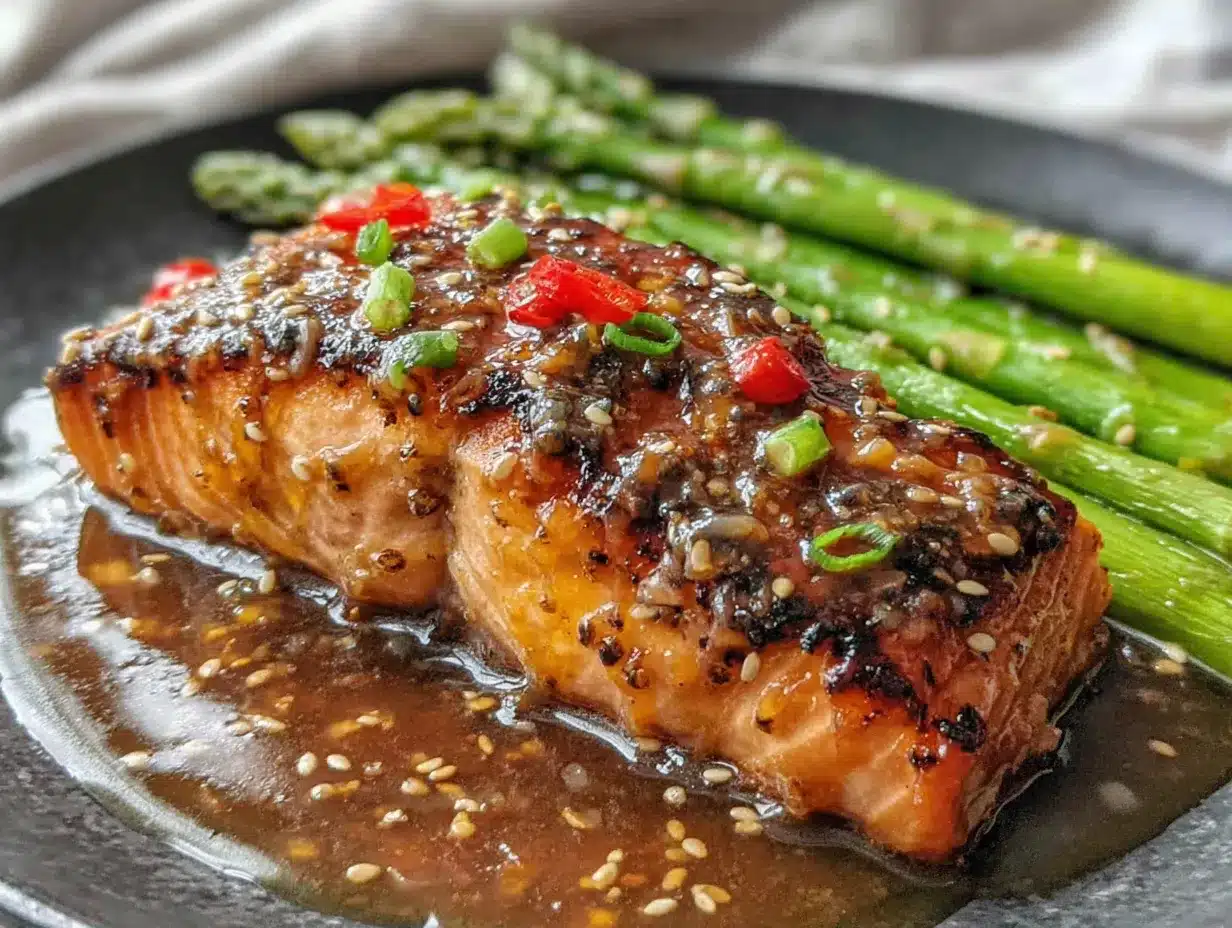
Let me walk you through this step by step. I’ve made this recipe dozens of times, so I know exactly where things can go wrong and how to avoid it.
- Prep Your Ingredients First (5 minutes): Before you turn on the heat, get everything ready. Pat the salmon fillets dry with paper towels — this is non-negotiable for getting that golden crust. Season both sides with a pinch of salt and black pepper. Trim the woody ends off the asparagus by holding each spear at both ends and bending until it snaps naturally. Mince your garlic. Squeeze the lemon juice. Whisk together the honey, soy sauce, and red pepper flakes in a small bowl until smooth. Trust me, having everything prepped makes the actual cooking stress-free.
- Heat the Pan (2 minutes): Place your skillet over medium-high heat and add 1 tablespoon of olive oil. Let it heat until the oil shimmers — about 2 minutes. You want the pan hot enough that the salmon sizzles immediately when it hits the surface. If it doesn’t sizzle, the pan isn’t ready yet.
- Sear the Salmon (4-5 minutes): Place the salmon fillets skin-side down in the hot pan. Resist the urge to move them around — let them cook undisturbed for 4-5 minutes. You’ll see the edges turning opaque and the skin getting crispy and golden. The salmon should release easily from the pan when it’s ready to flip. If it sticks, give it another 30 seconds. Flip the fillets carefully and cook for another 2-3 minutes on the other side. The salmon should be just cooked through — it will flake easily with a fork but still look moist in the center. Transfer the salmon to a plate and tent loosely with foil.
- Cook the Asparagus (3-4 minutes): Reduce the heat to medium. Add the remaining 1 tablespoon of olive oil to the same pan. Add the asparagus spears in a single layer — don’t overcrowd them. Cook for 2-3 minutes, turning occasionally with tongs, until they’re bright green and tender-crisp. Season with a pinch of salt. I like mine with a little bite still left in them, but cook them longer if you prefer softer asparagus.
- Make the Honey Garlic Sauce (2 minutes): Push the asparagus to one side of the pan. Add the butter and minced garlic to the empty space and cook for about 30 seconds until fragrant — don’t let the garlic burn. Pour in the honey-soy mixture and stir everything together. Let it bubble and reduce for 1-2 minutes until it thickens slightly. The sauce should coat the back of a spoon.
- Combine Everything (1 minute): Return the salmon fillets to the pan, nestling them among the asparagus. Spoon the sauce over the salmon and asparagus. Squeeze the fresh lemon juice over everything. Let it all warm through together for about 30 seconds. Sprinkle with sesame seeds and fresh parsley if you’re using them.
- Serve Immediately: This dish is best enjoyed right away while the salmon is still flaky and the sauce is glossy. Transfer everything to a serving platter or plate directly from the pan.
A few things I’ve learned the hard way: Don’t walk away from the pan during the sauce step. Honey-based sauces can go from perfectly reduced to burnt in about 15 seconds. And if your salmon fillets are different thicknesses, check the thinner ones first — you can always remove them early and let the thicker ones finish cooking.
Cooking Tips & Techniques
After making this recipe more times than I can count, here are the things I wish someone had told me from the start.
Pat the salmon dry. I cannot emphasize this enough. Moisture is the enemy of a good sear. If your salmon is wet, it will steam instead of sear, and you’ll end up with pale, sad fish instead of beautiful golden-brown fillets. Use paper towels and be thorough.
Let the salmon come to room temperature. Take the fillets out of the fridge about 15 minutes before cooking. Cold salmon cooks unevenly — the outside will be done while the center is still raw. Room-temperature salmon cooks more consistently from edge to center.
Don’t overcrowd the pan. I made this mistake the first time I tried cooking for a crowd. When you crowd the pan, the temperature drops, and the salmon releases moisture instead of browning. If you’re doubling the recipe, cook in batches or use two pans.
Watch the garlic like a hawk. Garlic goes from fragrant to bitter in seconds. When you add it to the pan, keep stirring and have your sauce ready to pour in immediately. Burnt garlic will ruin the entire dish — I learned this the hard way while answering a text message.
Use a fish spatula. If you have one, it makes flipping salmon so much easier. The thin, slotted design slides under the fillet without breaking it apart. Regular spatulas work too, but a fish spatula is worth the small investment if you cook fish often.
Trust your senses. Recipes give you timing guidelines, but every stove and pan is different. Look for visual cues — the salmon turning opaque, the asparagus brightening, the sauce thickening. Smell for that sweet-savory aroma of honey and garlic. Feel for the asparagus giving slightly when pierced with a fork.
Variations & Adaptations
This recipe is wonderfully adaptable. Here are some variations I’ve tried and loved.
Low-Carb/Keto Version: Replace the honey with a sugar-free honey substitute or use a monk fruit sweetener. The texture will be slightly different, but the flavor is still fantastic. I’ve also used a combination of butter and a touch of allulose syrup with great results.
Spicy Honey Garlic Version: Double the red pepper flakes and add a teaspoon of sriracha or chili garlic sauce to the honey mixture. The heat balances beautifully with the sweetness. My husband requests this version every time.
Swap the Vegetables: Not an asparagus fan? Broccolini, green beans, or sugar snap peas all work beautifully. Adjust cooking times accordingly — green beans need about 4-5 minutes, while sugar snap peas only need 2-3. In the summer, I sometimes use zucchini slices, adding them after the salmon is done and cooking for just 2 minutes per side.
Different Protein Options: This sauce works wonderfully with chicken thighs or shrimp. For chicken, cook about 6-7 minutes per side depending on thickness. For shrimp, they’ll only need 2-3 minutes total — add them at the very end. I’ve even used this sauce on firm tofu; just press and dry it well before pan-frying.
Air Fryer Adaptation: Cook the salmon in an air fryer at 375°F for 8-10 minutes, then toss the asparagus in the sauce and air fry for another 3-4 minutes. The sauce won’t reduce the same way, but it’s a great option when you want to free up stovetop space.
Citrus Twist: Add a tablespoon of orange juice along with the lemon juice for a brighter, more complex citrus flavor. I tried this on a whim when I had an orange about to go bad, and it was surprisingly delicious.
Serving & Storage Suggestions
This dish is best served hot, straight from the pan. The contrast between the warm, flaky salmon and the tender-crisp asparagus is at its peak right after cooking. I like to serve it over a bed of steamed jasmine rice or quinoa to soak up all that extra sauce. A side of crusty bread works beautifully too — perfect for wiping the plate clean.
For a complete meal, pair this with a simple cucumber salad dressed with rice vinegar and sesame oil, or a light arugula salad with lemon vinaigrette. The freshness of the salad balances the richness of the honey garlic glaze. If you’re serving company, add some roasted baby potatoes tossed in herbs — they complement the salmon beautifully and can cook in the oven while you make the main dish.
Storage: Leftovers keep well in an airtight container in the refrigerator for up to 3 days. The asparagus will soften over time, but the flavors actually meld together beautifully. I wouldn’t recommend freezing this dish — the texture of both the salmon and asparagus suffers significantly upon thawing.
Reheating: The best way to reheat is in a skillet over medium-low heat with a splash of water or extra soy sauce to refresh the sauce. Cover the pan to help the salmon warm through without drying out. Microwave reheating works in a pinch but tends to overcook the salmon. If using the microwave, do it in 30-second bursts at 50% power.
One thing I love about this recipe is that the flavors actually deepen overnight. The honey garlic sauce seeps into the salmon and asparagus, making leftovers almost better than the original meal. I’ve been known to make extra on purpose just for lunch the next day.
Nutritional Information & Benefits
This dish is packed with nutrients that make you feel good from the inside out. Here’s the approximate nutritional breakdown per serving (one fillet with asparagus and sauce):
- Calories: 420-450
- Protein: 38-42g
- Fat: 22-25g
- Carbohydrates: 18-20g
- Fiber: 3-4g
- Sugar: 14-16g (mostly from honey)
Salmon is one of the best sources of omega-3 fatty acids, which support heart health, brain function, and reduce inflammation throughout the body. It’s also rich in vitamin D and B vitamins. Asparagus brings fiber, folate, and vitamins A, C, and K to the table — plus it’s a natural diuretic that helps reduce bloating.
This meal is naturally gluten-free (if you use tamari instead of soy sauce) and can be made dairy-free by skipping the butter and using additional olive oil. It’s also low-carb friendly with only about 20g of carbohydrates per serving. If you’re watching your sugar intake, you can reduce the honey to 2 tablespoons and add a splash more soy sauce to balance the flavor.
I personally love that this recipe feels indulgent while being genuinely nutritious. It’s the kind of meal that satisfies cravings without the heavy, sluggish feeling that comes with takeout or processed foods.
Conclusion
This quick one-pan honey garlic salmon with asparagus has become my go-to answer for the eternal question: “What’s for dinner?” It’s fast enough for a frantic Tuesday, impressive enough for company, and simple enough that even beginner cooks can nail it on the first try. The honey garlic glaze hits that perfect sweet-savory spot, the salmon stays tender and flaky, and the asparagus adds color and crunch — all in one pan with minimal cleanup.
I’d love to hear how this turns out for you. Did you try any variations? Did your family love it as much as mine does? Drop a comment below and let me know — I genuinely read every single one and answer questions too. And if you snap a photo, tag me on Pinterest or Instagram. There’s something special about seeing this recipe come to life in other people’s kitchens.
Go ahead, give it a try. That one pan is waiting for you, and dinner will be ready before you know it.
Frequently Asked Questions
Can I use frozen salmon for this recipe?
Yes, but thaw it completely in the refrigerator overnight first. Pat it very dry before cooking — frozen salmon tends to hold more moisture. The cooking time will be about the same once it’s fully thawed.
What if I don’t have soy sauce?
You can substitute with tamari, coconut aminos, or even fish sauce (use less — start with 1 tablespoon). Each will change the flavor slightly, but they all work. In a pinch, salt can replace the saltiness, but you’ll lose some depth.
How do I know when the salmon is fully cooked?
The salmon should flake easily with a fork and look opaque all the way through. The internal temperature should reach 145°F. If you don’t have a thermometer, look for the white protein beads (albumin) starting to form on the surface — that’s a sign it’s nearly done.
Can I make this recipe ahead of time?
This dish is best fresh, but you can prep the ingredients ahead. Trim the asparagus, mince the garlic, and whisk the sauce up to 24 hours in advance. Store everything separately in the fridge. The actual cooking only takes 15 minutes, so it’s still quick when you’re ready to eat.
What can I serve with this besides rice?
Quinoa, couscous, cauliflower rice, or crusty bread all work beautifully. For a low-carb option, try serving it over a bed of sautéed spinach or zucchini noodles. The sauce is delicious enough that even plain steamed vegetables would be great alongside.
Pin This Recipe!
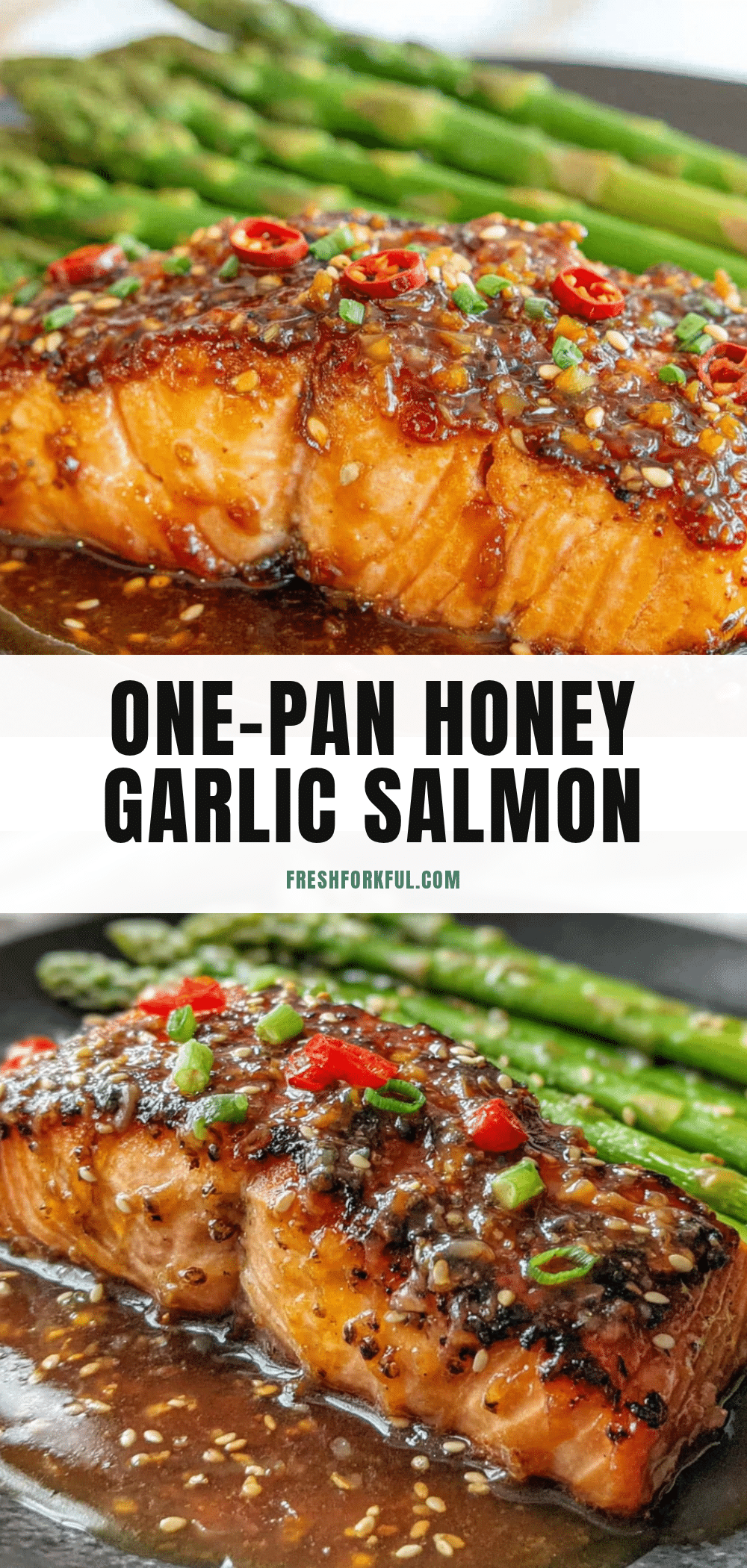
Quick One-Pan Honey Garlic Salmon with Asparagus
A quick and easy one-pan meal featuring tender salmon and crisp-tender asparagus coated in a sticky, savory honey garlic glaze. Ready in under 20 minutes, this recipe is perfect for busy weeknights and requires minimal cleanup.
- Prep Time: 5 minutes
- Cook Time: 15 minutes
- Total Time: 20 minutes
- Yield: 4 servings 1x
- Category: Main Course
- Cuisine: American
Ingredients
- 4 salmon fillets (about 6 ounces each)
- 1 bunch asparagus (about 1 pound), woody ends trimmed
- ¼ cup honey
- 3 tablespoons low-sodium soy sauce (or tamari for gluten-free)
- 4 cloves garlic, minced
- 2 tablespoons olive oil, divided
- 1 tablespoon unsalted butter
- Juice of ½ lemon
- ¼ teaspoon red pepper flakes (optional)
- Salt and black pepper to taste
- Sesame seeds and fresh parsley for garnish (optional)
Instructions
- Prep your ingredients: Pat salmon fillets dry with paper towels and season both sides with salt and pepper. Trim woody ends off asparagus. Mince garlic. Squeeze lemon juice. Whisk together honey, soy sauce, and red pepper flakes in a small bowl.
- Heat 1 tablespoon olive oil in a large skillet over medium-high heat until shimmering (about 2 minutes).
- Place salmon fillets skin-side down in the hot pan. Cook undisturbed for 4-5 minutes until skin is crispy and golden. Flip and cook for another 2-3 minutes until just cooked through. Transfer to a plate and tent with foil.
- Reduce heat to medium. Add remaining 1 tablespoon olive oil to the pan. Add asparagus in a single layer and cook for 3-4 minutes, turning occasionally, until bright green and tender-crisp. Season with a pinch of salt.
- Push asparagus to one side. Add butter and minced garlic to the empty space; cook for 30 seconds until fragrant. Pour in honey-soy mixture and stir. Let bubble and reduce for 1-2 minutes until slightly thickened.
- Return salmon to the pan, nestling among asparagus. Spoon sauce over salmon and asparagus. Squeeze fresh lemon juice over everything. Warm through for 30 seconds.
- Sprinkle with sesame seeds and fresh parsley if desired. Serve immediately.
Notes
Pat salmon dry for best sear. Let salmon come to room temperature before cooking. Don’t overcrowd the pan. Watch garlic carefully to avoid burning. Use a fish spatula for easier flipping. Sauce can burn quickly, so don’t walk away during that step.
Nutrition
- Serving Size: 1 salmon fillet with
- Calories: 435
- Sugar: 15
- Sodium: 680
- Fat: 23
- Saturated Fat: 5
- Carbohydrates: 19
- Fiber: 3.5
- Protein: 40
Keywords: one-pan salmon, honey garlic salmon, quick salmon recipe, asparagus salmon, weeknight dinner, healthy salmon, gluten-free salmon