Love this? Save it for later!
Share the inspiration with your friends
There used to be this tiny farm-to-table place tucked away on a side street in Burlington called The Gilded Beet. They made a maple dijon roasted turkey breast that was honestly life-changing—tender, glossy, with this sticky-sweet crust that had just enough bite from the mustard. When they closed their doors two winters ago, I felt a little pang of loss, like a good friend had moved away without saying goodbye. After seven tries—some burnt, some too salty, one where I accidentally used spicy brown mustard instead of dijon—I finally cracked the code.
It happened on a random Wednesday afternoon, not some grand cooking epiphany. I had a half-pound turkey breast thawing on the counter, a bottle of maple syrup my neighbor handed me from her trip to Vermont, and a desperate craving for that specific flavor I hadn’t tasted in months. I mean, I almost gave up after attempt number four when the glaze turned into a sticky, burnt mess that smelled like a campfire gone wrong. But honestly, something clicked that day—maybe it was the lower oven temp, maybe it was letting the turkey rest longer—and the result was spot on.
You know that feeling when you take a bite and your brain just goes quiet? That’s this recipe. The maple adds this deep, almost caramelized sweetness, while the dijon cuts through with a sharp tang that keeps every bite interesting. It’s not complicated—just a handful of ingredients and a little patience. Maybe you’ve been there, chasing a taste from a restaurant that no longer exists, wondering if you’ll ever get it right. Well, let me tell you, this is the one that finally worked for me, and I keep making it because it reminds me that some good things are worth the mess.
Why You’ll Love This Recipe
This Easy Maple Dijon Roasted Turkey Breast for Two isn’t just another weeknight dinner—it’s the kind of meal that makes you feel like you pulled off something special without breaking a sweat. I’ve tested this recipe more times than I care to admit, and every single version taught me something new about balancing flavors and timing.
- Quick & Easy: Comes together in under an hour, with only 10 minutes of active prep. Perfect for those evenings when you want a real meal but don’t have hours to spend in the kitchen.
- Simple Ingredients: No fancy grocery trips needed. You likely already have maple syrup, dijon mustard, and basic pantry staples in your kitchen right now.
- Perfect for Two: This recipe is designed specifically for smaller households. No more wrestling with a massive bird or eating leftovers for a week straight.
- Crowd-Pleaser: Even my picky eater friend, who claims to “not like turkey,” asked for seconds. The glaze is that good.
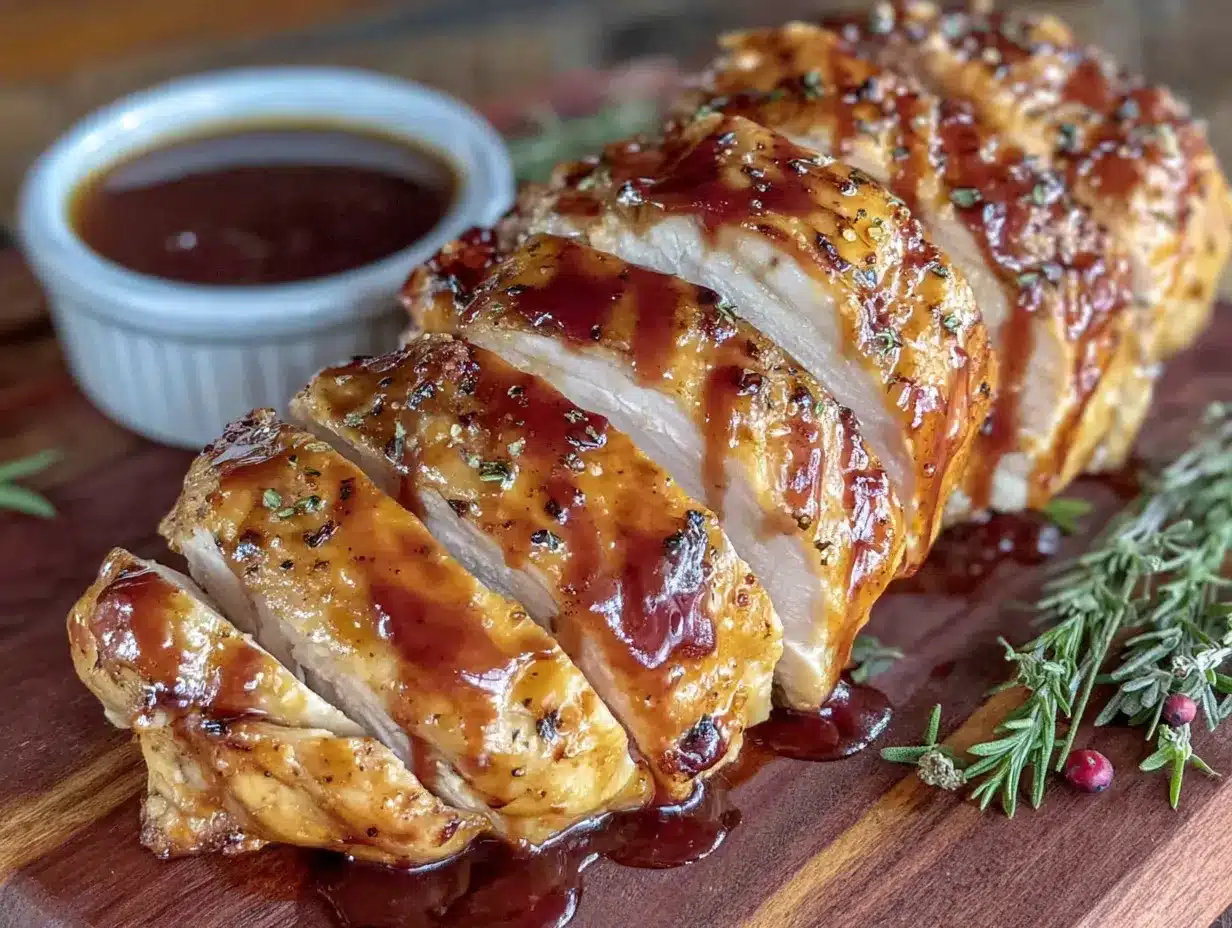
- Unbelievably Delicious: The texture is tender and juicy, with a caramelized crust that crackles slightly when you cut into it. It’s comfort food that feels fancy but is secretly easy.
What makes this recipe different from the rest? It’s the technique of basting the glaze in layers rather than dumping it all on at once. This method builds that gorgeous, sticky crust without burning the sugars. I learned this the hard way after attempt number three turned into a smoky disaster. The result is a turkey breast that’s evenly coated, deeply flavorful, and perfectly cooked every single time.
This isn’t just good—it’s the kind of recipe that makes you close your eyes after the first bite. It’s familiar yet elevated, simple yet satisfying. Perfect for a cozy date night at home or a quiet Sunday dinner when you want something that feels like a hug on a plate.
What Ingredients You Will Need
This recipe uses simple, wholesome ingredients that work together to create that signature sweet-and-tangy flavor. Most of these are pantry staples, which makes this dish perfect for last-minute cravings or planned dinners alike.
- 1 boneless, skin-on turkey breast half (about 1 to 1.5 pounds) — Look for a piece that’s evenly thick for consistent cooking. I prefer buying from a local butcher when I can, but grocery store brands work just fine. The skin is important here—it crisps up beautifully under the glaze.
- 3 tablespoons pure maple syrup — Please use the real stuff, not pancake syrup. Grade A dark amber gives the richest flavor, but any pure maple syrup works. I’ve tried this with honey in a pinch, and it’s good, but maple is truly special here.
- 2 tablespoons dijon mustard — Whole grain dijon adds a nice texture, but smooth dijon works perfectly too. Grey Poupon is my go-to brand because it has the right balance of sharpness without being overpowering.
- 1 tablespoon olive oil — Helps the seasoning stick and encourages browning. Avocado oil is a great substitute if that’s what you have on hand.
- 2 cloves garlic, minced — Fresh garlic makes a noticeable difference here. I’ve used jarred minced garlic in a pinch, and while it works, the fresh stuff adds a brighter, more aromatic flavor.
- 1 teaspoon dried thyme — Rosemary is a lovely substitute if you prefer a more woodsy note. I sometimes use fresh thyme sprigs tucked under the skin for extra flavor.
- ½ teaspoon salt — Kosher salt is best for even seasoning. If using table salt, reduce to ¼ teaspoon.
- ¼ teaspoon black pepper — Freshly ground makes a difference, but pre-ground works fine.
- 2 tablespoons unsalted butter, melted — Adds richness and helps create that gorgeous golden crust. For a dairy-free version, use an additional tablespoon of olive oil.
I recommend using a good-quality maple syrup for this recipe—it’s the star of the show, after all. I’ve been loyal to Runamok Maple for years because their syrups have such clean, complex flavors. But honestly, any pure maple syrup from your local grocery store will deliver delicious results.
For the dijon mustard, avoid the “honey mustard” blends—they often have added sugars that throw off the balance. Stick with classic dijon for that perfect tangy kick that cuts through the sweetness.
Equipment Needed
You don’t need a fancy kitchen to nail this recipe. Here’s what you’ll need:
- Small baking dish or rimmed baking sheet — A 9×9 or 8×8 dish works perfectly for a single turkey breast. I use my trusty old Pyrex dish that’s seen better days but still bakes like a dream.
- Meat thermometer — This is non-negotiable, friends. I’ve ruined too many turkey breasts by guessing. An instant-read thermometer costs around $10 and saves you from dry, overcooked meat.
- Small bowl — For whisking together the glaze. Any small mixing bowl will do.
- Pastry brush or spoon — For basting the glaze onto the turkey. A silicone brush is ideal because it doesn’t shed bristles, but a regular spoon works fine.
- Aluminum foil — For tenting the turkey while it rests. This step is crucial for juicy meat.
- Cutting board and sharp knife — For slicing the rested turkey. A serrated knife works well for clean cuts through the skin.
If you don’t have a meat thermometer, you can check doneness by cutting into the thickest part—the juices should run clear and the meat should no longer be pink. But honestly, just buy the thermometer. It’s the best investment you’ll make for your kitchen.
For budget-friendly options, dollar stores often carry basic baking dishes and mixing bowls that work just fine. Skip the expensive roasting pans—a simple glass dish does the job beautifully.
Preparation Method
Let me walk you through this step by step. I’ve included all the little details I wish someone had told me when I first started making this.
- Preheat your oven to 375°F (190°C). Position the rack in the center of the oven. Getting the temperature right is crucial—too hot and the sugars in the maple syrup will burn before the turkey cooks through.
- Pat the turkey breast dry with paper towels. This is one of those small steps that makes a big difference. Dry skin crisps up better and helps the seasoning stick. Don’t skip this, even if you’re in a hurry.
- Season the turkey generously with salt and pepper. Rub the seasoning all over the surface, including under the skin if possible. I like to do this about 10 minutes before roasting to let the salt penetrate the meat slightly.
- In a small bowl, whisk together the maple syrup, dijon mustard, olive oil, minced garlic, and dried thyme. Taste it—it should be sweet with a pleasant tangy kick. If it’s too sharp for your liking, add another teaspoon of maple syrup. If it’s too sweet, add a little more mustard.
- Place the turkey breast skin-side up in your baking dish. Drizzle about half of the glaze over the top, using your pastry brush or spoon to spread it evenly. Reserve the remaining glaze for basting later.
- Roast the turkey for 25 minutes. Set a timer—I’ve gotten distracted and let it go too long more times than I’d like to admit. After 25 minutes, remove the dish from the oven and brush another layer of glaze over the top.
- Continue roasting for another 15 to 20 minutes. Here’s where the magic happens. The glaze will start to caramelize and form that beautiful, sticky crust. Baste with the remaining glaze halfway through this second roasting period.
- Check the internal temperature. Insert your meat thermometer into the thickest part of the breast, avoiding the bone if there is one. You’re looking for 160°F (71°C). The temperature will rise to 165°F (74°C) during resting, so don’t overcook it now.
- Remove from the oven and tent loosely with aluminum foil. Let it rest for 10 minutes. This is the hardest part—your kitchen will smell incredible, and you’ll want to dig in immediately. Trust me, the resting time is what keeps the meat juicy.
- Slice against the grain and serve. Use a sharp knife to cut even slices, about ½-inch thick. Drizzle any pan juices over the top for extra flavor.
A quick note: if you notice the glaze starting to burn around the edges of the dish, add a splash of water or chicken broth to the pan. This will prevent the sugars from scorching without affecting the flavor.
One time, I forgot to reserve half the glaze and ended up with a turkey that was barely coated. Learn from my mistake—save that extra glaze for basting. It makes all the difference in building those gorgeous layers of flavor.
Cooking Tips & Techniques
After multiple rounds of trial and error, I’ve gathered some tips that will help you nail this recipe on your first try.
Let the turkey come to room temperature before roasting. I know, I know—food safety rules say not to leave meat out too long. But letting it sit on the counter for about 20 minutes before cooking helps it cook more evenly. A cold turkey breast straight from the fridge will cook unevenly, with the outside drying out before the center is done.
Don’t overcrowd the pan. If you’re using a dish that’s too large, the glaze will spread thin and burn. If it’s too small, the turkey will steam instead of roast. Aim for a dish where the turkey fits comfortably with about an inch of space around the edges.
Baste, don’t drown. I learned this the hard way after dumping all the glaze on at once and ending up with a soggy, sad turkey. Applying the glaze in thin layers allows each coat to caramelize before the next one goes on. This builds that beautiful, glossy crust that makes this recipe so special.
Watch the sugar carefully. Maple syrup has a lower burning point than you might think. If you notice the glaze getting too dark too quickly, reduce your oven temperature by 25 degrees and extend the cooking time slightly. Better safe than smoky.
One of my biggest failures happened when I tried to rush the resting time. I was hungry, impatient, and sliced into the turkey after only three minutes. The juices ran all over the cutting board, leaving the meat dry and disappointing. Don’t be like me—be patient. Those ten minutes of resting are sacred.
For consistent results, use a meat thermometer every single time. I don’t care how experienced you are—turkey is notoriously tricky to cook perfectly. A thermometer takes the guesswork out and guarantees juicy, safe meat every time.
Variations & Adaptations
This recipe is wonderfully flexible. Here are some variations I’ve tried and loved:
Herb Swap: Replace the dried thyme with fresh rosemary or sage for a different flavor profile. I tried rosemary once during the holidays, and it added such a warm, festive note that I now make that version for Thanksgiving leftovers.
Spicy Maple Version: Add ¼ teaspoon of cayenne pepper or a pinch of red pepper flakes to the glaze. The heat cuts through the sweetness beautifully and adds a surprising kick. My spice-loving friend requests this version every time she visits.
Garlic Lover’s Twist: Double the garlic and add a teaspoon of garlic powder to the seasoning rub. Roasted garlic becomes sweet and mellow, complementing the maple without overpowering it.
Dietary Adaptations: For a dairy-free version, simply omit the butter and use an extra tablespoon of olive oil. The glaze will still caramelize beautifully. For a lower-sugar option, reduce the maple syrup to 2 tablespoons and add a splash of apple cider vinegar for acidity.
Different Cooking Methods: This glaze works wonderfully on an air fryer turkey breast. Cook at 360°F (182°C) for about 25 to 30 minutes, basting halfway through. The air fryer creates an incredibly crispy skin that’s absolutely addictive.
I once tried a version with bourbon instead of maple syrup—don’t ask, it was a late-night experiment—and while it wasn’t bad, it definitely wasn’t this recipe. Stick with the maple, friends. Some classics are classic for a reason.
Serving & Storage Suggestions
This Easy Maple Dijon Roasted Turkey Breast for Two is best served warm, straight from the oven. The contrast between the sticky, caramelized crust and the tender, juicy meat is at its peak within the first 30 minutes of resting.
What to serve alongside: I love pairing this with roasted vegetables like Brussels sprouts or green beans tossed in a little olive oil and salt. The slight bitterness of the greens balances the sweetness of the glaze perfectly. Mashed potatoes or a simple wild rice pilaf also work beautifully to soak up any extra pan juices.
For a complete meal, try serving this with a crisp arugula salad dressed with lemon vinaigrette. The acidity cuts through the richness and keeps every bite feeling fresh.
Storage: Leftover turkey keeps well in an airtight container in the refrigerator for up to 4 days. The glaze will soften slightly, but the flavor remains delicious. I’ve been known to eat cold slices straight from the fridge—don’t judge me.
Reheating: For best results, reheat slices in a 300°F (150°C) oven for about 10 minutes, covered loosely with foil. This warms the meat through without drying it out. The microwave works in a pinch, but it will toughen the meat and ruin that beautiful crust.
Freezing: You can freeze the cooked turkey breast for up to 3 months. Wrap it tightly in plastic wrap, then foil, and place in a freezer bag. Thaw overnight in the refrigerator before reheating. The texture won’t be quite as perfect as fresh, but it’s still miles better than deli meat.
The flavors actually deepen after a day in the fridge, making leftovers perfect for sandwiches or salads. I once made a maple dijon turkey salad with leftover slices, some chopped apples, and a light vinaigrette, and it was honestly better than the original dinner.
Nutritional Information & Benefits
Here’s a rough estimate for one serving (about 6 ounces of cooked turkey breast with glaze):
| Nutrient | Amount |
|---|---|
| Calories | 320 |
| Protein | 38g |
| Fat | 12g |
| Carbohydrates | 18g |
| Sugar | 15g |
| Sodium | 520mg |
Turkey breast is an excellent source of lean protein, which supports muscle health and keeps you feeling full and satisfied. Maple syrup, while still a sugar, contains small amounts of antioxidants and minerals like zinc and manganese. Dijon mustard is low in calories and adds flavor without the fat of many sauces.
This recipe is naturally gluten-free and can easily be made dairy-free with a simple substitution. It’s also relatively low in saturated fat compared to other roasted meat dishes, making it a smart choice for those watching their heart health.
I personally love that this recipe lets me enjoy a comforting, satisfying meal without feeling overly indulgent. It’s the kind of dish that feels special but fits into a balanced lifestyle without any guilt.
Conclusion
This Easy Maple Dijon Roasted Turkey Breast for Two has become one of those recipes I turn to again and again, whether it’s a quiet Tuesday night or a small holiday gathering. It’s proof that you don’t need a complicated ingredient list or hours of prep to create something truly memorable. The sweet, tangy glaze, the tender meat, that gorgeous caramelized crust—it all comes together in under an hour with minimal fuss.
I love this recipe because it reminds me that good food doesn’t have to be complicated. Sometimes the simplest combinations—maple and mustard, heat and time—create the most satisfying results. It’s forgiving enough for beginners but impressive enough for company, and that’s a rare combination worth holding onto.
I’d love to hear how this recipe turns out for you. Did you try any variations? Did your kitchen smell as amazing as mine always does? Drop a comment below and share your experience. And if you loved this as much as I think you will, please share it with someone who needs a little comfort food in their life. Happy cooking, friends—you’ve got this.
Frequently Asked Questions
Can I use a bone-in turkey breast for this recipe?
Absolutely! Bone-in turkey breast will take a bit longer to cook—about 40 to 50 minutes total. Use your meat thermometer to check for doneness at 160°F (71°C) in the thickest part, avoiding the bone. The bone adds extra flavor and helps keep the meat moist.
What if I don’t have maple syrup?
Honey is the best substitute in a pinch. Use the same amount and expect a slightly different flavor—honey is sweeter and less complex than maple. Brown sugar mixed with a tablespoon of water also works, though the texture won’t be quite as glossy.
Can I make the glaze ahead of time?
Yes! You can whisk together the glaze up to 3 days in advance and store it in an airtight container in the refrigerator. Let it come to room temperature before using, as cold glaze won’t spread as easily over the turkey.
How do I know when the turkey is fully cooked without a thermometer?
If you don’t have a thermometer, cut into the thickest part of the breast. The juices should run clear with no pinkness, and the meat should be opaque throughout. The internal temperature should feel hot to the touch. But honestly, a thermometer is a much safer bet.
Can I double this recipe for a larger turkey breast?
Definitely! For a 2 to 3-pound turkey breast, double all the glaze ingredients and increase the roasting time to about 50 to 60 minutes. Use the same temperature and basting technique, and always rely on your meat thermometer for doneness rather than time alone.
Pin This Recipe!
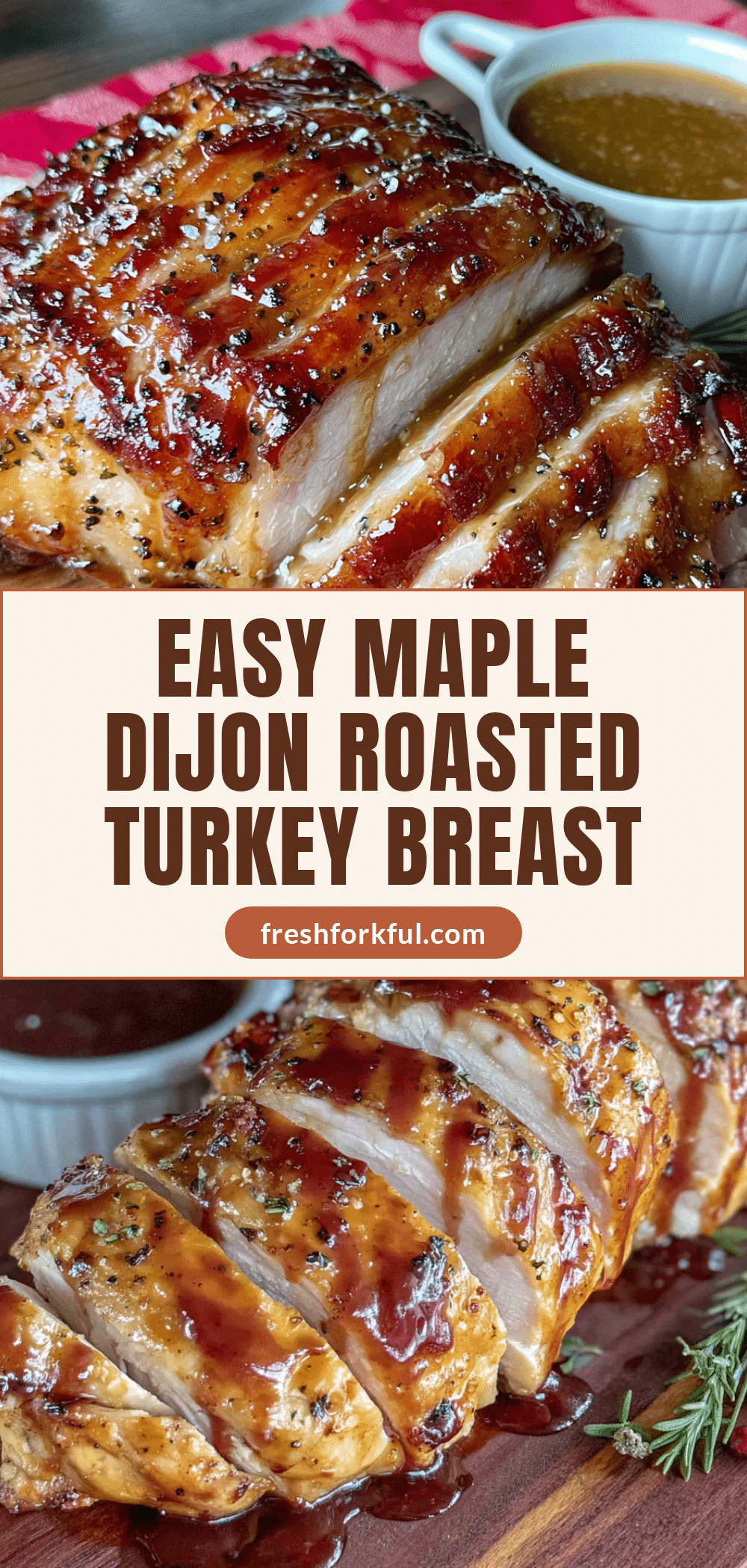
Easy Maple Dijon Roasted Turkey Breast for Two
A tender, juicy turkey breast with a sticky-sweet maple dijon glaze that caramelizes into a gorgeous crust. Perfect for a cozy dinner for two, this recipe comes together in under an hour with simple ingredients.
- Prep Time: 10 minutes
- Cook Time: 40 minutes
- Total Time: 50 minutes
- Yield: 2 servings 1x
- Category: Main Course
- Cuisine: American
Ingredients
- 1 boneless, skin-on turkey breast half (about 1 to 1.5 pounds)
- 3 tablespoons pure maple syrup
- 2 tablespoons dijon mustard
- 1 tablespoon olive oil
- 2 cloves garlic, minced
- 1 teaspoon dried thyme
- ½ teaspoon salt
- ¼ teaspoon black pepper
- 2 tablespoons unsalted butter, melted
Instructions
- Preheat your oven to 375°F (190°C). Position the rack in the center of the oven.
- Pat the turkey breast dry with paper towels.
- Season the turkey generously with salt and pepper, rubbing all over the surface, including under the skin if possible.
- In a small bowl, whisk together the maple syrup, dijon mustard, olive oil, minced garlic, and dried thyme.
- Place the turkey breast skin-side up in a small baking dish. Drizzle about half of the glaze over the top, using a pastry brush or spoon to spread it evenly. Reserve the remaining glaze.
- Roast the turkey for 25 minutes. Remove from the oven and brush another layer of glaze over the top.
- Continue roasting for another 15 to 20 minutes, basting with the remaining glaze halfway through.
- Check the internal temperature with a meat thermometer; it should read 160°F (71°C) in the thickest part.
- Remove from the oven and tent loosely with aluminum foil. Let rest for 10 minutes (temperature will rise to 165°F/74°C).
- Slice against the grain and serve, drizzling any pan juices over the top.
Notes
Let the turkey come to room temperature for about 20 minutes before roasting for even cooking. If the glaze starts to burn around the edges, add a splash of water or chicken broth to the pan. Resting for the full 10 minutes is crucial for juicy meat.
Nutrition
- Serving Size: 6 ounces cooked turk
- Calories: 320
- Sugar: 15
- Sodium: 520
- Fat: 12
- Saturated Fat: 4
- Carbohydrates: 18
- Protein: 38
Keywords: maple dijon turkey breast, roasted turkey breast for two, easy turkey recipe, maple mustard turkey, small batch turkey