Love this? Save it for later!
Share the inspiration with your friends
“The first time I tasted this Healing GAPS Diet Summer Introduction Bone Broth Soup, I wasn’t expecting much. It was a scorching July afternoon, and honestly, the last thing on my mind was a hot soup. But there I was, visiting a friend’s community garden event, and amidst the chatter and sun-soaked greenery, someone handed me a steaming cup of this broth. I remember the way the warmth spread through my hands, contrasting with the summer heat, and how that first sip surprised me with its delicate, soothing flavor. It wasn’t just comforting—it felt like a gentle hug for my gut.”
That day, I learned how bone broth could be more than just a winter staple. It became clear that healing and nourishment don’t always have to come from heavy or complicated dishes. This summer introduction bone broth soup is exactly that—simple, gentle, and packed with those gut-healing nutrients that the GAPS diet champions. Maybe you’ve been there too, craving something wholesome but light during the warmer months.
Let me tell you, making this soup isn’t about fuss or flair. It’s about a humble blend of ingredients that work quietly but powerfully, supporting digestion and overall wellness. I’ll admit, the first time I tried to make it at home, I forgot to add the herbs until halfway through simmering—classic me—but that little slip didn’t ruin the flavor at all. This recipe stuck with me because it’s easy, adaptable, and honestly, just feels right when you need a little self-care from the inside out.
Why You’ll Love This Recipe
- Quick & Easy: This Healing GAPS Diet bone broth soup comes together in under an hour, perfect for those busy summer days when you want nourishment without the wait.
- Simple Ingredients: No need for hard-to-find items—mostly pantry staples and fresh herbs you can grab from your garden or local farmer’s market.
- Perfect for Gut Health: Designed specifically for the GAPS diet, this soup supports digestion and soothes the gut lining, making it ideal for anyone beginning their healing journey.
- Great for Summer: Unlike heavy winter broths, this version is light and refreshing enough to enjoy even when the temperature rises.
- Unbelievably Delicious: The layered flavors from slow-simmered bones and fresh aromatics deliver a rich, comforting taste without feeling heavy.
What makes this recipe stand out is the way it balances tradition with summer-friendly simplicity. Instead of the usual dense, gelatinous broths, this version introduces gentle herbs and a touch of brightness that feels perfect when you want to nourish but not weigh yourself down. I usually blend in a little apple cider vinegar early in the simmering process—that trick really helps pull minerals from the bones for maximum nutrient power. Honestly, this soup is the kind of recipe that’s quietly transformative; it’s comfort food with a purpose, and that’s why it’s become a staple in my kitchen.
What Ingredients You Will Need
This Healing GAPS Diet Summer Introduction Bone Broth Soup relies on wholesome, simple ingredients that deliver deep flavor and gut-soothing benefits without any fuss. Most of these are pantry or fridge staples, and you can easily find quality bones at your local butcher or farmers market.
- Grass-fed beef or organic chicken bones (about 2-3 pounds / 900-1350g) – I prefer bones with some marrow and connective tissue for that rich collagen.
- Filtered water (enough to cover bones, about 10 cups / 2.4 liters) – clean water makes a difference.
- Apple cider vinegar (2 tablespoons) – helps extract minerals from the bones.
- Carrots (2 medium, chopped) – adds natural sweetness.
- Celery stalks (2, chopped) – classic aromatic base.
- Yellow onion (1 large, quartered) – for depth of flavor.
- Garlic cloves (3, smashed) – gut-friendly and adds warmth.
- Fresh parsley (a small bunch) – stirred in near the end for freshness.
- Fresh thyme (3-4 sprigs) – brings gentle herbal notes.
- Sea salt (to taste) – I use Celtic sea salt for minerals.
- Black peppercorns (1 teaspoon whole) – subtle spice.
If you’re looking for variation, swapping in organic chicken bones works well too and yields a lighter broth. For a vegetarian adaptation, you might try a vegetable broth base, though it won’t have the same collagen benefits. When sourcing bones, I recommend checking out local farms or trusted suppliers who prioritize pasture-raised animals to get the most nutrient-dense broth possible.
Equipment Needed
- Large stockpot or slow cooker: I find a 6-quart (about 5.7 liters) pot perfect for this recipe. A slow cooker is an easy alternative if you want to set and forget.
- Fine mesh strainer: Essential for removing all the bits and getting a clean, clear broth.
- Large ladle: For easy serving and transferring broth.
- Cutting board and sharp knife: For prepping vegetables and herbs.
- Glass or stainless steel storage containers: For storing leftover broth safely in the fridge or freezer.
If you’re on a budget, a basic heavy-bottomed pot works just fine. Personally, I’ve noticed that a slow cooker yields a richer broth thanks to the low and slow method, but stovetop works well when you’re short on time. Just be sure to keep an eye on water levels to avoid burning. Also, I recommend keeping a dedicated ladle and strainer just for broth-making to avoid cross-contamination if you’re cooking for sensitive diets.
Preparation Method
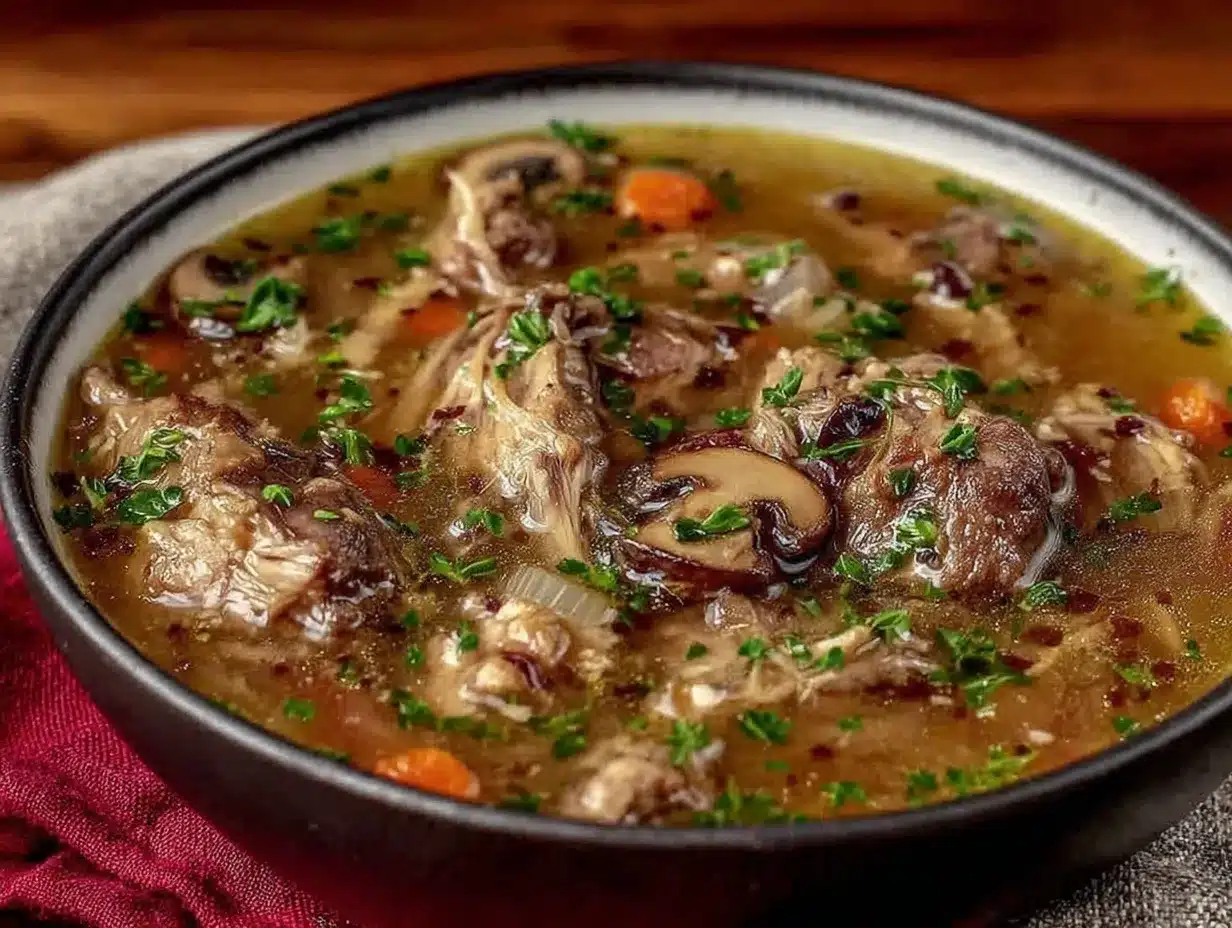
- Prep the bones: Preheat your oven to 400°F (200°C). Spread the bones on a baking sheet and roast them for about 30 minutes until they’re nicely browned. This step adds depth and richness to the broth. (Tip: You can skip roasting for a lighter broth, but it won’t have the same complexity.)
- Transfer bones to pot: Place the roasted bones into your stockpot or slow cooker. Add filtered water to cover the bones completely—about 10 cups (2.4 liters).
- Add apple cider vinegar: Pour in 2 tablespoons of apple cider vinegar. Let the mixture sit for 20-30 minutes before heating. This resting period helps break down the bones and release minerals.
- Add veggies and aromatics: Toss in chopped carrots, celery, quartered onion, smashed garlic cloves, peppercorns, and a pinch of sea salt.
- Simmer gently: Bring the pot to a gentle simmer over medium heat, then reduce to low. Maintain a low simmer—avoid boiling—to keep the broth clear and flavorful. Simmer for 6-12 hours. (Longer is better but you can do as little as 6 hours if short on time.)
- Skim the surface: Occasionally skim off any foam or impurities that rise to the top to keep the broth clean. This step might feel tedious but trust me, it makes a noticeable difference.
- Add herbs near the end: In the last 30 minutes, add fresh parsley and thyme sprigs. This keeps their bright flavor intact.
- Strain and cool: Remove bones and vegetables with tongs or a slotted spoon. Pour broth through a fine mesh strainer into a large bowl or pot. Let cool slightly before storing.
- Store properly: Transfer broth to glass containers. Refrigerate for up to 5 days or freeze in portions for up to 3 months.
One time, I accidentally let the broth boil hard for a bit—it turned cloudy and a bit bitter. Lesson learned: patience is key. Also, keep a thermometer handy if you want to be precise; the ideal simmer is around 190-200°F (88-93°C). Oh, and don’t forget to taste and adjust salt before serving—sometimes it needs just a pinch more to really sing.
Cooking Tips & Techniques
When making Healing GAPS Diet bone broth soup, timing and temperature control are your best friends. Slow and low simmering helps preserve delicate nutrients and keeps the broth clear. I learned this the hard way after rushing a batch that ended up cloudy and dull.
Another tip: don’t rush the resting time after adding apple cider vinegar. This step really helps dissolve the collagen and minerals from the bones, boosting the broth’s gut-healing powers.
Skimming the surface may seem like a chore, but it removes impurities that can make the broth bitter or murky. I often do this with a small fine-mesh sieve or even a large spoon.
For consistency, I recommend using the same type of bones each time—mixing beef with chicken can change cooking times and flavors unpredictably.
Finally, multitasking is key. While the broth simmers, prep your veggies for other meals or tidy the kitchen to make the most of your time. Just remember to check water levels every couple of hours and top up with hot water if it drops below the bones.
Variations & Adaptations
- Vegetarian version: Use a rich vegetable broth base with mushrooms, seaweed (like kombu), and nutritional yeast to mimic umami flavors, though it won’t have the same collagen content.
- Flavor twist: Add a slice of fresh ginger and a dash of turmeric for an anti-inflammatory boost that’s still gentle on the gut.
- Protein addition: Stir in shredded cooked chicken or beef once the broth is ready for a heartier meal option.
- Slow cooker vs stovetop: Slow cooker yields richer broth but stovetop allows quicker adjustments; pick what fits your schedule.
- Allergen substitutions: This recipe is naturally gluten-free and dairy-free, but if you’re sensitive to nightshades, omit celery and use fennel instead.
I personally love adding a handful of chopped kale or spinach at the very end during hot summer days, which adds a fresh, green lift without overpowering the broth’s subtle flavors.
Serving & Storage Suggestions
This Healing GAPS Diet bone broth soup is best served warm, either as a light starter or a soothing main on cooler summer evenings. Pour it into a rustic bowl and garnish with a sprig of fresh parsley for a simple, inviting presentation.
It pairs beautifully with mild, probiotic-rich sides like homemade fermented pickles or a soft boiled egg for extra protein. If you want something to nibble alongside, a slice of gluten-free bread or a small salad with olive oil dressing works well.
Stored in the refrigerator, the broth lasts up to 5 days; freeze leftovers in 1-2 cup portions using airtight containers or freezer-safe bags. When reheating, warm gently over low heat to preserve nutrients and avoid a cooked-off flavor. You might notice the broth gels when chilled—that’s the collagen doing its magic!
Flavors often deepen after a day or two in the fridge, so making it ahead can actually improve taste. Just give it a quick stir or warm before enjoying.
Nutritional Information & Benefits
A typical serving of this bone broth soup (about 1 cup or 240 ml) contains roughly 50-70 calories, low carbs, and is naturally rich in protein, collagen, and minerals like calcium, magnesium, and phosphorus. The slow simmering process releases amino acids such as glycine and proline, which support gut lining repair and reduce inflammation.
This recipe fits well into gluten-free, low-carb, and paleo diets. It’s free from common allergens like dairy and soy, making it a gentle choice for sensitive digestion.
Personally, I find that including bone broth like this in my routine helps calm my digestive system and supports overall skin and joint health. It’s like a little daily boost that’s both nurturing and delicious.
Conclusion
This Healing GAPS Diet Summer Introduction Bone Broth Soup is a comforting, nourishing recipe that doesn’t demand much fuss but rewards you with gentle, healing goodness. Whether you’re new to bone broth or looking for a lighter, summer-friendly version, this recipe offers a perfect balance of flavor and nutrition.
Feel free to tweak the herbs and vegetables to suit your taste or what’s fresh in your kitchen. I love how adaptable it is—honestly, it’s been a kitchen staple for easing digestion and feeling grounded.
If you try this recipe, I’d love to hear how it fits into your healing journey or any tweaks you made. Drop a comment below or share your experience, because recipes taste even better when they’re part of a shared story. Here’s to your health and a happy, cozy kitchen!
Frequently Asked Questions
What is the GAPS diet, and why is bone broth important?
The GAPS diet focuses on healing gut health through nutrient-dense foods. Bone broth is a cornerstone because it provides collagen and amino acids that help repair the gut lining.
Can I use frozen bones for this bone broth soup?
Yes! Frozen bones work just as well as fresh. Just thaw them slightly for easier roasting and cooking.
How long should I simmer bone broth for the best results?
Simmer for at least 6 hours, ideally 8-12 hours, to extract maximum nutrients and flavor. The longer, the better, but 6 hours is a good minimum if short on time.
Is it necessary to roast the bones before simmering?
Roasting adds richer flavor and color, but you can skip it for a lighter broth. It depends on your taste preference.
Can I drink this bone broth on its own or only as soup?
Both! Bone broth is delicious sipped on its own for quick nourishment or used as a base for soups, stews, and cooking grains.
Pin This Recipe!
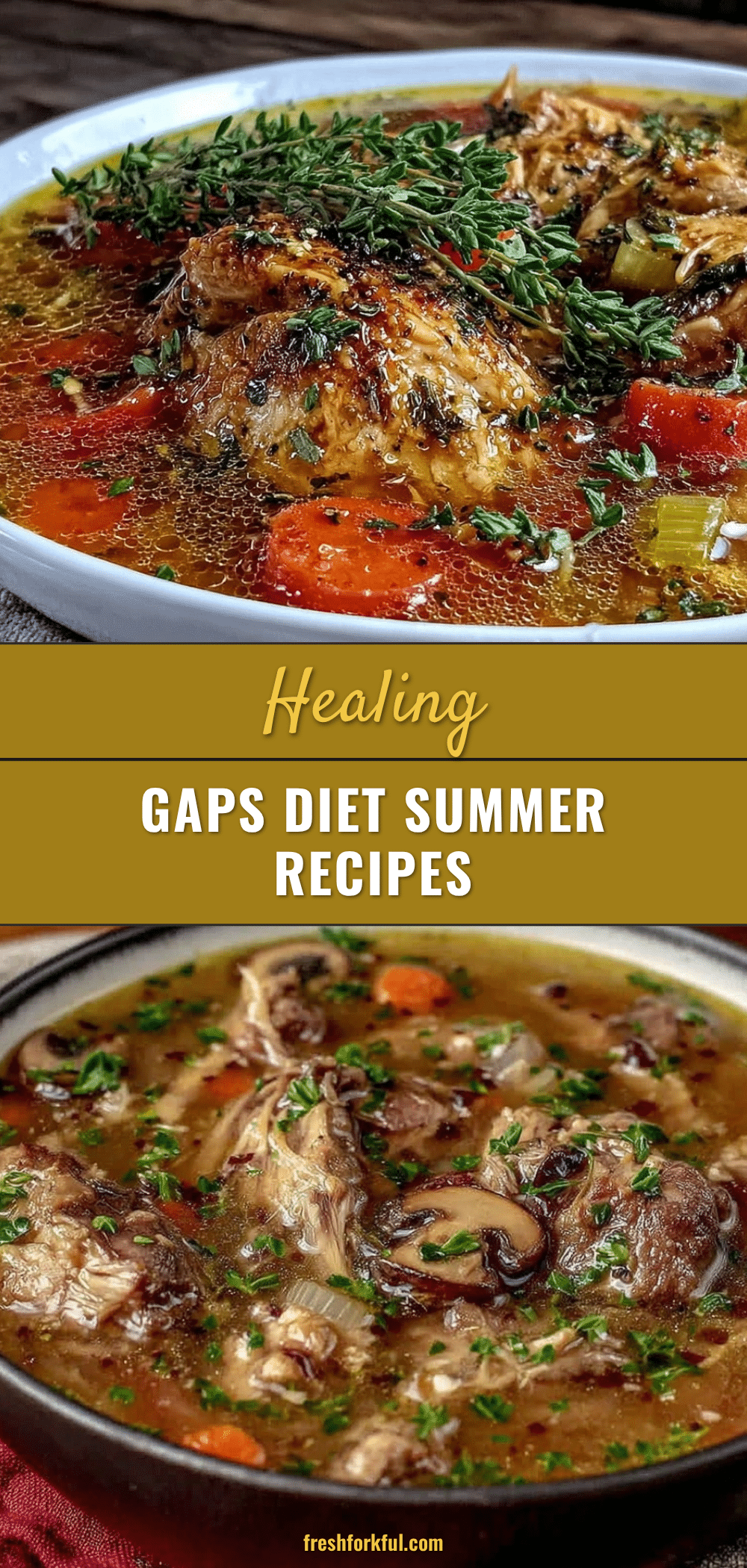
Healing GAPS Diet Bone Broth Soup Easy Summer Recipe for Gut Health

A light and nourishing bone broth soup designed for the GAPS diet, perfect for summer with simple ingredients that support gut health and digestion.
- Prep Time: 15 minutes
- Cook Time: 6 to 12 hours
- Total Time: 6 hours 15 minutes to 12 hours 15 minutes
- Yield: 8 servings 1x
- Category: Soup
- Cuisine: American
Ingredients
- 2–3 pounds grass-fed beef or organic chicken bones (900-1350g)
- 10 cups filtered water (2.4 liters)
- 2 tablespoons apple cider vinegar
- 2 medium carrots, chopped
- 2 celery stalks, chopped
- 1 large yellow onion, quartered
- 3 garlic cloves, smashed
- A small bunch fresh parsley
- 3–4 sprigs fresh thyme
- Sea salt to taste
- 1 teaspoon whole black peppercorns
Instructions
- Preheat oven to 400°F (200°C). Spread bones on a baking sheet and roast for about 30 minutes until browned. (Optional for richer flavor.)
- Transfer roasted bones to a large stockpot or slow cooker. Add filtered water to cover bones completely (about 10 cups).
- Add 2 tablespoons apple cider vinegar and let sit for 20-30 minutes before heating.
- Add chopped carrots, celery, quartered onion, smashed garlic cloves, peppercorns, and a pinch of sea salt.
- Bring to a gentle simmer over medium heat, then reduce to low. Maintain a low simmer and cook for 6-12 hours, skimming foam and impurities occasionally.
- Add fresh parsley and thyme sprigs in the last 30 minutes of simmering.
- Remove bones and vegetables with tongs or slotted spoon. Strain broth through a fine mesh strainer into a large bowl or pot.
- Let broth cool slightly, then transfer to glass containers. Refrigerate up to 5 days or freeze up to 3 months.
Notes
Do not boil the broth hard to avoid cloudiness and bitterness; maintain a gentle simmer around 190-200°F (88-93°C). Skim impurities regularly. Resting the bones in vinegar before heating helps extract minerals. Slow cooker yields richer broth; stovetop is faster. Adjust salt to taste before serving. Broth gels when chilled due to collagen.
Nutrition
- Serving Size: 1 cup (240 ml)
- Calories: 60
- Sugar: 1
- Sodium: 150
- Fat: 2
- Saturated Fat: 0.5
- Carbohydrates: 2
- Fiber: 0.5
- Protein: 8
Keywords: bone broth, GAPS diet, gut health, healing soup, summer recipe, collagen broth, gut healing, easy bone broth