Love this? Save it for later!
Share the inspiration with your friends
My friend Jenna asked why I couldn’t just throw everything into one bowl and eat it cold straight from the fridge. I started to explain why that wouldn’t work—something about texture breakdown, the importance of serving temperature, the whole professional chef spiel I’d perfected over the years. Then I stopped. Honestly, I had no good reason. I was just being stubborn.
It was a Tuesday, and I was standing in my tiny kitchen with a cracked colander I kept meaning to replace, staring at a can of chickpeas and a cucumber that had seen better days. Jenna had come over to help me meal prep for the week—something I’d been meaning to get better at but kept putting off. She wasn’t a cook, not really. She ate cereal for dinner more often than she’d admit. But she had this way of cutting through all my fussy food rules with simple questions that made me realize I’d been overcomplicating things for years.
“You know that feeling when you open the fridge and nothing sounds good?” she said, pulling out a lemon and a block of feta. “That’s my whole life. I need something I can grab without thinking.”
So we did it her way. We chopped everything up, tossed it in a big bowl with some olive oil and lemon juice, and divided it into containers. I’ll admit, I was skeptical. I kept waiting for the salad to get soggy or the flavors to fall flat. But by Wednesday afternoon, when I pulled that container out of the work fridge and took my first bite, I had to text her a photo with a string of exclamation points. The chickpeas had soaked up the dressing overnight. The cucumbers were still crisp. The feta had softened into these little creamy pockets that made every forkful different.
That’s how these Fresh Mediterranean Chickpea Salad Meal Prep Bowls became a permanent fixture in my weekly rotation. They’re the kind of recipe that makes you wonder why you ever made things harder than they needed to be.
Why You’ll Love These Fresh Mediterranean Chickpea Salad Meal Prep Bowls
I’ve made this recipe more times than I can count, and I keep coming back because it solves problems I didn’t even know I had. It’s not just another salad recipe—it’s the one I actually want to eat five days in a row.
- Ready in 20 Minutes: No cooking required. If you can chop a cucumber and open a can, you can make this happen on your laziest Sunday afternoon.
- Pantry-Friendly Ingredients: Canned chickpeas, jarred olives, a block of feta—these are things I almost always have on hand. No special trips to three different stores.
- Perfect for Busy Weeks: Whether you’re rushing between meetings or trying to feed a family on a Tuesday night, these bowls hold up beautifully in the fridge for up to five days.
- Crowd-Pleasing Flavors: I’ve served these at potlucks and watched people go back for thirds. Kids, adults, picky eaters—everyone seems to find something they love.
- Actually Satisfying: The chickpeas and feta provide enough protein and healthy fat to keep you full for hours. No sad desk lunch vibes here.
What makes this recipe different from the dozens of other chickpea salads out there? It’s the technique of marinating the chickpeas in the dressing before adding the vegetables. That extra ten minutes makes the chickpeas absorb all that lemony, garlicky goodness, so every bite tastes intentional rather than thrown together. Plus, I’ve tested the ratios endlessly to make sure the bowls don’t get watery or bland by day four. Trust me, I’ve had my share of sad, soggy meal prep failures to get here.
This is the kind of recipe that makes you close your eyes after the first bite. It’s comfort food reimagined—fresher, brighter, and somehow more satisfying than anything you’d order from a takeout menu. And honestly? It’s the only meal prep recipe I’ve ever made that my husband actually looks forward to eating all week.
What Ingredients You Will Need
This recipe uses simple, wholesome ingredients that come together to create something genuinely special. Most of these are pantry staples or easy-to-find items at any grocery store.
- Chickpeas: Two 15-ounce cans, drained and rinsed. I prefer Goya or Bush’s Best for consistently tender beans. Rinsing removes the excess sodium and that metallic canned taste.
- English Cucumber: One large cucumber, diced. I like English cucumbers because they have fewer seeds and a thinner skin, so you don’t need to peel them. If using regular cucumbers, peel and seed them first.
- Cherry Tomatoes: One pint, halved. Look for firm, bright red tomatoes. In summer, I use whatever heirloom varieties I can find at the farmers’ market.
- Red Onion: One small red onion, finely diced. Soaking the diced onion in cold water for five minutes removes some of the sharp bite if you’re sensitive to raw onion.
- Kalamata Olives: Half a cup, pitted and halved. I buy the ones packed in brine, not oil, for the best flavor. Peloponnese is my go-to brand.
- Feta Cheese: One block (about 8 ounces), crumbled. Please buy a block and crumble it yourself—it’s creamier and more flavorful than the pre-crumbled stuff, which often contains anti-caking agents.
- Fresh Parsley: Half a cup, chopped. Flat-leaf parsley works best here. I’ve made it with curly parsley in a pinch, and it’s fine, but not quite as bright.
- Extra Virgin Olive Oil: A quarter cup. Use a good-quality oil here—it’s the backbone of the dressing. I like California Olive Ranch for a reliable everyday option.
- Fresh Lemon Juice: From two large lemons (about 3 tablespoons). Don’t use bottled juice—it makes a noticeable difference in freshness.
- Red Wine Vinegar: One tablespoon. Adds a subtle tang that balances the richness of the olive oil and feta.
- Dried Oregano: One teaspoon. Mediterranean oregano is ideal, but any dried oregano works. Rub it between your palms before adding to release the oils.
- Garlic: One small clove, minced. I use a microplane for this so the garlic melts into the dressing rather than leaving sharp chunks.
- Salt and Black Pepper: To taste. I use flaky sea salt for finishing and kosher salt for the dressing.
Substitution Guidance: For a dairy-free version, skip the feta and add half an avocado per serving just before eating. If you’re avoiding nightshades, swap the cherry tomatoes for roasted red peppers from a jar. And if you can’t find Kalamata olives, Castelvetrano or even canned black olives work in a pinch—though the flavor will be milder.
Equipment Needed
You don’t need much for this recipe, which is part of the appeal. Here’s what I use:
- Large Mixing Bowl: Any medium-to-large bowl works. I use a ceramic one because it doesn’t react with the acidic dressing.
- Sharp Knife: A good chef’s knife makes dicing the cucumber and tomatoes infinitely easier. My Victorinox has lasted me years and cost under $40.
- Cutting Board: Wood or plastic—whatever you have. Just make sure it’s stable.
- Measuring Cups and Spoons: For the dressing. I eyeball it now, but measuring helps when you’re first starting out.
- Citrus Juicer or Reamer: Not essential, but it gets more juice out of your lemons with less effort. I have a cheap plastic one that’s served me well for a decade.
- Microplane or Fine Grater: For the garlic. A garlic press works too, but I find the microplane distributes the flavor more evenly.
- Meal Prep Containers: Four to six airtight containers. Glass is ideal because it doesn’t stain or absorb odors. I use Pyrex snapware sets.
If you don’t have a microplane, just mince the garlic as finely as you can. And if you’re using plastic containers, give them a good wash with baking soda afterward to prevent any lingering garlic smell.
Preparation Method
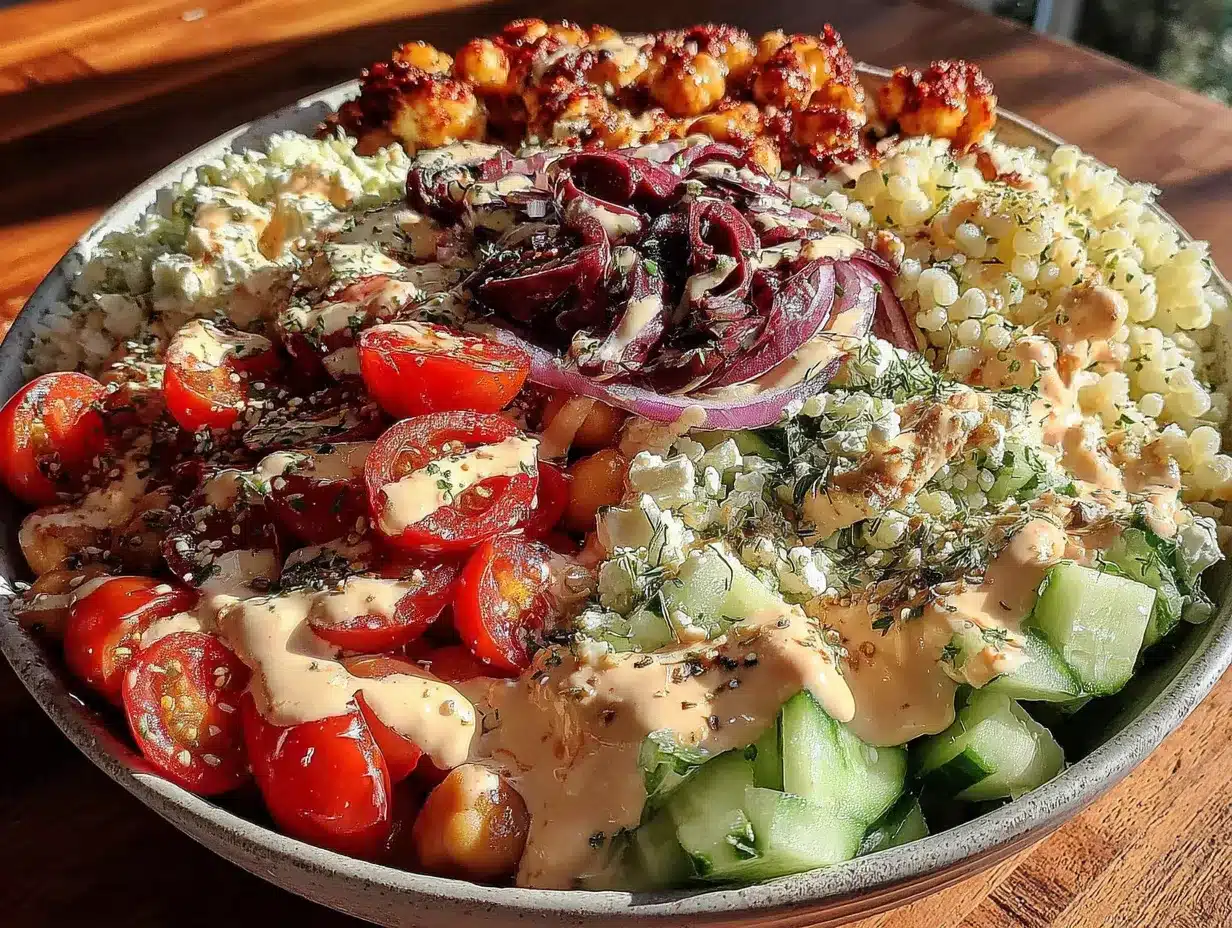
This comes together faster than you’d think. Here’s how I do it every single time.
- Make the dressing first. In a small bowl or jar, whisk together the olive oil, lemon juice, red wine vinegar, minced garlic, dried oregano, and a pinch of salt and pepper. I like to do this before I start chopping so the flavors have time to mingle. Set it aside.
- Prep the chickpeas. Drain and rinse both cans of chickpeas thoroughly under cold water. Shake off as much water as you can, then spread them on a clean kitchen towel and pat them dry. This step matters—wet chickpeas dilute the dressing and make everything watery. Transfer the dried chickpeas to your large mixing bowl.
- Marinate the chickpeas. Pour about half the dressing over the chickpeas and toss to coat. Let them sit while you chop the vegetables—at least 10 minutes. This is the secret to bowls that taste good on day five. The chickpeas absorb the dressing and stay flavorful instead of turning bland and sad.
- Chop the vegetables. Dice the cucumber into half-inch pieces. Halve the cherry tomatoes. Finely dice the red onion. If you’re sensitive to raw onion, soak the diced pieces in a small bowl of cold water for five minutes, then drain well.
- Add the vegetables to the bowl. Toss the cucumber, tomatoes, onion, and Kalamata olives into the bowl with the marinated chickpeas. Pour the remaining dressing over everything and stir gently until combined. You want everything evenly coated without crushing the tomatoes.
- Add the feta and parsley. Crumble the feta over the top and add the chopped parsley. Fold everything together gently—I use a rubber spatula to avoid breaking up the feta too much. Taste and adjust salt and pepper. Remember that feta is salty, so go easy on the salt at first.
- Portion into containers. Divide the salad evenly among four to six meal prep containers. Press it down gently so it’s compact but not smashed. Seal the lids tightly and refrigerate for at least an hour before eating—this lets the flavors meld together beautifully.
Pro tip: If you’re packing these for the week, leave the feta and parsley on top of each container rather than mixing them in. They stay fresher that way, and you can stir everything together when you’re ready to eat.
Cooking Tips & Techniques
I’ve made this recipe more times than I can count, and I’ve learned a few things the hard way. Here’s what I wish someone had told me.
Dry your chickpeas thoroughly. This is non-negotiable. I learned this lesson after making a batch that turned into a watery mess by Wednesday. Patting them dry with a kitchen towel makes a huge difference in texture and flavor concentration.
Let the chickpeas marinate. I know it’s tempting to skip this step when you’re in a hurry, but that 10-minute rest transforms the entire dish. The chickpeas go from bland and beany to bright and flavorful. It’s like the difference between a quick handshake and a real conversation.
Don’t overdress. You can always add more dressing, but you can’t take it out. Start with less than you think you need, toss everything, and add more if the salad looks dry. The vegetables release water over time, so what looks perfectly dressed on Sunday might be swimming by Wednesday.
Use a light hand with the feta. I once added an entire block of feta because I thought more cheese equals more better. It was too salty and overwhelmed everything else. A generous crumble is plenty.
Chop uniformly. This is one of those small things that makes a big difference. If your cucumber pieces are twice the size of your tomato halves, you’ll get uneven bites. Aim for half-inch pieces across the board.
Store upside down. Here’s a weird trick I picked up from a restaurant cook: store your meal prep containers upside down in the fridge. The dressing redistributes as it settles, keeping the top ingredients from drying out. It sounds silly, but it works.
Variations & Adaptations
This recipe is endlessly flexible. Here are a few ways I’ve adapted it over the years.
Add protein: Grilled chicken, shrimp, or salmon all work beautifully on top. I’ve also added a can of drained tuna in olive oil for an even faster protein boost. Just flake it in gently so it doesn’t break apart too much.
Make it grain-free: Skip the chickpeas and double the cucumber and tomatoes. Or add diced bell peppers and artichoke hearts for more bulk. It’s still satisfying, just lighter.
Go vegan: Omit the feta and add half an avocado per serving right before eating. I’ve also used crumbled tofu marinated in lemon juice and nutritional yeast for a similar salty, tangy vibe. It’s not the same, but it’s good in its own way.
Switch up the herbs: Fresh mint, dill, or basil all work beautifully here. I made a version with mint and lemon that felt like summer in a bowl. Just keep the total herb amount the same—about half a cup.
Add grains: Cooked quinoa, farro, or couscous stretch this into a heartier meal. Add about a cup of cooked grains and adjust the dressing slightly—grains soak up more liquid, so you might need an extra tablespoon of olive oil and lemon juice.
Spice it up: A pinch of red pepper flakes or a drizzle of harissa paste adds warmth without overpowering the Mediterranean flavors. I’ve also added a teaspoon of za’atar to the dressing for a more complex herbal note.
Serving & Storage Suggestions
These bowls are best served cold or at room temperature. I like to pull my container out of the fridge about 10 minutes before eating to take the chill off. The flavors open up beautifully at room temperature.
For serving, I’ll sometimes add a handful of arugula or mixed greens to the bowl for extra freshness. A dollop of hummus on the side is never a bad idea either. And if I’m feeling fancy, I’ll sprinkle some toasted pine nuts or sesame seeds on top for crunch.
Storage: These bowls keep beautifully in the refrigerator for up to five days. Store them in airtight glass containers—plastic can absorb the garlic and onion smell. I don’t recommend freezing this salad. The vegetables get watery and the feta turns grainy.
Reheating: Honestly, I don’t recommend reheating these. They’re meant to be eaten cold. But if you absolutely must, microwave individual portions for 20-30 seconds just to take the edge off. Don’t go longer than that, or the cucumbers will get limp and sad.
The flavors actually improve after a day or two in the fridge. The chickpeas continue to absorb the dressing, and the onions mellow out. By day three, this salad is at its peak. I’ve eaten it on day five and still enjoyed it, though the cucumbers start to lose their crunch around then.
Nutritional Information & Benefits
These bowls are packed with good-for-you ingredients that actually taste amazing. Here’s a rough breakdown per serving (based on four servings):
Calories: Approximately 380-420
Protein: 14-16 grams
Fat: 22-25 grams (mostly from olive oil and feta)
Carbohydrates: 32-36 grams
Fiber: 10-12 grams
Sodium: 680-720 mg (varies based on feta and olives)
Chickpeas are a fantastic source of plant-based protein and fiber, which helps keep you full and supports healthy digestion. The olive oil provides heart-healthy monounsaturated fats, while the vegetables deliver a solid dose of vitamins A, C, and K. Feta adds calcium and protein, though it’s higher in sodium, so keep that in mind if you’re watching your salt intake.
This recipe is naturally vegetarian, gluten-free, and can easily be made vegan. It’s also relatively low in added sugars and contains no processed ingredients. I love that I can eat something that tastes indulgent while knowing it’s actually doing my body some good.
Conclusion
These Fresh Mediterranean Chickpea Salad Meal Prep Bowls have genuinely changed the way I think about weekly cooking. They’re proof that meal prep doesn’t have to be boring or complicated. Sometimes the best recipes are the ones that come together in twenty minutes with ingredients you already have.
I love this recipe because it reminds me that Jenna was right all along. We don’t always need more steps or fancier techniques. Sometimes we just need someone to ask a simple question and a bowl of cold chickpeas to show us the way.
I’d love to hear how these turn out for you. Leave a comment below with your favorite variation or any tweaks you made—I’m always looking for new ideas. And if you share these on social media, tag me so I can see your beautiful bowls. Happy prepping, friends!
Frequently Asked Questions
Can I use canned chickpeas or do I need to cook dried ones?
Canned chickpeas work perfectly here. Just drain, rinse, and pat them dry. Cooking dried chickpeas from scratch is fine too, but it adds time and isn’t necessary for this recipe. I use canned 99% of the time.
How long do these bowls last in the fridge?
They stay fresh for up to five days when stored in airtight containers. The cucumbers start to lose some crunch around day four, but the flavors actually improve over time. I wouldn’t push it past day five.
Can I add chicken or other protein?
Absolutely. Grilled chicken, shrimp, salmon, or even canned tuna all work well. Just add the protein when you’re ready to eat, or store it separately if you’re prepping for the week. This keeps everything at its best texture.
What if I don’t like feta cheese?
You can skip it entirely or swap it for another cheese. Goat cheese adds a tangy creaminess, and ricotta salata offers a similar salty, crumbly texture. For a dairy-free option, try crumbled firm tofu marinated in lemon juice and salt.
Can I freeze these bowls?
I don’t recommend freezing this salad. The vegetables release water when thawed, and the feta turns grainy and unappealing. These are strictly a refrigerator meal, which is fine since they last a full work week.
Pin This Recipe!
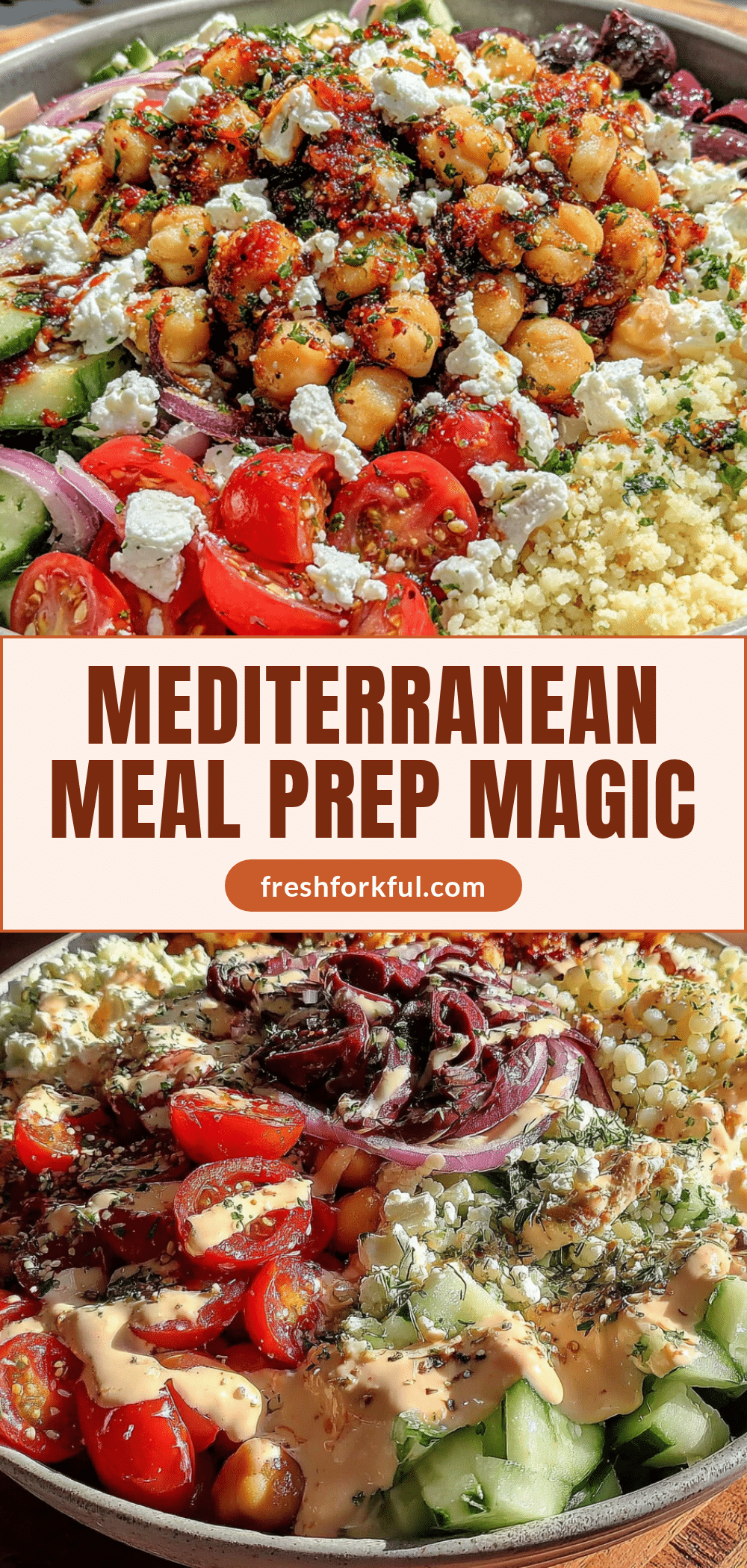
Fresh Mediterranean Chickpea Salad Meal Prep Bowls
These Fresh Mediterranean Chickpea Salad Meal Prep Bowls are a quick, no-cook meal prep solution that stays fresh for up to five days. Marinated chickpeas, crisp vegetables, and creamy feta come together in a bright lemon-oregano dressing for a satisfying and flavorful lunch.
- Prep Time: 20 minutes
- Cook Time: 0 minutes
- Total Time: 20 minutes
- Yield: 4-6 servings 1x
- Category: Salad
- Cuisine: Mediterranean
Ingredients
- 2 (15-ounce) cans chickpeas, drained and rinsed
- 1 large English cucumber, diced
- 1 pint cherry tomatoes, halved
- 1 small red onion, finely diced
- 1/2 cup Kalamata olives, pitted and halved
- 1 block (8 ounces) feta cheese, crumbled
- 1/2 cup fresh flat-leaf parsley, chopped
- 1/4 cup extra virgin olive oil
- 3 tablespoons fresh lemon juice (from 2 large lemons)
- 1 tablespoon red wine vinegar
- 1 teaspoon dried oregano
- 1 small garlic clove, minced
- Salt and black pepper to taste
Instructions
- Make the dressing first: In a small bowl or jar, whisk together olive oil, lemon juice, red wine vinegar, minced garlic, dried oregano, and a pinch of salt and pepper. Set aside.
- Drain and rinse both cans of chickpeas thoroughly under cold water. Shake off excess water, then spread on a clean kitchen towel and pat dry. Transfer dried chickpeas to a large mixing bowl.
- Pour about half the dressing over the chickpeas and toss to coat. Let them sit while you chop the vegetables—at least 10 minutes.
- Dice the cucumber into half-inch pieces. Halve the cherry tomatoes. Finely dice the red onion. If sensitive to raw onion, soak diced onion in cold water for 5 minutes, then drain well.
- Add the cucumber, tomatoes, onion, and Kalamata olives to the bowl with the marinated chickpeas. Pour the remaining dressing over everything and stir gently until combined.
- Crumble the feta over the top and add the chopped parsley. Fold everything together gently. Taste and adjust salt and pepper.
- Divide the salad evenly among 4 to 6 meal prep containers. Press down gently, seal lids tightly, and refrigerate for at least 1 hour before eating.
Notes
For best results, dry chickpeas thoroughly and let them marinate for at least 10 minutes. Store containers upside down in the fridge to redistribute dressing. For dairy-free, omit feta and add half an avocado per serving just before eating. For vegan, use crumbled tofu marinated in lemon juice and nutritional yeast. Add cooked quinoa, farro, or couscous for a heartier meal. Do not freeze.
Nutrition
- Serving Size: 1 bowl (based on 4 s
- Calories: 400
- Sugar: 8
- Sodium: 700
- Fat: 23
- Saturated Fat: 6
- Carbohydrates: 34
- Fiber: 11
- Protein: 15
Keywords: Mediterranean chickpea salad, meal prep bowls, no-cook salad, healthy lunch, vegetarian meal prep, chickpea salad, feta salad, easy meal prep