Love this? Save it for later!
Share the inspiration with your friends
This was supposed to be a creamy, mayo-laden chicken salad—the kind my grandmother made every Sunday, heavy on the dressing, light on the crunch. I had the rotisserie chicken shredded, the celery diced, and my favorite mixing bowl ready. But when I reached for the mayonnaise jar in the fridge, my hand landed on a nearly empty container. Maybe three tablespoons left. Not nearly enough for the two cups of chicken staring back at me.
I stood there for a solid minute, honestly, just staring into the fridge like it had personally betrayed me. The power had flickered earlier that morning during a storm, and I was already running late for meal prep Sunday. You know that feeling when you’ve mentally committed to a recipe and there’s no turning back? That was me, holding a sad jar of mayo and wondering if I should just give up on the whole idea.
Then I spotted the Greek yogurt. Plain, thick, tangy—sitting right next to the sad mayo jar like it was waiting for its moment. I grabbed it on impulse, dumped it into the bowl, and held my breath. What came out was nothing like the plan—and better. Creamier, tangier, with a lightness that made me wonder why I’d been using mayo all these years. The first bite had this unexpected brightness that cut through the richness of the chicken.
I texted my sister a photo with the caption “chicken salad crisis averted” and she asked for the recipe before I even finished typing. That was three summers ago, and I haven’t bought a jar of mayo for chicken salad since. These quick no-mayo chicken salad lunchbox cups became my go-to for busy weeks, picnics, and those days when you need lunch to feel like something you actually look forward to. Maybe you’ve been there—staring at an almost-empty jar, wondering if you should just order takeout. Trust me, this version is better.
Why You’ll Love This Recipe
Let me tell you why these no-mayo chicken salad lunchbox cups have earned a permanent spot in my weekly rotation. I’ve tested this recipe at least a dozen times—tweaking the yogurt ratio, trying different add-ins, and even serving it to my pickiest friends. Every single person has asked for the recipe. That’s not bragging, that’s just what happens when something works.
- Quick & Easy: Comes together in under 15 minutes, perfect for busy weeknights or last-minute lunch prep. No cooking required if you use pre-cooked chicken.
- Simple Ingredients: No fancy grocery trips needed. You likely already have Greek yogurt, chicken, and a few crunchy veggies in your kitchen.
- Perfect for Meal Prep: Great for packing in lunchboxes, taking to work, or grabbing as a quick snack between meetings.
- Crowd-Pleaser: Always gets rave reviews from kids and adults alike. Even my mayo-loving uncle asked for seconds.
- Unbelievably Delicious: The texture and flavor combo is next-level comfort food—creamy without being heavy, tangy without being overpowering.
What makes this recipe different from the rest is the technique. I blend a bit of the Greek yogurt with lemon juice and Dijon mustard before mixing it in, which creates an ultra-smooth, emulsified dressing that clings perfectly to every piece of chicken. It’s not just another chicken salad—it’s your best version. The kind that makes you close your eyes after the first bite. It’s comfort food reimagined—healthier, faster, but with the same soul-soothing satisfaction. Perfect for impressing guests without stress, or turning a simple meal into something memorable.
What Ingredients You Will Need
This recipe uses simple, wholesome ingredients to deliver bold flavor and satisfying texture without the fuss. Most of these are pantry staples you probably already have on hand.
- Cooked Chicken: 3 cups, shredded or diced (rotisserie chicken works beautifully; I prefer the one from Costco for its flavor and tenderness)
- Plain Greek Yogurt: 1/2 cup, full-fat or 2% for best creaminess (Fage or Chobani are my go-to brands)
- Dijon Mustard: 1 tablespoon (adds tang and helps emulsify the dressing; Grey Poupon is my favorite)
- Fresh Lemon Juice: 1 tablespoon (brightens everything up; always use fresh, not bottled)
- Celery: 1/2 cup, finely diced (adds that essential crunch; look for firm, bright green stalks)
- Red Onion: 1/4 cup, finely diced (soak in cold water for 5 minutes to mellow the bite if you’re sensitive)
- Fresh Parsley: 2 tablespoons, chopped (optional but adds freshness; flat-leaf parsley has more flavor)
- Salt: 1/2 teaspoon, or to taste
- Black Pepper: 1/4 teaspoon, freshly ground
- Garlic Powder: 1/4 teaspoon (adds savory depth without overpowering)
- Optional Add-ins: 1/4 cup dried cranberries or chopped grapes for sweetness; 1/4 cup chopped walnuts or almonds for crunch
For the yogurt, I recommend using full-fat or 2% Greek yogurt for the best texture. Non-fat works in a pinch, but the dressing will be thinner and less satisfying. If you’re dairy-free, swap in a thick coconut yogurt, but look for one with no added sugar. For the chicken, rotisserie chicken saves so much time, but you can also poach or bake chicken breasts ahead of time. In summer, I sometimes swap in leftover grilled chicken for a smoky twist.
Equipment Needed
You don’t need much for this recipe, which is part of the beauty. Here’s what you’ll want to have ready:
- Large Mixing Bowl: A medium to large bowl for combining everything. I use my favorite ceramic bowl from Target—it was $12 and has survived three moves.
- Cutting Board: A sturdy board for dicing celery and onions. Wood is nice, but plastic works fine.
- Chef’s Knife: A sharp 8-inch knife makes quick work of chopping. Dull knives are dangerous—trust me, I learned that the hard way with a sliced finger.
- Measuring Spoons: For the yogurt, mustard, and lemon juice. Eyeballing works if you’re confident, but measuring ensures consistency.
- Rubber Spatula: For folding everything together without smashing the chicken. Silicone ones are easy to clean.
- Small Bowl: For mixing the dressing before adding it to the chicken. This step makes a difference.
- Lunchbox Cups or Airtight Containers: Portion into 4-6 small containers for grab-and-go lunches. I use glass meal prep containers with snap lids.
If you don’t have a chef’s knife, a sharp paring knife will work—it’ll just take a bit longer to dice everything. No rubber spatula? A wooden spoon works fine, just be gentle when folding so the chicken doesn’t get mushy.
Preparation Method
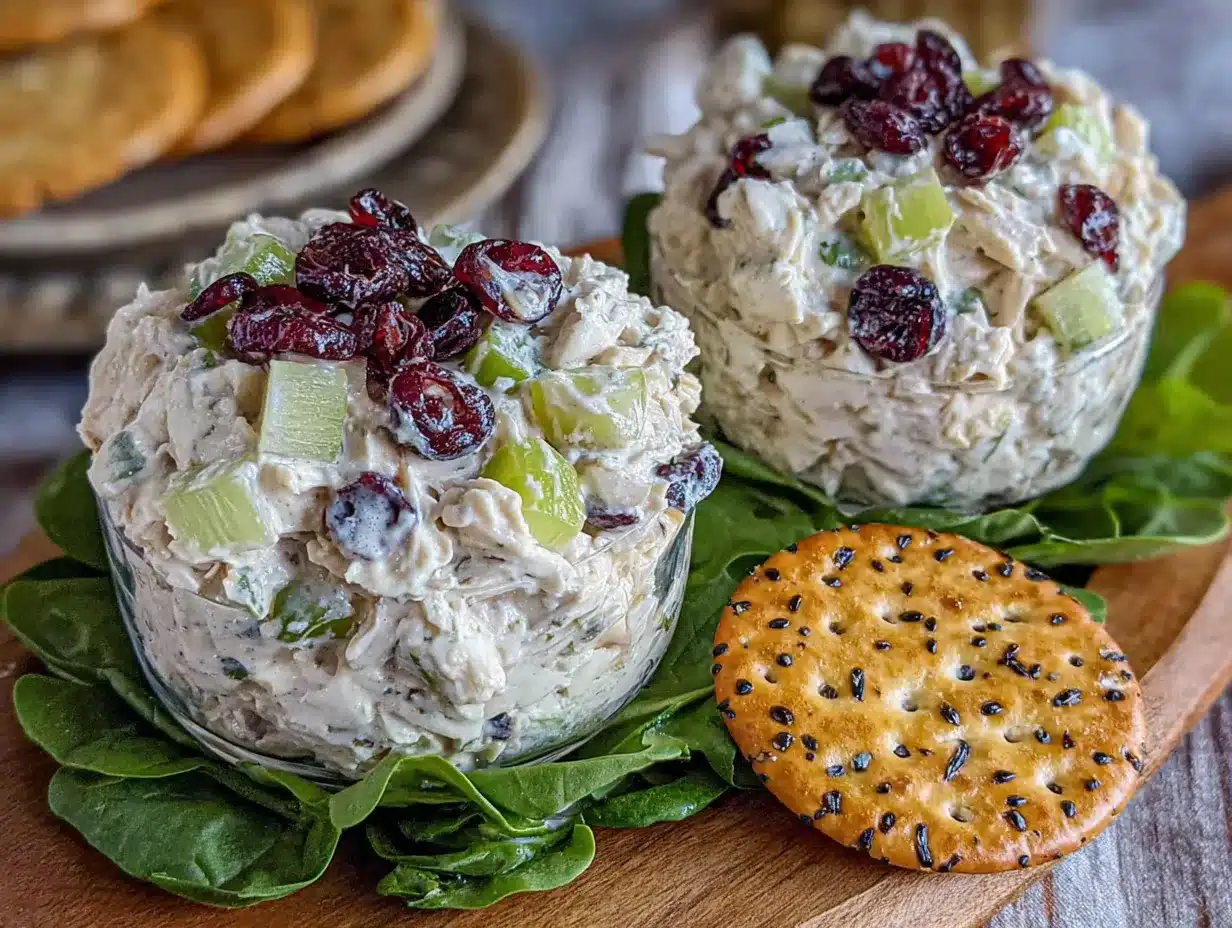
This comes together in about 15 minutes, and I’ll walk you through every step so you get it right the first time.
- Prepare the chicken: If using rotisserie chicken, remove the skin and shred the meat with two forks or your hands. You want bite-sized pieces, not shreds so fine they disappear into the dressing. Aim for about 3 cups. If using cooked chicken breasts, dice them into 1/2-inch cubes. Set aside in your large mixing bowl.
- Dice the vegetables: Finely chop the celery and red onion. For the celery, slice lengthwise into thin strips, then cut across into small dice. For the onion, cut off the root end, peel, and dice finely. If raw onion is too strong for you, soak the diced pieces in cold water for 5 minutes, then drain and pat dry. Add both to the bowl with the chicken.
- Make the dressing: In a small bowl, whisk together the Greek yogurt, Dijon mustard, lemon juice, garlic powder, salt, and pepper. Taste it—it should be tangy and well-seasoned. The yogurt should be smooth and creamy. If it seems too thick, add a teaspoon of water or extra lemon juice to thin it slightly.
- Combine everything: Pour the dressing over the chicken and vegetables. Using a rubber spatula or large spoon, fold gently until everything is evenly coated. Don’t overmix—you want the chicken to stay in distinct pieces, not turn into paste. Fold about 10-12 times, scraping the bottom of the bowl to incorporate any dressing that settled.
- Add optional ingredients: If using dried cranberries, grapes, or nuts, fold them in now. I love adding chopped walnuts for crunch and dried cranberries for sweetness—the combination is incredible. If you’re adding grapes, halve or quarter them so they distribute evenly.
- Season and adjust: Taste the chicken salad and adjust seasoning. It should be bright from the lemon, savory from the mustard, and well-salted. Add more salt or pepper if needed. If it seems dry, add another tablespoon of yogurt. If it seems too wet, add a bit more diced chicken or celery.
- Portion into cups: Divide the mixture evenly among 4-6 lunchbox cups or airtight containers. Press it down gently to pack it without compressing it. Each cup should hold about 1/2 to 3/4 cup of chicken salad.
- Chill before serving: Refrigerate for at least 30 minutes before eating. This allows the flavors to meld and the texture to set. The chicken salad tastes even better the next day, honestly—the yogurt absorbs into the chicken and everything becomes more cohesive.
Pro tip: If you’re meal prepping for the week, leave out any nuts or grapes until you’re ready to eat. They can get soggy or soft after a day or two. Store them separately and add them fresh each morning.
Cooking Tips & Techniques
After making this recipe probably fifty times, I’ve picked up a few tricks that make a real difference. Let me share what I’ve learned—including the mistakes.
Don’t overdress: The biggest mistake I made early on was adding too much yogurt, thinking it would make the salad creamier. It just made it soupy. Start with less dressing than you think you need, then add more if it looks dry. You can always add, but you can’t take away.
Season in layers: Add salt and pepper to the chicken before adding the dressing, then again after mixing. This seasons every layer instead of just the surface. I learned this from a chef friend who said, “Salt doesn’t penetrate fat, so season the lean protein first.” She was right.
Let it rest: The hardest lesson for me was patience. I used to eat this immediately and wonder why it tasted flat. After an hour in the fridge, the flavors bloom. The yogurt absorbs into the chicken, the lemon mellows, and the mustard’s sharpness rounds out. If you can wait overnight, you’ll be rewarded.
Chicken texture matters: Over-shredding the chicken creates a mushy texture. I aim for pieces about the size of a grape—big enough to chew, small enough to fit on a cracker. If using canned chicken (which I don’t recommend but understand in a pinch), drain it well and flake it gently.
Temperature trick: Cold chicken straight from the fridge makes the yogurt seize up and become gloppy. Let your chicken sit at room temperature for 10-15 minutes before mixing. The dressing coats better and the final texture is silkier.
My biggest failure: I once tried using flavored Greek yogurt—strawberry, because I was out of plain and thought it would be fine. It was not fine. The sweetness clashed with the mustard and lemon in the worst way. I ate it anyway because I hate wasting food, but it taught me to never substitute flavored yogurt in savory recipes.
Variations & Adaptations
This recipe is incredibly flexible, and I’ve tried almost every variation you can imagine. Here are my favorites:
Mediterranean Twist: Swap the celery and parsley for chopped cucumber, Kalamata olives, and fresh dill. Add a tablespoon of crumbled feta cheese. The briny olives and creamy feta pair beautifully with the tangy yogurt dressing. I make this version when I’m craving something bright and herbaceous.
Curried Chicken Salad: Add 1 teaspoon of curry powder and 1/4 teaspoon of turmeric to the dressing. Fold in 1/4 cup of golden raisins and 2 tablespoons of sliced almonds. The warm spices transform this into something completely different—earthy, slightly sweet, and deeply satisfying. My husband requests this version every week.
Avocado Version: Replace half the yogurt with mashed ripe avocado. The avocado adds healthy fats and a silky texture that’s incredibly luxurious. Add a squeeze of extra lime juice to keep the avocado from browning. This version is best eaten the same day, as avocado doesn’t keep well overnight.
Dairy-Free Adaptation: Use a thick coconut yogurt or cashew-based yogurt instead of Greek yogurt. Look for unsweetened, plain varieties. I’ve also used mashed silken tofu blended with lemon juice and mustard—it’s surprisingly creamy and works well for those avoiding dairy entirely.
Low-Carb Option: Serve the chicken salad in butter lettuce cups or hollowed-out cucumber boats instead of bread or crackers. The recipe is already low in carbs, but swapping the serving vessel makes it keto-friendly. I love scooping it into endive leaves for a fancy appetizer.
Spicy Kick: Add 1/2 teaspoon of sriracha or a pinch of cayenne pepper to the dressing. Fold in diced jalapeño (seeds removed if you want less heat). The spice cuts through the creaminess beautifully and wakes up your taste buds.
Serving & Storage Suggestions
These lunchbox cups are designed for convenience, but they’re also versatile enough for entertaining. Here’s how to serve and store them for the best experience.
Serving Temperature: Serve chilled or at room temperature. I prefer it cold straight from the fridge, but if you’re packing it for lunch, it’ll be perfectly fine after sitting in a lunchbox for a few hours. Just add an ice pack if you’re worried about food safety.
Presentation Ideas: Scoop the chicken salad into butter lettuce cups for a low-carb option, pile it onto crusty bread for a hearty sandwich, or serve it with crackers and veggie sticks for a snack plate. For a party, hollow out small bell peppers or cherry tomatoes and fill them with the chicken salad for bite-sized appetizers.
What to Serve With It: A simple side of fresh fruit, a handful of potato chips, or a cup of tomato soup pairs beautifully. I love serving it with crispy garlic chicken on the side for a protein-packed lunch that keeps me full for hours. For a lighter meal, pair it with a simple green salad dressed with lemon vinaigrette.
Storage Instructions: Store in airtight containers in the refrigerator for up to 4 days. Do not freeze—the yogurt will separate and become watery upon thawing, and the texture of the chicken will suffer. If you add grapes or nuts, store them separately and add just before eating to maintain their texture.
Reheating: This is meant to be served cold, so no reheating needed! If you prefer it at room temperature, let it sit out for 10-15 minutes before eating. The flavors actually deepen over time, so day-old chicken salad often tastes better than fresh.
Flavor Development: The chicken salad reaches its peak flavor after 24 hours in the fridge. The yogurt has fully absorbed into the chicken, the mustard has mellowed, and the lemon has brightened everything without being sharp. I always make this a day ahead when I’m serving it to guests.
Nutritional Information & Benefits
This recipe is not just delicious—it’s genuinely good for you. Here’s what you’re getting in each serving (based on 5 servings):
| Nutrient | Amount Per Serving |
|---|---|
| Calories | 245 |
| Protein | 32g |
| Fat | 8g |
| Saturated Fat | 2.5g |
| Carbohydrates | 6g |
| Fiber | 1g |
| Sugar | 3g |
| Sodium | 410mg |
Health Benefits: Greek yogurt is packed with probiotics for gut health and provides more protein than regular yogurt, keeping you full longer. Chicken is a lean source of complete protein, essential for muscle repair and maintenance. Celery and onions add fiber and antioxidants with minimal calories. The lemon juice provides vitamin C, which supports immune function.
Dietary Considerations: This recipe is naturally low-carb, gluten-free, and nut-free (unless you add nuts). For a dairy-free version, use coconut yogurt. For a lower-fat option, use non-fat Greek yogurt, though the texture will be slightly thinner. The recipe is also egg-free and soy-free as written.
My Wellness Perspective: I love that this recipe lets me enjoy a classic comfort food without the heavy feeling that mayo-based versions leave behind. It’s satisfying enough to feel like a treat but light enough that I don’t need a nap afterward. That balance is hard to find, and I’m grateful this recipe delivers it every time.
Conclusion
These quick no-mayo chicken salad lunchbox cups started as a kitchen accident, but they’ve become one of my most reliable recipes. They’re proof that sometimes the best things come from running out of ingredients at exactly the right moment. The tangy yogurt dressing, the crunch of fresh vegetables, the tender chicken—it all comes together in something that feels both familiar and new.
I hope you give this recipe a try, whether you’re meal prepping for a busy week, packing lunch for your kids, or just looking for a lighter take on a classic. Feel free to customize it with your favorite add-ins—that’s the beauty of a recipe like this. It’s a starting point, not a rulebook.
I’d love to hear how yours turns out! Leave a comment below and let me know what variations you tried. Did you add grapes? Curry powder? A handful of toasted almonds? Share your creation and tag me on social media—I’m always looking for new ideas to try. Until next time, happy cooking and even happier eating!
Frequently Asked Questions
Can I use canned chicken for this recipe?
You can, but I don’t recommend it. Canned chicken has a softer, mushier texture and a distinct flavor that doesn’t pair as well with the yogurt dressing. If you’re in a pinch, drain it well and flake it gently. Rotisserie chicken or leftover grilled chicken gives much better results.
How long does this chicken salad last in the fridge?
Stored in an airtight container, it stays fresh for up to 4 days. The flavors actually improve after the first day. If you’ve added grapes or nuts, store them separately and add them just before eating to keep them from getting soggy.
Can I make this recipe dairy-free?
Absolutely! Use a thick, unsweetened coconut yogurt or cashew-based yogurt instead of Greek yogurt. I’ve also had success using mashed silken tofu blended with lemon juice and mustard. Just make sure your yogurt alternative is thick enough to coat the chicken without being watery.
Is this recipe kid-friendly?
Very much so! The creamy texture and mild flavor appeal to most kids. If your child is sensitive to onion, you can leave it out or use finely diced apple instead for sweetness and crunch. My niece loves this with halved grapes mixed in—she calls it “rainbow chicken salad.”
Can I freeze this chicken salad?
I don’t recommend freezing it. The yogurt will separate and become watery when thawed, and the chicken’s texture will turn mushy. This recipe is best made fresh and stored in the fridge for up to 4 days. If you need to prep further ahead, cook and shred the chicken in advance, then mix everything together the day you plan to serve it.
Pin This Recipe!
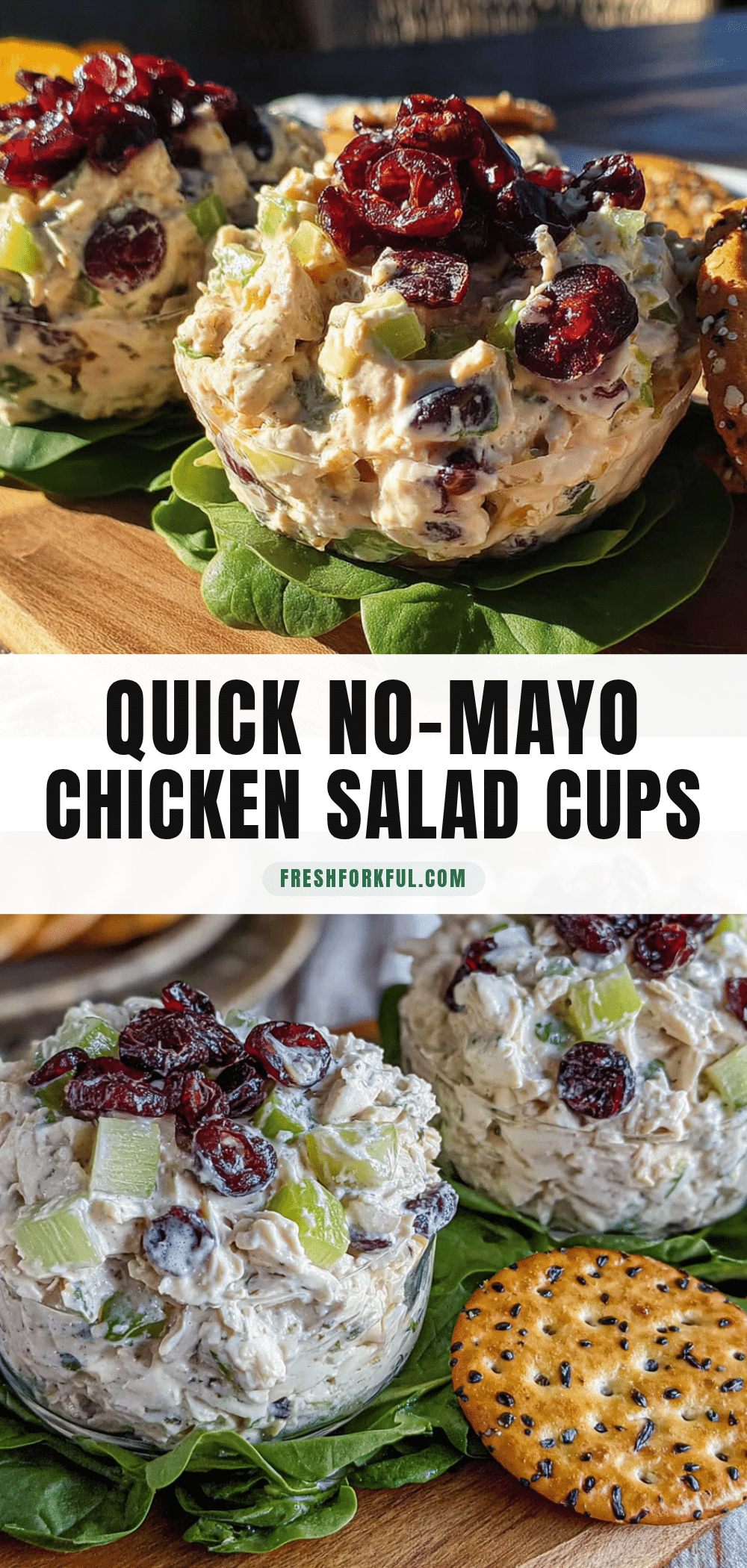
Easy No-Mayo Chicken Salad Lunchbox Cups

A creamy, tangy chicken salad made with Greek yogurt instead of mayo, perfect for quick lunches and meal prep. Ready in under 15 minutes with simple ingredients.
- Prep Time: 15 minutes
- Cook Time: 0 minutes
- Total Time: 15 minutes
- Yield: 5 servings 1x
- Category: Main Course
- Cuisine: American
Ingredients
- 3 cups cooked chicken, shredded or diced (rotisserie chicken works well)
- 1/2 cup plain Greek yogurt (full-fat or 2%)
- 1 tablespoon Dijon mustard
- 1 tablespoon fresh lemon juice
- 1/2 cup celery, finely diced
- 1/4 cup red onion, finely diced
- 2 tablespoons fresh parsley, chopped (optional)
- 1/2 teaspoon salt
- 1/4 teaspoon black pepper, freshly ground
- 1/4 teaspoon garlic powder
- 1/4 cup dried cranberries or chopped grapes (optional)
- 1/4 cup chopped walnuts or almonds (optional)
Instructions
- Prepare the chicken: If using rotisserie chicken, remove skin and shred meat with two forks or hands into bite-sized pieces. If using cooked chicken breasts, dice into 1/2-inch cubes. Set aside in a large mixing bowl.
- Dice the vegetables: Finely chop celery and red onion. For celery, slice lengthwise into thin strips, then cut across into small dice. For onion, cut off root end, peel, and dice finely. If raw onion is too strong, soak diced pieces in cold water for 5 minutes, then drain and pat dry. Add both to the bowl with chicken.
- Make the dressing: In a small bowl, whisk together Greek yogurt, Dijon mustard, lemon juice, garlic powder, salt, and pepper. Taste and adjust seasoning. If too thick, add a teaspoon of water or extra lemon juice.
- Combine everything: Pour dressing over chicken and vegetables. Using a rubber spatula or large spoon, fold gently until evenly coated (about 10-12 folds). Do not overmix.
- Add optional ingredients: If using dried cranberries, grapes, or nuts, fold them in now.
- Season and adjust: Taste and adjust seasoning. If dry, add another tablespoon of yogurt. If too wet, add more chicken or celery.
- Portion into cups: Divide mixture evenly among 4-6 lunchbox cups or airtight containers. Each cup should hold about 1/2 to 3/4 cup.
- Chill before serving: Refrigerate for at least 30 minutes before eating. Flavors meld and texture sets. Tastes even better the next day.
Notes
For best results, let chicken sit at room temperature for 10-15 minutes before mixing to prevent yogurt from seizing. Season in layers: add salt and pepper to chicken before dressing, then again after mixing. If meal prepping, store nuts or grapes separately and add fresh each morning. The chicken salad reaches peak flavor after 24 hours in the fridge.
Nutrition
- Serving Size: 1 cup
- Calories: 245
- Sugar: 3
- Sodium: 410
- Fat: 8
- Saturated Fat: 2.5
- Carbohydrates: 6
- Fiber: 1
- Protein: 32
Keywords: chicken salad, no mayo, Greek yogurt, lunchbox, meal prep, healthy, quick, easy