Love this? Save it for later!
Share the inspiration with your friends
Lena wasn’t trying to impress anyone. I’d stopped by to drop off a library book she’d lent me—one of those cozy mysteries she swore would cure my reading slump—and the smell hit me before I even got through the door. It wasn’t fancy, not some complicated braise or slow-simmered stock. It was just… warm. Deep. Like the kitchen had been giving off a low, happy sigh for hours.
“What is that?” I asked, probably a little too loudly, standing there in her mudroom with snow melting off my boots.
She barely looked up from the pile of laundry she was folding. “Oh, just soup. Whatever was in the crisper drawers.”
Let me tell you, that “whatever was in the crisper drawers” moment changed how I think about feeding my family on a budget. Here was a woman who wasn’t trying to be a food blogger or a Pinterest-perfect mom. She was just making dinner happen on a Tuesday, using up what she had, and it smelled like pure magic. I stood there, honestly a little envious of how effortless she made it look. She didn’t even offer me a bowl—I had to ask. Maybe you’ve been there, standing in someone else’s kitchen, realizing that the best recipes aren’t the complicated ones. They’re the ones someone makes without thinking twice.
That afternoon, I went home and immediately started chopping. I’ve tweaked Lena’s method over the years, but the heart of it is the same: a crockpot, some humble vegetables, and zero stress. This is the soup that saves my grocery budget week after week, and the one my kids actually ask for. It’s the kind of recipe that stays with you because it proves you don’t need a lot to make something really, really good.
Why You’ll Love This Recipe
I’ve tested this budget-friendly crockpot vegetable soup more times than I can count, and honestly, it keeps surprising me. It’s become my go-to for those weeks when the pantry looks sad and the bank account looks emptier. Here’s why I think you’ll love it just as much:
- Incredibly Budget-Friendly: This soup is built around the cheapest veggies you can find—carrots, celery, potatoes, canned tomatoes. We’re talking pennies per serving, not dollars. It’s the kind of meal that makes you feel smart about your grocery shopping.
- Set It and Forget It: The crockpot does all the heavy lifting. You chop in the morning, toss everything in, and by dinner, your house smells like you’ve been cooking all day. Perfect for busy weeknights or lazy Sundays.
- Picky Eater Approved: My kids are suspicious of anything green, but they gobble this up. The long simmer makes the vegetables soft and sweet, and the broth gets this rich, savory flavor that tastes way more expensive than it is.
- Leftovers That Get Better: This is one of those soups that tastes even better the next day. The flavors meld together overnight, making lunch the next afternoon something to actually look forward to.
- Endlessly Customizable: Got a half-used bag of frozen corn? Toss it in. Some wilting zucchini? Chop it up. This recipe is more of a forgiving framework than a rigid set of rules, which is exactly what a busy home cook needs.
What makes this different from other vegetable soup recipes is the technique. Most recipes have you dump everything in and hope for the best, which can leave you with a watery, bland broth. My version uses a simple trick—sautéing the aromatics first—to build a deep flavor base without any expensive ingredients. It’s a small step that makes a huge difference, and it’s the reason this soup tastes like it simmered all day in a fancy restaurant kitchen, not like it came from a can.
This isn’t just soup. It’s the meal that saves your week when you’re staring down a tight grocery budget and a hungry family. It’s comfort in a bowl, made with love and a whole lot of practicality.
What Ingredients You Will Need
This budget-friendly crockpot vegetable soup uses simple, wholesome ingredients to deliver big flavor without the big price tag. Most of these are pantry staples or the cheapest produce you can find at the store. Here’s what you’ll need:
For the Soup Base
- 1 tablespoon olive oil (for sautéing; use vegetable oil if you’re on a super tight budget)
- 1 large yellow onion, diced (the foundation of flavor; don’t skip it)
- 3 cloves garlic, minced (adds that savory depth that makes the broth irresistible)
- 3 large carrots, peeled and diced (adds natural sweetness as they cook)
- 3 celery stalks, diced (gives the soup that classic, earthy backbone)
- 4 medium Yukon Gold or Russet potatoes, peeled and cubed (they break down slightly and thicken the broth naturally)
For the Broth & Flavor
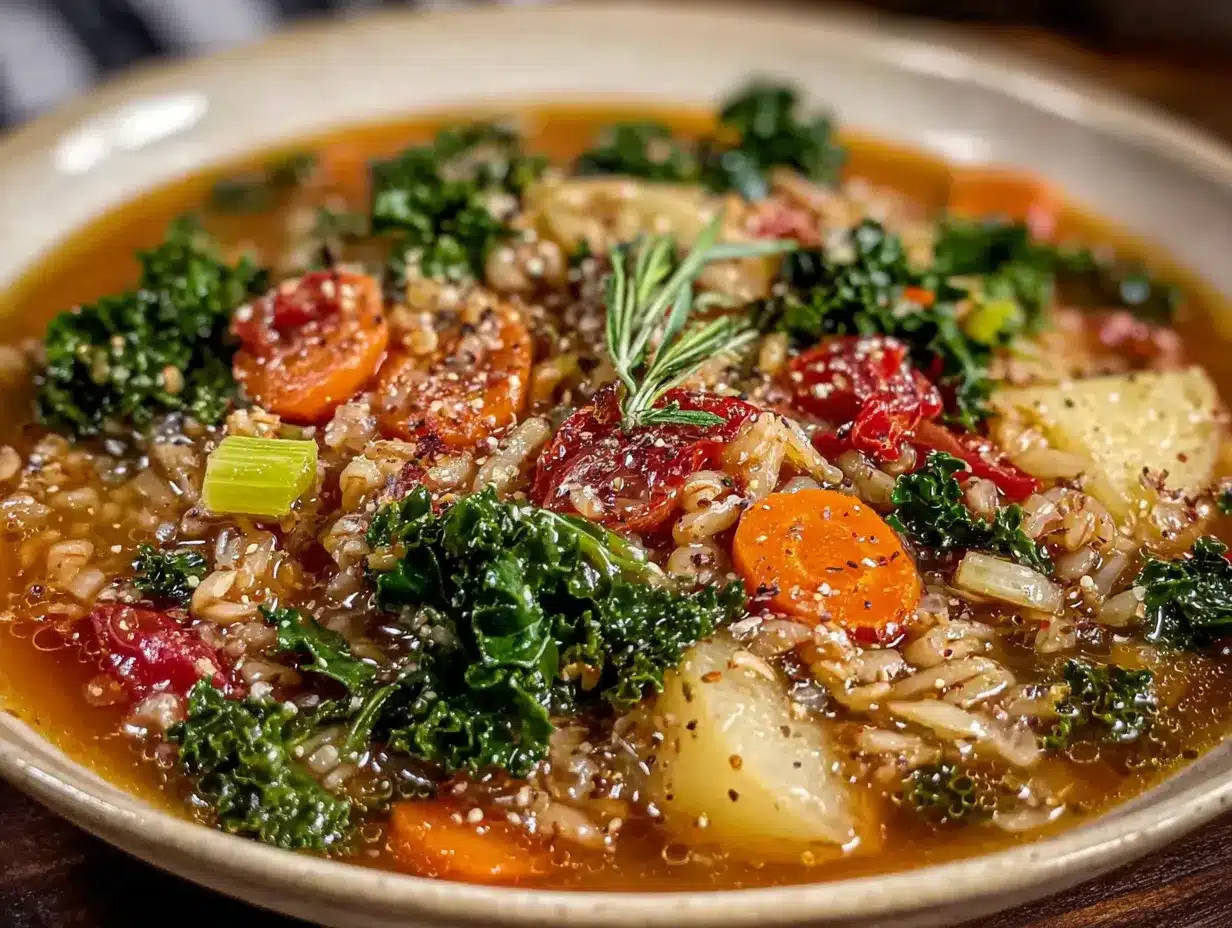
- 6 cups low-sodium vegetable broth (I like Pacific Foods or Swanson for consistent flavor; use water plus a bouillon cube if you’re pinching pennies)
- 1 can (14.5 oz) diced tomatoes, undrained (adds acidity and color; fire-roasted is a nice upgrade if it’s on sale)
- 1 cup frozen green beans (no need to thaw; they hold up beautifully in the slow cooker)
- 1 cup frozen corn (adds a pop of sweetness; fresh or canned works too)
- 1 teaspoon dried thyme (earthy and warm, it’s the secret to making the broth taste complex)
- 1 teaspoon dried oregano (adds a subtle Italian-inspired note)
- 1 bay leaf (removed before serving; it adds an almost imperceptible but essential depth)
- Salt and freshly ground black pepper, to taste (start with 1 teaspoon salt and ½ teaspoon pepper, then adjust)
Optional Add-Ins for Extra Heartiness
- 1 cup chopped cabbage (adds bulk and sweetness; it’s practically free)
- ½ cup pearl barley or brown rice (rinsed; adds chewiness and makes the soup a complete meal)
- 1 can (15 oz) kidney beans or chickpeas, drained and rinsed (for protein and fiber; keeps the budget low)
Ingredient Selection Tips: For the best texture, look for potatoes that are firm and free of sprouts. If you’re using fresh green beans instead of frozen, trim the ends and cut them into 1-inch pieces. I’ve found that using low-sodium broth is key here—it lets you control the salt level, and the vegetables release their own natural juices that add flavor. If you only have regular broth, just go easy on the added salt until the end.
Substitution Guidance: This recipe is incredibly flexible. Swap sweet potatoes for Yukon Golds, use zucchini instead of green beans, or toss in a handful of spinach at the end for extra greens. For a gluten-free version, skip the barley and use rice or quinoa instead. If you’re dairy-free, this soup is naturally your friend—no milk or cream needed.
Equipment Needed
One of the best things about this budget-friendly crockpot vegetable soup is that you don’t need a fancy kitchen to make it. Here’s what you’ll need:
- A 6-quart or larger slow cooker: This is your main tool. I use a Crock-Pot brand that I picked up at a garage sale for ten bucks, and it’s been going strong for years. If you have a smaller one, just halve the recipe.
- A large skillet or sauté pan: You’ll need this for the quick sauté step. Any non-stick or stainless steel pan will work. Don’t skip this even if you’re tempted—it makes a real difference.
- A sharp chef’s knife and cutting board: A good knife makes chopping vegetables feel less like a chore. I use a Victorinox that’s affordable and stays sharp.
- Measuring cups and spoons: For the broth and seasonings. Eyeballing is fine for most things, but salt and herbs are worth measuring.
- A wooden spoon or spatula: For stirring the aromatics. A silicone spatula works great too.
- A ladle: For serving. Any old ladle will do.
Budget-Friendly Alternatives: If you don’t own a slow cooker, you can absolutely make this in a large Dutch oven or heavy-bottomed pot on the stovetop. Just simmer it on low for about 45 minutes to an hour, or until the vegetables are tender. The flavor won’t be quite as deep, but it’ll still be delicious. And honestly, I’ve seen perfectly good slow cookers at thrift stores for under $15—it’s worth the investment if you make soups often.
Maintenance Tip: After each use, clean your slow cooker insert with warm soapy water and a soft sponge. Avoid abrasive scrubbers, especially if you have a non-stick coating. A little baking soda paste can help remove stubborn stains without scratching.
Preparation Method
This budget-friendly crockpot vegetable soup comes together in a few simple steps. The key is the initial sauté—don’t skip it, even though it adds ten minutes to your morning. Trust me, it’s the difference between a good soup and a great one.
- Sauté the aromatics (10 minutes): Heat the olive oil in a large skillet over medium heat. Add the diced onion and cook, stirring occasionally, until it becomes translucent and soft—about 5 minutes. Add the minced garlic and cook for another 30 seconds until fragrant. This step wakes up the flavors and gives the soup a rich, savory base that you just can’t get from dumping raw onions into a slow cooker.
- Layer the vegetables in the crockpot: Transfer the sautéed onion and garlic to your slow cooker. Add the diced carrots, celery, and potatoes. These heartier vegetables need the most time to soften, so they go in first. Don’t stir yet—just layer them in.
- Add the broth and tomatoes: Pour in the vegetable broth and the undrained can of diced tomatoes. The liquid from the tomatoes adds acidity and helps tenderize the vegetables as they cook. Give everything a gentle stir to combine.
- Season the soup: Add the dried thyme, oregano, bay leaf, and a generous pinch of salt and pepper. I start with about 1 teaspoon of salt and ½ teaspoon of pepper, knowing I can adjust later. Remember, you can always add more salt, but you can’t take it out.
- Cook on low for 6-7 hours or high for 3-4 hours: Cover the slow cooker and set it to your preferred time. Low and slow is my favorite method—it gives the flavors more time to meld and the vegetables become incredibly tender without turning to mush. If you’re short on time, high works fine, but keep an eye on the texture around the 3-hour mark.
- Add the frozen vegetables (30 minutes before serving): About half an hour before you plan to eat, stir in the frozen green beans and corn. They don’t need long to cook, and adding them late keeps them from getting overcooked and mushy. If you’re using fresh green beans, add them at the same time.
- Adjust seasoning and serve: Remove the bay leaf and discard it. Taste the broth and adjust the salt and pepper as needed. I often find it needs another good pinch of salt at this point, especially if I used low-sodium broth. Ladle the soup into bowls and serve hot.
Visual and Sensory Cues: When the soup is done, the potatoes should be fork-tender but still holding their shape. The carrots should be soft enough to cut with the side of a spoon. The broth should be fragrant and deeply colored, not watery. If the soup seems too thick, stir in a splash more broth or water. If it’s too thin, let it cook uncovered for another 15-20 minutes to reduce slightly.
Personal Efficiency Tip: I chop all the vegetables the night before and store them in a sealed container in the fridge. In the morning, I just do the quick sauté, dump everything in the crockpot, and I’m out the door. It makes the whole process feel almost too easy.
Cooking Tips & Techniques
Over the years, I’ve made this budget-friendly crockpot vegetable soup more times than I can count, and I’ve definitely learned a thing or two the hard way. Here are my best tips for getting it right every time:
Don’t Skip the Sauté: I know, I know—the whole point of a crockpot is to dump and go. But that five-minute sauté of the onion and garlic is non-negotiable. The first time I made this, I was in a hurry and threw everything in raw. The soup was fine, but it lacked that deep, savory richness that makes you close your eyes after the first bite. The browning creates compounds called Maillard reaction products that add complexity you just can’t get any other way.
Cut Vegetables Uniformly: This is one of those tips that sounds fussy but actually matters. If your carrot pieces are twice the size of your potato pieces, they won’t cook evenly. Aim for ½-inch cubes for everything. It doesn’t have to be perfect—I’m definitely not a precision chopper—but consistent sizes mean everything finishes at the same time.
Season in Layers: I add a little salt at the beginning, then taste and adjust at the end. This prevents the soup from becoming overly salty as it reduces. Also, remember that canned tomatoes and broth often contain sodium, so account for that when you’re seasoning.
Avoid Overcooking: I once left this soup on low for almost 10 hours because I got stuck at work. The vegetables were basically baby food. If you know you’ll be gone longer than 7 hours, choose heartier vegetables like carrots and potatoes, and leave the more delicate ones like green beans and corn out until the end.
My Biggest Failure: The first time I made this for my in-laws, I forgot to add the bay leaf entirely. The soup was still good, but it lacked that subtle, almost indefinable depth that makes you think someone spent hours on it. I’ve never made that mistake again. Bay leaves are cheap, but they punch way above their weight class in flavor.
Multitasking Strategy: While the vegetables are sautéing, I use that time to measure out the broth and open the can of tomatoes. It keeps the momentum going and gets everything into the crockpot faster. On busy mornings, every minute counts.
Variations & Adaptations
This budget-friendly crockpot vegetable soup is a canvas, not a finished painting. Here are some of my favorite ways to change it up depending on what I have on hand or who I’m feeding:
Hearty Protein-Packed Version
Add 1 can (15 oz) of drained and rinsed kidney beans or chickpeas along with the broth. For meat-eaters, you can brown ½ pound of ground turkey or beef and add it at the beginning. My husband loves this version—he says it finally feels like a “real meal” to him, even though I think the original is plenty satisfying.
Italian-Inspired Twist
Swap the thyme and oregano for 1 teaspoon of dried basil and ½ teaspoon of fennel seeds. Add a Parmesan rind to the broth as it cooks (remove before serving). The rind adds an umami richness that’s incredible, and it’s a great way to use up something you’d otherwise toss. Serve with a sprinkle of grated Parmesan on top.
Spicy Southwest Version
Add 1 teaspoon of chili powder and ½ teaspoon of cumin along with the other seasonings. Stir in a can of drained and rinsed black beans and a cup of frozen corn. A squeeze of lime juice at the end brightens everything up. This version is a hit at our house on cold, gray days when we need a little kick.
Slow Cooker vs. Stovetop
If you don’t have a slow cooker, make this in a large pot on the stovetop. After sautéing the aromatics, add the broth, tomatoes, and heartier vegetables. Bring to a boil, then reduce to a simmer and cook for 25-30 minutes, or until the vegetables are tender. Add the frozen vegetables in the last 5 minutes. The stovetop version is faster and works beautifully, though the flavors won’t meld quite as deeply.
Dietary Adaptations
This soup is naturally vegan, gluten-free (if you skip the barley), and dairy-free. For a lower-carb version, swap the potatoes for cauliflower florets and add extra green beans. My sister, who’s on a keto diet, loves this adaptation and says it hits the spot without kicking her out of ketosis.
Serving & Storage Suggestions
This budget-friendly crockpot vegetable soup is a meal in itself, but it also plays well with others. Here’s how I like to serve it and keep it for later:
Serving Temperature and Presentation: Serve this soup piping hot, straight from the crockpot. Ladle it into deep bowls and top with a sprinkle of fresh parsley if you have it (completely optional, but it looks nice). A crusty piece of bread on the side is practically mandatory—it’s perfect for sopping up the last bits of broth. My kids love it with a grilled cheese sandwich, which turns it into a cozy, nostalgic dinner.
Complementary Dishes: This soup pairs beautifully with a simple green salad dressed with lemon vinaigrette. The acidity cuts through the richness of the broth. For a heartier meal, serve it alongside roasted chicken thighs or a simple frittata. On nights when I’m really tired, I just serve it with buttered toast and call it a win.
Storage Instructions: Let the soup cool completely before storing. Transfer it to an airtight container and refrigerate for up to 5 days. The flavors actually deepen overnight, so don’t be surprised if it tastes even better the next day. For longer storage, freeze the soup in portion-sized containers or freezer bags for up to 3 months. Leave a little headspace in the container, as the soup will expand as it freezes.
Reheating Methods: Reheat individual portions in the microwave for 2-3 minutes, stirring halfway through. For larger batches, warm the soup in a pot on the stovetop over medium-low heat, stirring occasionally. Add a splash of broth or water if it’s thickened too much during storage. The frozen soup can be thawed overnight in the fridge or reheated directly from frozen on the stovetop over low heat.
Flavor Development: I honestly think this soup is better on day two. The vegetables continue to absorb the broth, and the seasonings mellow and blend together. If you can, make it a day ahead and reheat it for dinner. Your future self will thank you.
Nutritional Information & Benefits
This budget-friendly crockpot vegetable soup is as good for you as it is for your wallet. Here’s a rough estimate per serving (based on 8 servings):
- Calories: Approximately 180-220
- Protein: 6-8g (varies with add-ins)
- Fat: 3-5g
- Carbohydrates: 35-40g
- Fiber: 7-9g
- Sodium: 400-600mg (depends on broth and added salt)
Health Benefits of Key Ingredients: Carrots are packed with beta-carotene, which your body converts to vitamin A for healthy vision and immune function. Potatoes provide resistant starch, which feeds your gut’s good bacteria. Celery is a great source of vitamin K and antioxidants. The combination of fiber-rich vegetables makes this soup incredibly filling without being heavy.
Dietary Considerations: This soup is naturally vegan, vegetarian, and dairy-free. It’s also gluten-free as long as you skip the barley. If you’re watching your sodium intake, use low-sodium broth and go easy on the added salt. The vegetables themselves are naturally low in sodium, so you’re in control.
Personal Wellness Perspective: I love that this soup makes me feel good about what I’m feeding my family. It’s packed with vegetables, low in processed ingredients, and completely free of weird additives. On nights when we’ve had pizza or takeout, a bowl of this soup feels like a reset button. It’s comfort food that doesn’t come with a side of guilt.
Conclusion
This budget-friendly crockpot vegetable soup is proof that you don’t need expensive ingredients or complicated techniques to make something truly delicious. It’s the recipe that saves my week when the fridge is looking bare and the grocery budget is stretched thin. It’s the meal that makes my kids ask for seconds, and the one that fills my house with that warm, cozy smell that says “everything’s going to be okay.”
I hope you’ll take this recipe and make it your own. Add your favorite vegetables, tweak the seasonings, or throw in whatever’s languishing in your crisper drawer. That’s the beauty of a good soup—it’s forgiving, adaptable, and always, always welcome at the table.
When you make it, I’d love to hear how it turned out. Did your family love it? Did you try a fun variation? Drop a comment below and share your experience. And if you know someone else who could use a little budget-friendly comfort in their life, please pass this recipe along. Happy cooking, friend.
Frequently Asked Questions
Can I make this soup in an Instant Pot?
Absolutely! Use the sauté function to cook the onion and garlic, then add the remaining ingredients (except the frozen vegetables). Pressure cook on high for 10 minutes, then quick release the pressure. Stir in the frozen vegetables and let them warm through for 5 minutes before serving.
Can I use fresh tomatoes instead of canned?
Yes, you can. Use about 4-5 medium fresh tomatoes, diced. Since fresh tomatoes have more water content, you may want to reduce the broth by about ½ cup to avoid a watery soup. The flavor will be a bit lighter, but still delicious.
How can I make this soup thicker?
If you prefer a thicker, more stew-like consistency, you have a few options. Mash some of the potatoes against the side of the crockpot before serving—they’ll release their starch and thicken the broth naturally. Alternatively, stir in 2 tablespoons of tomato paste along with the broth, or add ¼ cup of rinsed red lentils at the beginning (they break down and add body).
Can I leave the soup cooking all day while I’m at work?
Yes, but with caution. If you’ll be gone for 8-10 hours, cook the soup on low for the first 6-7 hours, then switch the crockpot to the “warm” setting if yours has one. For longer cooking times, use heartier vegetables like carrots, potatoes, and cabbage, and add the more delicate vegetables (green beans, corn) when you get home.
What’s the best way to freeze this soup?
Let the soup cool completely, then portion it into freezer-safe bags or containers. Leave about an inch of headspace for expansion. Label with the date and freeze flat for easy storage. To thaw, transfer a container to the fridge overnight or reheat directly from frozen on the stovetop over low heat. The soup will keep well in the freezer for up to 3 months.
PrintEasy Budget Crockpot Vegetable Soup the Whole Family Will Love

A budget-friendly, set-it-and-forget-it crockpot vegetable soup that’s packed with flavor and perfect for busy weeknights. Made with simple, affordable ingredients, this soup is picky eater approved and tastes even better the next day.
- Prep Time: 15 minutes
- Cook Time: 6-7 hours (low) or 3-4 hours (high)
- Total Time: 6 hours 15 minutes to 7 hours 15 minutes
- Yield: 8 servings 1x
- Category: Soup
- Cuisine: American
Ingredients
- 1 tablespoon olive oil
- 1 large yellow onion, diced
- 3 cloves garlic, minced
- 3 large carrots, peeled and diced
- 3 celery stalks, diced
- 4 medium Yukon Gold or Russet potatoes, peeled and cubed
- 6 cups low-sodium vegetable broth
- 1 can (14.5 oz) diced tomatoes, undrained
- 1 cup frozen green beans
- 1 cup frozen corn
- 1 teaspoon dried thyme
- 1 teaspoon dried oregano
- 1 bay leaf
- Salt and freshly ground black pepper, to taste
- 1 cup chopped cabbage (optional)
- ½ cup pearl barley or brown rice, rinsed (optional)
- 1 can (15 oz) kidney beans or chickpeas, drained and rinsed (optional)
Instructions
- Sauté the aromatics: Heat the olive oil in a large skillet over medium heat. Add the diced onion and cook, stirring occasionally, until translucent and soft, about 5 minutes. Add the minced garlic and cook for another 30 seconds until fragrant.
- Layer the vegetables in the crockpot: Transfer the sautéed onion and garlic to your slow cooker. Add the diced carrots, celery, and potatoes.
- Add the broth and tomatoes: Pour in the vegetable broth and the undrained can of diced tomatoes. Give everything a gentle stir to combine.
- Season the soup: Add the dried thyme, oregano, bay leaf, and a generous pinch of salt and pepper (start with 1 teaspoon salt and ½ teaspoon pepper).
- Cook on low for 6-7 hours or high for 3-4 hours: Cover the slow cooker and set to your preferred time.
- Add the frozen vegetables (30 minutes before serving): Stir in the frozen green beans and corn. If using fresh green beans, add them at the same time.
- Adjust seasoning and serve: Remove the bay leaf and discard. Taste the broth and adjust salt and pepper as needed. Ladle the soup into bowls and serve hot.
Notes
Don’t skip the initial sauté of onion and garlic—it builds a deep flavor base. Cut vegetables uniformly (about ½-inch cubes) for even cooking. Season in layers: add a little salt at the beginning, then adjust at the end. Avoid overcooking; if cooking longer than 7 hours, use heartier vegetables and add delicate ones later. The soup tastes even better the next day.
Nutrition
- Serving Size: 1 serving (about 1.5
- Calories: 180220
- Sugar: 810
- Sodium: 400600
- Fat: 35
- Saturated Fat: 0.51
- Carbohydrates: 3540
- Fiber: 79
- Protein: 68
Keywords: crockpot vegetable soup, budget soup, slow cooker soup, vegetable soup, easy soup, healthy soup, family dinner