Love this? Save it for later!
Share the inspiration with your friends
This was supposed to be chicken soup. I had the whole thing planned out in my head — a big pot of classic chicken noodle, the kind my mom used to make when we were sick. I’d grabbed a beautiful roasting chicken from the market, some carrots, celery, the works. But somewhere between unloading the grocery bags and answering a frantic text from my sister about school pickup, I made a critical error. I grabbed the butternut squash I’d bought for a side dish and tossed it into the roasting pan with the chicken. I didn’t realize it until the chicken was done and I went to shred it. There it was — a perfectly roasted chicken sitting next to a pile of caramelized, golden-brown squash cubes. I was already late, the kids were hungry, and honestly, I just stood there for a minute, staring at the pan.
I couldn’t waste that squash, you know? So I did the only thing that made sense in the moment — I scooped it all into a pot, added some broth from the chicken, and hit it with the immersion blender. My husband walked in as I was tasting it, and I was half-embarrassed to tell him what happened. He took one spoonful, then another, and said, “This is better than the chicken soup.” I laughed, but he was right. That happy little kitchen disaster turned into something we now crave all fall and winter long. It’s the kind of soup that feels like a warm hug in a bowl — creamy without being heavy, sweet but a little savory, and so simple you’ll wonder why you ever bought the canned stuff.
Maybe you’ve been there — a moment where a recipe goes completely off the rails and you end up with something better than you planned. That’s this soup. It’s not fancy, and it wasn’t supposed to happen. But now, I honestly can’t imagine fall without it.
Why You’ll Love This Recipe
Let me tell you, this isn’t just another butternut squash soup recipe. I’ve tested this one at least a dozen times, tweaking the roasting time, playing with the broth ratio, and even convincing my picky eight-year-old to try it (she asked for seconds, which is basically a parenting win of the highest order). Here’s why this one stands out:
- Budget-Friendly : One butternut squash costs about the same as a fancy coffee drink, and it makes enough soup to feed your family for two meals. That’s real value when you’re feeding a hungry crew.
- Simple Ingredients : You probably have garlic, onion, and broth in your kitchen right now. No chasing down exotic spices or expensive cream — just real food that works.
- Perfect for Busy Weeknights : The oven does most of the work. You just toss, roast, and blend. It’s hands-off cooking at its finest.
- Crowd-Pleaser : I’ve served this to my kids, my in-laws, and even a neighbor who “doesn’t like squash.” Everyone goes back for more. It’s magic, I swear.
- Leftovers That Shine : This soup gets even better the next day. The flavors meld together overnight, and it reheats like a dream. Perfect for lunch prep or a quick dinner on a busy night.
What makes this recipe different from the rest is the roasting. I don’t just boil the squash — I roast it until the edges are caramelized and deeply golden. That little step adds a layer of sweetness and complexity you just can’t get from stovetop methods. It’s comfort food reimagined — healthier than a creamy chowder, faster than a complicated soup, but with the same soul-soothing satisfaction that makes you close your eyes after the first bite.
What Ingredients You Will Need
This recipe uses simple, wholesome ingredients to deliver bold flavor and satisfying texture without the fuss. Most of these are pantry staples, and the ones that aren’t are easy to find at any grocery store.
- Butternut Squash — One medium squash, about 2 to 2.5 pounds. Look for one that feels heavy for its size and has a firm, unblemished skin. I prefer buying whole squash and peeling it myself — the flavor is better than pre-cut cubes, and it’s cheaper. (Pro tip: use a sharp vegetable peeler to remove the skin easily.)
- Yellow Onion — One large onion, roughly chopped. It adds a savory backbone to the soup. Sweet onions work too, but yellow onions are my go-to for depth.
- Garlic Cloves — Four to five cloves, smashed but not minced. Roasting whole cloves mellows their sharpness and gives the soup a subtle, sweet garlic flavor. I recommend using fresh garlic here — the jarred stuff just doesn’t roast the same way.
- Olive Oil — Two tablespoons for roasting. Use a good-quality extra virgin olive oil for the best flavor. It helps caramelize the vegetables and adds richness.
- Vegetable Broth — Four cups. I use low-sodium broth so I can control the salt level. Chicken broth works too if that’s what you have on hand. For a deeper flavor, try using bone broth.
- Unsalted Butter — One tablespoon, stirred in at the end. It adds a silky finish and a touch of richness. You can skip it or use a dairy-free alternative if needed.
- Maple Syrup — One tablespoon, optional but recommended. It enhances the natural sweetness of the roasted squash. Use pure maple syrup, not pancake syrup — it makes a difference.
- Ground Cinnamon — A quarter teaspoon. Just a hint to warm up the flavor profile. It’s subtle, not overpowering.
- Ground Nutmeg — An eighth teaspoon. Freshly grated is best if you have it, but pre-ground works fine.
- Salt and Black Pepper — To taste. I start with half a teaspoon of salt and adjust at the end.
- Heavy Cream or Coconut Milk — A quarter cup, optional. For an extra-creamy version, stir this in after blending. Coconut milk keeps it dairy-free and adds a lovely subtle sweetness.
That’s it. No long list of obscure ingredients — just real food that comes together beautifully.
Equipment Needed
You don’t need a fancy kitchen to make this soup. Here’s what you’ll need:
- Baking Sheet — A large rimmed baking sheet works best for roasting the squash and onions. Line it with parchment paper for easy cleanup.
- Sharp Chef’s Knife — Butternut squash is tough to cut. A sharp knife makes the job safer and easier. I learned this the hard way after nearly losing a fingernail to a dull blade.
- Vegetable Peeler — A sturdy Y-peeler is my favorite for removing squash skin quickly.
- Large Soup Pot or Dutch Oven — For combining the roasted vegetables and broth. A Dutch oven holds heat beautifully and is perfect for simmering.
- Immersion Blender or Countertop Blender — An immersion blender lets you blend the soup right in the pot, which means less mess. If you use a countertop blender, work in batches and don’t fill it more than halfway with hot liquid — trust me on this one.
- Wooden Spoon or Spatula — For stirring and scraping up any browned bits from the pot.
- Measuring Cups and Spoons — Basic but essential for getting the proportions right.
If you don’t have an immersion blender, a standard blender works perfectly. Just let the soup cool slightly before blending, and hold the lid down with a kitchen towel to prevent any hot splashes.
Preparation Method
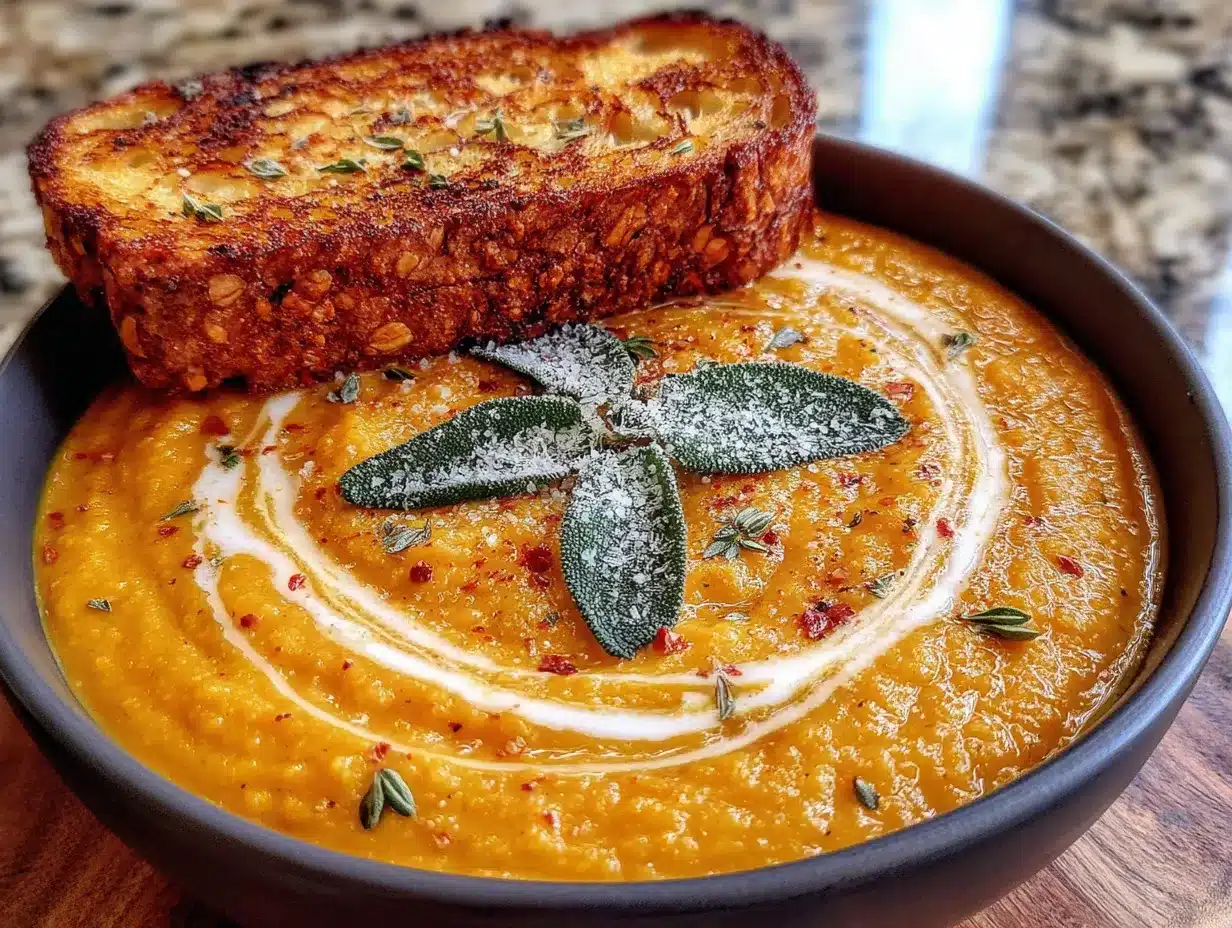
Let’s get cooking. This recipe is straightforward, but I’ll walk you through every step so you feel confident.
- Preheat your oven to 400°F (200°C). Give it a good 15 minutes to come to temperature. While it heats, prepare your squash.
- Prep the butternut squash. Cut off both ends of the squash with a sharp knife, then slice it in half crosswise where the narrow neck meets the bulbous bottom. Stand each piece upright and slice off the skin in strips from top to bottom. Cut the neck into 1-inch cubes. Scoop out the seeds from the bulbous section with a spoon, then cube that part too. Aim for uniform pieces so they roast evenly.
- Roast the vegetables. On your baking sheet, toss the cubed squash, chopped onion, and smashed garlic cloves with the olive oil, a pinch of salt, and a few cracks of black pepper. Spread everything in a single layer — don’t overcrowd the pan or the vegetables will steam instead of roast. Roast for 30 to 35 minutes, flipping halfway through, until the squash is fork-tender and the edges are golden brown and caramelized.
- Combine and simmer. Transfer the roasted vegetables to your soup pot. Add the vegetable broth, maple syrup, cinnamon, and nutmeg. Bring to a gentle boil over medium-high heat, then reduce the heat to low and let it simmer for 10 minutes. This allows the flavors to meld together.
- Blend until smooth. Remove the pot from the heat. If using an immersion blender, blend directly in the pot until the soup is silky smooth. If using a countertop blender, let the soup cool for five minutes, then blend in batches. Be careful — hot liquid expands, so only fill the blender halfway. Hold the lid down with a towel while blending.
- Finish with butter and cream. Return the blended soup to the pot if needed. Stir in the butter until melted, then add the heavy cream or coconut milk if using. Taste and adjust the seasoning — you might want a bit more salt or a pinch more cinnamon. Heat gently over low heat for another two minutes, stirring occasionally.
- Serve and enjoy. Ladle the soup into bowls. I like to add a swirl of cream on top, a sprinkle of black pepper, and maybe a few roasted pumpkin seeds for crunch. Serve hot with crusty bread or a simple grilled cheese sandwich.
The whole process takes about 50 minutes from start to finish, and most of that is hands-off roasting time. Not bad for a soup that tastes like you spent all day in the kitchen.
Cooking Tips & Techniques
I’ve made this soup more times than I can count, and I’ve definitely learned a few things along the way. Here are my best tips:
Don’t skip the roasting step. I know it’s tempting to just boil the squash to save time, but roasting is what gives this soup its deep, caramelized flavor. The high heat brings out the natural sugars in the squash and adds a subtle smokiness that boiling just can’t replicate. Trust the process here.
Cut the squash into even pieces. I learned this after one batch where some cubes were tiny and burnt while others were still hard. Uniform pieces ensure everything roasts at the same rate. Aim for 1-inch cubes.
Use low-sodium broth. This gives you control over the salt level. You can always add more salt at the end, but you can’t take it out. I learned this after accidentally oversalting a batch — it was still edible, but it wasn’t my best work.
Blend carefully. If you’re using a countertop blender, let the soup cool for at least five minutes before blending. Hot liquid creates steam pressure, and I once had the lid blow off mid-blend. It was a mess. Work in small batches and hold the lid down firmly.
Taste as you go. Seasoning is personal. Start with the recommended amounts, then taste and adjust. Sometimes the squash is sweeter, sometimes the broth is saltier. Your palate is the best guide.
Make it ahead. This soup actually tastes better the next day. The flavors have time to meld and deepen. Make a double batch on Sunday, and you’ll have lunch or dinner ready for a busy weeknight.
Variations & Adaptations
One of the best things about this soup is how flexible it is. Here are a few ways to change it up:
Make it vegan. Skip the butter and use coconut milk instead of heavy cream. The coconut milk adds a lovely tropical note that pairs beautifully with the squash. I’ve made this version for a vegan friend, and she asked for the recipe on the spot.
Add some heat. Toss a quarter teaspoon of cayenne pepper or red pepper flakes into the pot before blending. The warmth balances the sweetness of the squash and gives the soup a subtle kick. My husband loves this version.
Swap the squash. No butternut squash? Use a sugar pumpkin, acorn squash, or even sweet potatoes. The cooking time and liquid amount stay the same. I’ve made this with sweet potatoes when squash was out of season, and it was just as good.
Roast with apple. Add one peeled and cubed apple to the baking sheet with the squash. A Honeycrisp or Fuji adds a bright, fruity sweetness that takes the soup to another level. I tried this on a whim one fall, and now it’s my go-to variation.
Make it a meal. Stir in a cup of cooked white beans or shredded chicken after blending for extra protein. It turns the soup into a hearty main dish that will keep everyone full until dinner.
Go gluten-free. This soup is naturally gluten-free, so no changes needed. Just double-check your broth label to make sure it’s certified gluten-free if that’s a concern.
Serving & Storage Suggestions
This soup is incredibly versatile when it comes to serving. Here’s how I like to enjoy it:
Serving temperature. Serve it piping hot. Ladle it into deep bowls and top with a swirl of cream, a drizzle of olive oil, or a sprinkle of toasted pumpkin seeds. A few cracks of black pepper and a pinch of flaky sea salt finish it off beautifully.
What to serve with it. A crusty baguette or sourdough bread is perfect for dipping. For a heartier meal, pair it with a grilled cheese sandwich — the combination is pure comfort food. A simple green salad with a tangy vinaigrette also works well to balance the richness.
Storage instructions. Let the soup cool completely, then transfer it to an airtight container. It will keep in the refrigerator for up to five days. The flavors actually deepen and improve over the first day or two.
Freezing instructions. This soup freezes beautifully. Pour cooled soup into freezer-safe bags or containers, leaving an inch of headspace for expansion. It will keep for up to three months. Thaw overnight in the refrigerator before reheating.
Reheating tips. Reheat gently on the stovetop over medium-low heat, stirring occasionally. If the soup thickens too much after storage, stir in a splash of broth or water to thin it out. You can also reheat individual portions in the microwave — just cover the bowl and heat in 30-second intervals, stirring between each.
How flavors develop. I’ve noticed that this soup is at its best on day two or three. The roasted flavors become more pronounced, and the spices meld together seamlessly. It’s one of those rare dishes that actually improves with time.
Nutritional Information & Benefits
This soup is as nourishing as it is delicious. Here’s a rough estimate per serving (based on six servings, without the optional cream):
- Calories: 180
- Protein: 3g
- Fat: 7g
- Carbohydrates: 30g
- Fiber: 6g
- Sugar: 10g (natural sugars from the squash)
- Sodium: 480mg (varies based on broth)
- Vitamin A: 450% of the Daily Value
- Vitamin C: 35% of the Daily Value
- Potassium: 800mg
Health benefits. Butternut squash is packed with vitamin A, which supports eye health and immune function. It’s also rich in fiber, which aids digestion and keeps you feeling full. The garlic and onions provide antioxidants that help fight inflammation. This soup is naturally gluten-free and can easily be made vegan or dairy-free. It’s a wholesome, feel-good meal that doesn’t sacrifice flavor for nutrition.
Dietary considerations. As written, this soup is vegetarian and gluten-free. To make it vegan, use coconut oil instead of butter and coconut milk instead of cream. For a low-carb option, reduce the maple syrup or omit it entirely — the roasted squash is sweet enough on its own.
Conclusion
This roasted butternut squash soup started as a mistake, but honestly, it’s become one of my most-requested recipes. It’s the kind of dish that proves you don’t need fancy techniques or expensive ingredients to make something truly memorable. Just a little patience, a hot oven, and a willingness to roll with the unexpected.
I love this recipe because it’s forgiving. You can tweak it, swap things out, and it still turns out delicious. It’s the soup I make when I want to feel like I’ve got dinner handled without any stress. And when my family sits down and takes that first spoonful, the quiet that falls over the table tells me everything I need to know.
I’d love to hear how this soup turns out for you. Did you try a variation? Did your picky eater surprise you? Drop a comment below and let me know. And if you’re looking for another cozy meal to round out the week, don’t miss my creamy tomato basil soup — it’s another family favorite that comes together in under an hour. Happy cooking, friends!
Frequently Asked Questions
Can I use frozen butternut squash instead of fresh?
Yes, you can use frozen cubed butternut squash to save time. Just spread it on the baking sheet frozen and roast it straight from the bag. You may need to add an extra 10 minutes to the roasting time, and the texture won’t caramelize quite as deeply as fresh squash, but it still makes a delicious soup.
How do I make this soup dairy-free?
It’s easy. Skip the butter and use coconut milk or another dairy-free creamer instead of heavy cream. The coconut milk adds a subtle sweetness that pairs beautifully with the roasted squash. I’ve made this version many times, and it’s just as creamy and satisfying.
Can I make this soup in a slow cooker?
Absolutely. Toss the cubed squash, onion, and garlic with olive oil and roast them in the oven first for 25 minutes — don’t skip this step, as it’s key for flavor. Then transfer everything to the slow cooker, add the broth and spices, and cook on low for 4 to 6 hours or high for 2 to 3 hours. Blend and finish with butter and cream as directed.
How do I peel butternut squash safely?
Use a sharp Y-shaped vegetable peeler for the best control. First, cut off both ends of the squash so it sits flat on your cutting board. Then slice it in half crosswise where the narrow neck meets the bulbous bottom. Stand each piece upright and peel from top to bottom. If the skin is tough, you can also microwave the whole squash for 2 to 3 minutes to soften it slightly before peeling.
What can I do with the butternut squash seeds?
Don’t throw them away! Rinse the seeds to remove the stringy pulp, toss them with a little olive oil and salt, and roast them on a baking sheet at 350°F for 10 to 12 minutes. They make a fantastic crunchy topping for this soup. I always save mine and roast them while the squash is cooking.
Pin This Recipe!
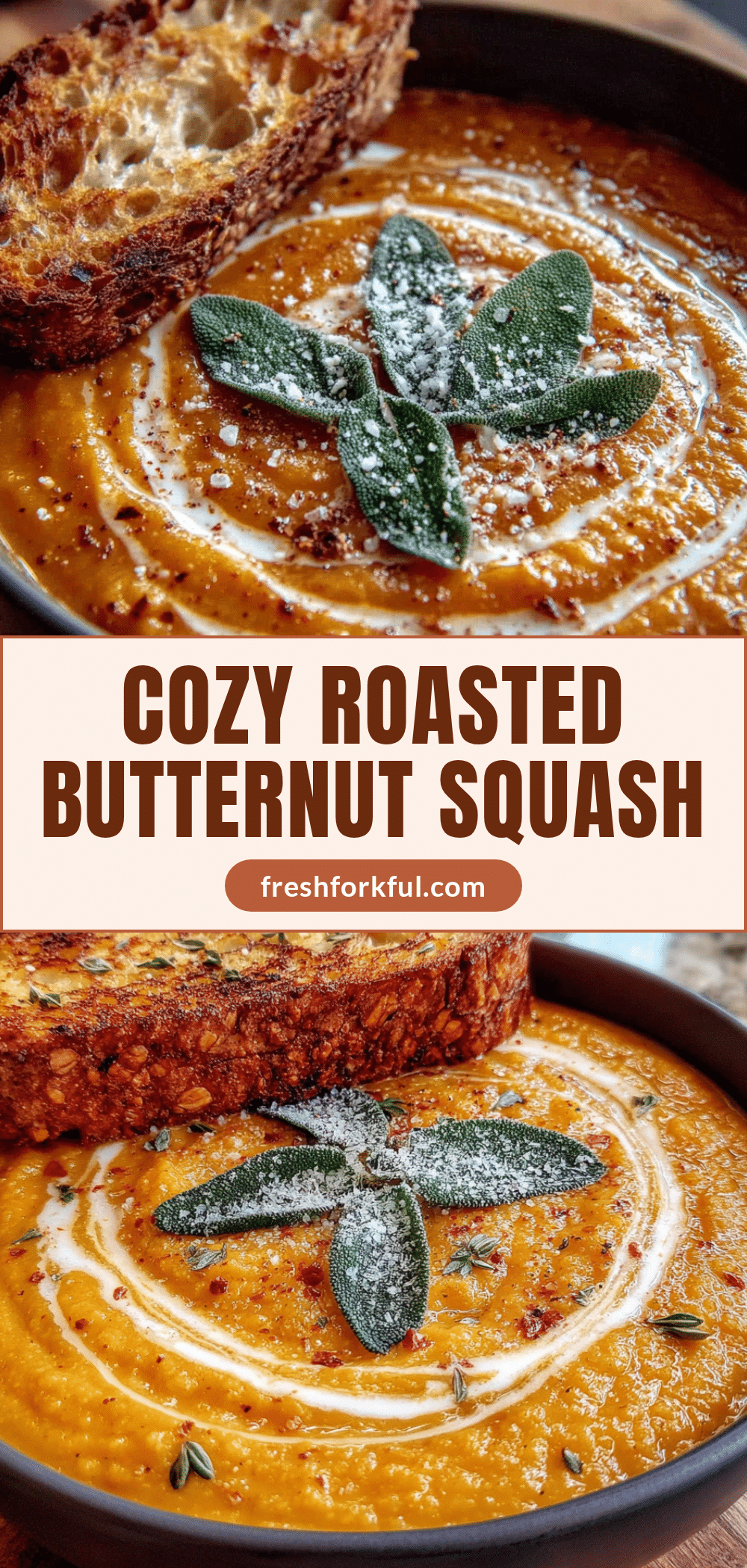
Cozy Roasted Butternut Squash Soup: Easy Family Recipe

This creamy, comforting butternut squash soup is made with roasted squash, onion, and garlic for deep, caramelized flavor. It’s a simple, budget-friendly recipe that’s perfect for busy weeknights and tastes even better the next day.
- Prep Time: 15 minutes
- Cook Time: 35 minutes
- Total Time: 50 minutes
- Yield: 6 servings 1x
- Category: Soup
- Cuisine: American
Ingredients
- 1 medium butternut squash (about 2 to 2.5 pounds), peeled and cubed
- 1 large yellow onion, roughly chopped
- 4 to 5 garlic cloves, smashed
- 2 tablespoons olive oil
- 4 cups low-sodium vegetable broth
- 1 tablespoon unsalted butter
- 1 tablespoon pure maple syrup (optional)
- 1/4 teaspoon ground cinnamon
- 1/8 teaspoon ground nutmeg
- Salt and black pepper to taste
- 1/4 cup heavy cream or coconut milk (optional)
Instructions
- Preheat your oven to 400°F (200°C).
- Prep the butternut squash: Cut off both ends, slice in half crosswise, stand each piece upright and slice off the skin. Cut the neck into 1-inch cubes. Scoop out seeds from the bulbous section and cube that part too.
- On a baking sheet, toss the cubed squash, chopped onion, and smashed garlic cloves with olive oil, a pinch of salt, and black pepper. Spread in a single layer. Roast for 30 to 35 minutes, flipping halfway, until fork-tender and edges are golden brown.
- Transfer roasted vegetables to a large soup pot. Add vegetable broth, maple syrup, cinnamon, and nutmeg. Bring to a gentle boil over medium-high heat, then reduce heat to low and simmer for 10 minutes.
- Remove from heat. Using an immersion blender, blend until smooth. If using a countertop blender, let cool for 5 minutes, then blend in batches, filling no more than halfway and holding the lid down with a towel.
- Return blended soup to the pot. Stir in butter until melted, then add heavy cream or coconut milk if using. Taste and adjust seasoning. Heat gently over low heat for 2 minutes, stirring occasionally.
- Serve hot, topped with a swirl of cream, black pepper, and roasted pumpkin seeds if desired.
Notes
Don’t skip roasting—it gives the soup deep, caramelized flavor. Cut squash into even 1-inch cubes for uniform roasting. Use low-sodium broth to control salt. For a vegan version, skip butter and use coconut milk. Soup tastes even better the next day. Freezes well for up to 3 months.
Nutrition
- Serving Size: 1 serving (about 1.5
- Calories: 180
- Sugar: 10
- Sodium: 480
- Fat: 7
- Saturated Fat: 2
- Carbohydrates: 30
- Fiber: 6
- Protein: 3
Keywords: butternut squash soup, roasted butternut squash soup, easy soup recipe, fall soup, creamy soup, vegetarian soup, gluten-free soup