Love this? Save it for later!
Share the inspiration with your friends
My neighbor, Dave, wasn’t trying to impress anyone. I’d stopped by to borrow his extension ladder on a drizzly Tuesday afternoon, and this smell hit me before I even got his screen door open. It was rich, briny, and creamy all at once — the kind of smell that makes you forget why you came over in the first place. Dave just shrugged and said, “Making chowder. It’s nothing.” But let me tell you, it was anything but nothing.
I stood there in his mudroom, ladder completely forgotten, watching him stir this pot of what I’d later learn was the best homemade New England clam chowder I’d ever tasted. He wasn’t following a fancy recipe. He was just cooking from memory, tossing in things by handfuls, tasting from a wooden spoon like it was the most normal thing in the world. I mean, honestly, I was a little jealous. The casualness of it all — that’s what got me.
Maybe you’ve been there, standing in someone else’s kitchen, realizing they’ve got something special going on and they don’t even know it. That’s how this recipe came into my life. I watched, I asked questions, and I went home and tried it myself the very next day. It took a few batches to get it right, but now this is the chowder I bring to every fall gathering, every holiday potluck, every time I need to feed a crowd something that feels like a warm hug in a bowl. It’s the recipe that makes people close their eyes after the first spoonful. And honestly? That never gets old.
Why You’ll Love This Recipe
This isn’t just another clam chowder recipe you’ll find floating around the internet. I’ve tested this one at least a dozen times — tweaking the cream ratio, playing with the bacon fat, even accidentally oversalting a batch that taught me a very important lesson about canned clams. What I’m sharing with you today is the version that’s earned standing ovations at dinner parties and quiet nods of approval from my most honest critics: my family.
- Quick & Easy: From start to finish, this chowder comes together in about 45 minutes. Perfect for a weeknight dinner when you want something that feels special without spending all evening in the kitchen.
- Simple Ingredients: You won’t need to hunt down anything exotic. Most of these ingredients are already in your pantry or fridge — potatoes, onions, cream, butter, and canned clams.
- Perfect for Entertaining: This chowder was made for gatherings. It scales beautifully for a crowd, can be made ahead of time, and tastes even better the next day. Your guests will think you spent hours on it.
- Crowd-Pleaser: I’ve served this to seafood lovers and seafood skeptics alike. Something about the creamy broth and tender potatoes wins everyone over. It’s comfort food at its finest.
- Unbelievably Delicious: The secret? A combination of clam juice and half-and-half creates a broth that’s rich without being heavy. Plus, the bacon adds a smoky depth that takes this chowder from good to unforgettable.
This is the kind of recipe that makes you look like a hero at the dinner table. It’s the chowder people ask for by name. And the best part? It’s forgiving. You can mess up the timing, add a little extra cream, or use different potatoes, and it still comes out amazing. That’s the kind of recipe worth holding onto.
What Ingredients You Will Need
This recipe uses simple, wholesome ingredients to deliver bold flavor and satisfying texture without the fuss. Most of these are pantry staples or easy to find at any grocery store. Here’s what you’ll need and why each ingredient matters.
For the Chowder Base
- Bacon — 6 slices, chopped. I prefer thick-cut bacon for more flavor and a better texture. The bacon fat is where the magic starts. It adds a smoky, savory foundation that canned clams alone can’t provide.
- Unsalted butter — 2 tablespoons. This adds richness and helps sauté the vegetables without burning. If your bacon is very fatty, you can reduce the butter slightly.
- Yellow onion — 1 large, diced. Onions provide the aromatic base. Sweet onions work well here too, but yellow onions give a more balanced flavor.
- Celery — 2 ribs, diced. Celery adds a subtle freshness and crunch that balances the creaminess. Don’t skip it — it’s a classic chowder ingredient for a reason.
- Garlic — 3 cloves, minced. Fresh garlic is non-negotiable here. It adds depth without overpowering the clams.
For the Broth and Cream
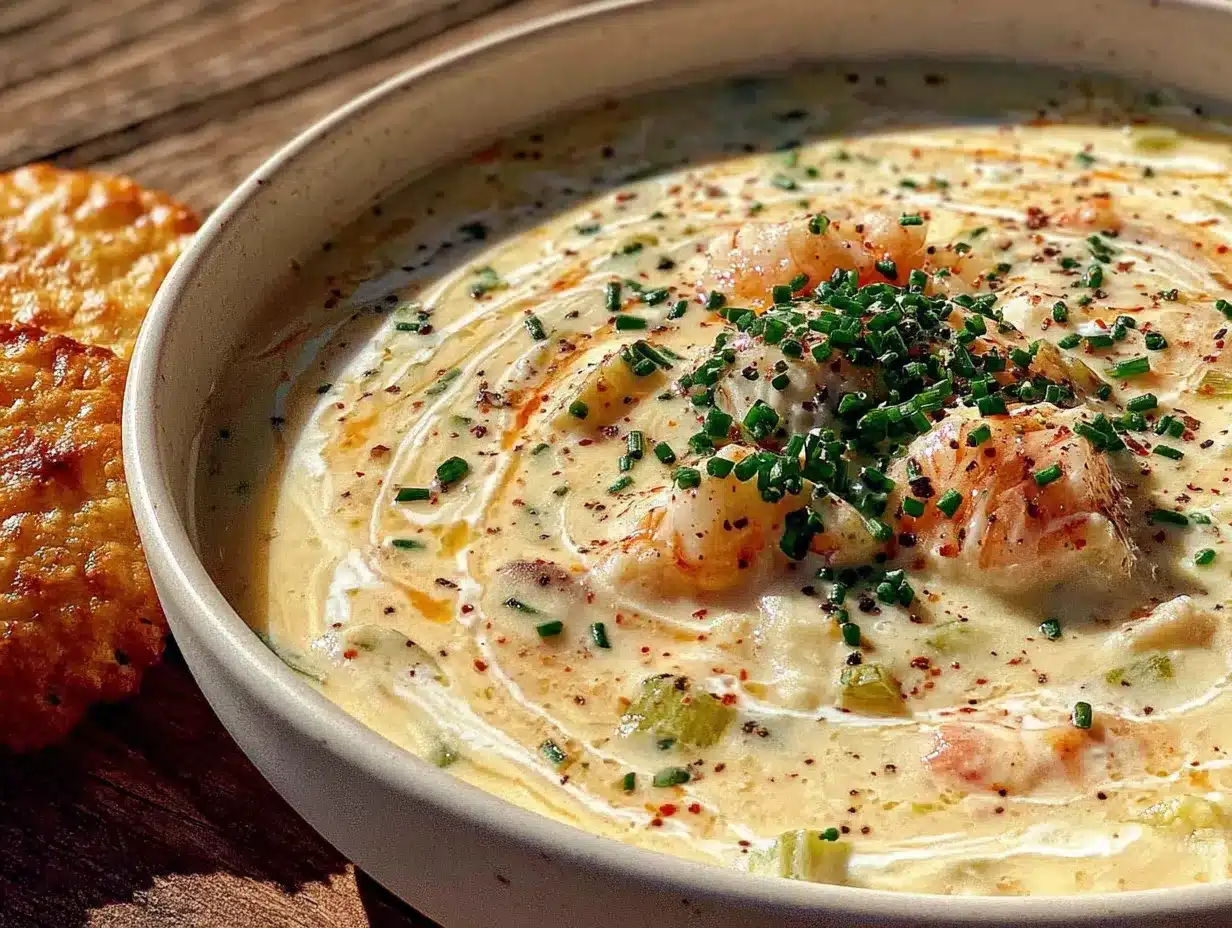
- All-purpose flour — ¼ cup. This thickens the chowder slightly. For a gluten-free version, you can use cornstarch mixed with cold water as a slurry.
- Clam juice — 2 bottles (8 ounces each). This is the backbone of the chowder’s flavor. I recommend Bar Harbor or Snow’s brands for the best taste. You can also use the liquid from canned clams if you’re using fresh.
- Chicken broth — 1 cup. Low-sodium is best so you can control the salt level. Vegetable broth works too if you want to keep it lighter.
- Half-and-half — 2 cups. This gives the chowder its signature creamy texture without being as heavy as heavy cream. You can substitute with whole milk for a lighter version or heavy cream for extra richness.
- Russet potatoes — 3 medium, peeled and diced into ½-inch cubes. Russets break down slightly during cooking, which naturally thickens the chowder. Yukon Golds work too but hold their shape better.
For the Clams and Seasoning
- Canned chopped clams — 3 cans (6.5 ounces each), drained with juice reserved. I use Snow’s or Bumble Bee. Don’t rinse them — you want all that briny goodness. (adds authentic clam flavor)
- Fresh thyme — 1 teaspoon, chopped. Dried thyme works in a pinch, but fresh adds a brighter herbal note.
- Bay leaf — 1. This infuses the chowder with a subtle earthy flavor. Remove it before serving.
- Salt and black pepper — to taste. Go easy on the salt at first — the bacon and clam juice are already salty.
- Fresh parsley — 2 tablespoons, chopped, for garnish. Adds color and a fresh finish.
- Oyster crackers — for serving. Optional but highly recommended for that authentic New England experience.
Equipment Needed
You don’t need a professional kitchen to make this chowder. Here’s what you’ll need:
- Large Dutch oven or heavy-bottomed pot — A 5- to 6-quart pot is ideal. I use my trusty Le Creuset, but any heavy pot works. The key is even heat distribution so the chowder doesn’t scorch.
- Wooden spoon or silicone spatula — For stirring. Wooden spoons are gentle on your pot and don’t scratch.
- Chef’s knife and cutting board — For dicing vegetables and bacon. A sharp knife makes prep faster and safer.
- Measuring cups and spoons — Accuracy matters, especially with the flour and liquid ratios.
- Colander — For draining the canned clams if needed. Though I usually just pour the whole can in and adjust the liquid.
- Ladle — For serving. A deep ladle makes portioning easy.
If you don’t have a Dutch oven, a large soup pot works perfectly. Just keep an eye on the heat and stir more frequently to prevent sticking. And honestly, I’ve made this chowder in a stockpot on a camping stove before — it still turned out amazing. The equipment matters less than the technique.
Preparation Method
Alright, let’s get cooking. This chowder comes together in layers, and each step builds on the last. Take your time, taste as you go, and don’t rush the process.
- Cook the bacon. Place your Dutch oven over medium heat and add the chopped bacon. Cook for 6 to 8 minutes, stirring occasionally, until the bacon is crispy and the fat has rendered. Use a slotted spoon to transfer the bacon to a paper towel-lined plate. Leave about 2 tablespoons of bacon fat in the pot — discard the rest or save it for another use. (Pro tip: Don’t skip this step. The bacon fat is liquid gold for flavor.)
- Sauté the vegetables. Add the butter to the pot with the reserved bacon fat. Once melted, add the diced onion and celery. Cook for 5 to 7 minutes, stirring often, until the onions are translucent and the celery is softened. Add the minced garlic and cook for another minute until fragrant. Your kitchen should smell amazing at this point.
- Make the roux. Sprinkle the flour over the sautéed vegetables and stir constantly for 2 minutes. This cooks out the raw flour taste and helps thicken the chowder. The mixture will look pasty and clumpy — that’s normal. Keep stirring until it’s golden and bubbly.
- Add the liquids. Slowly pour in the clam juice and chicken broth while whisking constantly. This prevents lumps from forming. Bring the mixture to a gentle simmer, then add the diced potatoes, bay leaf, and fresh thyme. Stir everything together.
- Cook the potatoes. Let the chowder simmer for 12 to 15 minutes, or until the potatoes are fork-tender. Don’t overcook them — you want them soft but still holding their shape. Stir occasionally to prevent sticking. (Sensory cue: The broth should be slightly thickened and smell briny and savory.)
- Add the cream and clams. Reduce the heat to low. Stir in the half-and-half and the drained chopped clams. Let everything warm through for 3 to 5 minutes. Do not let the chowder boil at this point, or the cream could curdle. Keep it at a gentle simmer.
- Season and finish. Remove the bay leaf. Taste the chowder and add salt and pepper as needed. Remember, the bacon and clams are already salty, so go easy. Stir in half the cooked bacon, reserving the rest for garnish.
- Serve. Ladle the chowder into bowls and top with the reserved bacon, a sprinkle of fresh parsley, and a handful of oyster crackers if you’re using them. Serve immediately while it’s hot and comforting.
Cooking Tips & Techniques
After making this chowder more times than I can count, I’ve picked up a few tricks that make a real difference. Here are the ones I wish I’d known from the start.
Don’t rush the bacon. I know it’s tempting to crank up the heat to get it crispy faster, but medium heat is your friend. Low and slow renders the fat evenly and gives you perfectly crispy bits without burning. Burnt bacon adds a bitter taste that can ruin the whole pot.
Watch your salt. This is the mistake I made on my second attempt. Canned clams and bacon are both naturally salty, so you really don’t need much additional salt. I add a tiny pinch at the beginning and adjust at the end. You can always add more, but you can’t take it out.
Keep the cream cool. When you add the half-and-half, make sure it’s at room temperature or slightly cool. Adding cold cream to a hot pot can cause it to curdle. I take mine out of the fridge about 15 minutes before I need it.
Use the right potatoes. Russet potatoes are my go-to because they break down slightly and thicken the chowder naturally. If you prefer a chowder with distinct potato chunks, use Yukon Golds or red potatoes. They hold their shape better.
Taste as you go. This is the most important tip I can give you. Seasoning is personal, and the only way to get it right is to taste at every stage. I taste the broth before adding the clams, after adding the cream, and right before serving. It only takes a second, and it saves you from serving something that’s off.
Make it ahead. Here’s a secret: this chowder actually tastes better the next day. The flavors meld together overnight, and the texture gets even creamier. If you’re hosting, make it a day ahead and reheat gently over low heat. Just add a splash of milk or cream to thin it out if it’s too thick.
Variations & Adaptations
One of the best things about this chowder is how adaptable it is. Here are some variations I’ve tried and loved.
Dairy-Free Version
Swap the butter for olive oil and the half-and-half for full-fat canned coconut milk. The coconut flavor is subtle and actually complements the clams beautifully. Use a dairy-free milk alternative for the broth if needed. I’ve served this to dairy-free guests and they couldn’t tell the difference.
Gluten-Free Version
Replace the all-purpose flour with a gluten-free all-purpose blend or use cornstarch as a thickener. Mix 2 tablespoons of cornstarch with 2 tablespoons of cold water to make a slurry, then stir it into the chowder during the last 5 minutes of cooking. It works like a charm.
Extra-Veggie Version
Add a cup of diced carrots or corn kernels along with the potatoes. The carrots add sweetness and color, while corn adds a pop of texture. I tried this during a winter potluck and it was a hit. Just make sure to dice the carrots small so they cook in the same time as the potatoes.
Seafood Medley Version
If you’re feeling fancy, add ½ pound of peeled shrimp or scallops along with the clams. Cook them for 3 to 4 minutes until they’re opaque and cooked through. This turns a simple chowder into a showstopper for special occasions.
Spicy Version
Add a pinch of cayenne pepper or a diced jalapeño when sautéing the vegetables. The heat cuts through the creaminess beautifully. I made this version for a game day gathering and it disappeared in minutes.
Serving & Storage Suggestions
This chowder is best served hot, straight from the pot. Ladle it into deep bowls and top with the reserved bacon, fresh parsley, and a generous handful of oyster crackers. The crackers add a satisfying crunch that contrasts with the creamy broth.
For a complete meal, serve this chowder with a crusty baguette or warm sourdough bread for dipping. A simple green salad with a lemon vinaigrette on the side balances the richness. If you’re hosting a dinner party, start with a light appetizer like shrimp cocktail or a crudité platter, then let the chowder shine as the main event.
When it comes to beverages, a crisp white wine like Sauvignon Blanc or a light lager pairs beautifully. For non-alcoholic options, sparkling water with a squeeze of lemon is refreshing and cuts through the creaminess.
Storage: Let the chowder cool completely before transferring it to an airtight container. It will keep in the refrigerator for 3 to 4 days. The flavors actually deepen overnight, so leftovers are a treat.
Freezing: This chowder freezes well, but there’s a catch — dairy-based soups can separate when thawed. To avoid this, freeze the chowder without the cream, then add the cream when reheating. It keeps for up to 3 months in the freezer.
Reheating: Reheat gently over low heat on the stovetop, stirring occasionally. Add a splash of milk or broth to thin it out if needed. Avoid using high heat, which can cause the cream to curdle. Microwave reheating works in a pinch, but use 50% power and stir every 30 seconds.
Nutritional Information & Benefits
Here’s an estimated nutritional breakdown per serving (based on 6 servings):
| Nutrient | Amount |
|---|---|
| Calories | 385 |
| Total Fat | 22g |
| Saturated Fat | 10g |
| Cholesterol | 65mg |
| Sodium | 890mg |
| Total Carbohydrates | 28g |
| Dietary Fiber | 3g |
| Sugars | 4g |
| Protein | 18g |
This chowder offers several nutritional benefits. Clams are an excellent source of lean protein, iron, and vitamin B12, which supports energy metabolism and red blood cell formation. Potatoes provide potassium and vitamin C, while the celery and onions add fiber and antioxidants. The bacon and cream should be enjoyed in moderation, but this chowder can absolutely fit into a balanced diet.
For a lighter option, swap the half-and-half for whole milk and reduce the bacon to 4 slices. You’ll still get great flavor with fewer calories and less fat.
Note: This chowder contains shellfish, dairy, and gluten (if using all-purpose flour). Adjust ingredients as needed for dietary restrictions.
Conclusion
This homemade New England clam chowder is more than just a recipe — it’s the kind of dish that brings people together. Whether you’re serving it at a cozy family dinner, a holiday gathering, or a casual potluck, it never fails to impress. The creamy broth, tender potatoes, and smoky bacon create a combination that feels both comforting and special.
I’ve made this chowder for picky eaters, seafood skeptics, and even a few self-proclaimed chowder snobs. Every single time, it gets the same reaction: quiet satisfaction followed by requests for seconds. That’s the power of a good recipe made with care.
Now it’s your turn. Give this chowder a try, and don’t be afraid to make it your own. Add extra clams, swap in different herbs, or dial up the spice — this recipe is forgiving and flexible. And when you do make it, I’d love to hear how it turned out. Drop a comment below, share your photos, or tag me on social media. Let’s keep this chowder tradition alive, one bowl at a time.
Happy cooking, and save me a bowl!
Frequently Asked Questions
Can I use fresh clams instead of canned?
Absolutely. If you have access to fresh clams, steam them open in a little white wine or water, then chop the meat and use the steaming liquid as part of your clam juice. You’ll need about 2 pounds of fresh clams in the shell for this recipe. Just be sure to strain the steaming liquid through a fine-mesh sieve to remove any grit.
Why did my chowder turn out too thin?
This usually happens if the potatoes weren’t cooked long enough or if the roux wasn’t given time to thicken. Let the chowder simmer for a few extra minutes to allow the potatoes to break down slightly and release their starch. If it’s still thin, mix 1 tablespoon of cornstarch with 2 tablespoons of cold water and stir it in. Simmer for 2 more minutes and it should thicken right up.
Can I make this chowder in a slow cooker?
Yes, with a few adjustments. Cook the bacon and sauté the vegetables on the stovetop first, then transfer everything except the cream and clams to the slow cooker. Cook on low for 4 to 6 hours or on high for 2 to 3 hours. Add the clams and cream during the last 30 minutes. This method is great for parties because you can keep the chowder warm for hours.
How do I prevent the cream from curdling?
The key is temperature control. Always add the cream to the chowder after you’ve removed it from direct heat or reduced the heat to low. Stir the cream in gently and don’t let the chowder boil after adding it. If you’re reheating leftovers, use low heat and stir frequently. Cold cream added to a hot pot is the most common cause of curdling.
What’s the best way to reheat leftover chowder?
The stovetop method is best. Transfer the chowder to a saucepan and reheat over low heat, stirring occasionally. Add a splash of milk or broth if it’s too thick. Avoid using high heat, which can cause the cream to separate. If you’re in a hurry, the microwave works — just use 50% power and stir every 30 seconds until heated through.
Pin This Recipe!
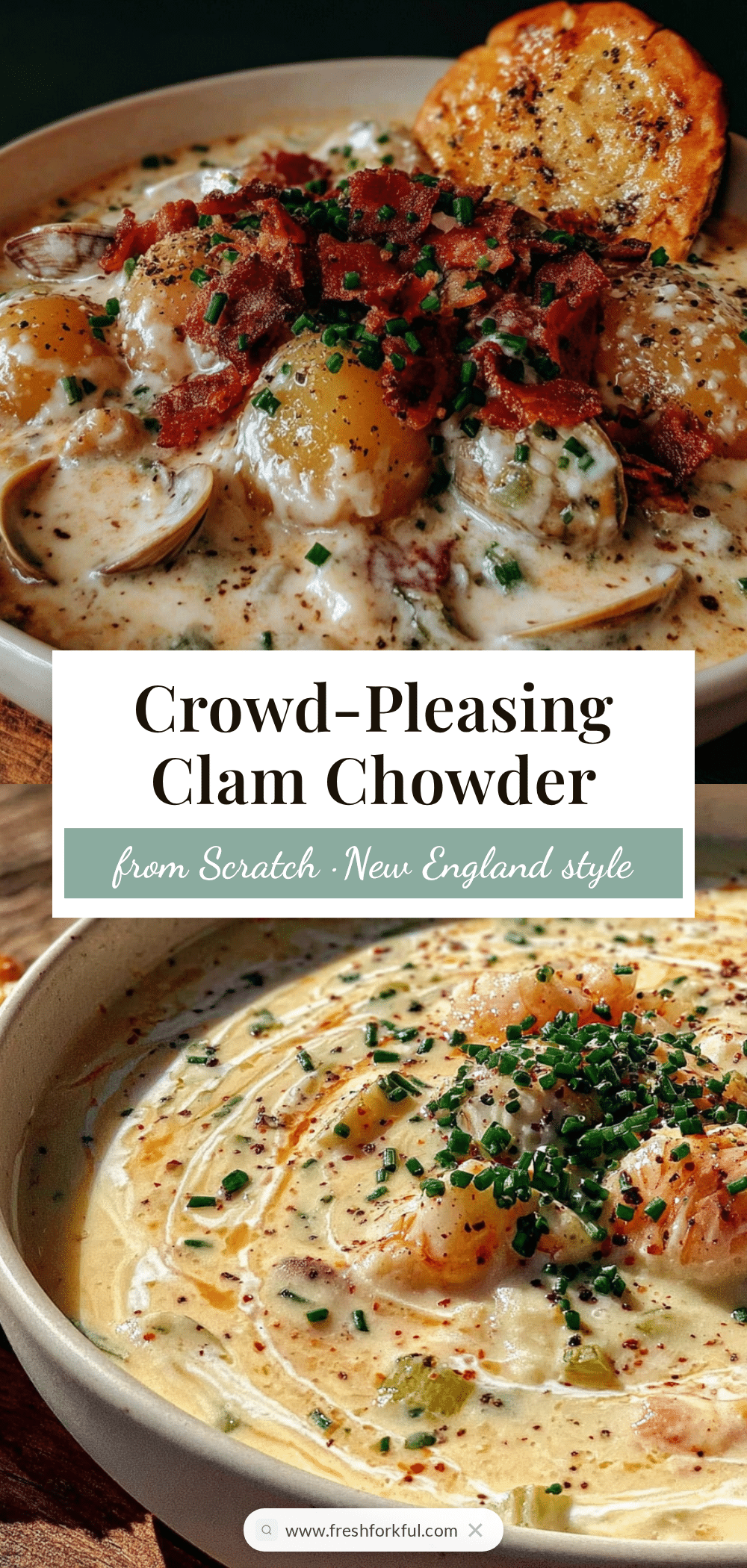
Best Homemade New England Clam Chowder Recipe

This creamy, smoky clam chowder is made with simple ingredients like bacon, potatoes, and canned clams. It’s quick to prepare, perfect for entertaining, and tastes even better the next day.
- Prep Time: 15 minutes
- Cook Time: 30 minutes
- Total Time: 45 minutes
- Yield: 6 servings 1x
- Category: Main Course
- Cuisine: American
Ingredients
- 6 slices bacon, chopped
- 2 tablespoons unsalted butter
- 1 large yellow onion, diced
- 2 ribs celery, diced
- 3 cloves garlic, minced
- ¼ cup all-purpose flour
- 2 bottles (8 ounces each) clam juice
- 1 cup low-sodium chicken broth
- 2 cups half-and-half
- 3 medium Russet potatoes, peeled and diced into ½-inch cubes
- 3 cans (6.5 ounces each) chopped clams, drained with juice reserved
- 1 teaspoon fresh thyme, chopped
- 1 bay leaf
- Salt and black pepper to taste
- 2 tablespoons fresh parsley, chopped
- Oyster crackers for serving (optional)
Instructions
- Cook the bacon: Place a large Dutch oven over medium heat and add the chopped bacon. Cook for 6 to 8 minutes, stirring occasionally, until crispy. Transfer bacon to a paper towel-lined plate. Leave about 2 tablespoons of bacon fat in the pot.
- Sauté the vegetables: Add the butter to the pot with the reserved bacon fat. Once melted, add the diced onion and celery. Cook for 5 to 7 minutes, stirring often, until onions are translucent and celery is softened. Add the minced garlic and cook for another minute until fragrant.
- Make the roux: Sprinkle the flour over the sautéed vegetables and stir constantly for 2 minutes until golden and bubbly.
- Add the liquids: Slowly pour in the clam juice and chicken broth while whisking constantly. Bring to a gentle simmer, then add the diced potatoes, bay leaf, and fresh thyme. Stir together.
- Cook the potatoes: Let the chowder simmer for 12 to 15 minutes, or until the potatoes are fork-tender. Stir occasionally.
- Add the cream and clams: Reduce heat to low. Stir in the half-and-half and the drained chopped clams. Let warm through for 3 to 5 minutes. Do not let boil.
- Season and finish: Remove the bay leaf. Taste and add salt and pepper as needed. Stir in half the cooked bacon, reserving the rest for garnish.
- Serve: Ladle the chowder into bowls and top with reserved bacon, fresh parsley, and oyster crackers if using. Serve immediately.
Notes
Don’t rush the bacon; cook over medium heat for even rendering. Watch your salt—canned clams and bacon are already salty. Keep the cream at room temperature to prevent curdling. Use Russet potatoes for natural thickening or Yukon Golds for distinct chunks. Taste at every stage. This chowder tastes even better the next day.
Nutrition
- Serving Size: 1 bowl (about 1.5 cu
- Calories: 385
- Sugar: 4
- Sodium: 890
- Fat: 22
- Saturated Fat: 10
- Carbohydrates: 28
- Fiber: 3
- Protein: 18
Keywords: clam chowder, New England clam chowder, homemade chowder, creamy chowder, bacon chowder, seafood soup, comfort food