Love this? Save it for later!
Share the inspiration with your friends
Introduction
“I wasn’t expecting much when I stumbled upon a dog-eared notebook at the back of a local health shop last spring,” I admitted to myself as I flipped through the pages filled with handwritten notes about the GAPS diet. It wasn’t some fancy cookbook or a bestseller; it was a simple, well-loved guide passed around among health-conscious locals. Honestly, I was skeptical at first. I mean, a diet focused on gut health with so many restrictions? But something about the way the author described the transformation—how the food healed rather than just filled—caught my attention.
The next afternoon, I found myself in a small kitchen, attempting the introduction phase of the GAPS diet. Between boiling homemade bone broth and peeling fresh garlic cloves, I felt a quiet excitement. The gentle simmering sounds, the earthy aroma of herbs, and the warm glow from the stovetop made it feel less like a diet and more like a ritual. You know that feeling when a kitchen becomes a sanctuary? That’s what happened.
That first week wasn’t perfect. I forgot to soak the nuts one night, and the broth boiled over, making a mess that took an extra 10 minutes to clean. But amidst those little hiccups, something else stood out—the way my body started responding. The sluggishness lifted, and the quiet discomfort I’d been ignoring began to ease. Maybe you’ve been there—looking for a way to reset your health without complicated gimmicks.
This Wholesome GAPS Diet Introduction to Full Protocol recipe stayed with me because it’s not just food. It’s a journey back to nourishing basics, focusing on natural ingredients that work with your body. Let me tell you, it’s the kind of approach that makes you appreciate simple, healing meals more than any trendy fad. Whether you’re just hearing about GAPS or ready to embrace the full protocol, this guide will walk you through it all with a friendly hand.
Why You’ll Love This Recipe
After testing and refining this Wholesome GAPS Diet Introduction to Full Protocol myself (and seeing how it’s helped friends and family), I can confidently say it’s a game-changer for anyone interested in gut healing and wholesome eating. Here’s why it’s worth trying:
- Quick & Easy: Most meals come together in under an hour, which is perfect for those busy days when you want something nourishing without fuss.
- Simple Ingredients: No hard-to-find exotic items—this recipe uses staples you probably already have or can easily find at your local market.
- Perfect for Gut Health: Designed to help soothe and repair your digestive system, this protocol supports overall wellness.
- Crowd-Pleaser: Even those new to GAPS find these dishes flavorful and satisfying, making meals enjoyable for the whole family.
- Unbelievably Delicious: The balance of savory broths, fermented veggies, and fresh herbs creates layers of flavor that surprise and delight.
This isn’t just another restrictive diet recipe—it’s crafted with attention to detail, like slow-simmered broths that extract every bit of goodness and carefully balanced seasonings that respect the protocol’s guidelines. It’s comfort food that feels like a warm hug, but one that’s actually healing your insides.
Whether you’re preparing this for a cozy dinner or as part of a bigger healing journey, you’ll find it’s the kind of recipe that sticks with you—and that’s why I keep coming back to it.
What Ingredients You Will Need
This Wholesome GAPS Diet Introduction to Full Protocol recipe uses simple, wholesome ingredients to deliver bold flavor and nourishing benefits without the fuss. Most of these are pantry staples or fresh items you can easily source. Here’s what you’ll need, grouped for ease:
- For the Healing Broth Base:
- Organic beef or chicken bones (preferably grass-fed or free-range) – about 2 pounds (900g)
- Filtered water – enough to cover bones (about 12 cups / 3 liters)
- Apple cider vinegar (with “the mother”) – 2 tablespoons (helps extract minerals)
- Fresh garlic cloves, peeled and smashed – 4 cloves
- Fresh ginger, sliced – 1-inch piece
- Carrots, peeled and chopped – 2 medium
- Celery stalks, chopped – 2 stalks
- Sea salt, to taste (preferably Celtic or Himalayan)
- Black peppercorns – 1 teaspoon
- For the Introduction Phase Vegetables:
- Zucchini, peeled and diced – 1 medium
- Squash, peeled and diced – 1 small
- Spinach or kale, roughly chopped – 1 cup (optional for later stages)
- For Fermented Sides:
- Raw sauerkraut or homemade fermented vegetables – 1 cup
- Filtered water – for fermenting (if making at home)
- Optional Flavor Boosters:
- Fresh herbs (parsley, thyme, or rosemary) – a handful
- Turmeric powder – 1 teaspoon (anti-inflammatory)
Ingredient Tips: I recommend buying bones from trusted local farmers or organic sources to ensure quality. For fermented veggies, if you’re new to fermenting, store-bought raw sauerkraut from brands like Farmhouse Culture or Bubbies works well. You can swap carrots with parsnips or turnips for seasonal variety.
Equipment Needed

You don’t need fancy gadgets to make this wholesome GAPS diet recipe, but a few basic tools will make your life easier:
- Large stockpot or slow cooker: A heavy-bottomed stockpot works great, but a slow cooker is perfect for hands-off broth simmering.
- Strainer or cheesecloth: To strain the broth and keep it clear and smooth.
- Sharp knife and cutting board: For prepping veggies and herbs.
- Glass jars: If you’re fermenting vegetables, wide-mouth glass jars are best to avoid unwanted chemicals from plastics.
If you don’t have a slow cooker, no worries—just plan for a longer simmer on the stove. Personally, I love my 6-quart slow cooker for making bone broth overnight; it makes mornings so much easier. And for fermenting, a simple airlock lid fits most mason jars, but you can also use a kitchen towel secured with a rubber band.
Preparation Method
- Prepare the Bones: Rinse 2 pounds (900g) of organic beef or chicken bones under cold water to remove any impurities. This step helps keep your broth clear. If you want richer flavor, roast the bones at 400°F (200°C) for 30 minutes until golden brown.
- Start the Broth: Place the bones in a large stockpot or slow cooker. Add 12 cups (3 liters) of filtered water and 2 tablespoons of apple cider vinegar. Let it sit for 20–30 minutes before heating—this helps extract minerals from the bones.
- Add Aromatics and Veggies: Toss in 4 smashed garlic cloves, 1-inch sliced ginger, 2 chopped carrots, 2 celery stalks, 1 teaspoon black peppercorns, and a pinch of sea salt. You can also add fresh herbs like thyme or parsley at this stage.
- Simmer the Broth: Bring everything to a gentle boil, then reduce heat to low. Let it simmer for 12 to 24 hours (slow cooker on low works perfectly for this). Check occasionally to skim off any foam that rises to the surface to keep the broth clean.
- Strain and Cool: After simmering, strain the broth through a fine mesh strainer or cheesecloth into a large bowl. Discard solids. Let the broth cool, then refrigerate to allow fat to rise to the top. You can skim off the fat or stir it back in for extra nutrients.
- Prepare Introduction Vegetables: While the broth simmers, peel and dice zucchini and squash into small pieces. You can steam or lightly boil these in a small amount of the broth until tender (about 10 minutes). Add chopped spinach or kale only in later stages once your gut is more settled.
- Combine and Serve: Warm up a serving of broth with soft vegetables. Include a spoonful of raw sauerkraut or fermented veggies on the side to support gut flora. This combination provides nourishment, flavor, and healing properties all in one bowl.
Notes: If the broth tastes too strong or salty, dilute with water or add more vegetables. The smell should be rich and inviting, not sour or off. If you notice any cloudiness, it’s likely due to residual fat or impurities—strain again if needed.
Cooking Tips & Techniques
Getting the most out of your GAPS diet broth and introduction protocol requires a few insider tips:
- Don’t rush the simmer: Low and slow is key. The longer you simmer, the richer and more nutrient-dense your broth becomes.
- Skim frequently: Foam rises as proteins break down; removing it keeps your broth clear and less bitter.
- Use fresh, quality bones: I learned this the hard way when cheap bones made broth taste bland. Grass-fed or free-range bones add more depth and nutrition.
- Be patient with fermentation: If making your own fermented veggies, keep jars at room temperature for 3-5 days, tasting daily. It’s a balancing act between tanginess and crunch.
- Multitask smartly: While broth simmers, prep veggies or clean up to save time. I usually do this while the slow cooker hums away.
- Adapt flavors gradually: At first, keep seasoning simple. As your palate adjusts, add herbs and spices one at a time to avoid overwhelming your digestive system.
Variations & Adaptations
This GAPS diet introduction recipe can be tailored to fit different needs and preferences. Here are some ideas:
- Vegetarian Option: Use nutrient-rich vegetable broth made from mushrooms, seaweed, and root vegetables, but note this alters the traditional GAPS protocol which emphasizes animal-based broths.
- Seasonal Veggies: Swap zucchini and squash for peeled pumpkin or parsnips in colder months for a warming twist.
- Spice it Up: Add a touch of turmeric or fresh ginger in later stages for anti-inflammatory benefits and flavor complexity.
- Allergen-Friendly: If sensitive to garlic or onions, omit or replace with herbs like oregano or basil for gentle flavor.
- Personal Favorite: I once added a splash of homemade chicken liver pâté stirred into the warm broth for an extra nutrient boost—rich and deeply satisfying!
Serving & Storage Suggestions
This wholesome introduction broth is best served warm, ideally fresh from the stove or slow cooker. Ladle it into a rustic bowl and add a side of fermented vegetables to enjoy a complete gut-healing meal. You can pair it with lightly steamed greens or simple mashed root vegetables for a heartier plate.
Store leftover broth in airtight glass containers in the fridge for up to 4 days. For longer storage, freeze in portions using silicone trays or freezer-safe jars—broth freezes beautifully without losing flavor. When reheating, warm gently on the stove rather than microwaving to preserve nutrients and texture.
Flavors deepen after a day or two in the fridge, so if you can wait, the next day’s broth tastes even better. Just remember to stir or shake well before serving to re-incorporate any separated fat.
Nutritional Information & Benefits
This broth-rich GAPS diet recipe is packed with collagen, amino acids, and minerals like calcium, magnesium, and phosphorus. These support gut lining repair, joint health, and immune function. The fermented vegetables provide probiotics to balance gut flora, helping digestion and reducing inflammation.
It’s naturally gluten-free, grain-free, and low in carbs, making it suitable for many dietary needs. Keep in mind, those with histamine sensitivities should introduce fermented foods slowly. Overall, this recipe offers a nourishing, whole-food approach that supports wellness from the inside out.
Conclusion
Wholesome GAPS Diet Introduction to Full Protocol isn’t just a meal plan—it’s a thoughtful way to nourish your gut and body with real, healing food. I love how it combines tradition with simplicity, making the sometimes intimidating GAPS diet approachable and enjoyable. Whether you’re a beginner or looking to refine your healing kitchen routine, this guide offers a solid foundation.
Give it a try, adjust according to your tastes, and see how it feels for you. I’d love to hear about your experience or any twists you make—sharing those moments makes the journey even richer. Here’s to health, warmth, and plenty of nourishing bowls ahead!
FAQs About the Wholesome GAPS Diet Introduction to Full Protocol
What is the main purpose of the GAPS diet introduction phase?
The introduction phase helps gently heal and seal the gut lining by starting with easy-to-digest foods like bone broth and simple vegetables. This prepares your digestive system for more complex foods later in the protocol.
Can I make the broth ahead of time?
Absolutely! Bone broth can be made in large batches and stored in the fridge for up to 4 days or frozen for several months, making meal prep easier.
Are fermented vegetables necessary during the introduction phase?
Yes, fermented vegetables introduce beneficial probiotics that aid in restoring healthy gut flora. However, start with small amounts and increase gradually to avoid discomfort.
Can I use store-bought broth instead of making my own?
While homemade broth is best for nutrient content and control over ingredients, high-quality store-bought broth with no additives can be a convenient alternative in a pinch.
How do I know when to move from the introduction to the full GAPS protocol?
Once your digestion improves and you tolerate introduction foods well without symptoms, you can gradually add more foods from the full protocol under guidance or based on how your body feels.
For those interested in related comforting and healing recipes, I recall a friend’s recipe for crispy garlic chicken that pairs beautifully with this broth, or a simple homemade fermented sauerkraut to boost gut health alongside your meals.
Pin This Recipe!
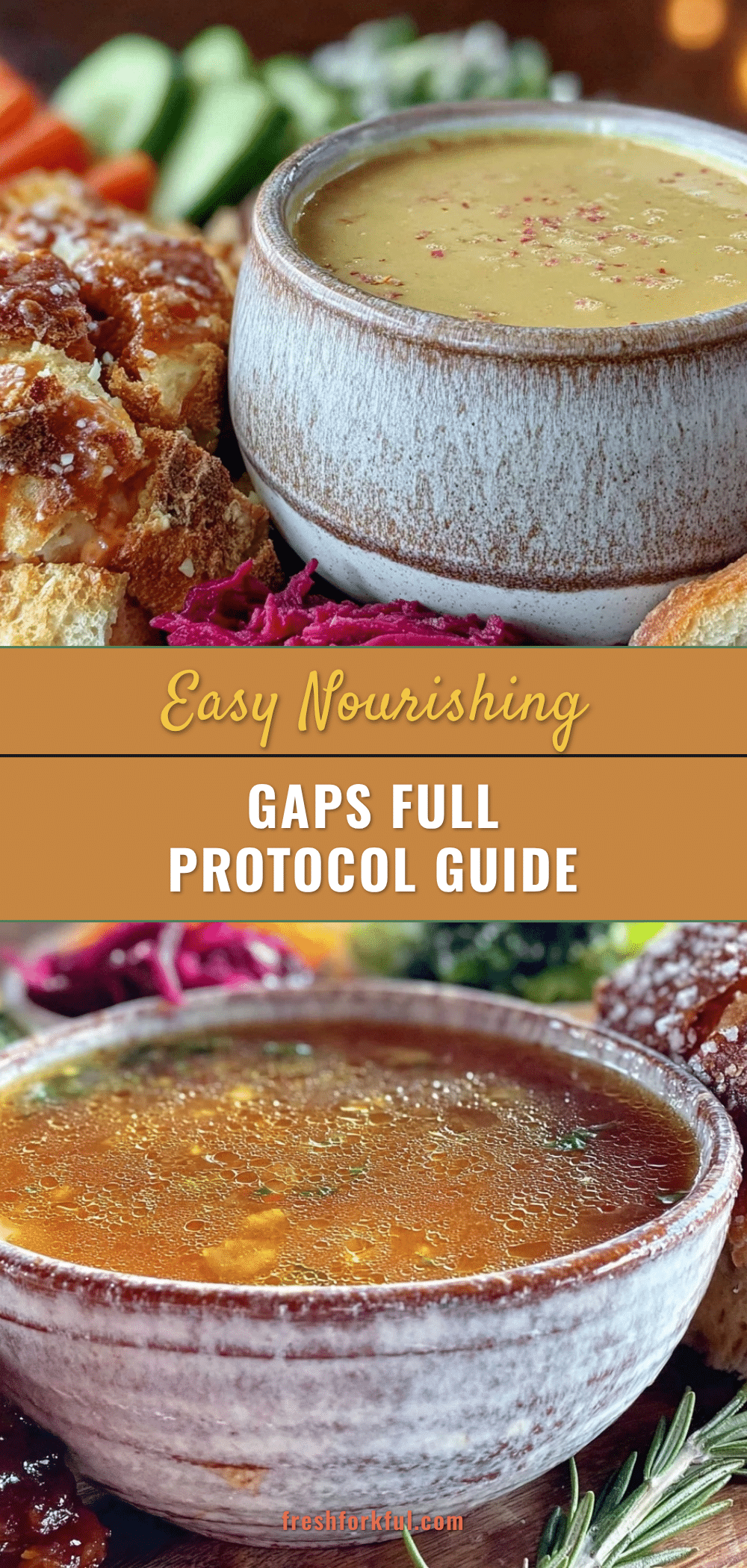
Wholesome GAPS Diet Introduction Full Protocol Easy Guide for Beginners

A nourishing and healing recipe focused on gut health, featuring slow-simmered bone broth with simple vegetables and fermented sides, designed to support the GAPS diet introduction phase.
- Prep Time: 20 minutes
- Cook Time: 12 to 24 hours
- Total Time: 12 hours 20 minutes to 24 hours 20 minutes
- Yield: 6 servings 1x
- Category: Main Course
- Cuisine: GAPS Diet / Healing Broth
Ingredients
- 2 pounds (900g) organic beef or chicken bones (preferably grass-fed or free-range)
- 12 cups (3 liters) filtered water
- 2 tablespoons apple cider vinegar (with ‘the mother’)
- 4 fresh garlic cloves, peeled and smashed
- 1-inch piece fresh ginger, sliced
- 2 medium carrots, peeled and chopped
- 2 celery stalks, chopped
- Sea salt, to taste (preferably Celtic or Himalayan)
- 1 teaspoon black peppercorns
- 1 medium zucchini, peeled and diced
- 1 small squash, peeled and diced
- 1 cup spinach or kale, roughly chopped (optional for later stages)
- 1 cup raw sauerkraut or homemade fermented vegetables
- Fresh herbs (parsley, thyme, or rosemary) – a handful (optional)
- 1 teaspoon turmeric powder (optional)
Instructions
- Rinse 2 pounds (900g) of organic beef or chicken bones under cold water to remove impurities. Optionally, roast bones at 400°F (200°C) for 30 minutes until golden brown for richer flavor.
- Place bones in a large stockpot or slow cooker. Add 12 cups (3 liters) filtered water and 2 tablespoons apple cider vinegar. Let sit for 20–30 minutes before heating to help extract minerals.
- Add 4 smashed garlic cloves, 1-inch sliced ginger, 2 chopped carrots, 2 chopped celery stalks, 1 teaspoon black peppercorns, a pinch of sea salt, and optionally fresh herbs like thyme or parsley.
- Bring to a gentle boil, then reduce heat to low. Simmer for 12 to 24 hours, skimming off foam occasionally to keep broth clear.
- Strain broth through a fine mesh strainer or cheesecloth into a large bowl. Discard solids. Let broth cool, refrigerate to allow fat to rise, then skim fat off or stir back in.
- While broth simmers, peel and dice zucchini and squash. Steam or lightly boil in a small amount of broth until tender (about 10 minutes). Add chopped spinach or kale only in later stages.
- Warm a serving of broth with soft vegetables. Serve with a spoonful of raw sauerkraut or fermented vegetables on the side.
Notes
Simmer broth low and slow for richest flavor and nutrients. Skim foam frequently to keep broth clear. Use fresh, quality bones for best taste. Ferment vegetables at room temperature for 3-5 days, tasting daily. Dilute broth with water if too strong or salty. Store broth in airtight containers in fridge up to 4 days or freeze for longer storage. Reheat gently on stove to preserve nutrients.
Nutrition
- Serving Size: 1 cup broth with veg
- Calories: 150
- Sugar: 3
- Sodium: 400
- Fat: 7
- Saturated Fat: 2
- Carbohydrates: 8
- Fiber: 2
- Protein: 12
Keywords: GAPS diet, bone broth, gut health, fermented vegetables, healing broth, gut healing, wholesome eating, introduction phase, slow simmer, fermented sides