Love this? Save it for later!
Share the inspiration with your friends
“You know that moment when you realize your usual dinner routine just isn’t cutting it anymore? Well, that was me last fall. I was at the local farmer’s market, chatting with a vendor about his fresh kale and heirloom tomatoes, when he casually mentioned how his sister manages her type 2 diabetes with simple, wholesome meals. Honestly, I wasn’t expecting much, but as he described the meal plan she follows—focused on blood sugar control without sacrificing flavor—I was intrigued. I scribbled some notes on the back of my shopping list, juggling a cracked bowl in one hand and my reusable bags in the other (classic me, always a little messy in the kitchen!).
That day, I decided to try out a healthy type 2 diabetes meal plan for blood sugar control that felt easy, approachable, and actually enjoyable. Let me tell you, it’s been a game-changer. Maybe you’ve been there—facing the challenge of balancing nutrition, taste, and the overwhelming flood of advice online. This isn’t about strict diets or bland food. It’s about meals that help keep blood sugar steady while making dinner something you look forward to. I keep going back to this plan because it feels less like a medical regimen and more like a lifestyle you can live with.
So, whether you’re managing type 2 diabetes yourself or cooking for someone you care about, this meal plan is designed to bring a little relief and a lot of flavor to your table. Let me walk you through the good stuff—recipes that work, ingredients that make sense, and tips that come from real kitchen trials (and a few happy accidents!).
Why You’ll Love This Recipe
Managing type 2 diabetes and trying to keep your meals healthy can feel overwhelming, but this meal plan makes it manageable and even enjoyable. Here’s why it’s been a favorite in my kitchen and why I think you’ll appreciate it too:
- Quick & Easy: Recipes come together in under 30 minutes—perfect for busy weeknights or when you’re just too tired to fuss.
- Simple Ingredients: No complicated shopping lists here. Most items are pantry staples or fresh produce you can find year-round.
- Perfect for Everyday Eating: These meals work well for breakfast, lunch, or dinner and are ideal if you want consistent blood sugar support throughout the day.
- Crowd-Pleaser: Family-approved and friendly for picky eaters, so no one feels like they’re missing out.
- Unbelievably Delicious: The combination of fiber, lean protein, and healthy fats creates satisfying and tasty dishes that don’t feel like “diet food.”
What sets this meal plan apart is the focus on balance—combining flavor with blood sugar-friendly choices. For example, blending creamy avocado into dressings adds richness without spiking carbs, and swapping refined grains for quinoa or barley gives a gentle fiber boost. I remember one evening when I accidentally doubled the garlic in a recipe—turns out, it made the dish even better! These little kitchen surprises make cooking fun and remind me that healthy eating doesn’t have to be perfect to be great.
What Ingredients You Will Need
This healthy type 2 diabetes meal plan for blood sugar control leans on wholesome, easy-to-find ingredients that work together to keep your meals nutritious and flavorful. Most of these are pantry staples or fresh produce that you can tweak based on what’s in season or your preferences.
- For the Base:
- Quinoa, rinsed (a great gluten-free grain, rich in protein and fiber)
- Brown rice or barley (for variety and added fiber)
- Leafy greens like kale, spinach, or arugula (fresh and nutrient-dense)
- Proteins:
- Skinless chicken breast or thighs (lean protein, easy to cook)
- Wild-caught salmon or other fatty fish (packed with omega-3s)
- Canned chickpeas or black beans (fiber-rich plant protein, great for salads or stews)
- Eggs, preferably free-range (versatile and nutrient-dense)
- Vegetables & Fruits:
- Cruciferous veggies like broccoli and Brussels sprouts (high in fiber and antioxidants)
- Bell peppers, sliced (adds crunch and vitamin C)
- Avocado, ripe (healthy fats that help with blood sugar stabilization)
- Fresh berries (blueberries or strawberries for a touch of natural sweetness)
- Healthy Fats & Extras:
- Extra virgin olive oil (for cooking and dressings; I prefer California Olive Ranch brand)
- Chia seeds or flaxseeds (adds fiber and omega-3s; sprinkle on yogurt or salads)
- Fresh herbs like parsley, cilantro, or basil (brighten flavors naturally)
- Garlic and ginger (for flavor and anti-inflammatory benefits)
- Lemon or lime juice (adds zest and freshness)
- Seasonings:
- Sea salt (use sparingly)
- Black pepper, freshly ground
- Ground cumin and smoked paprika (adds warmth without sodium)
- Ground cinnamon (great for blood sugar regulation when used in moderation)
If you want to switch things up, almond flour works well for gluten-free baking, and swapping Greek yogurt with coconut yogurt keeps it dairy-free. I always keep a jar of no-sugar-added tomato sauce on hand to add depth to stews and sauces. The key is to mix and match what you have and keep it simple.
Equipment Needed
For this meal plan, you won’t need fancy gadgets—just practical tools that make cooking easier and more enjoyable. Here’s what I use regularly:
- Medium to large non-stick skillet or sauté pan (great for quick cooking of meats and veggies)
- Heavy-bottomed saucepan or pot (for grains like quinoa and rice)
- Sharp chef’s knife and cutting board (trust me, a good knife makes all the difference!)
- Mixing bowls (for prepping salads and combining ingredients)
- Measuring cups and spoons (to keep seasoning and portions consistent)
- Baking sheet (useful for roasting veggies or baking chicken)
- Immersion blender or regular blender (helpful for making dressings or creamy sauces)
If you don’t have an immersion blender, a whisk and some elbow grease will do just fine. I often recommend investing in a good-quality knife and keeping it sharp—makes prep faster and safer. Budget-friendly options like a cast-iron skillet can replace multiple pans and add a nice sear to your proteins. Honestly, once you have these basics, you’re set to make most recipes from this plan without hassle.
Preparation Method
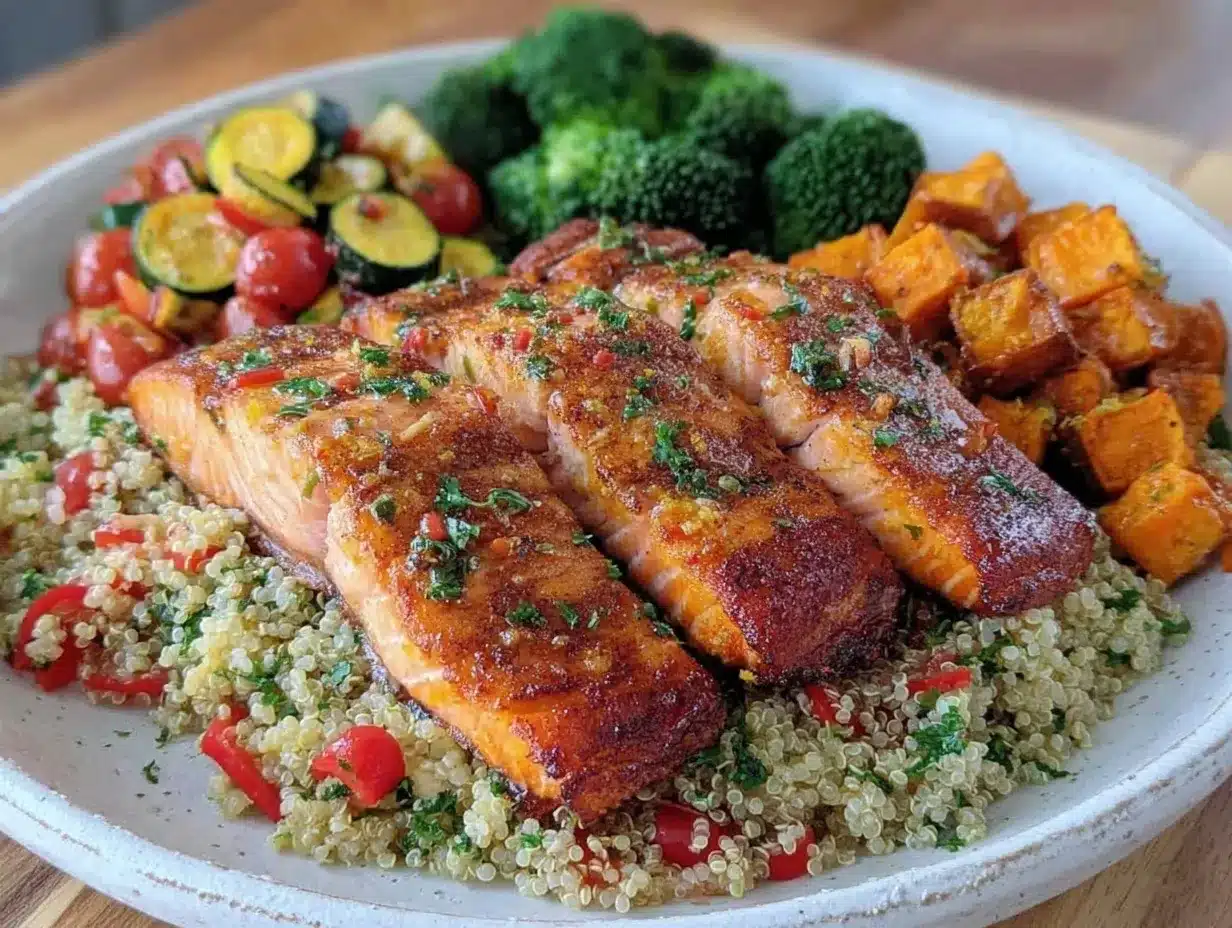
- Cook the Grains: Rinse 1 cup (170 g) of quinoa under cold water. Bring 2 cups (480 ml) of water to a boil in a saucepan. Add quinoa, reduce heat to low, cover, and simmer for 15 minutes or until water is absorbed. Fluff with a fork and set aside. (Tip: Cooking grains ahead saves time later.)
- Prepare the Vegetables: While quinoa cooks, wash and chop 2 cups (150 g) of kale, removing tough stems. Slice 1 bell pepper into thin strips. Rinse and halve 1 cup (150 g) of cherry tomatoes. If using broccoli, cut into bite-sized florets.
- Cook the Protein: Heat 1 tablespoon (15 ml) of olive oil in a non-stick skillet over medium heat. Season 2 skinless chicken breasts (about 12 oz / 340 g) with salt, pepper, and 1 teaspoon (2 g) of smoked paprika. Cook for about 6 minutes per side until cooked through and golden. Let rest for 5 minutes, then slice thinly. (For plant-based option, sauté chickpeas with cumin and garlic for 5 minutes.)
- Make the Dressing: In a small bowl, whisk together 2 tablespoons (30 ml) of olive oil, juice of one lemon, 1 minced garlic clove, 1 teaspoon (2 g) of Dijon mustard, salt, and pepper. Add 1/4 of an avocado mashed for creaminess. Taste and adjust seasoning.
- Assemble the Salad: In a large bowl, combine quinoa, kale, bell pepper, cherry tomatoes, and sliced chicken. Drizzle with dressing and toss gently until everything is coated. Sprinkle 1 tablespoon (10 g) of chia seeds or flaxseeds on top. (Note: If kale feels too tough, massage it with a pinch of salt and a splash of olive oil before mixing.)
- Optional Warm-Up: For a warm meal, heat the salad gently in a skillet for 2-3 minutes or enjoy it fresh as a nutrient-packed lunch or dinner.
- Storage: Store leftovers in an airtight container in the fridge for up to 3 days. Reheat gently or eat cold.
Throughout preparation, keep an eye on the textures—quinoa should be fluffy, chicken juicy but cooked through, and the kale tender but still a bit crisp. If you find the dressing too tart, a small pinch of honey or a splash of balsamic vinegar can balance it out. I’ve learned that prepping veggies the night before saves me a ton of time, especially when mornings get hectic.
Cooking Tips & Techniques
Cooking for blood sugar control means paying attention to balance and timing, but it doesn’t have to be complicated. Here are some tips I’ve picked up along the way:
- Batch cook grains: Cooking quinoa or brown rice in bulk and storing it in the fridge makes meal prep a breeze during the week.
- Protein prep: Grilling or baking chicken in advance and adding it cold or warmed to salads can save you from scrambling at mealtime.
- Don’t overcook veggies: To keep nutrients and texture intact, sauté or steam just until tender-crisp. Overcooked vegetables lose their charm—and some of their benefits.
- Use fresh herbs and spices: They add flavor without extra calories or sodium, which is important for managing blood pressure alongside blood sugar.
- Watch portion sizes: Even healthy foods can impact blood sugar if eaten in large quantities. I keep a mental note of portions, especially with grains and starchy vegetables.
- Keep a kitchen timer handy: It’s easy to get distracted (trust me, I once burned garlic while answering a phone call!). Set timers for each step to avoid mishaps.
A common mistake I’ve seen is skipping protein or healthy fats, which can lead to blood sugar spikes. Pairing fiber-rich veggies with protein and fat slows digestion and provides lasting energy. Also, don’t forget to hydrate—sometimes thirst disguises itself as hunger!
Variations & Adaptations
This meal plan is flexible and can be adjusted to suit different tastes and dietary needs. Here are some ideas to make it your own:
- Low-carb option: Swap quinoa for cauliflower rice to reduce carbohydrates while keeping volume and texture.
- Vegetarian/vegan: Replace chicken with marinated tofu, tempeh, or roasted chickpeas for protein. Use coconut yogurt for creamy dressings instead of avocado if preferred.
- Seasonal twists: In cooler months, roast root vegetables like sweet potatoes or carrots to add warmth and sweetness. Summer calls for fresh cucumbers and zucchini ribbons to lighten the dish.
- Flavor variations: Experiment with different spice blends—try za’atar, curry powder, or chili flakes to keep meals exciting.
- Allergen-friendly: Use olive oil instead of butter, and ensure grains are gluten-free like millet or certified gluten-free oats.
One personal favorite variation is adding roasted butternut squash and pumpkin seeds in the fall — it adds a cozy sweetness and crunch that’s irresistible. Don’t hesitate to play around; cooking for blood sugar control shouldn’t feel restrictive but empowering.
Serving & Storage Suggestions
Serving these meals fresh is ideal, but they also hold up well for leftovers. Here’s how to get the most out of your dishes:
- Serving temperature: Enjoy salads at room temperature or slightly chilled. Warm dishes taste best freshly heated but can be gently reheated on the stovetop or microwave.
- Presentation: Add a sprinkle of fresh herbs and a wedge of lemon on the side to brighten flavors and add a pop of color.
- Complementary sides: Pair with a small green salad, steamed asparagus, or a cup of herb tea for a balanced meal.
- Storage: Keep meals in airtight containers in the fridge for up to 3 days. For longer storage, freeze cooked grains and proteins separately in freezer-safe bags for up to 1 month.
- Reheating tips: Thaw frozen components overnight in the fridge. Reheat gently to avoid drying out proteins, adding a splash of water or broth if needed.
Flavors often deepen after a day or two, so leftovers can taste even better. Just remember to keep dressings separate when storing salads to prevent sogginess. I like to keep a little extra dressing on hand to freshen things up before serving.
Nutritional Information & Benefits
This meal plan is designed to support blood sugar control while providing balanced nutrition. A typical serving contains approximately:
| Nutrient | Amount per serving |
|---|---|
| Calories | 350–400 kcal |
| Carbohydrates | 35–40 g |
| Fiber | 8–10 g |
| Protein | 25–30 g |
| Fat | 12–15 g (mostly healthy fats) |
Key ingredients like quinoa and leafy greens provide fiber to slow glucose absorption. Healthy fats from olive oil and avocado help improve insulin sensitivity, while lean proteins stabilize blood sugar levels. This plan is naturally gluten-free and can be adapted for low-carb or plant-based diets. If you have allergies to nuts or seeds, simply omit or substitute with safe options.
From a wellness perspective, I appreciate how this meal plan supports steady energy throughout the day without crashes. It’s a reminder that food can be both medicine and comfort.
Conclusion
Trying a healthy type 2 diabetes meal plan for blood sugar control doesn’t have to feel like a chore or taste like cardboard. This plan combines simple, nourishing ingredients with fresh flavors and practical cooking methods that fit real life. I love sharing this because it’s not just about managing a condition—it’s about enjoying meals that feel good in every way.
Feel free to tweak the recipes and tailor the meals to your taste and lifestyle. Maybe you’ll discover your own happy accident or favorite variation along the way. If you give these recipes a try, I’d love to hear how they worked for you—drop a comment or share your own twists. Remember, cooking is a journey, and every step counts toward better health and happiness.
Here’s to good food that supports you every day!
FAQs
What makes this meal plan suitable for blood sugar control?
This plan emphasizes balanced meals with fiber-rich vegetables, lean proteins, and healthy fats that slow sugar absorption and help maintain stable blood glucose levels.
Can I prepare these meals ahead of time?
Absolutely! Grains and proteins can be batch-cooked and stored in the fridge for up to 3 days, making weekday meal prep simple and stress-free.
Are these recipes suitable for people with gluten intolerance?
Yes, most ingredients are naturally gluten-free. Just ensure any grains used are certified gluten-free if you are sensitive.
How can I add more variety to the meal plan?
Try swapping proteins, using seasonal vegetables, and changing up herbs and spices to keep meals exciting and flavorful.
Is this meal plan good for weight management as well?
Yes, the focus on nutrient-dense, high-fiber foods and balanced macros supports healthy weight management alongside blood sugar control.
Pin This Recipe!
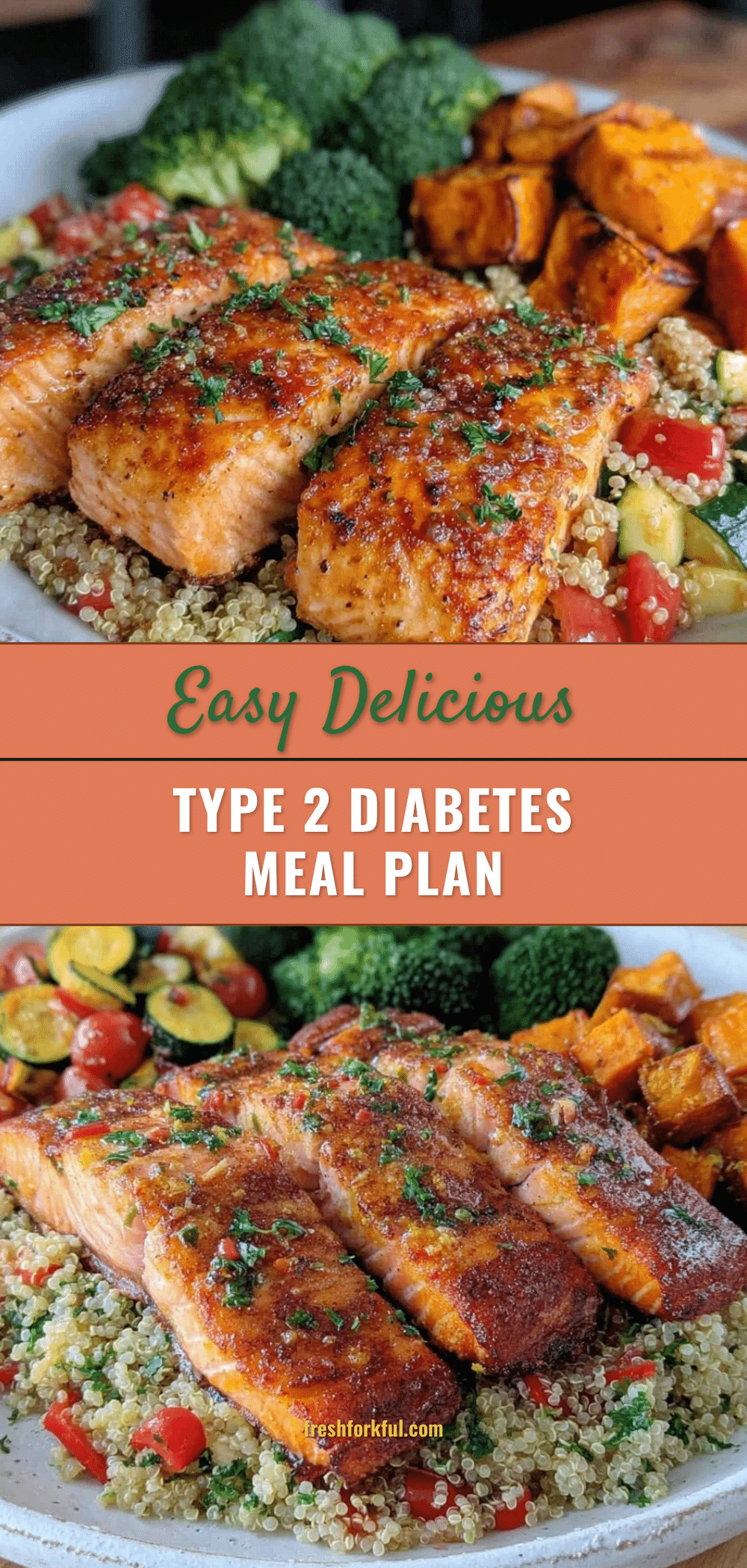
Healthy Type 2 Diabetes Meal Plan for Blood Sugar Control Easy Recipes
A simple, wholesome meal plan designed to help manage type 2 diabetes by balancing nutrition and flavor with quick, easy recipes that support blood sugar control.
- Prep Time: 10 minutes
- Cook Time: 25 minutes
- Total Time: 35 minutes
- Yield: 4 servings 1x
- Category: Main Course
- Cuisine: American
Ingredients
- 1 cup quinoa, rinsed
- Brown rice or barley (optional for variety)
- 2 cups kale, chopped, stems removed
- 1 bell pepper, sliced
- 1 cup cherry tomatoes, halved
- 2 skinless chicken breasts (about 12 oz)
- Olive oil (extra virgin, for cooking and dressings)
- 1 tablespoon chia seeds or flaxseeds
- 1/4 avocado, mashed
- Juice of 1 lemon
- 1 garlic clove, minced
- 1 teaspoon Dijon mustard
- Salt (use sparingly)
- Black pepper, freshly ground
- 1 teaspoon smoked paprika
- Optional: canned chickpeas or black beans (for plant-based protein)
- Optional: fresh herbs like parsley, cilantro, or basil
- Optional: ground cumin, ground cinnamon, ginger
Instructions
- Rinse 1 cup quinoa under cold water. Bring 2 cups water to a boil in a saucepan. Add quinoa, reduce heat to low, cover, and simmer for 15 minutes or until water is absorbed. Fluff with a fork and set aside.
- While quinoa cooks, wash and chop 2 cups kale, removing tough stems. Slice 1 bell pepper into thin strips. Rinse and halve 1 cup cherry tomatoes. If using broccoli, cut into bite-sized florets.
- Heat 1 tablespoon olive oil in a non-stick skillet over medium heat. Season 2 skinless chicken breasts with salt, pepper, and 1 teaspoon smoked paprika. Cook about 6 minutes per side until cooked through and golden. Let rest for 5 minutes, then slice thinly. For plant-based option, sauté chickpeas with cumin and garlic for 5 minutes.
- In a small bowl, whisk together 2 tablespoons olive oil, juice of one lemon, 1 minced garlic clove, 1 teaspoon Dijon mustard, salt, and pepper. Add 1/4 mashed avocado for creaminess. Taste and adjust seasoning.
- In a large bowl, combine quinoa, kale, bell pepper, cherry tomatoes, and sliced chicken. Drizzle with dressing and toss gently until coated. Sprinkle 1 tablespoon chia seeds or flaxseeds on top. If kale feels too tough, massage it with a pinch of salt and a splash of olive oil before mixing.
- Optional: For a warm meal, heat the salad gently in a skillet for 2-3 minutes or enjoy fresh as a nutrient-packed lunch or dinner.
- Store leftovers in an airtight container in the fridge for up to 3 days. Reheat gently or eat cold.
Notes
Batch cook grains and proteins ahead to save time. Massage kale with salt and olive oil if too tough. Use fresh herbs and spices to enhance flavor without added sodium. Store dressings separately to prevent sogginess. Reheat gently to avoid drying out proteins. Variations include swapping quinoa for cauliflower rice for low-carb, or using tofu/tempeh for vegetarian options.
Nutrition
- Serving Size: 1 serving (approxima
- Calories: 375
- Sugar: 5
- Sodium: 250
- Fat: 13.5
- Saturated Fat: 2
- Carbohydrates: 37.5
- Fiber: 9
- Protein: 27.5
Keywords: type 2 diabetes, blood sugar control, healthy meal plan, easy recipes, quinoa salad, lean protein, fiber-rich, gluten-free, low-carb option