Love this? Save it for later!
Share the inspiration with your friends
“Mom, what’s for lunch tomorrow?” That question landed on a busy Thursday evening as I was trying to juggle work emails and dinner prep. My son, who’s been managing type 1 diabetes since kindergarten, looked hopeful but a bit tired of the same old sandwich routine. Honestly, packing a healthy type 1 diabetic school lunch for carb counting felt like walking a tightrope some days.
I remember one afternoon, while waiting at a pediatric diabetes support group, I scribbled down ideas from other parents juggling carb counts and picky eaters. One mom shared how she turned simple ingredients into lunchbox magic that made carb tracking easier without sacrificing flavor or nutrition. That little chat shifted my whole approach.
Let’s face it, school lunches for kids with type 1 diabetes require more than just throwing together food; it’s about balancing nutrition, taste, and precise carb counts to keep blood sugars steady. Maybe you’ve been there—staring at ingredient labels, second-guessing portion sizes, or wrestling with a child’s lunch preferences. This recipe collection is born from those real moments, with tweaks and tips that actually work for busy families like yours and mine.
So, if you’re hunting for healthy type 1 diabetic school lunch ideas that make carb counting simpler and mealtime less stressful, you’re in the right place. This isn’t just another lunch plan—it’s a toolkit built from experience, trial, and a little kitchen chaos (I won’t lie, I once spilled hummus all over the counter mid-packing). Stick with me, and we’ll make school lunch prep something you can feel good about every day.
Why You’ll Love This Recipe
After countless lunchbox experiments and carb calculations, I can honestly say this healthy type 1 diabetic school lunch approach stands out for a few solid reasons:
- Quick & Easy: Comes together in under 15 minutes, perfect for those hectic school mornings or last-minute lunchbox assembly.
- Simple Ingredients: No need to hunt down specialty items—most ingredients are pantry staples or easy finds at your local grocery store.
- Perfect for School Days: Balanced nutrition and portion sizes designed specifically for carb counting make it a breeze to manage blood sugars.
- Crowd-Pleaser: Kids genuinely enjoy these lunches, making it easier to stick with healthy habits without daily battles.
- Unbelievably Delicious: The flavors and textures keep lunches interesting—think crunchy, creamy, and savory all in one box.
What makes this recipe collection different? It’s not just about carb counting—it’s about making healthy lunches that don’t feel like a chore. Through trial and error, I found that prepping components like homemade dips, portioned nuts, and fresh veggies ahead of time keeps everything seamless. Plus, I’ve included tips for swapping ingredients to suit your child’s tastes and dietary needs.
This recipe collection isn’t just functional; it’s comforting. It’s the kind of lunch that makes your kid close their eyes and smile after the first bite—and as a parent, that’s priceless.
What Ingredients You Will Need
This recipe uses simple, wholesome ingredients to deliver bold flavor and satisfying texture without the fuss. Most are everyday items, but I’ll include notes on the best choices and possible swaps.
- For the Protein:
- Cooked chicken breast, shredded or diced (great for lean protein and easy carb tracking)
- Hard-boiled eggs (portable and filling)
- Low-fat cheese cubes (adds calcium and protein, choose brands like Cabot or Sargento)
- Plain Greek yogurt (acts as a creamy dip base, opt for Fage or Chobani)
- For the Carbs:
- Whole grain crackers (look for ones with 15g carbs or less per serving)
- Fresh veggies like carrot sticks, cucumber slices, and cherry tomatoes (low in carbs and high in fiber)
- Small apples or berries (portion carefully to stay within carb limits)
- Mini whole wheat pita pockets (easy to fill and portion)
- For the Extras:
- Hummus or guacamole (homemade or store-bought, watch serving sizes)
- Raw almonds or walnuts (a handful adds healthy fats and protein)
- Olive oil (for drizzling on veggies or mixing into dips)
- Fresh herbs like parsley or dill (for flavor without added carbs)
If you’re looking for gluten-free options, swap whole grain crackers and pita with gluten-free alternatives or extra veggies. For dairy-free needs, replace cheese and yogurt with soy-based or coconut-based products. I’ve found that sticking to fresh, whole foods makes carb counting more predictable and less stressful.
Equipment Needed
For packing a healthy type 1 diabetic school lunch that’s easy to assemble and carb-count friendly, you’ll want a few key tools:
- A good-quality lunchbox with separate compartments or small containers to keep foods distinct (I love the Bentgo Kids lunchbox for this)
- Small silicone or glass containers with lids for dips and dressings
- A sharp kitchen knife for slicing veggies and proteins neatly
- A digital kitchen scale (crucial for precise carb counting and portion control)
- Reusable snack bags or beeswax wraps for sandwiches and crackers
If you don’t have a kitchen scale yet, a measuring cup and tablespoon set can help, but honestly, a scale saves so much guesswork. For budget-friendly options, check out basic digital scales online or at discount stores; they really pay off when managing carb intake.
Preparation Method
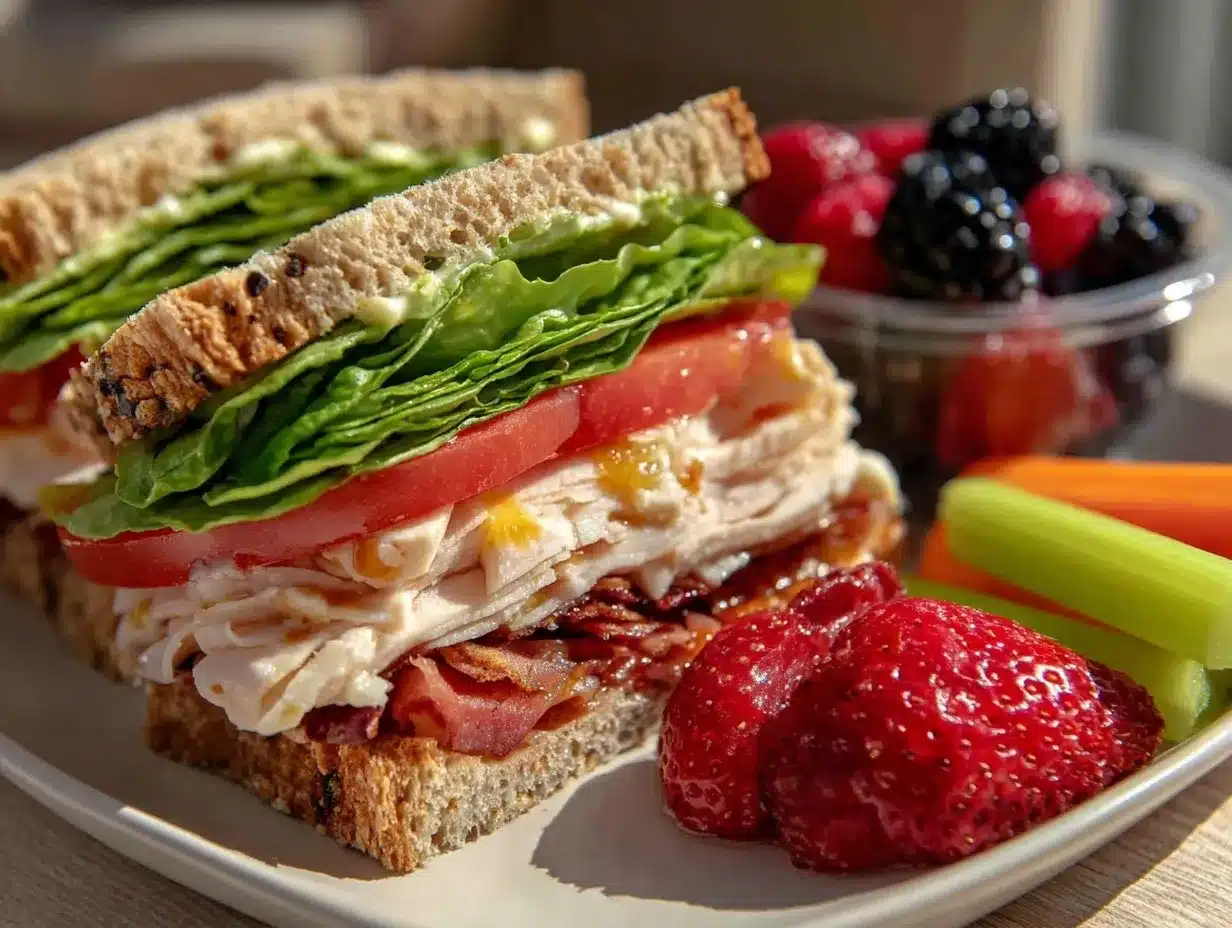
- Cook and Prep Proteins (10 minutes)
Start by cooking chicken breasts or boiling eggs. Shred or dice the chicken into bite-sized pieces. Peel and halve the eggs if using. These proteins are your lunchbox anchors and help balance blood sugar levels. - Wash and Cut Veggies (5-7 minutes)
Rinse carrot sticks, cucumber slices, and cherry tomatoes under cold water. Cut to kid-friendly sizes. Fresh veggies add crunch and fiber, which help slow carb absorption. - Assemble Dips and Extras (5 minutes)
Portion hummus or guacamole into small containers. Add a drizzle of olive oil and sprinkle with fresh herbs for flavor. Include a small handful of nuts wrapped separately to maintain crunch. - Measure Carbs Precisely (5 minutes)
Using your kitchen scale, weigh crackers, pita bread, or fruit portions. For instance, 30g whole grain crackers or 1 small apple slice usually fits well within typical carb limits. Logging this data helps with insulin dosing. - Pack the Lunchbox (5 minutes)
Place each component into the lunchbox compartments, keeping wet and dry items separate. Add an ice pack to keep perishables fresh. Double-check that portions match your carb goals. - Label and Note (Optional)
For school nurses or caregivers, include a small note with carb counts and any special instructions. It takes a minute but can save confusion later.
One tip: I like prepping some ingredients the night before (like cooking chicken and boiling eggs), so mornings are faster. Also, if your kid likes dipping, pack dips separately to avoid soggy veggies.
Cooking Tips & Techniques
Managing carb counting while keeping lunches tasty can be tricky. Here’s what I’ve learned through experience:
- Consistency is Key: Use the same brands and serving sizes regularly to make carb counting predictable. Changing crackers or bread types can throw off estimates.
- Mix Textures: Including crunchy, creamy, and soft elements keeps lunches interesting and more appealing to kids.
- Watch Portion Sizes: Always weigh or measure carbs—eyeballing leads to surprises in blood sugar later.
- Batch Prep: Cook proteins and chop veggies in bulk to save time during busy mornings.
- Stay Flexible: Have a few backup options for days when your child isn’t in the mood for the planned lunch.
- Label Everything: Mark containers with carb counts for quick reference, especially helpful for caregivers or teachers.
I once forgot to pack the protein one morning (yes, chaos!), and the blood sugar was all over the place that day—lesson learned. Now I keep a checklist taped to the fridge to prevent those slip-ups.
Variations & Adaptations
This healthy type 1 diabetic school lunch plan can be adapted easily depending on preferences, dietary restrictions, or seasonal ingredients:
- Vegetarian Version: Swap chicken for chickpeas or lentil salad. Hard-boiled eggs and cheese provide protein, too.
- Gluten-Free Swap: Replace whole grain crackers and pita with gluten-free crackers or rice cakes. Fresh veggies and fruit remain the same.
- Seasonal Fruits: In autumn, try apple slices with a sprinkle of cinnamon. Summer calls for fresh berries or grapes (watch portions).
- Dairy-Free Option: Use dairy-free cheese alternatives and coconut yogurt dips.
- Flavor Boost: Add a sprinkle of everything bagel seasoning on the cheese cubes or a dash of smoked paprika to hummus for a little twist.
One variation my son loves is swapping out the usual hummus for a black bean dip, which changes the flavor and adds fiber without increasing carbs much. It’s a simple swap that keeps lunch exciting.
Serving & Storage Suggestions
Serve these lunches chilled or at room temperature—both work well. Using an insulated lunchbox with an ice pack keeps everything fresh until lunchtime. I recommend packing dips separately to avoid soggy veggies or crackers.
This lunch pairs well with a small bottle of water or unsweetened iced tea to stay hydrated. For after-school snacks, consider fresh fruit or a slice of cheese to maintain balanced energy.
Store leftovers (like cooked chicken or chopped veggies) in airtight containers in the fridge for up to 3 days. If you batch cook proteins, freeze portions individually and thaw overnight before packing.
Reheating isn’t usually necessary, but if your child prefers warm food, use a microwave-safe container and heat briefly at school if possible. Flavors tend to meld nicely over time, so lunches prepared the night before often taste even better.
Nutritional Information & Benefits
This healthy type 1 diabetic school lunch provides a balanced mix of macronutrients tailored for blood sugar control. On average, a typical lunch contains about 45-50 grams of carbohydrates, 20-25 grams of protein, and healthy fats from nuts and olive oil.
Key benefits include:
- Steady energy release thanks to fiber-rich vegetables and whole grains
- Protein to support growth and stabilize blood sugar
- Healthy fats for brain development and satiety
- Low added sugars, reducing blood sugar spikes
For families managing carb counting, this lunch plan fits nicely into most insulin dosing schedules and offers flexibility for adjustments. Note allergens like nuts and dairy, and swap as needed for safety.
Conclusion
Putting together a healthy type 1 diabetic school lunch for carb counting doesn’t have to feel overwhelming. With a little prep, some trusty ingredients, and these practical tips, you can create lunches that keep your child nourished, satisfied, and confident throughout the school day.
Remember, every family’s needs are unique—feel free to tweak portions and ingredients to suit your child’s tastes and health goals. I love this approach because it’s grounded in real life—imperfect, flexible, and focused on making life easier.
Give these ideas a try and share how your lunches turn out—I’d love to hear your adaptations or favorite combos. Here’s to stress-free, healthy, and tasty school lunches that work for your family every day!
FAQs
What are some easy carb counting tips for school lunches?
Use a kitchen scale to weigh portions, stick to consistent brands, and prepare a simple chart of carb counts for common lunch items. Pre-portion snacks to avoid surprises.
Can I prepare these lunches the night before?
Absolutely! Prepping proteins and chopping veggies the night before saves time and reduces morning stress. Just keep cold items refrigerated overnight.
How do I handle a picky eater with type 1 diabetes?
Try offering familiar foods with small tweaks, like adding a favorite dip or mixing textures. Involve your child in lunch prep to boost interest.
Are there gluten-free options included?
Yes, simply swap crackers and pita with gluten-free equivalents or extra veggies. Always check labels to avoid hidden gluten.
What if my child needs dairy-free lunches?
Replace cheese and yogurt with dairy-free alternatives like almond or coconut-based products. Many dips also have dairy-free versions available.
Pin This Recipe!
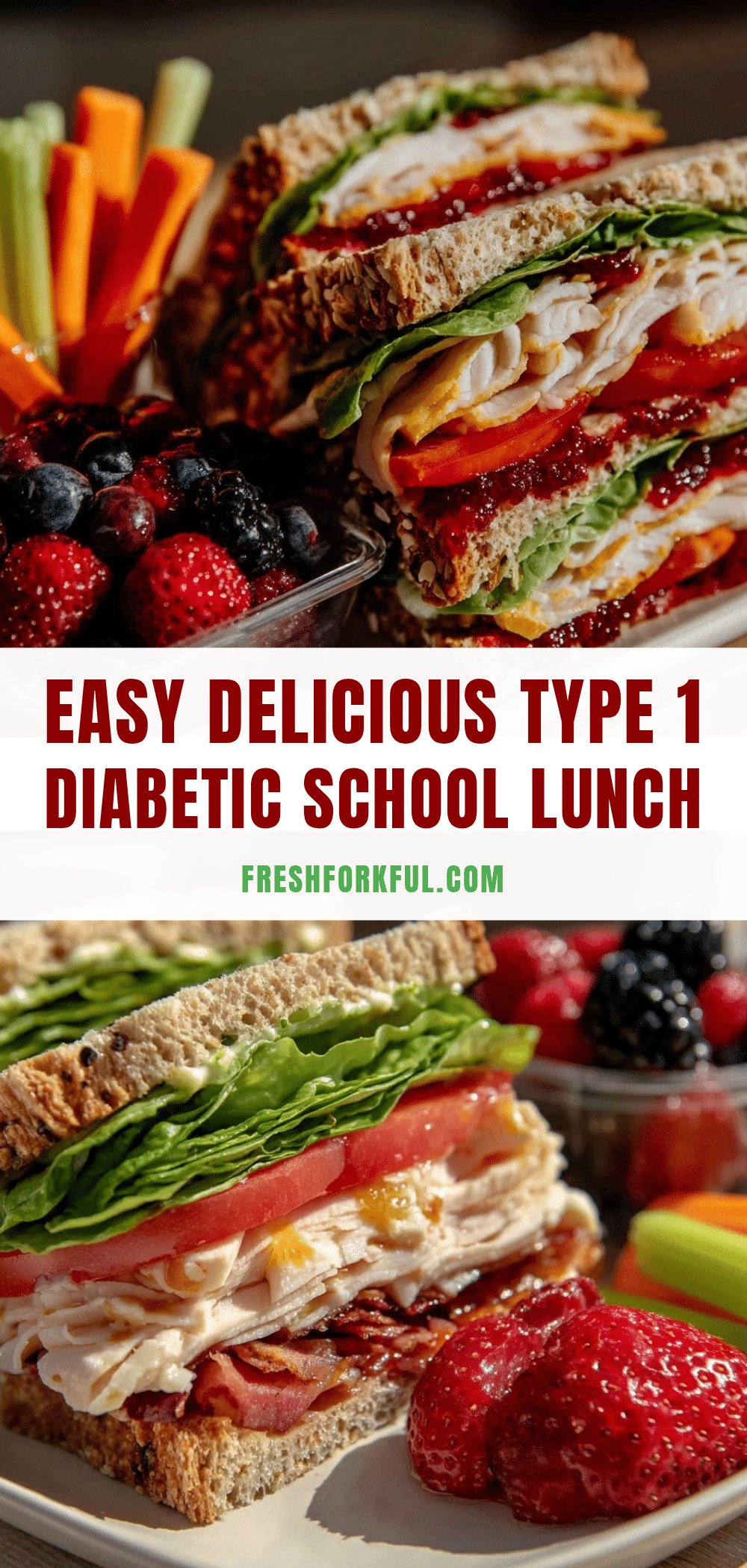
Healthy Type 1 Diabetic School Lunch Ideas for Easy Carb Counting

A collection of healthy, balanced school lunch ideas designed specifically for kids with type 1 diabetes to simplify carb counting and maintain steady blood sugar levels.
- Prep Time: 10 minutes
- Cook Time: 10 minutes
- Total Time: 20 minutes
- Yield: 1 lunch serving
- Category: Main Course
- Cuisine: American
Ingredients
- Cooked chicken breast, shredded or diced
- Hard-boiled eggs
- Low-fat cheese cubes (e.g., Cabot or Sargento)
- Plain Greek yogurt (e.g., Fage or Chobani)
- Whole grain crackers (15g carbs or less per serving)
- Fresh veggies: carrot sticks, cucumber slices, cherry tomatoes
- Small apples or berries (portion carefully)
- Mini whole wheat pita pockets
- Hummus or guacamole (homemade or store-bought)
- Raw almonds or walnuts
- Olive oil
- Fresh herbs like parsley or dill
Instructions
- Cook chicken breasts or boil eggs. Shred or dice chicken into bite-sized pieces. Peel and halve eggs if using.
- Rinse carrot sticks, cucumber slices, and cherry tomatoes under cold water. Cut to kid-friendly sizes.
- Portion hummus or guacamole into small containers. Drizzle with olive oil and sprinkle fresh herbs. Include a small handful of nuts wrapped separately.
- Using a kitchen scale, weigh crackers, pita bread, or fruit portions to stay within carb limits.
- Place each component into lunchbox compartments, keeping wet and dry items separate. Add an ice pack to keep perishables fresh. Double-check portions match carb goals.
- Optionally, label containers with carb counts and special instructions for caregivers or school nurses.
Notes
Prep proteins and chop veggies the night before to save time. Use consistent brands and measure portions precisely for accurate carb counting. Pack dips separately to avoid soggy veggies. Label containers with carb counts for caregivers.
Nutrition
- Serving Size: One balanced lunchbo
- Calories: 40045
- Sugar: 810
- Sodium: 400600
- Fat: 1520
- Saturated Fat: 35
- Carbohydrates: 4550
- Fiber: 68
- Protein: 2025
Keywords: type 1 diabetes, school lunch, carb counting, healthy lunch, diabetic lunch, kid-friendly, easy lunch, balanced nutrition