Love this? Save it for later!
Share the inspiration with your friends
“The power went out halfway through the hottest day last July,” I remember telling my friend, laughing as I recounted the chaos. The fridge was full of fresh summer fruits, and honestly, I wasn’t about to let a heatwave or a blackout keep me from staying nourished. That’s when I started experimenting with these healthy gastroparesis-safe summer smoothies for light nutrition. You know that feeling when your stomach just can’t handle heavy meals, but you still want something refreshing and satisfying? Yeah, that was me—stuck between a rock and a hard place, craving something cool but gentle.
I wasn’t expecting to find such simple, soothing blends that could help me get through those tough days. It all began with a blender, some ripe peaches from the local farmer’s market, and a stubborn refusal to give up on summer flavors. The first attempt was a bit of a mess—forgot to tighten the lid, and peach juice ended up everywhere (including the ceiling). But from that little disaster came surprisingly tasty smoothies that felt like a hug for my digestive system.
Maybe you’ve been there—looking for light but nourishing options that don’t upset your gastroparesis symptoms. These recipes blend the right ingredients to keep things moving smoothly, literally. I keep coming back to these smoothies because they’re not just easy on my stomach; they’re genuinely delicious, refreshing, and perfect for any summer day when you want to feel good and hydrated without the heavy aftermath.
Why You’ll Love This Recipe
After testing dozens of combinations (and yes, a few spills), these healthy gastroparesis-safe summer smoothies became my go-to for light nutrition on tough days. They’re thoughtfully crafted to balance gentle ingredients with vibrant flavors, making each sip both soothing and satisfying.
- Quick & Easy: Ready in under 10 minutes, perfect for busy mornings or when you need a fast pick-me-up.
- Simple Ingredients: No need for fancy superfoods—these use common, easy-to-find items that work well for sensitive stomachs.
- Perfect for Summer: Light, cool, and hydrating, ideal for hot days or when heavier foods feel overwhelming.
- Crowd-Pleaser: Whether it’s for a family brunch or a quiet afternoon treat, these smoothies get nods of approval from everyone, even picky eaters.
- Unbelievably Delicious: The fresh fruit combos and creamy textures make these far from boring—they’re a little burst of sunshine in a glass.
What sets these apart is the gentle approach—low in fiber but rich in flavor, carefully avoiding ingredients that might trigger symptoms. For example, blending soft fruits like ripe bananas or peeled peaches ensures smooth texture without harsh chunks. Adding a splash of lactose-free milk or a hint of ginger keeps things interesting yet soothing. Honestly, this isn’t just another smoothie list. It’s the one I trust when I want comfort without compromise.
What Ingredients You Will Need
These healthy gastroparesis-safe summer smoothies rely on gentle, nourishing ingredients that soothe and hydrate. Most are pantry or fridge staples, making it easy to whip up a nutritious drink without a special trip to the store.
- Soft Fresh Fruits: Ripe bananas (mashed), peeled peaches (diced), seedless watermelon cubes, peeled cucumber slices, and peeled pear chunks. These provide natural sweetness and a smooth texture.
- Liquid Base: Lactose-free milk or almond milk (unsweetened) keeps the blend creamy without upsetting digestion. Coconut water is another refreshing option, especially for hydration.
- Gentle Thickeners: Silken tofu or plain lactose-free yogurt (choose brands like Daiya or So Delicious for best smoothness) add protein and creaminess.
- Flavor Enhancers: A small pinch of ground ginger or cinnamon can calm the stomach and add a subtle warmth. Fresh mint leaves are optional but refreshing.
- Sweeteners (optional): A drizzle of pure maple syrup or a splash of mild honey if extra sweetness is desired—though the ripe fruit usually does the trick.
- Ice Cubes: For an extra chill without watering down flavors.
Substitutions are easy: swap almond milk with oat milk if preferred, or use peeled apples instead of pears for a twist. Avoid fibrous skins or seeds since those can be harsh on gastroparesis. The goal is smooth, easy-to-digest nutrition without compromising on taste.
Equipment Needed
- High-Speed Blender: Essential for achieving that silky texture, especially when blending fibrous fruits. I personally use a Vitamix, but a Ninja or Blendtec works well too.
- Measuring Cups and Spoons: To ensure ingredient balance, especially for liquids and spices.
- Peeler and Knife: For removing skins from fruits and slicing them thinly. A sharp paring knife makes the job easier and safer.
- Glass or BPA-Free Plastic Cups: For serving. I like clear glasses so the colorful layers shine through, but travel tumblers are great if you’re on the go.
If you don’t have a high-speed blender, freeze fruits overnight and blend in smaller batches to help achieve smoother results. Also, clean your blender promptly after use to avoid staining and lingering flavors—trust me, a quick rinse right away saves a lot of scrubbing later!
Preparation Method
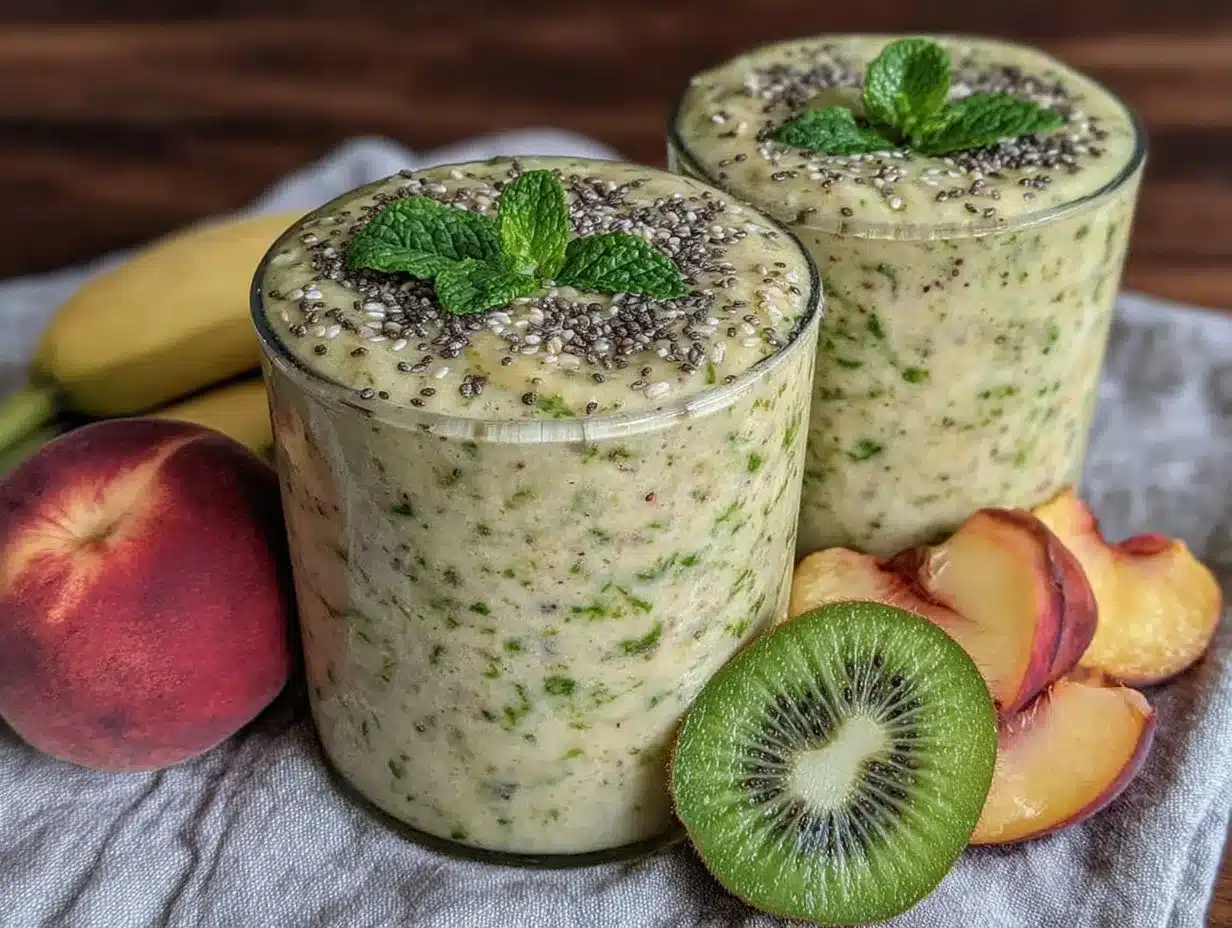
- Prepare Fruits (5 minutes): Peel and dice soft fruits like peaches, pears, or cucumber. For bananas, simply mash with a fork until smooth. Remove any seeds or tough skins to keep texture gentle.
- Add Liquids (1 minute): Pour 1 cup (240 ml) of lactose-free milk, almond milk, or coconut water into the blender. This creates the smoothie’s base and keeps it light.
- Include Thickeners and Flavor (2 minutes): Add ¼ cup (60 g) of silken tofu or lactose-free yogurt for creaminess. Sprinkle in ¼ teaspoon ground ginger or cinnamon if using, plus a few fresh mint leaves for a cooling touch.
- Sweetening (optional): Drizzle 1 teaspoon of maple syrup or honey if you want a sweeter smoothie. Ripe fruits often provide enough natural sweetness, so taste before adding.
- Add Ice Cubes (optional): Toss in 4–5 ice cubes for a chilled drink. This step is great for hot days but can be skipped if you prefer a thicker, room-temperature smoothie.
- Blend (1–2 minutes): Start blending on low speed, gradually increasing to high. Blend until the mixture is completely smooth and creamy—no lumps or chunks. If the smoothie feels too thick, add a splash more liquid in small increments.
- Taste and Adjust: Pause blending to taste. Add a little more sweetener or spice if desired, then blend briefly again.
- Serve Immediately: Pour into your glass and enjoy. These smoothies are best fresh but can be stored in the fridge for up to 24 hours (give them a quick stir before drinking).
If your blender struggles with texture, try soaking the fruit pieces in the liquid for 10 minutes before blending. This softens everything further and helps avoid gritty bits. Also, a smoothie that’s too thick? Add more liquid one tablespoon at a time.
Cooking Tips & Techniques
One thing I learned early on is that texture makes all the difference for gastroparesis-safe smoothies. You want everything silky smooth to avoid irritating your stomach. Using ripe fruit is key—overripe bananas or peaches blend into creamy perfection, while underripe ones can be harsh.
Don’t rush the blending. I like to pulse a few times at first, then blend continuously for at least a minute. This ensures any fibrous bits break down fully. If your blender isn’t powerful, try chopping fruits smaller or peeling more thoroughly.
Watch your liquid ratios. Too much liquid makes the smoothie watery and less satisfying; too little can turn it into a thick paste that’s hard to drink. Start with 1 cup (240 ml) and adjust from there.
One common mistake is adding high-fiber ingredients like seeds or skins. Even ground flaxseed, though healthy, can be too much for some gastroparesis sufferers. Stick to peeled, soft fruits and gentle thickeners.
Timing matters too—these smoothies are best enjoyed fresh. If you need to prep ahead, store in airtight containers in the fridge and stir well before drinking to bring back creaminess.
Variations & Adaptations
There’s plenty of room to mix things up while keeping your smoothies gastroparesis-friendly.
- Berry-Lite Version: Use peeled strawberries or blueberries, but keep amounts small (¼ cup/40 g) to avoid too much fiber. Blend thoroughly with a splash of lactose-free milk and a touch of honey.
- Green Refresher: Add peeled cucumber and a handful of baby spinach (if tolerated) for a mild green smoothie. The spinach adds nutrients without overwhelming texture. Finish with fresh mint and ginger.
- Protein Boost: Swap silken tofu for lactose-free Greek yogurt or add a teaspoon of a low-FODMAP protein powder to keep things gentle but filling.
- Warm Spice Twist: On cooler summer evenings, blend in a pinch of turmeric and cinnamon, then let the smoothie sit for 5 minutes before drinking. This mellow warmth soothes digestion.
- Personal Favorite: I sometimes throw in a peeled, roasted sweet potato cube for a creamy, slightly sweet base that’s easy to digest and keeps me full longer.
Serving & Storage Suggestions
Serve these smoothies chilled for the most refreshing experience. Pour into clear glasses and garnish with a small mint leaf or a thin slice of peeled peach for a pretty touch. They pair wonderfully with light, gastroparesis-safe snacks like plain rice cakes or soft cheese.
Store leftovers in airtight containers in the fridge for up to 24 hours. Because fresh fruit tends to oxidize, you might notice slight color changes—no worries, the flavor stays intact. Stir gently before drinking.
To reheat (if you prefer warm), microwave for 15–20 seconds, then stir well. I usually prefer them cold or room temperature, but warming can be comforting if your stomach is sensitive to cold.
Nutritional Information & Benefits
Each smoothie serves about 1 cup (240 ml) and roughly contains:
| Calories | 150–200 kcal |
|---|---|
| Protein | 5–8 grams (depending on tofu or yogurt) |
| Fat | 2–4 grams (mostly from plant-based milk or tofu) |
| Carbohydrates | 30–35 grams |
| Fiber | 1–3 grams (kept low for gastroparesis) |
The key ingredients like bananas, peaches, and lactose-free dairy alternatives provide gentle, easily digestible energy. Ginger and cinnamon offer natural anti-inflammatory benefits, soothing the digestive tract. These smoothies fit well within a gastroparesis-friendly diet because they’re low in fiber and fat, which helps minimize symptoms like nausea or bloating.
Conclusion
If you’re managing gastroparesis or just want light, nourishing summer drinks, these smoothies are a winner. They’re easy to make, kind to your stomach, and full of fresh, vibrant flavors that make you forget you’re even eating “safe.” I love that they’re adaptable to whatever fruits are ripe in my kitchen and that they never feel like a compromise—just tasty, gentle nutrition.
Try customizing these recipes to suit your taste and dietary needs. Let me know how your blender mishaps or triumphs go, and share any creative twists you come up with—I’m always curious! Remember, summer doesn’t have to be heavy to be satisfying; sometimes, it’s those light, simple moments that stick with us the most.
FAQs About Healthy Gastroparesis-Safe Summer Smoothies
What fruits are best for gastroparesis-friendly smoothies?
Soft, ripe fruits like bananas, peeled peaches, pears, and seedless watermelon are ideal because they blend smoothly and are gentle on digestion. Avoid fibrous skins and seeds.
Can I use regular dairy milk in these smoothies?
Regular milk can be harder to digest for some with gastroparesis. Lactose-free or plant-based milks like almond or oat milk are usually better tolerated.
How can I make these smoothies more filling without upsetting my stomach?
Adding silken tofu or lactose-free yogurt provides protein and creaminess without adding much fiber or fat, making smoothies more satisfying.
Is it okay to prepare these smoothies in advance?
You can store them in the fridge for up to 24 hours in an airtight container. Stir before drinking as some separation may occur.
Are there any spices safe to add for flavor?
Yes, gentle spices like ground ginger, cinnamon, or a few fresh mint leaves are great options that can soothe digestion while adding flavor.
For those interested in light, healthy recipes, you might appreciate the simplicity and comfort of my creamy avocado smoothie or the fresh flavors in my cucumber mint cooler. Both share the gentle approach needed for sensitive stomachs.
Pin This Recipe!
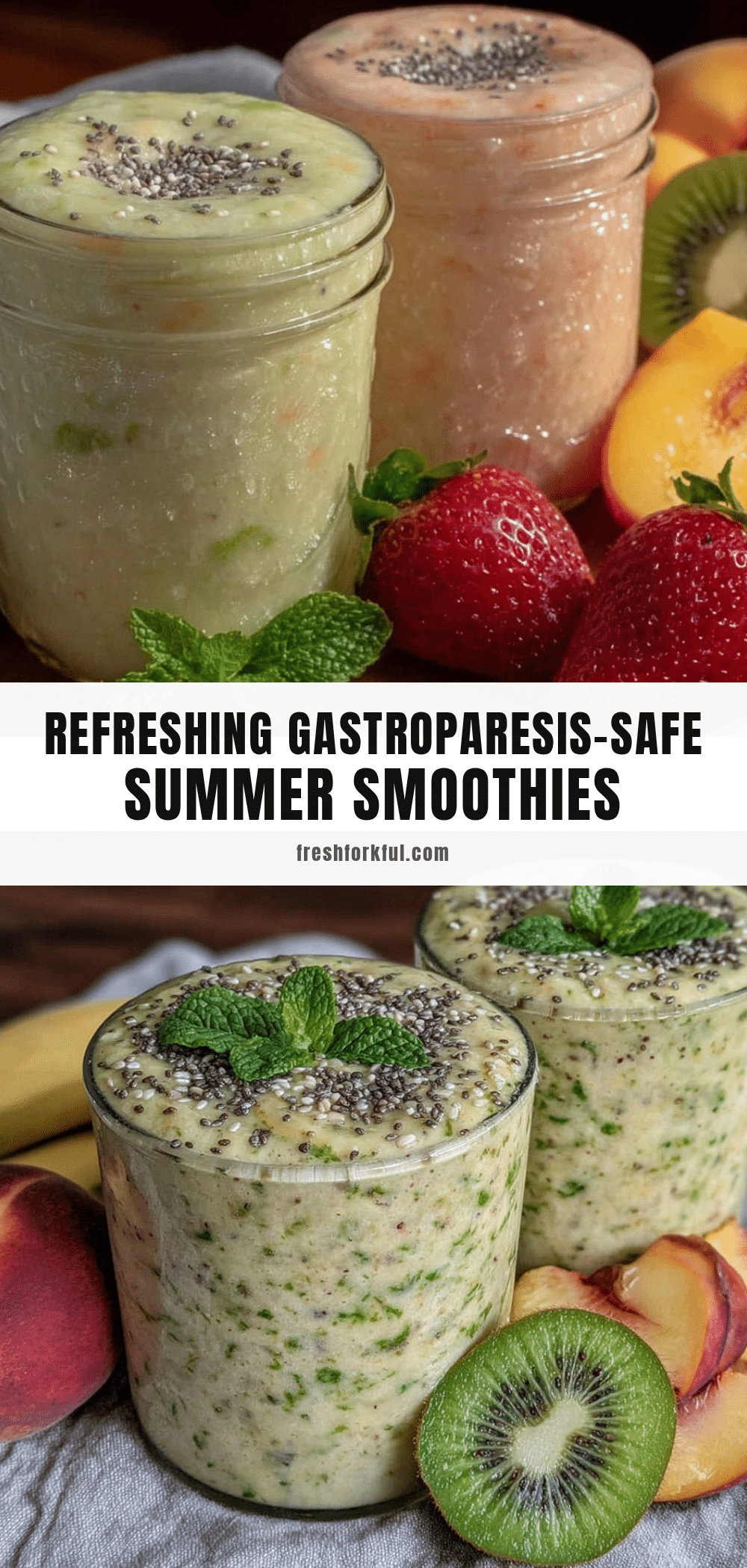
Healthy Gastroparesis-Safe Summer Smoothies

These smoothies are light, nourishing, and gentle on the stomach, perfect for those managing gastroparesis or seeking refreshing summer nutrition.
- Prep Time: 8 minutes
- Cook Time: 2 minutes
- Total Time: 10 minutes
- Yield: 1 serving
- Category: Beverage
- Cuisine: American
Ingredients
- Ripe bananas (mashed)
- Peeled peaches (diced)
- Seedless watermelon cubes
- Peeled cucumber slices
- Peeled pear chunks
- Lactose-free milk or almond milk (unsweetened)
- Coconut water (optional)
- Silken tofu or plain lactose-free yogurt (¼ cup / 60 g)
- Ground ginger (¼ teaspoon, optional)
- Ground cinnamon (¼ teaspoon, optional)
- Fresh mint leaves (optional)
- Pure maple syrup (1 teaspoon, optional)
- Mild honey (1 teaspoon, optional)
- Ice cubes (4–5, optional)
Instructions
- Prepare Fruits (5 minutes): Peel and dice soft fruits like peaches, pears, or cucumber. Mash bananas with a fork until smooth. Remove any seeds or tough skins to keep texture gentle.
- Add Liquids (1 minute): Pour 1 cup (8 fl oz / 240 ml) of lactose-free milk, almond milk, or coconut water into the blender.
- Include Thickeners and Flavor (2 minutes): Add ¼ cup (60 g) of silken tofu or lactose-free yogurt. Sprinkle in ¼ teaspoon ground ginger or cinnamon if using, plus a few fresh mint leaves.
- Sweetening (optional): Drizzle 1 teaspoon of maple syrup or honey if extra sweetness is desired. Taste before adding.
- Add Ice Cubes (optional): Toss in 4–5 ice cubes for a chilled drink, or skip for a thicker smoothie.
- Blend (1–2 minutes): Start blending on low speed, gradually increasing to high. Blend until completely smooth and creamy. Add more liquid in small increments if too thick.
- Taste and Adjust: Pause blending to taste. Add more sweetener or spice if desired, then blend briefly again.
- Serve Immediately: Pour into a glass and enjoy. Store leftovers in the fridge up to 24 hours; stir before drinking.
Notes
Use ripe, soft fruits peeled and deseeded to ensure smooth texture. Avoid fibrous skins and seeds. If blender is not powerful, soak fruit in liquid for 10 minutes before blending. Adjust liquid to achieve desired consistency. Store smoothies in airtight containers in the fridge up to 24 hours and stir before drinking. Warm gently if preferred.
Nutrition
- Serving Size: 1 cup (240 ml)
- Calories: 150200
- Sugar: 2025
- Sodium: 50100
- Fat: 24
- Saturated Fat: 0.51
- Carbohydrates: 3035
- Fiber: 13
- Protein: 58
Keywords: gastroparesis-safe, summer smoothies, healthy smoothies, light nutrition, lactose-free, low fiber, gentle digestion, refreshing drinks