Love this? Save it for later!
Share the inspiration with your friends
“I never thought I’d become a meal planner for gastroparesis, but here I am, scribbling down recipes between sips of my ginger tea.” That’s how my journey with creating a gentle gastroparesis meal plan began—late one rainy evening when my best friend, who’d recently been diagnosed, called me overwhelmed and hungry but too anxious to eat. You know that feeling when your stomach just won’t cooperate, and every bite feels like a battle? It’s exhausting. I wanted to help, so I started experimenting with meals that could soothe without upsetting, starting from liquids and slowly moving to solids. Honestly, it wasn’t perfect at first—I forgot to strain the broth once and nearly served a chunky puree that made her grimace. But after many iterations, this meal plan took shape, designed to support all phases of gastroparesis recovery.
Maybe you’ve been there—unsure what to eat next, stuck between bland and boring. This plan is meant to guide you gently, whether you’re just starting with liquids or ready to try soft solids. The whole idea is to ease digestion and bring comfort back to your plate, without all the guesswork and stress. This isn’t just a list of recipes; it’s a lifeline I wish I had when I first began helping her navigate gastroparesis meals. Let me tell you, the warmth of a well-made broth or the softness of a perfectly blended smoothie can feel like the safest hug when your stomach’s on edge.
This gentle gastroparesis meal plan has stuck with me because it’s both practical and kind to the body. It’s not about deprivation but nourishment tailored for sensitive digestion, and it grows with you—from liquid to solid textures, matching your recovery’s pace. So if you’re looking for easy-to-make recipes that won’t overwhelm your stomach but still bring flavor and comfort, you’re in the right place.
Why You’ll Love This Recipe
Having spent countless hours testing and refining these recipes, I can say this gentle gastroparesis meal plan is truly a game changer for anyone dealing with digestion issues. Here’s why it stands out:
- Quick & Easy: Most recipes come together in under 30 minutes, perfect for those tough days when energy is low.
- Simple Ingredients: No need for fancy or hard-to-find items. Pantry staples and everyday produce are the stars here.
- Perfect for All Recovery Phases: Whether you’re on liquids, purees, or soft solids, this plan adapts seamlessly.
- Crowd-Pleaser: Family and friends who’ve tried these meals have been surprised at how tasty and satisfying they are, even for sensitive stomachs.
- Unbelievably Delicious: The balance of gentle flavors and textures creates comfort food that feels indulgent, not clinical.
What makes this meal plan different? It’s not just bland or boring. For example, blending cottage cheese into smoothies adds protein without heaviness, and using bone broth offers natural nutrients and soothing warmth. Plus, I’ve made sure each recipe respects the delicate digestion process, avoiding common triggers. Honestly, it’s the kind of meal plan that makes you close your eyes after the first bite and feel a little better inside and out. Whether it’s a quiet weekday lunch or a comforting dinner, this plan turns gentle eating into something worth looking forward to.
What Ingredients You Will Need
This gentle gastroparesis meal plan uses simple, wholesome ingredients to deliver comfort and nourishment without fuss or irritation. Most are pantry staples or easy to find fresh items that you can adjust based on your preferences or availability.
- Liquids & Broths:
- Homemade or low-sodium chicken bone broth (rich in nutrients and gentle)
- Vegetable broth, strained (for variety and gentle flavor)
- Filtered water or herbal teas (like ginger or chamomile for digestion)
- Fruits & Vegetables:
- Ripe bananas, mashed (adds natural sweetness and smooth texture)
- Cooked carrots, pureed (soft and soothing)
- Zucchini, peeled and steamed (mild and easy on the stomach)
- Applesauce, unsweetened (great for gentle sweetness)
- Avocado, ripe and mashed (healthy fats that are easy to digest)
- Dairy & Proteins:
- Cottage cheese, small-curd and well blended (for protein without heaviness)
- Greek yogurt, plain and smooth (use dairy-free option if needed)
- Eggs, well cooked and lightly scrambled (a gentle protein source)
- Carbohydrates:
- White rice, well cooked and soft (easy to digest)
- Gluten-free bread or crackers (for soft solids phase)
- Oats, cooked until very soft (comforting and filling)
- Fats & Oils:
- Olive oil, extra virgin (adds gentle richness)
- Coconut oil (optional, for variety in fats)
- Seasonings:
- Salt, use sparingly
- Fresh herbs like parsley or dill, finely chopped (adds freshness without irritation)
- Ground ginger (soothing and anti-inflammatory)
When shopping, I usually pick organic produce where possible, but it’s more about what feels right for your digestion. For bone broth, I trust brands like Kettle & Fire for convenience, but homemade always tastes best if you have time. If you need gluten-free options, swapping white rice for quinoa or millet works well too. The idea is flexibility without compromise on gentleness.
Equipment Needed
To prepare this gentle gastroparesis meal plan, you don’t need a fancy kitchen setup. Here’s what helped me the most:
- Blender or Food Processor: Essential for pureeing soups, smoothies, and soft meals; a basic model works fine.
- Fine Mesh Sieve or Strainer: Perfect for removing any lumps or solids from broths and purees to keep textures smooth.
- Medium Saucepan: For cooking vegetables, grains, and broths gently.
- Measuring Cups and Spoons: Accuracy helps especially when seasoning lightly.
- Spatula and Wooden Spoon: For stirring without scratching cookware.
If you don’t have a blender, a hand immersion blender also does the trick and is easier to clean. For budget-friendly options, stores like Target or Walmart carry reliable appliances under $30 that have lasted me years. I learned early on to keep my tools simple and clean, which makes cooking less intimidating and more enjoyable.
Preparation Method
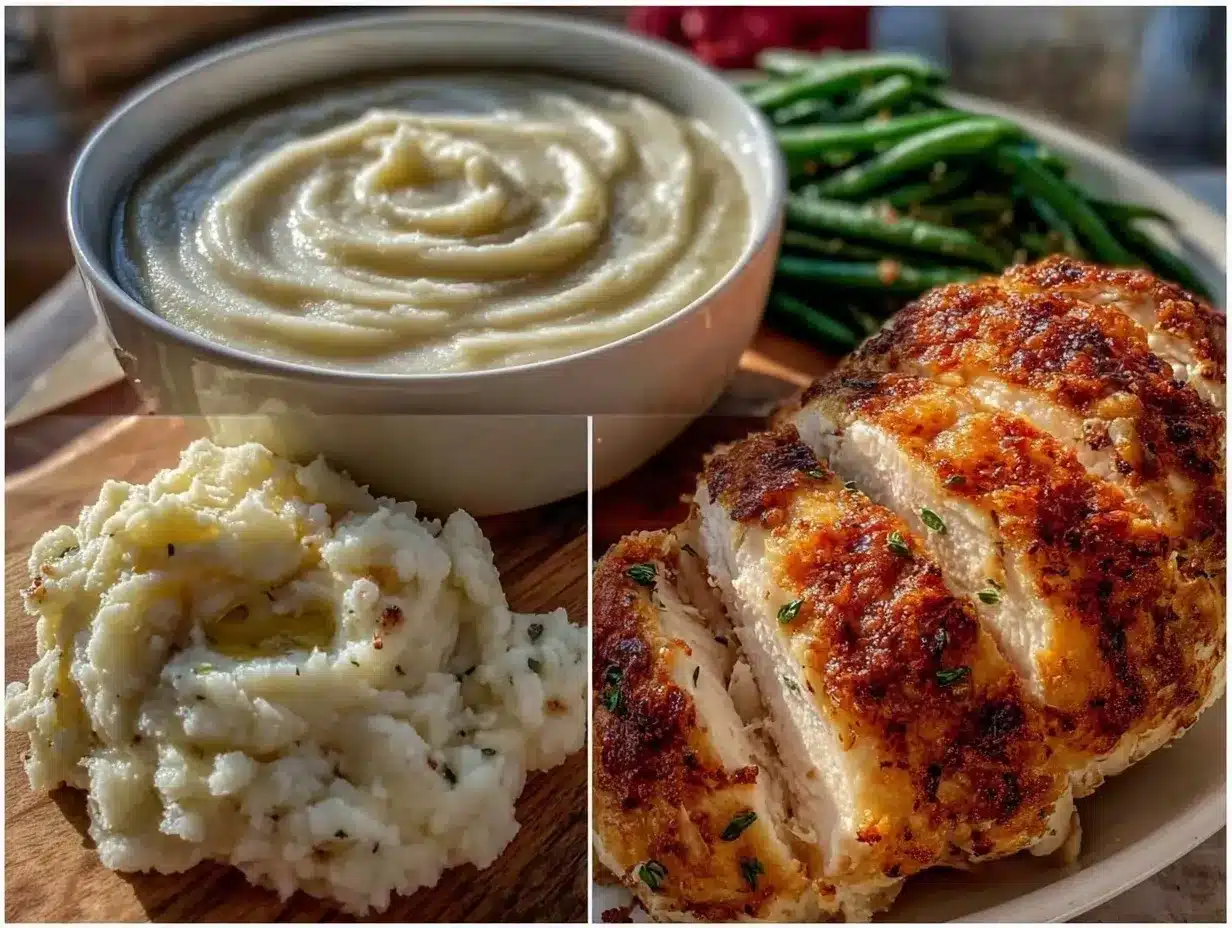
- Start with the Broth Base (15 minutes): Warm 4 cups (960 ml) of chicken bone broth or vegetable broth in a medium saucepan over low heat. Avoid boiling to keep nutrients intact. Keep it warm while preparing other ingredients. Tip: If making homemade broth, simmer bones with a splash of apple cider vinegar for 4 hours before straining.
- Prepare Vegetables (20-25 minutes): Peel and chop carrots and zucchini into small pieces. Steam until very soft (about 15 minutes). Once tender, puree in a blender with 1 cup (240 ml) of the warm broth until silky smooth. Pass the puree through a fine mesh sieve if needed for extra smoothness.
- Make the Fruit Puree or Smoothie (5-10 minutes): Blend 1 ripe banana with ½ cup (120 ml) plain Greek yogurt and a teaspoon of honey (optional). Add a pinch of ground ginger for digestion support. Adjust thickness with water or broth to your liking. This can be served as a snack or light meal.
- Cook Grains (20 minutes): Rinse ½ cup (90 g) white rice and cook in 1 cup (240 ml) broth or water until very soft and mushy. Let cool slightly before serving to avoid irritation.
- Prepare Soft Proteins (10 minutes): Lightly scramble 2 large eggs with a splash of water or broth, cooking gently over low heat until just set. Avoid browning or crisping. Alternatively, blend cottage cheese with a little broth for a smooth protein-rich puree.
- Combine & Season (5 minutes): Mix vegetable purees, grains, and proteins in portions suited for your phase. Season lightly with salt and fresh herbs. Avoid strong spices or heavy oils.
Note: For each phase, adjust texture accordingly—thinner and fully blended for liquids, chunkier but soft for solids. I always test temperature and texture myself before serving to ensure comfort. If you find a puree too thick, thin with broth or water. If too bland, a tiny pinch of salt or fresh herbs can make all the difference.
Cooking Tips & Techniques
When making meals for gastroparesis, patience is your best friend. Cooking gently and blending thoroughly avoids irritation and helps digestion immensely. Here are some tips I’ve picked up:
- Cook low and slow: High heat can break down nutrients and create harsh textures. Keep simmering gentle; think of it as pampering your food.
- Blend well: Pureeing until very smooth avoids any chance of blockages or discomfort. I often double blend—once in the blender, then through a sieve.
- Test textures: What feels soft to one person may be too chunky for another. Always err on the side of softness and adjust gradually.
- Stay mindful of portions: Smaller, frequent meals work better than large ones. I usually prepare single-serving sizes to avoid waste and encourage manageable eating.
- Hydration matters: Keep fluids flowing alongside meals. Herbal teas or warm water can soothe and help digestion.
One mistake I made early on was rushing the purees and ending up with gritty textures that made my friend gag. That was a wake-up call to slow down and respect the process. Also, seasoning lightly but thoughtfully transformed plain blends into something you actually want to eat. Multitasking? I recommend prepping grains while veggies steam and blending fruit purees during downtime—it keeps the kitchen moving without overwhelm.
Variations & Adaptations
This meal plan is designed to be flexible and adjust to your needs or preferences. Here are some ideas I’ve tried and others you can consider:
- Dietary: For dairy-free needs, swap Greek yogurt and cottage cheese with coconut yogurt or silken tofu blends. Almond milk works well for thinning purees too.
- Seasonal: In warmer months, chilled purees with cucumber or melon add refreshing variety. In colder seasons, try warming blends with pumpkin or sweet potato.
- Flavor: Adding a pinch of fresh herbs like basil or mint can brighten flavors without upsetting digestion. A dash of cinnamon or vanilla in fruit purees adds a comforting twist.
- Cooking Method: If steaming isn’t an option, slow roasting vegetables at low temperature (around 300°F/150°C) until soft works well but requires careful monitoring to avoid drying.
- Personal Variation: I discovered blending cooked quinoa with avocado and a touch of olive oil created a creamy, protein-rich soft meal that my friend loved once moving toward solids.
Feel free to experiment gently and listen to your body’s cues. The key is finding what feels good and adjusting accordingly. If you need more ideas, you might find inspiration in other nourishing recipes like creamy ginger carrot soup or mild herbed chicken puree.
Serving & Storage Suggestions
Serve all meals slightly warm or at room temperature, never too hot, as sensitive stomachs can react to temperature extremes. Presentation can be simple—smooth purees in small bowls, soft solids neatly plated with a drizzle of olive oil or a sprinkle of fresh herbs.
This meal plan pairs nicely with soothing beverages like chamomile tea or warm water with lemon. For a balanced approach, add easy-to-digest sides like soft gluten-free bread or rice crackers during the soft solids phase.
Store leftovers in airtight containers in the refrigerator for up to 48 hours. For longer storage, most purees freeze well in small portions—just thaw gently in the fridge or warm slowly on the stove. Reheating should be done gradually to preserve texture and flavor.
Over time, flavors deepen and meld beautifully, especially in broths and pureed veggies. I find that making a batch ahead helps me stay prepared for tougher days, reducing mealtime stress.
Nutritional Information & Benefits
This gentle gastroparesis meal plan is thoughtfully balanced to provide essential nutrients without taxing digestion. A typical serving supplies:
- Calories: Approximately 200-300 per meal, depending on ingredients and portion size
- Protein: 10-15 grams from eggs, cottage cheese, and bone broth
- Carbohydrates: 20-30 grams from rice, fruits, and vegetables
- Fats: 5-10 grams, primarily healthy fats from olive oil and avocado
Key ingredients like bone broth offer gut-healing amino acids, while ginger and herbs support digestion and reduce inflammation. The low fiber and easily digestible carbs help avoid bloating or discomfort. This plan is naturally gluten-free and can be adapted for dairy intolerance. From a wellness perspective, it’s designed to nourish both body and spirit gently, helping you regain strength and comfort at your own pace.
Conclusion
This gentle gastroparesis meal plan is more than just a set of recipes—it’s a thoughtful companion through a challenging digestive journey. Whether you’re starting with liquids or easing into soft solids, these meals are designed to feel kind, nourishing, and doable. You can tweak seasonings, swap ingredients, or adjust textures based on how you feel, making this plan truly yours.
I love this meal plan because it embodies patience and care, qualities that gastroparesis demands. It’s the kind of cooking that reminds you food can heal and comfort, even on tough days. If you try these recipes, I’d be thrilled to hear how they worked for you—comments, questions, or your own adaptations are always welcome. Remember, gentle eating doesn’t mean sacrificing flavor or joy—it’s about finding your best way forward, one spoonful at a time.
Frequently Asked Questions
What foods should I avoid with gastroparesis?
It’s best to avoid high-fiber, fatty, and highly spiced foods as they can slow digestion and cause discomfort. Stick to low-fat, soft, and easily digestible options like those in this meal plan.
Can I eat solid foods right away?
Usually, gastroparesis diets start with liquids and purees before gradually introducing soft solids. Always follow your healthcare provider’s advice and listen to your body.
Are there any beverages I should avoid?
Avoid carbonated drinks, caffeine, and alcohol, as they can worsen symptoms. Herbal teas and water are safer choices.
How can I add protein without upsetting my stomach?
Gentle proteins like well-cooked eggs, blended cottage cheese, and bone broth are easier to digest and included in this meal plan to support your needs.
Is it okay to freeze leftovers?
Yes, most purees and broths freeze well. Store in small portions and thaw slowly in the refrigerator to maintain texture and flavor.
Pin This Recipe!
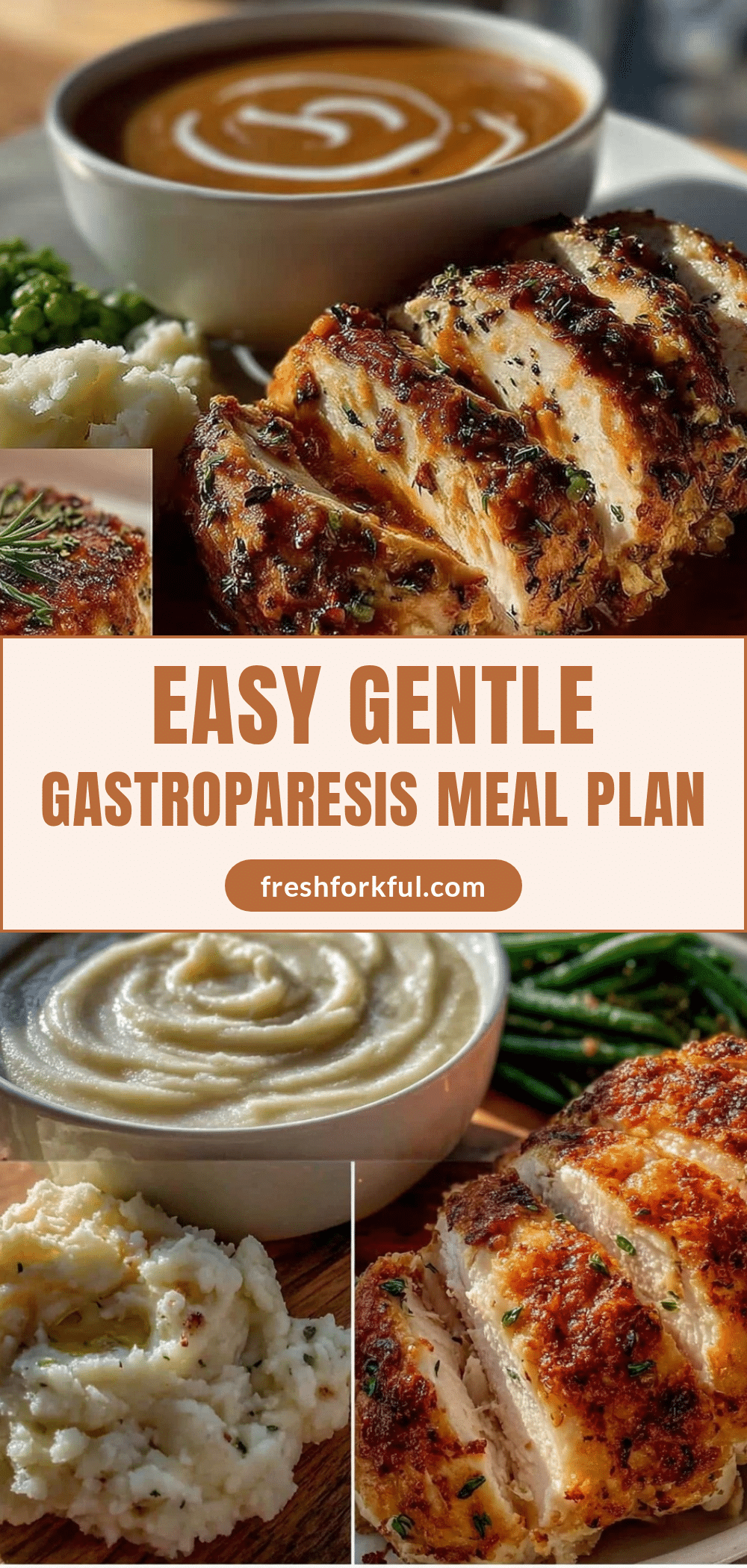
Gentle Gastroparesis Meal Plan Easy Recipes for All Phases

A gentle meal plan designed to support all phases of gastroparesis recovery, featuring easy-to-make recipes that soothe digestion with simple, wholesome ingredients.
- Prep Time: 15 minutes
- Cook Time: 45 minutes
- Total Time: 1 hour
- Yield: 1 serving 1x
- Category: Main Course
- Cuisine: American
Ingredients
- 4 cups (960 ml) homemade or low-sodium chicken bone broth
- 4 cups (960 ml) vegetable broth, strained
- Filtered water or herbal teas (ginger or chamomile)
- Ripe bananas, mashed
- Cooked carrots, pureed
- Zucchini, peeled and steamed
- Unsweetened applesauce
- Avocado, ripe and mashed
- Cottage cheese, small-curd and well blended
- Plain Greek yogurt (or dairy-free alternative)
- Eggs, well cooked and lightly scrambled
- White rice, well cooked and soft
- Gluten-free bread or crackers
- Oats, cooked until very soft
- Olive oil, extra virgin
- Coconut oil (optional)
- Salt, use sparingly
- Fresh herbs like parsley or dill, finely chopped
- Ground ginger
Instructions
- Warm 4 cups (960 ml) of chicken bone broth or vegetable broth in a medium saucepan over low heat. Avoid boiling to keep nutrients intact. Keep it warm while preparing other ingredients.
- Peel and chop carrots and zucchini into small pieces. Steam until very soft (about 15 minutes). Puree in a blender with 1 cup (240 ml) of the warm broth until silky smooth. Pass the puree through a fine mesh sieve if needed for extra smoothness.
- Blend 1 ripe banana with ½ cup (120 ml) plain Greek yogurt and a teaspoon of honey (optional). Add a pinch of ground ginger for digestion support. Adjust thickness with water or broth to your liking.
- Rinse ½ cup (90 g) white rice and cook in 1 cup (240 ml) broth or water until very soft and mushy. Let cool slightly before serving.
- Lightly scramble 2 large eggs with a splash of water or broth, cooking gently over low heat until just set. Alternatively, blend cottage cheese with a little broth for a smooth protein-rich puree.
- Mix vegetable purees, grains, and proteins in portions suited for your phase. Season lightly with salt and fresh herbs. Avoid strong spices or heavy oils.
- Adjust texture accordingly—thinner and fully blended for liquids, chunkier but soft for solids. Test temperature and texture before serving. Thin with broth or water if too thick. Add a tiny pinch of salt or fresh herbs if too bland.
Notes
Cook low and slow to preserve nutrients and avoid harsh textures. Blend thoroughly and sieve purees for smoothness. Adjust textures based on recovery phase. Serve meals slightly warm or at room temperature. Store leftovers in airtight containers in the refrigerator for up to 48 hours or freeze in small portions. Reheat gently to preserve texture and flavor.
Nutrition
- Serving Size: Approximately 1 meal
- Calories: 200300
- Fat: 510
- Saturated Fat: 12
- Carbohydrates: 2030
- Protein: 1015
Keywords: gastroparesis, gentle meal plan, easy recipes, digestion-friendly, soft foods, purees, bone broth, low fiber, gluten-free, dairy-free options