Love this? Save it for later!
Share the inspiration with your friends
“You know that feeling when you’re craving something fresh but also want to keep things light and healthy? Well, last summer, I found myself in exactly that spot. It was the kind of hot July afternoon where the air felt thick, and all I wanted was a meal that felt like a breath of fresh air for my body. I’d been struggling with recurring candida issues and was tired of meals that either felt too bland or too complicated.”
One evening, while wandering through my local farmers market, I struck up a conversation with an elderly vendor named Rosa. She wasn’t the typical health guru type — more like your down-to-earth grandma who’s seen a thing or two. Rosa shared her simple secrets for fresh anti-candida summer meals that kept her feeling vibrant and full of energy. Her recipes were surprisingly easy, bursting with wholesome ingredients, and perfect for those hot days when cooking felt like a chore.
Honestly, I was skeptical at first. I mean, I’d tried so many diets and recipes before. But I decided to give one of Rosa’s dishes a shot — a crisp cucumber and avocado salad with a zingy lemon-tahini dressing. That first bite? It was a revelation. The balance of flavors felt like a reset button for my taste buds and my gut. From there, I started crafting a collection of fresh anti-candida summer meals that became staples not just for my health, but for my joy in the kitchen.
Maybe you’ve been there too — craving something fresh that supports your wellness without feeling like a punishment. Let me tell you, these recipes bring a wholesome boost without fuss, and I can’t wait to share them with you.
Why You’ll Love This Recipe
- Quick & Easy: Most recipes whip up in under 30 minutes, perfect when you want a nourishing meal without the wait.
- Simple Ingredients: No need for specialty stores — these meals rely on fresh, accessible produce and pantry staples you probably have on hand.
- Perfect for Summer: Light, refreshing, and cooling — ideal for hot days when heavy meals just won’t do.
- Candida-Friendly: Carefully chosen ingredients support gut balance and help reduce yeast overgrowth naturally.
- Crowd-Pleaser: These dishes are satisfying for all palates — my skeptical friends often ask for seconds!
- Unbelievably Delicious: The combination of fresh herbs, tangy dressings, and crunchy textures makes these meals anything but boring.
This isn’t just another anti-candida cookbook approach. I’ve tested these recipes repeatedly, tweaking dressings and ingredient ratios to nail the perfect balance of flavor and gut-friendly nutrition. One trick I picked up is blending fresh herbs into the dressing rather than just sprinkling them on top — it makes a surprisingly big difference in taste. These meals aren’t about restriction; they’re about nourishing your body with vibrant, yummy food that feels like a treat. Whether you’re new to anti-candida eating or looking for fresh ideas, you’ll find these recipes a game-changer.
They’ve become my go-to for summer lunches, quick dinners, or even potluck contributions that don’t leave anyone feeling heavy or sluggish. Plus, you get the kind of wholesome boost that keeps you energized for the whole day.
What Ingredients You Will Need
This collection of fresh anti-candida summer meals relies on simple, wholesome ingredients that deliver bold flavors and satisfying textures without much fuss. Most are pantry staples or fresh produce you can find year-round or during the summer months. Here’s a breakdown of what you’ll need:
- Fresh Vegetables: Cucumbers (cooling and hydrating), zucchini (versatile and mild), bell peppers (adds sweetness and crunch), leafy greens like spinach or kale (nutrient powerhouses).
- Healthy Fats: Avocado (creamy texture and gut-friendly fats), extra virgin olive oil (for dressings), coconut oil (for light cooking, adds subtle flavor).
- Proteins: Organic chicken breast or wild-caught fish (light proteins that digest easily), pastured eggs, or plant-based options like chickpeas (rinse well to reduce starch).
- Herbs & Flavorings: Fresh parsley, cilantro, basil (adds brightness), garlic (antifungal properties), lemon juice or lime juice (for a refreshing tang), apple cider vinegar (helps balance gut flora).
- Nuts & Seeds: Raw pumpkin seeds, sunflower seeds, or walnuts (for crunch and added nutrients).
- Spices: Ground cumin, turmeric, black pepper, and sea salt (to taste).
- Optional Ingredients: Unsweetened coconut yogurt (adds creaminess and probiotics), zucchini noodles (for a pasta alternative), and fermented veggies like sauerkraut (boosts gut health).
For best results, I usually recommend sourcing organic vegetables when possible — you’ll notice a fresher taste and fewer pesticides. When it comes to olive oil, brands like California Olive Ranch or Colavita have been my favorites for dressings because of their smooth, fruity finish. If you want a gluten-free option, simply skip any grains and focus on fresh veggies and proteins. For dairy-free creaminess, swapping Greek yogurt for coconut yogurt works beautifully.
Seasonal substitutions are easy too. For example, in hotter months, swapping zucchini for fresh summer squash or adding fresh berries for a touch of sweetness can keep things exciting and fresh.
Equipment Needed
- Sharp Chef’s Knife: Essential for chopping fresh veggies quickly and safely. I love a good 8-inch chef’s knife — it’s versatile and comfortable to hold.
- Cutting Board: Preferably wood or bamboo for durability and easy cleaning.
- Mixing Bowls: A set of medium to large bowls for tossing salads and mixing dressings.
- Blender or Food Processor: Handy for creating smooth dressings or creamy sauces — a trusty blender like the NutriBullet or a compact food processor works well.
- Salad Spinner: Optional but a game-changer for washing and drying leafy greens quickly, which helps dressings stick better.
- Measuring Cups and Spoons: For accuracy, especially with dressings and spices.
- Citrus Juicer: Not essential but makes squeezing lemons or limes much easier and less messy.
If you don’t have a blender, whisking dressings by hand still works — just give it more time to emulsify. For budget-friendly alternatives, a sharp paring knife and a good large bowl can replace a food processor in a pinch (I’ve done it more times than I care to admit!). Keeping your knives sharp not only makes prep faster but safer too, so a quick honing before you start is always a good idea.
Preparation Method
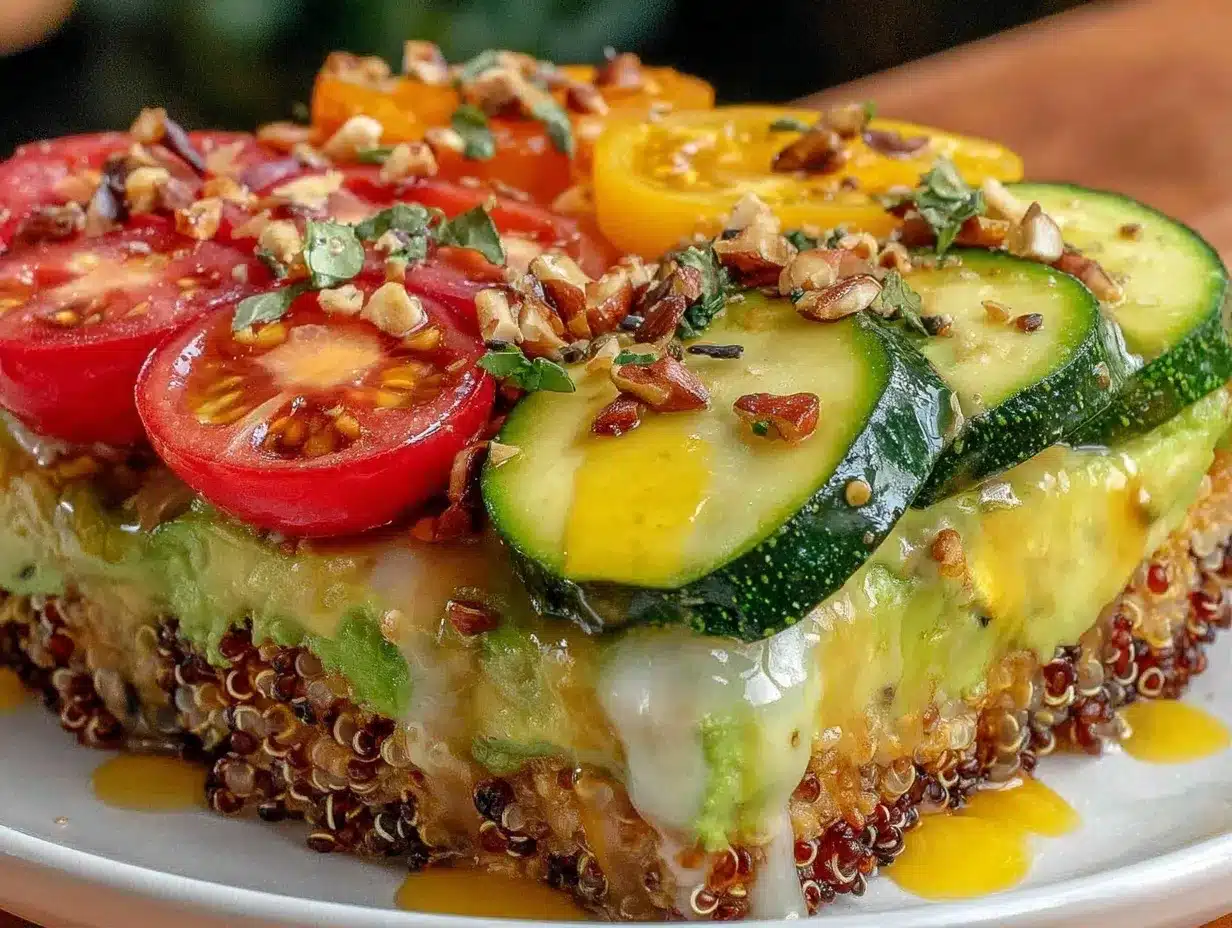
- Prep Your Vegetables (10-15 minutes): Rinse all fresh produce under cold water. Use a sharp knife to chop cucumbers, bell peppers, and zucchini into bite-sized pieces — roughly 1/2-inch cubes work well. For leafy greens, tear them into manageable pieces after spinning or patting dry. This ensures your salad doesn’t get soggy.
- Make the Dressing (5 minutes): In a blender or food processor, combine 3 tablespoons of extra virgin olive oil (45 ml), juice of one lemon (about 2 tablespoons or 30 ml), 1 clove of garlic (minced), 1 teaspoon of apple cider vinegar (5 ml), a pinch of sea salt, and a handful of fresh parsley or cilantro. Blend until smooth and creamy. If you want a creamier texture, add 2 tablespoons of unsweetened coconut yogurt or avocado.
- Prepare Protein (15-20 minutes): If using chicken breast, season lightly with sea salt, 1/2 teaspoon turmeric, and black pepper. Sauté in 1 tablespoon coconut oil (15 ml) over medium heat until cooked through (about 6-7 minutes per side). Let it rest for a few minutes before slicing thinly. For fish, bake at 375°F (190°C) for 12-15 minutes with lemon and herbs.
- Assemble the Salad (5 minutes): In a large mixing bowl, combine chopped veggies, leafy greens, and seeds or nuts. Toss gently with the dressing until everything is evenly coated. Add the sliced protein on top or mix in gently.
- Final Touches (2 minutes): Sprinkle extra fresh herbs or a few more seeds on top for crunch. Taste and adjust salt or lemon juice if needed. Serve immediately or chill for 10-15 minutes to let flavors meld.
Pro tip: If you’re prepping ahead, keep the dressing separate until serving to avoid sogginess. Also, when sautéing chicken, don’t overcrowd the pan — it steams instead of browns, and that flavor is key. I once tried to rush this step (big mistake), so trust me, patience pays off here.
Cooking Tips & Techniques
One trick that took me a while to get right was balancing the acidity in the dressing. Too much lemon or vinegar overwhelms, too little leaves it flat. Start small and add more gradually, tasting as you go. Fresh herbs lose their punch quickly once chopped, so add them last or blend into dressings to keep that vibrant flavor alive.
Another tip: when cooking proteins like chicken or fish, let them come to room temperature before cooking. This helps them cook evenly and stay juicy. I learned this the hard way after ending up with dry chicken breasts more than once.
Multitasking helps too — chop veggies while the protein rests or toss the salad while dressing blends. Timing is key to serving the freshest meal possible. Using a salad spinner for greens is a small investment that seriously boosts your salad’s texture. Nothing worse than soggy leaves, right?
Lastly, keep your knife skills sharp. A clean cut means less bruising and better presentation — plus, it speeds up prep time. I recommend practicing basic chopping techniques if you’re new; it makes a big difference in both safety and efficiency.
Variations & Adaptations
If you’re looking to mix things up, here are a few ways to customize these fresh anti-candida summer meals:
- Low-Carb Variation: Swap out starchy veggies for extra leafy greens or add spiralized zucchini noodles as a base for a light pasta-style dish.
- Vegan Adaptation: Replace animal proteins with grilled tofu or roasted chickpeas. Use coconut yogurt in dressings for creaminess without dairy.
- Seasonal Twist: In cooler months, add roasted root vegetables like sweet potatoes or beets to keep things cozy while maintaining candida-friendly principles.
- Spice It Up: Add fresh jalapeños or a pinch of cayenne to the dressing for a subtle kick that wakes up your palate.
- Personal Favorite: I love adding a spoonful of fermented sauerkraut on the side for an extra probiotic boost — it’s tangy and pairs surprisingly well with the fresh salads.
Adjust the salt and acid levels based on your taste and dietary needs. If you’re sensitive to garlic, swap it for shallots or green onions for a milder flavor. And if you’re worried about nuts or seeds due to allergies, pumpkin seeds are usually a safe bet and won’t overpower the dish.
Serving & Storage Suggestions
These fresh anti-candida summer meals are best served chilled or at room temperature, allowing the flavors to really come alive. I like to plate the salad in shallow bowls to keep everything crisp and inviting. A sprinkling of fresh herbs on top adds a pop of color and aroma that makes it irresistible.
Pair these meals with light herbal teas like peppermint or chamomile for a soothing complement, or a crisp sparkling water with lemon for a refreshing contrast. For a heartier meal, serve with a side of roasted garlic cauliflower or a simple avocado dip.
If you have leftovers, store them in airtight containers in the fridge for up to 2 days. Keep dressings separate if possible to avoid sogginess. To reheat proteins, a quick 1-2 minute warm-up in a skillet works better than the microwave to keep them juicy.
Flavors often deepen after a few hours, so making the dressing ahead and letting the salad marinate slightly can be a game-changer. Just be sure to add any crunchy toppings last minute to keep that satisfying bite.
Nutritional Information & Benefits
Each serving of these fresh anti-candida summer meals typically contains around 300-400 calories, rich in fiber, healthy fats, and lean proteins. With minimal sugars and complex carbohydrates, they support balanced blood sugar levels, which is crucial for managing candida.
Key ingredients like garlic and apple cider vinegar have natural antifungal properties, aiding in candida control. Leafy greens and fresh herbs provide antioxidants and vitamins A, C, and K, boosting your immune system and skin health.
These recipes are naturally gluten-free and low in processed ingredients, making them suitable for many dietary preferences. The inclusion of fermented foods and healthy fats supports a balanced gut microbiome, which is essential for overall wellbeing.
From a wellness perspective, I’ve found these meals not only help reduce candida symptoms but also leave me feeling energized and light — a true win-win.
Conclusion
Fresh anti-candida summer meals don’t have to be complicated or boring. With simple ingredients, straightforward prep, and a few key flavor tricks, you can enjoy dishes that nourish your body and satisfy your taste buds. These recipes have become a staple in my kitchen because they bring that perfect balance of health and deliciousness, especially during the warm months.
Feel free to tweak the herbs, proteins, or spices to suit your preferences — this is your wholesome boost after all! I love sharing these with friends who are skeptical about anti-candida eating, and more often than not, they end up asking for the recipe.
Give these meals a try, and let me know how they work for you. Your comments and adaptations are always welcome — it’s a joy to hear how others make them their own. Here’s to fresh, vibrant eating that supports your health and your happiness!
Frequently Asked Questions
- Can I prepare these meals in advance? Absolutely! Just keep dressings separate and add crunchy toppings last minute to keep everything fresh.
- Are these recipes suitable for vegans? Yes, with a few simple substitutions like tofu or chickpeas for protein and coconut yogurt for creaminess.
- What if I don’t have a blender? You can whisk dressings by hand — just mix vigorously until combined.
- Can I use frozen vegetables? Fresh veggies are best for texture, but frozen can work in a pinch, especially for cooked components.
- How do these meals help with candida? They emphasize antifungal and gut-friendly ingredients while avoiding sugars and processed carbs that feed candida.
Pin This Recipe!
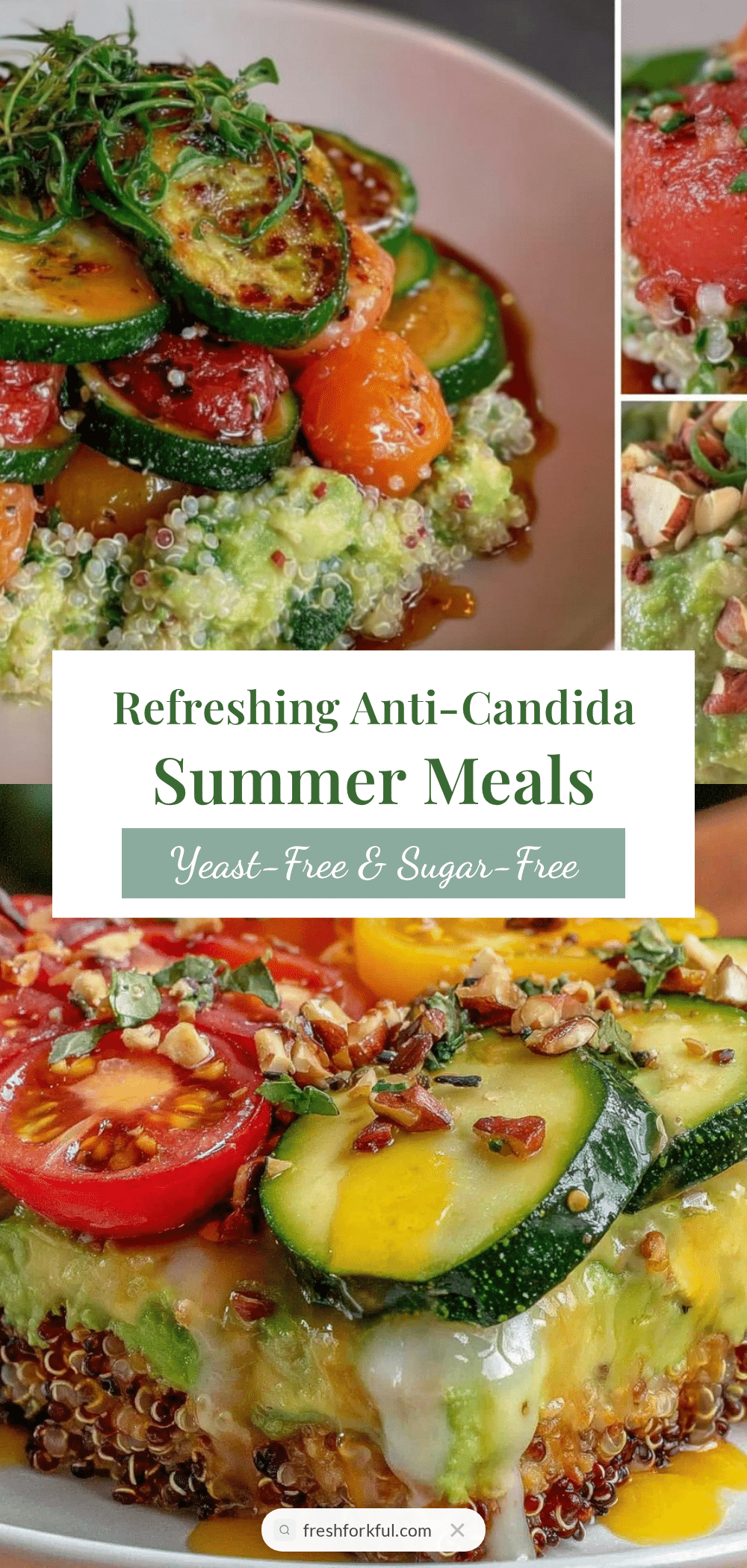
Fresh Anti-Candida Summer Meals

A collection of fresh, easy-to-make summer meals designed to support gut health and reduce candida overgrowth with wholesome, vibrant ingredients.
- Prep Time: 15 minutes
- Cook Time: 20 minutes
- Total Time: 35 minutes
- Yield: 4 servings
- Category: Main Course
- Cuisine: Health-Focused / Anti-Candida
Ingredients
- Cucumbers
- Zucchini
- Bell peppers
- Leafy greens (spinach or kale)
- Avocado
- Extra virgin olive oil
- Coconut oil
- Organic chicken breast or wild-caught fish
- Pastured eggs or chickpeas
- Fresh parsley, cilantro, basil
- Garlic
- Lemon juice or lime juice
- Apple cider vinegar
- Raw pumpkin seeds, sunflower seeds, or walnuts
- Ground cumin
- Turmeric
- Black pepper
- Sea salt
- Unsweetened coconut yogurt (optional)
- Zucchini noodles (optional)
- Fermented veggies like sauerkraut (optional)
Instructions
- Rinse all fresh produce under cold water. Chop cucumbers, bell peppers, and zucchini into 1/2-inch cubes. Tear leafy greens into manageable pieces after drying.
- In a blender or food processor, combine 3 tablespoons extra virgin olive oil, juice of one lemon (about 2 tablespoons), 1 minced garlic clove, 1 teaspoon apple cider vinegar, a pinch of sea salt, and a handful of fresh parsley or cilantro. Blend until smooth. Add 2 tablespoons unsweetened coconut yogurt or avocado for creaminess if desired.
- Season chicken breast lightly with sea salt, 1/2 teaspoon turmeric, and black pepper. Sauté in 1 tablespoon coconut oil over medium heat for 6-7 minutes per side until cooked through. Let rest before slicing. For fish, bake at 375°F for 12-15 minutes with lemon and herbs.
- In a large bowl, combine chopped vegetables, leafy greens, and seeds or nuts. Toss gently with dressing until evenly coated. Add sliced protein on top or mix in gently.
- Sprinkle extra fresh herbs or seeds on top for crunch. Taste and adjust salt or lemon juice if needed. Serve immediately or chill for 10-15 minutes to meld flavors.
Notes
Keep dressing separate until serving to avoid sogginess. Do not overcrowd pan when sautéing chicken to ensure proper browning. Fresh herbs blend better in dressings than sprinkled on top. Let proteins come to room temperature before cooking for even results. Use a salad spinner for crisp greens. Adjust acidity gradually when making dressing.
Nutrition
- Serving Size: 1 bowl of salad with
- Calories: 350
- Sugar: 5
- Sodium: 350
- Fat: 22
- Saturated Fat: 4
- Carbohydrates: 18
- Fiber: 6
- Protein: 25
Keywords: anti-candida, summer meals, fresh salad, healthy recipes, gut health, gluten-free, dairy-free, easy recipes, wholesome meals