Love this? Save it for later!
Share the inspiration with your friends
Introduction
“I wasn’t even planning to bake that day,” I admit, as I recall the afternoon when these fluffy Japanese milk bread dinner rolls first stole my heart. It was one of those lazy Sundays; the kind where the kitchen feels more like a cozy refuge than a chore zone. I found myself fiddling with a recipe scribbled on a crumpled piece of paper tucked inside an old cookbook at a local flea market—yes, really! The idea of pillowy soft rolls intrigued me, but honestly, I was skeptical. You know that feeling when you expect bread to be just bread, and then—bam!—something totally different surprises you?
The dough was softer and stickier than anything I’d handled before, and I almost gave up midway because, well, my counter was a mess, and I forgot to grease the baking pan properly (classic me). But the smell wafting from the oven was impossible to ignore. That warm, sweet aroma filled the whole house and pulled me back from my little kitchen chaos. When the rolls finally cooled, I hesitated, then took a bite—and honestly, it was like biting into a cloud. That softness, the subtle sweetness, the perfect golden crust—it all made me realize this wasn’t just a recipe; it was a little piece of magic I wanted to make over and over.
Maybe you’ve been there too—trying a bread recipe that promises softness but ends up dense and disappointing. These Japanese milk bread dinner rolls actually deliver on that promise, and I keep making them for everything from dinner parties to quiet weeknight suppers. Let me tell you, once you try these, your standard dinner rolls just won’t cut it anymore.
Why You’ll Love This Recipe
Honestly, this recipe ticks all the boxes if you’re after soft, fluffy dinner rolls that practically melt in your mouth. From my countless trials and happy kitchen mishaps, I can say these rolls are:
- Quick & Easy: Ready in about 3 hours from start to finish, including rising time—perfect for a relaxed weekend bake or when you need dinner rolls in a pinch.
- Simple Ingredients: No exotic or hard-to-find items here. You’ll mostly use pantry staples like milk, flour, sugar, and yeast, so no extra grocery runs.
- Perfect for Every Occasion: Whether it’s a family dinner, holiday feast, or casual brunch, these rolls fit right in with their soft texture and subtle sweetness.
- Crowd-Pleaser: Kids and adults alike can’t get enough. I once brought these to a potluck, and they vanished before the main course even arrived.
- Unbelievably Delicious: The secret? The “tangzhong” method, where a cooked flour and milk mixture makes the bread incredibly moist and tender.
What sets these apart from your usual dinner rolls is that they aren’t just soft—they’re pillowy and have this slight sweetness that balances perfectly with savory meals. The technique might sound fancy, but trust me, it’s straightforward and worth every step. This recipe delivers bread that’s comforting and light, the kind you close your eyes for after the first bite. It’s not just dinner rolls; it’s a little moment of joy you bake yourself.
What Ingredients You Will Need
This recipe uses simple, wholesome ingredients to create that signature soft and fluffy texture without too much fuss. Most of these are pantry basics, with a few special touches for that authentic Japanese milk bread feel.
- For the Tangzhong (Water Roux):
- All-purpose flour – 3 tablespoons (25g)
- Whole milk – ½ cup (120ml)
- For the Dough:
- Bread flour – 3 cups (375g) (I prefer King Arthur for consistent texture)
- Instant yeast – 2¼ teaspoons (one packet)
- Granulated sugar – ¼ cup (50g)
- Salt – 1 teaspoon
- Whole milk – ⅓ cup (80ml), warm (about 110°F / 43°C)
- Unsalted butter – 4 tablespoons (56g), softened (adds richness)
- Large egg – 1, room temperature
Feel free to swap out whole milk for almond or oat milk if you’re dairy-free, although it might subtly change the flavor and softness. Bread flour helps with that perfect chew and structure, but all-purpose flour works if it’s what you have on hand. If you want to make this gluten-free, you might want to experiment with a blend designed for bread, but that’s a different adventure!
Equipment Needed
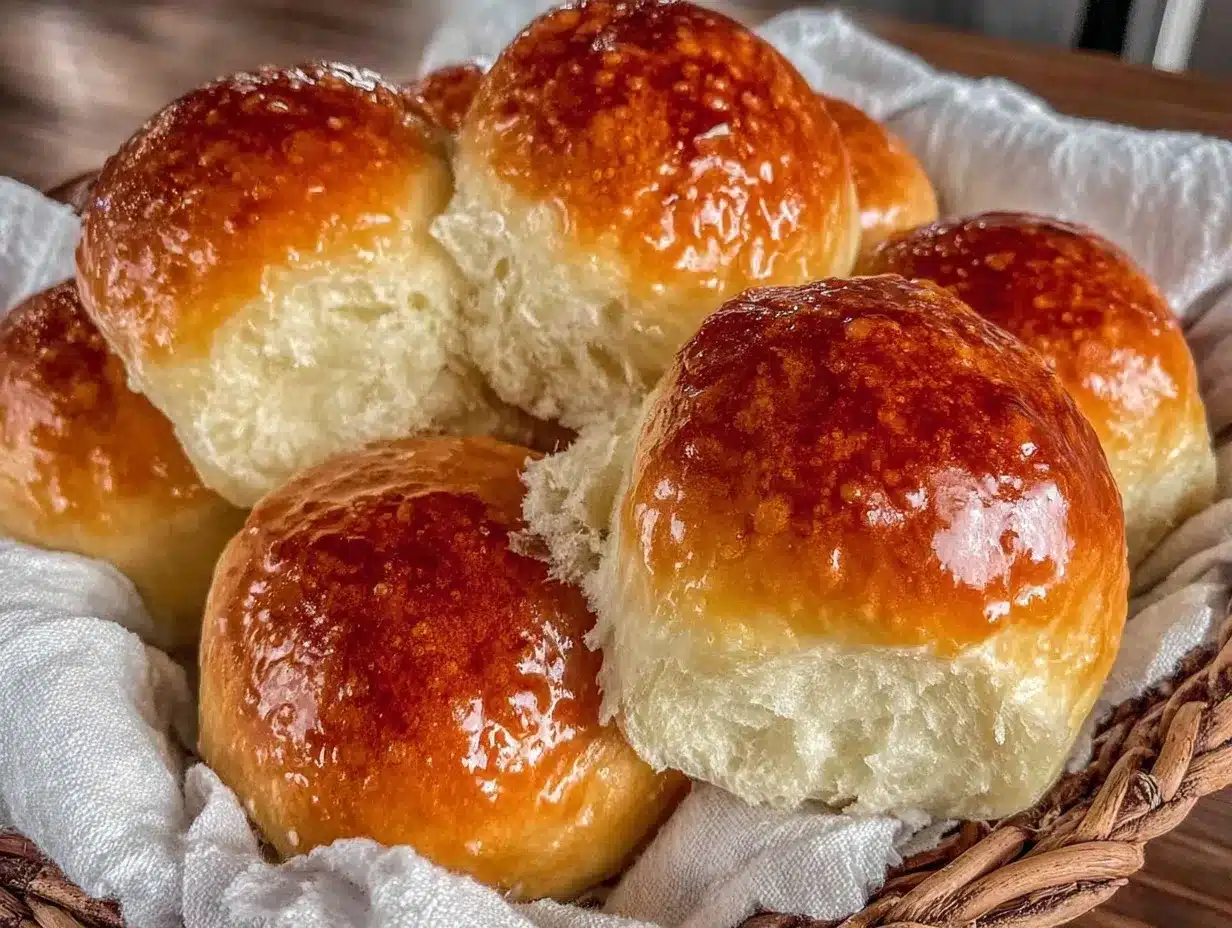
- Mixing bowls – medium and small sizes
- Measuring cups and spoons – for precision
- Whisk or fork – for mixing tangzhong
- Stand mixer with dough hook (optional but makes kneading easier; I use one and it’s a game-changer)
- Plastic wrap or kitchen towel – to cover dough while rising
- 9×5-inch (23×13 cm) loaf pan or round baking dish – for shaping rolls
- Pastry brush – for egg wash (optional, but adds beautiful golden color)
If you don’t have a stand mixer, no worries! Kneading by hand takes a bit more elbow grease but is totally doable. I’ve done it both ways, and honestly, the results are just as rewarding. Also, keeping your dough covered well during proofing is key to prevent drying out—plastic wrap works wonders.
Preparation Method
- Make the Tangzhong: In a small saucepan, whisk together 3 tablespoons (25g) of all-purpose flour and ½ cup (120ml) whole milk until smooth. Heat over medium-low, stirring constantly until the mixture thickens to a pudding-like consistency (about 3-5 minutes). Remove from heat and let cool to room temperature. This step is crucial for that soft, moist crumb.
- Mix the Dough: In your mixing bowl, combine 3 cups (375g) bread flour, 2¼ teaspoons instant yeast, ¼ cup (50g) sugar, and 1 teaspoon salt. Add the cooled tangzhong, ⅓ cup (80ml) warm whole milk, 4 tablespoons (56g) softened butter, and 1 large egg. Using a stand mixer with a dough hook on low speed or your hands, mix until ingredients come together.
- Knead: Knead the dough for about 8-10 minutes until it’s smooth and elastic. It will be slightly sticky but should pull away from the bowl sides. If it’s too sticky, sprinkle a bit more flour, but be careful not to add too much or the bread will be dense.
- First Rise: Shape the dough into a ball, place it in a lightly greased bowl, and cover it with plastic wrap or a damp towel. Let it rise in a warm spot for 1 to 1½ hours, or until doubled in size. I like to warm my oven slightly (turned off) and place the dough inside for consistent rising.
- Shape the Rolls: Punch down the dough gently to release air. Divide into 8 equal pieces (about 90g / 3 oz each). Roll each piece into a ball, then place them seam-side down into your greased loaf pan or baking dish, leaving a little space between them for expansion.
- Second Rise: Cover again and let the rolls rise for 45-60 minutes until they puff up nicely—this is when you’ll see that classic fluffy texture forming.
- Preheat Oven & Apply Egg Wash: Preheat your oven to 350°F (175°C). Optional: brush rolls lightly with a beaten egg mixed with a teaspoon of water for a glossy, golden finish.
- Bake: Bake rolls for 20-25 minutes until the tops are golden brown and sound hollow when tapped. If you’re unsure, insert a skewer; it should come out clean.
- Cool & Enjoy: Remove from oven and let cool slightly in the pan before transferring to a wire rack. These rolls are best enjoyed warm but also taste great the next day.
Quick tip: If your rolls brown too fast, tent with foil halfway through baking. Also, don’t rush the rising steps—patience pays off with that perfect softness.
Cooking Tips & Techniques
The magic behind these fluffy Japanese milk bread rolls lies in a few key tricks I’ve learned over the years. First, the tangzhong technique really is a game-changer. Cooking a portion of the flour with milk gelatinizes the starches, trapping moisture and guaranteeing softness that lasts beyond day one.
Another thing: Kneading is where most people stumble. If you haven’t kneaded much before, imagine it as a gentle workout for the dough—press, fold, and turn repeatedly. Don’t be discouraged if the dough feels sticky at first; with time, it will become smooth and elastic. If you’re using a stand mixer, keep the speed low to avoid overheating the yeast.
During proofing, keep your dough in a warm, draft-free place. I once messed up by leaving mine near an open window on a chilly day, and it barely rose. A quick fix: preheat your oven for a minute, turn it off, and place the dough inside with the door slightly open.
Lastly, avoid overbaking. These rolls need just enough time to develop color and structure but stay soft inside. Overbaked rolls get dry—which is the enemy of fluffy bread.
Variations & Adaptations
Want to switch things up? These Japanese milk bread dinner rolls are surprisingly versatile.
- Herb-Infused Rolls: Add 1 tablespoon finely chopped fresh rosemary or thyme to the dough for a fragrant twist that pairs beautifully with roasted meats.
- Sweet Version: Increase sugar to ½ cup (100g) and fold in raisins or chopped dried apricots before shaping for a soft, sweet treat perfect for breakfast.
- Gluten-Free Adaptation: Use a gluten-free bread flour blend and a bit more liquid (start with an extra 2 tablespoons milk), but note the texture will be a bit different—still delicious though!
- Vegan Option: Swap butter for plant-based margarine and use flax egg (1 tablespoon ground flaxseed + 3 tablespoons water) instead of the egg. Use non-dairy milk for the tangzhong.
Personally, I once added a splash of orange blossom water for a subtle floral note that my guests loved—it’s a fun way to impress without extra effort. You can also bake these rolls in a round pan for pull-apart bread or shape them as buns for sandwiches.
Serving & Storage Suggestions
These rolls are best served warm—think just out of the oven or lightly toasted with a pat of butter melting on top. They pair wonderfully with hearty soups, stews, or a simple salad for a balanced meal. For a classic combo, I like serving them alongside crispy garlic chicken or a rich curry.
To store, keep the rolls in an airtight container at room temperature for up to 2 days. They lose some of their pillowy magic if left uncovered. For longer storage, freeze the cooled rolls wrapped tightly in foil and placed in a freezer bag. When ready to eat, thaw overnight and warm in the oven at 300°F (150°C) for 5-10 minutes.
These rolls also taste great the next day, as the flavors mellow and the crumb softens even more. You might find yourself sneaking one as a midnight snack—you know that feeling!
Nutritional Information & Benefits
Each fluffy Japanese milk bread dinner roll (about 90g) contains roughly:
| Calories | Carbs | Protein | Fat |
|---|---|---|---|
| 150 kcal | 28g | 4g | 3g |
The key ingredients—milk, butter, and eggs—provide protein and essential fats, while the flour offers slow-digesting carbohydrates that fuel your day. The milk adds calcium and vitamin D, and using whole milk keeps the rolls moist without needing extra fats.
If you’re mindful of allergens, this recipe contains gluten, dairy, and eggs, but it’s easy to adapt with substitutions mentioned earlier. I’ve found these rolls to be a comforting option that doesn’t skimp on nutrition or taste, especially when balanced with fresh veggies or a lean protein.
Conclusion
To wrap it up, these fluffy Japanese milk bread dinner rolls are more than just a side dish—they’re a little daily delight you can bake yourself. The tender crumb and pillowy softness make them stand out from ordinary rolls, and the recipe is surprisingly approachable, even if you’ve never made bread before.
Don’t hesitate to customize with your favorite flavors or tweaks—you might find a new family favorite just like I did that lazy Sunday. Honestly, I love how these rolls bring a sense of warmth and comfort to any meal, and I hope they do the same for you.
If you try them, please let me know how they turned out or what twists you added. Sharing your kitchen stories always makes my day. Here’s to many cozy meals filled with soft bread and good company!
Frequently Asked Questions
- Can I make these rolls without the tangzhong method?
You can, but the rolls won’t be as soft or stay fresh as long. The tangzhong adds moisture and that signature pillowy texture. - How do I know when the dough has risen enough?
It should roughly double in size and look puffy. Press gently with a finger—if the indentation springs back slowly, it’s ready. - Can I use active dry yeast instead of instant yeast?
Yes, just dissolve it in warm milk first and let it activate for 5-10 minutes before adding to the dough. - How should I store leftover rolls?
Keep them in an airtight container at room temperature for up to 2 days or freeze for longer storage. - Are these rolls suitable for sandwiches?
Absolutely! Their soft texture makes them great for delicate sandwich fillings or sliders.
Pin This Recipe!
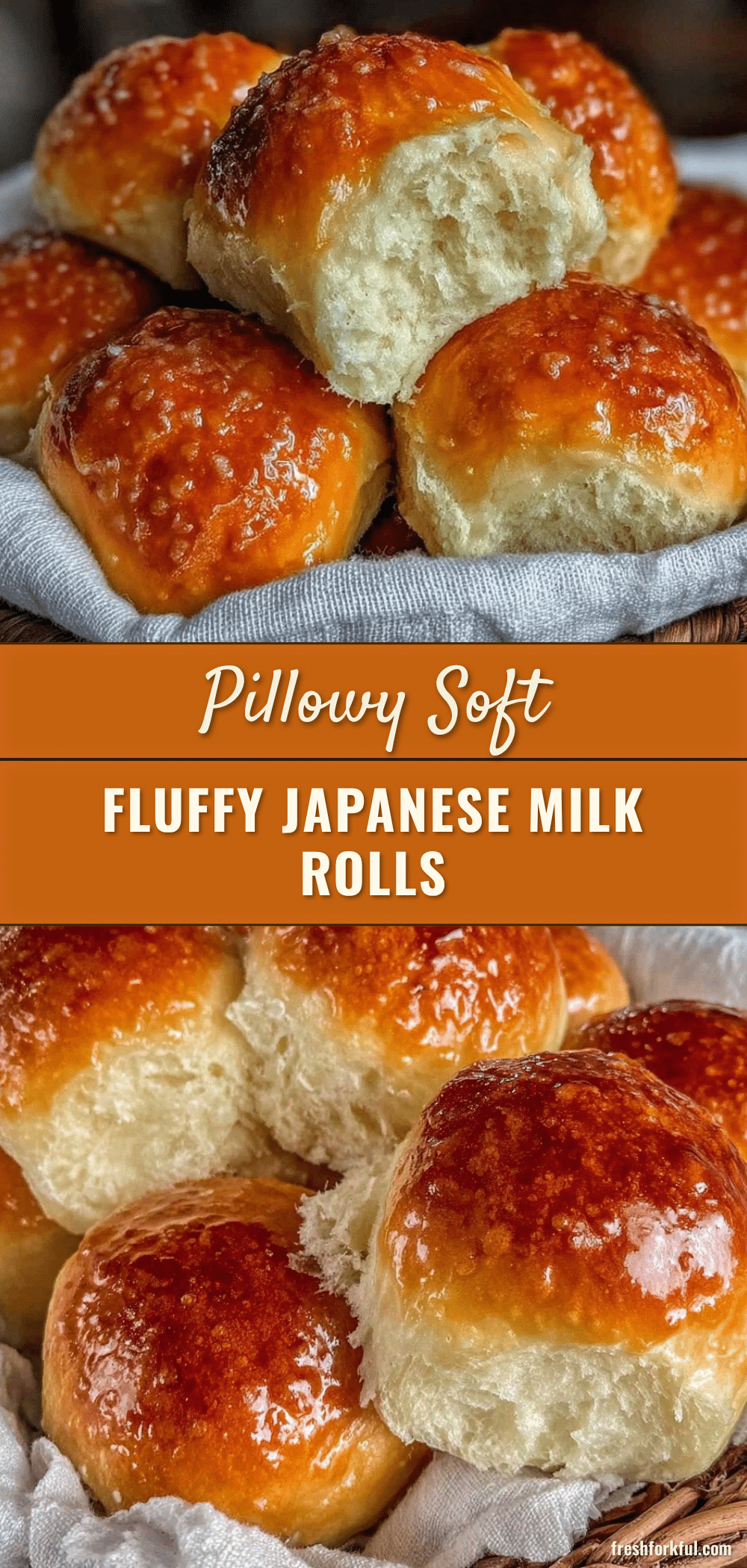
Fluffy Japanese Milk Bread Dinner Rolls

These fluffy Japanese milk bread dinner rolls are pillowy soft with a subtle sweetness and perfect golden crust, making them a delightful addition to any meal.
- Prep Time: 30 minutes
- Cook Time: 25 minutes
- Total Time: 3 hours
- Yield: 8 rolls 1x
- Category: Bread, Dinner Rolls
- Cuisine: Japanese
Ingredients
- 3 tablespoons (25g) all-purpose flour (for tangzhong)
- ½ cup (120ml) whole milk (for tangzhong)
- 3 cups (375g) bread flour
- 2¼ teaspoons instant yeast (one packet)
- ¼ cup (50g) granulated sugar
- 1 teaspoon salt
- ⅓ cup (80ml) warm whole milk (about 110°F / 43°C)
- 4 tablespoons (56g) unsalted butter, softened
- 1 large egg, room temperature
Instructions
- Make the Tangzhong: In a small saucepan, whisk together 3 tablespoons (25g) of all-purpose flour and ½ cup (120ml) whole milk until smooth. Heat over medium-low, stirring constantly until the mixture thickens to a pudding-like consistency (about 3-5 minutes). Remove from heat and let cool to room temperature.
- Mix the Dough: In a mixing bowl, combine 3 cups (375g) bread flour, 2¼ teaspoons instant yeast, ¼ cup (50g) sugar, and 1 teaspoon salt. Add the cooled tangzhong, ⅓ cup (80ml) warm whole milk, 4 tablespoons (56g) softened butter, and 1 large egg. Mix until ingredients come together using a stand mixer with a dough hook on low speed or by hand.
- Knead: Knead the dough for about 8-10 minutes until smooth and elastic. It will be slightly sticky but should pull away from the bowl sides. If too sticky, sprinkle a bit more flour carefully.
- First Rise: Shape the dough into a ball, place in a lightly greased bowl, cover with plastic wrap or damp towel, and let rise in a warm spot for 1 to 1½ hours until doubled in size.
- Shape the Rolls: Punch down the dough gently to release air. Divide into 8 equal pieces (about 3 oz / 90g each). Roll each piece into a ball and place seam-side down into a greased loaf pan or baking dish, leaving space between rolls.
- Second Rise: Cover and let the rolls rise for 45-60 minutes until puffed up.
- Preheat Oven & Apply Egg Wash: Preheat oven to 350°F (175°C). Optionally brush rolls with beaten egg mixed with a teaspoon of water for a glossy finish.
- Bake: Bake rolls for 20-25 minutes until golden brown and hollow sounding when tapped. Check doneness with a skewer if unsure.
- Cool & Enjoy: Remove from oven, cool slightly in pan, then transfer to a wire rack. Best served warm.
Notes
If rolls brown too fast, tent with foil halfway through baking. Keep dough covered during rising to prevent drying. Knead gently and avoid overheating yeast. For dairy-free, substitute milk and butter with plant-based alternatives. Gluten-free adaptations require special flour blends and more liquid.
Nutrition
- Serving Size: 1 roll (about 3 oz /
- Calories: 150
- Sugar: 5
- Sodium: 150
- Fat: 3
- Saturated Fat: 1.8
- Carbohydrates: 28
- Fiber: 1
- Protein: 4
Keywords: Japanese milk bread, dinner rolls, fluffy bread, tangzhong, soft rolls, pillowy bread, homemade bread