Love this? Save it for later!
Share the inspiration with your friends
“I wasn’t expecting a salad to feel like a warm hug,” my friend Jessie said one chilly October afternoon, as she took the first bite of what I now call my Cozy AIP Autoimmune Protocol Fall Transition Salad. It was one of those rare moments when the kitchen felt like a sanctuary, and honestly, I was a little surprised myself. You know that feeling when you’re trying to eat clean but also crave comfort food? Yeah, that was me—juggling healing and cozy vibes while the leaves outside turned those perfect shades of burnt orange and deep red.
The recipe actually came from a late-night brainstorm. I’d been struggling to find a salad that fit the AIP guidelines but didn’t taste like cardboard or leave me hungry an hour later. The idea hit me as I was rummaging through the fridge for something easy after a long day—roasted autumn veggies, tender greens, and a tangy dressing that felt like it belonged more in a warm stew than a salad bowl. I grabbed a cracked ceramic bowl—my favorite one, even though it’s got a chip on the edge—and started tossing things together. Honestly, it was a bit of a mess at first. I forgot to roast the squash long enough, and the kitchen timer went off just as I spilled some dressing on the counter. Classic me!
But then I took that first bite. The flavors were simple but cozy, like the salad was quietly whispering, “You got this.” Maybe you’ve been there—wanting something healing but still satisfying, especially during those tricky fall transition days. This Cozy AIP Autoimmune Protocol Fall Transition Salad stuck with me because it’s more than just a recipe; it’s a little ritual that brings calm and warmth when the weather shifts and all you want is a meal that feels like home.
Why You’ll Love This Recipe
After testing the Cozy AIP Autoimmune Protocol Fall Transition Salad countless times—yes, I kept tweaking it through several weekends—I’ve come to trust this recipe as a go-to for anyone easing into fall while following AIP guidelines. It’s straightforward, approachable, and honestly, a bit of a lifesaver on busy days.
- Quick & Easy: Ready in about 30 minutes, making it perfect for weeknights or when you want a fuss-free healthy meal.
- Simple Ingredients: Uses pantry staples and seasonal veggies you can find at most farmers’ markets—no exotic or hard-to-find items.
- Ideal for Fall Transition: Combines warming roasted veggies with crisp greens to suit that in-between season perfectly.
- Crowd-Pleaser: Even friends who aren’t on AIP have asked for seconds—proving it’s anything but boring.
- Unbelievably Delicious: The dressing’s subtle tang and the mix of textures make every bite feel thoughtfully balanced and cozy.
What really sets this salad apart is the dressing—made with fresh lemon juice, a little apple cider vinegar, and a hint of ginger—that brings an unexpected zing without breaking any protocol rules. I’ve seen AIP salads that taste one-note and dry, but this one keeps things lively and satisfying. Honestly, it’s the kind of recipe I make when I need that little extra comfort but don’t want to stray from my healing goals. It’s like comfort food reimagined for wellness, and you might find yourself closing your eyes after the first bite, just soaking it all in.
What Ingredients You Will Need
This Cozy AIP Autoimmune Protocol Fall Transition Salad uses simple, wholesome ingredients to deliver bold flavor and satisfying texture without the fuss. Most are staples in any AIP pantry, and many can be swapped seasonally to keep things fresh.
- For the Roasted Veggies:
- Butternut squash, peeled and cubed (adds natural sweetness and creaminess)
- Brussels sprouts, halved (for that slight crunch and earthy flavor)
- Carrots, sliced diagonally (for color and subtle sweetness)
- Extra virgin olive oil (I prefer California Olive Ranch for smoothness)
- Sea salt and freshly ground black pepper (adjust to taste)
- For the Salad Base:
- Mixed baby greens (spinach, arugula, and butter lettuce work beautifully)
- Fresh parsley, chopped (brightens the whole salad)
- For the Dressing:
- Fresh lemon juice (about one medium lemon, strained)
- Apple cider vinegar (I use Bragg’s for purity)
- Fresh ginger, grated (about 1 teaspoon, adds gentle warmth)
- Extra virgin olive oil (balances acidity)
- Raw honey or maple syrup (optional, for a touch of sweetness)
- Sea salt to taste
- Optional Add-ins:
- Pomegranate seeds (for a pop of color and tartness, great in fall)
- Toasted pumpkin seeds (adds crunch and AIP-friendly fats)
If you can’t find Brussels sprouts, kale works well as a substitute for the greens. For a nut-free, gluten-free option, this salad fits perfectly into AIP and paleo diets. When it’s summer, I sometimes swap butternut squash for roasted sweet potatoes or even roasted beets for a different twist.
Equipment Needed
- Large baking sheet (preferably rimmed) for roasting vegetables
- Mixing bowls (one large for tossing salad, one small for dressing)
- Whisk or fork for mixing the dressing
- Sharp chef’s knife for chopping veggies and herbs
- Measuring spoons and cups (for accurate dressing ratios)
- Salad spinner (optional but helpful to dry greens thoroughly)
If you don’t have a salad spinner, a clean kitchen towel works fine to pat dry your greens. I’ve used silicone baking mats on my sheet pan to avoid scrubbing stuck-on roasted bits, but parchment paper is a budget-friendly alternative. Just be sure to spread veggies evenly so they roast nicely and don’t steam.
Preparation Method
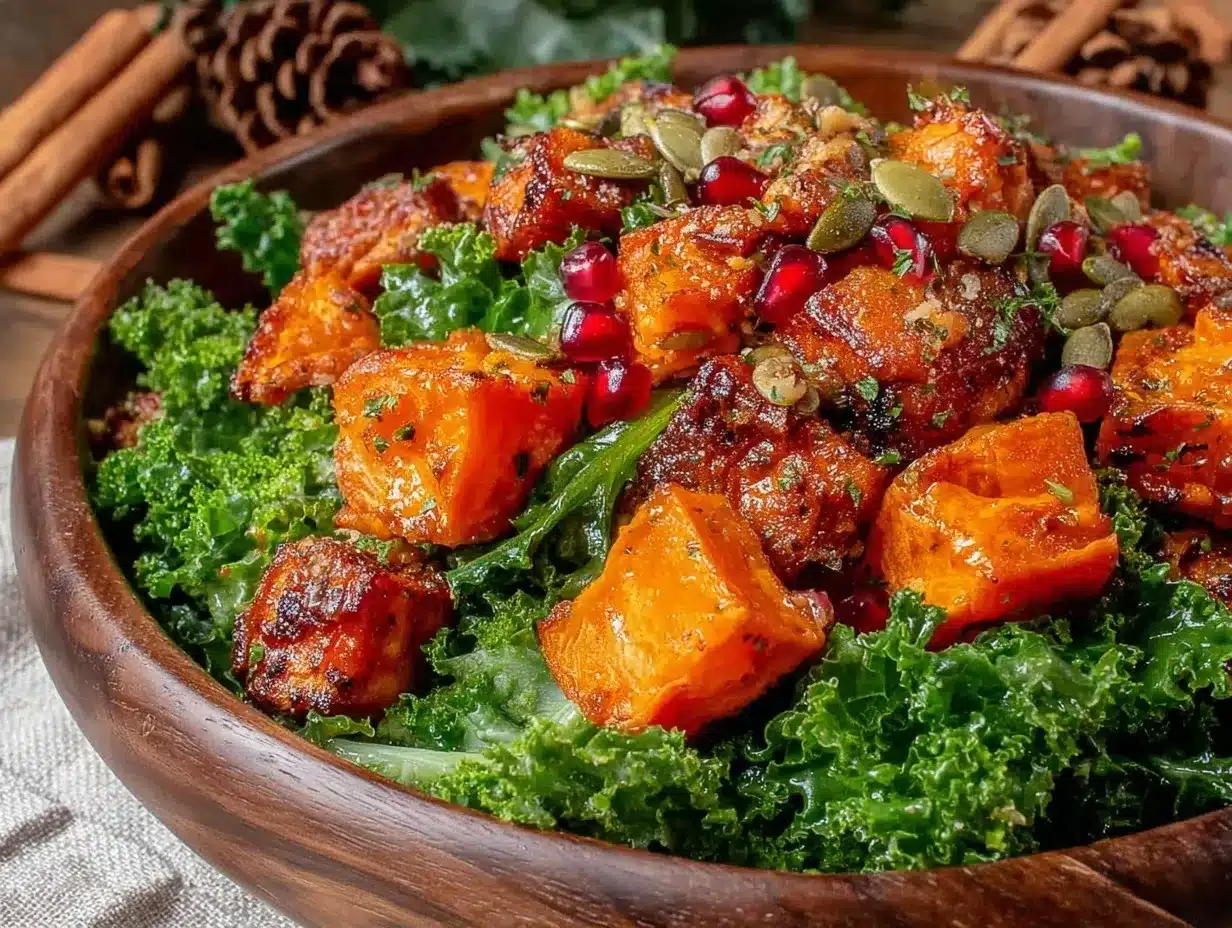
- Preheat your oven to 400°F (200°C). This temperature is just right for roasting the squash and Brussels sprouts to a tender, caramelized finish in about 25–30 minutes.
- Prepare the veggies: Peel and cube the butternut squash into roughly 1-inch pieces. Trim and halve the Brussels sprouts. Slice the carrots diagonally about ¼ inch thick for even roasting.
- Toss the vegetables: In a large bowl, combine the squash, Brussels sprouts, and carrots. Drizzle with 2 tablespoons of extra virgin olive oil, sprinkle with ½ teaspoon sea salt and ¼ teaspoon freshly ground black pepper, and toss until everything is coated evenly.
- Spread veggies on the baking sheet: Arrange in a single layer without crowding. Overcrowding traps steam and prevents browning. Roast for 25–30 minutes, flipping halfway through, until edges are golden and crispy.
- While veggies roast, prepare the dressing: In a small bowl, whisk together 3 tablespoons extra virgin olive oil, 2 tablespoons fresh lemon juice, 1 tablespoon apple cider vinegar, 1 teaspoon freshly grated ginger, and a pinch of sea salt. Add ½ teaspoon raw honey or maple syrup if you prefer a touch of sweetness.
- Prepare the salad base: Rinse and dry mixed baby greens and chop fresh parsley. Place them in a large salad bowl.
- Combine salad: Once roasted veggies have cooled slightly but are still warm, add them to the greens. Pour the dressing over the salad and toss gently to mix flavors without bruising the greens.
- Add optional toppings: Sprinkle pomegranate seeds and toasted pumpkin seeds over the top for a festive crunch and extra nutrients.
- Serve immediately: This salad is best enjoyed fresh, while the roasted veggies still offer that cozy warmth against the crisp greens.
Pro tip: If you’re short on time, roast the veggies ahead and reheat them gently in a warm oven before tossing with fresh greens and dressing. Just don’t microwave—the texture suffers, and you lose that lovely roasted flavor.
Cooking Tips & Techniques
Roasting vegetables is honestly the magic behind this salad. You want to get those edges caramelized without drying out the squash. I learned the hard way that tossing the veggies halfway through roasting really helps achieve that perfect balance. Also, don’t skip seasoning before roasting; it’s key to developing layers of flavor.
For the dressing, freshly grated ginger makes a world of difference—you get a bright, spicy note that wakes up the whole salad. If you only have ground ginger, use about ¼ teaspoon, but fresh is best when possible.
Another tip: always dress your salad just before serving. If you toss it too early, the greens wilt, and you lose that fresh bite. I sometimes dress half the salad to keep leftovers fresh, then dress the rest when serving again.
When mixing, use a large bowl and toss gently with salad tongs or clean hands. You want to coat everything without bruising delicate leaves.
Finally, don’t overdo the salt. The roasted veggies bring natural sweetness, so a light hand on seasoning preserves balance. You can always adjust at the table.
Variations & Adaptations
This Cozy AIP Fall Transition Salad is flexible, so feel free to make it your own:
- Seasonal swaps: In winter, swap butternut squash for roasted sweet potatoes or parsnips to keep the cozy vibe going.
- Protein add-ins: For a heartier meal, add shredded poached chicken or baked wild-caught salmon (both AIP-compliant) on top.
- Flavor twists: Try adding fresh thyme or rosemary to the roasting veggies for an herbal note that’s perfect for fall.
- Allergen-friendly alterations: Use avocado oil instead of olive oil if you prefer a neutral flavor or have an olive sensitivity.
- Personal favorite: I sometimes toss in a handful of cooked, cooled green beans for an extra pop of color and crunch.
Serving & Storage Suggestions
This salad shines served slightly warm or at room temperature. The roasted veggies provide a comforting contrast to the fresh greens, so aim to serve it within an hour of tossing.
Pair it with a simple bone broth or a cup of herbal tea for a full cozy meal. It also complements crispy garlic chicken beautifully if you want a protein boost for dinner.
Store leftovers in an airtight container in the refrigerator for up to 2 days. To reheat, warm the roasted veggies gently in a 300°F (150°C) oven for 5–7 minutes, then toss again with fresh greens and dressing. Avoid microwaving to keep texture intact.
You’ll notice flavors deepen slightly when stored overnight—the tang of the dressing melds with the sweetness of the veggies, making leftovers just as tasty.
Nutritional Information & Benefits
This salad is nutrient-dense and gentle on the digestive system, perfect for those following the Autoimmune Protocol. Here’s a rough estimate per serving:
- Calories: 250–300 kcal
- Fat: 18–22g (healthy fats from olive oil)
- Carbohydrates: 20–25g (mostly from vegetables)
- Protein: 3–5g
The butternut squash and carrots provide beta-carotene and antioxidants, which support immune function. Brussels sprouts add fiber and vitamins C and K. Olive oil and pumpkin seeds offer anti-inflammatory fats that are especially helpful during autoimmune flare-ups.
This recipe is naturally gluten-free, dairy-free, and compliant with AIP, making it suitable for those with common food sensitivities.
Conclusion
If you’re looking for a salad that feels like a warm, healing embrace during fall, this Cozy AIP Autoimmune Protocol Fall Transition Salad is it. It’s simple, satisfying, and designed to support your wellness journey without sacrificing flavor or comfort. I love how it brings together seasonal veggies and a bright, zingy dressing that keeps things interesting.
Feel free to tweak the recipe to suit your taste or what’s in season—flexibility is part of the joy. I’d love to hear how you make it your own, so don’t hesitate to share your twists or questions below. Here’s to cozy, healing meals that nourish both body and soul!
FAQs
What makes this salad AIP-friendly?
This salad avoids common autoimmune protocol triggers like nightshades, nuts, seeds (except pumpkin seeds, which are usually tolerated), dairy, grains, and legumes. It focuses on nutrient-dense veggies and gut-soothing fats.
Can I prepare this salad ahead of time?
You can roast the vegetables up to a day in advance and store them separately. Toss the salad and dressing just before serving to keep the greens fresh and crisp.
Is this salad suitable for beginners on the AIP diet?
Absolutely. The ingredients are straightforward, and the method is simple, making it a perfect cozy introduction to AIP-friendly cooking.
Can I add protein to make this a full meal?
Yes! Adding shredded chicken, turkey, or wild-caught salmon works well and keeps the dish within AIP guidelines.
What if I don’t like Brussels sprouts?
Kale, collard greens, or green beans make great substitutes. Roasting brings out their natural sweetness and reduces bitterness.
Pin This Recipe!
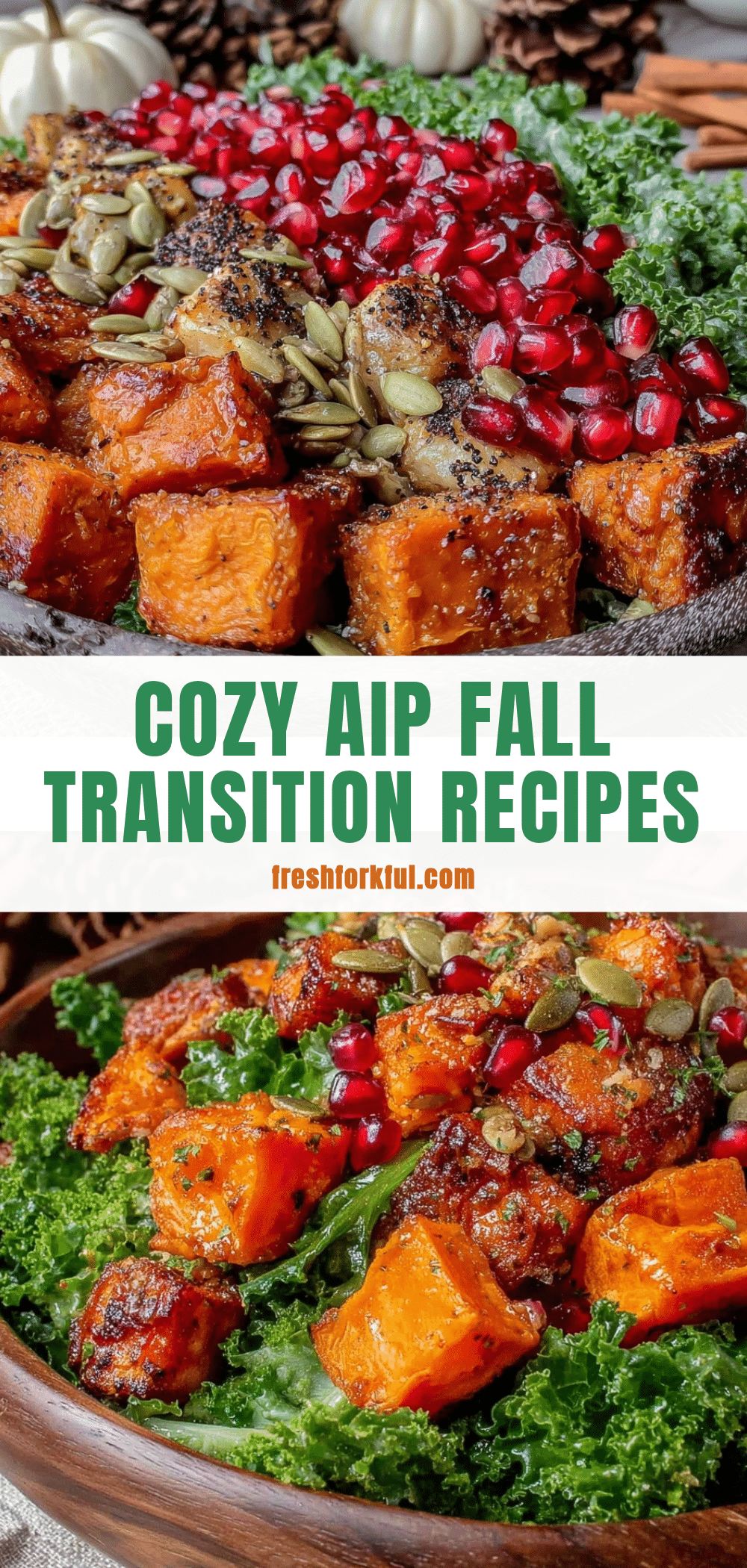
Cozy AIP Autoimmune Protocol Fall Transition Salad Recipe Easy and Perfect for Beginners

A warm and comforting salad perfect for the fall transition, combining roasted autumn vegetables, tender greens, and a tangy dressing that fits the Autoimmune Protocol (AIP) guidelines.
- Prep Time: 15 minutes
- Cook Time: 30 minutes
- Total Time: 45 minutes
- Yield: 4 servings 1x
- Category: Salad
- Cuisine: American
Ingredients
- 1 medium butternut squash, peeled and cubed (about 1-inch pieces)
- 1 pound Brussels sprouts, trimmed and halved
- 3 medium carrots, sliced diagonally about 1/4 inch thick
- 4 tablespoons extra virgin olive oil, divided
- 1/2 teaspoon sea salt, plus more to taste
- 1/4 teaspoon freshly ground black pepper
- 4 cups mixed baby greens (spinach, arugula, butter lettuce)
- 1/4 cup fresh parsley, chopped
- 2 tablespoons fresh lemon juice (about 1 medium lemon, strained)
- 1 tablespoon apple cider vinegar
- 1 teaspoon fresh ginger, grated
- 1/2 teaspoon raw honey or maple syrup (optional)
- Pomegranate seeds (optional, for garnish)
- Toasted pumpkin seeds (optional, for garnish)
Instructions
- Preheat your oven to 400°F (200°C).
- Peel and cube the butternut squash into roughly 1-inch pieces. Trim and halve the Brussels sprouts. Slice the carrots diagonally about 1/4 inch thick for even roasting.
- In a large bowl, combine the squash, Brussels sprouts, and carrots. Drizzle with 2 tablespoons of extra virgin olive oil, sprinkle with 1/2 teaspoon sea salt and 1/4 teaspoon freshly ground black pepper, and toss until everything is coated evenly.
- Spread the vegetables in a single layer on a large rimmed baking sheet without crowding. Roast for 25–30 minutes, flipping halfway through, until edges are golden and crispy.
- While the vegetables roast, prepare the dressing: In a small bowl, whisk together 3 tablespoons extra virgin olive oil, 2 tablespoons fresh lemon juice, 1 tablespoon apple cider vinegar, 1 teaspoon freshly grated ginger, and a pinch of sea salt. Add 1/2 teaspoon raw honey or maple syrup if desired.
- Rinse and dry the mixed baby greens and chop the fresh parsley. Place them in a large salad bowl.
- Once the roasted vegetables have cooled slightly but are still warm, add them to the greens. Pour the dressing over the salad and toss gently to combine without bruising the greens.
- Sprinkle pomegranate seeds and toasted pumpkin seeds over the top if using.
- Serve immediately while the roasted veggies are still warm.
Notes
Roast vegetables evenly spaced to avoid steaming. Toss veggies halfway through roasting for caramelization. Dress salad just before serving to keep greens crisp. Reheat roasted veggies gently in a 300°F oven if preparing ahead; avoid microwaving to preserve texture.
Nutrition
- Serving Size: 1 salad bowl serving
- Calories: 275
- Sugar: 7
- Sodium: 300
- Fat: 20
- Saturated Fat: 3
- Carbohydrates: 23
- Fiber: 5
- Protein: 4
Keywords: AIP salad, autoimmune protocol, fall salad, roasted vegetables, healthy salad, paleo, gluten-free, dairy-free, cozy salad