Love this? Save it for later!
Share the inspiration with your friends
I was digging through the back of my pantry last Tuesday, looking for a can of chicken broth I could have sworn I bought, when my fingers brushed against a dusty bag of cornmeal. And just like that—I was seven years old, standing on a step stool in my Aunt Ruby’s kitchen, watching her pour buttermilk into a bowl with more confidence than I’ve ever had doing anything. She passed away six years ago, and I don’t think about her every day, which makes me feel guilty in a quiet way. But that bag of cornmeal? It brought her back. The way her hands moved, the smell of sage filling every corner of that tiny house, the way she’d let me crumble the day-old cornbread with my fingers even though I was supposed to be using a fork.
I bought that cornmeal for a totally different recipe I never got around to making. Honestly, I almost put it back. But something told me to hold onto it, and now I know why. That moment in the pantry was the universe reminding me of the best Southern cornbread dressing with sage I’ve ever had—and the only version I’ve been chasing ever since. I’ve made it maybe forty times since she passed, and every single time, I get a little closer. Maybe you’ve been there, trying to recreate a taste from your past that feels just out of reach. That’s what this recipe is for me. And now, after years of tweaking and testing, I think I’ve finally nailed it.
This isn’t just any dressing. It’s the kind that makes people close their eyes at the table. The kind that gets requested for Thanksgiving, Christmas, and random Tuesday dinners when you need something warm and familiar. It’s the best Southern cornbread dressing with sage because it’s built on memory, patience, and a few tricks I learned the hard way.
Why You’ll Love This Recipe
Let me tell you why this recipe has earned a permanent spot in my holiday rotation—and honestly, in my regular dinner rotation too. I’ve tested this version more times than I care to admit, and every single time, it delivers that soul-soothing comfort you’re craving.
- Made for a Crowd: This recipe scales beautifully. Whether you’re feeding eight or eighteen, it holds up without losing that perfect texture. I’ve brought it to potlucks and watched it disappear before the turkey even hit the table.
- Simple Ingredients: No fancy grocery store runs needed. Cornmeal, buttermilk, eggs, onions, celery, and sage—that’s the backbone. You probably have most of this in your kitchen right now.
- Prep-Ahead Friendly: You can make the cornbread two days ahead, crumble it, and store it in the fridge. When guests arrive, you’re just mixing and baking. That’s the kind of hosting hack that saves your sanity.
- Unbelievably Moist: The secret is in the ratio of broth to cornbread and the way you let it rest before baking. No dry, crumbly dressing here. Every bite is tender and rich.
- Crowd-Pleaser: I’ve served this to picky eaters, Southern grandmothers, and friends who swore they didn’t like dressing. They all asked for seconds. It’s that good.
What makes this the best Southern cornbread dressing with sage is the balance. The sage is present but not overpowering. The cornbread is sturdy enough to hold its shape but soft enough to melt in your mouth. And that golden crust on top? Pure magic. It’s the kind of dish that makes you look like a hero in the kitchen without breaking a sweat.
What Ingredients You Will Need
This recipe uses simple, honest ingredients that come together to create something truly special. Most of these are pantry staples, but I’ll share a few tips I’ve picked up along the way.
For the Cornbread
- 1 ½ cups yellow cornmeal (I prefer White Lily for that fine texture, but any brand works)
- ½ cup all-purpose flour (adds structure without making it tough)
- 1 tablespoon baking powder
- 1 teaspoon salt
- 1 tablespoon sugar (just a touch—this dressing is savory, not sweet)
- 2 large eggs, room temperature
- 1 ½ cups buttermilk (shake it well before measuring)
- ¼ cup unsalted butter, melted (plus more for the skillet)
For the Dressing

- 6 cups crumbled day-old cornbread (about one full 9-inch skillet’s worth)
- 2 tablespoons unsalted butter
- 1 large yellow onion, finely diced (about 1 ½ cups)
- 3 celery stalks, finely diced (about 1 cup)
- 2 tablespoons fresh sage, finely chopped (or 1 tablespoon dried)
- 1 teaspoon dried thyme
- ½ teaspoon black pepper
- 1 teaspoon salt
- 2 cups low-sodium chicken broth (plus more if needed)
- 2 large eggs, beaten
A few notes from my kitchen: Use low-sodium broth so you can control the salt level. I learned that one the hard way after a disastrously salty batch. Also, fresh sage really does make a difference here—it’s more aromatic and less dusty than dried. But if all you have is dried, use half the amount and rub it between your palms to release the oils. For the cornbread, make it a day ahead and let it sit out uncovered overnight. Stale cornbread absorbs the broth better and gives you that perfect texture.
Equipment Needed
You don’t need a fancy kitchen to make this recipe, but a few specific tools will make your life easier.
- 10-inch cast iron skillet: This is my go-to for baking the cornbread. It gives you that crispy, golden crust that’s hard to replicate. If you don’t have one, a 9×9 baking dish works fine.
- Large mixing bowls: You’ll need one for the cornbread batter and another for combining the dressing ingredients.
- Sharp chef’s knife: For dicing the onion and celery. A dull knife will just frustrate you and crush the vegetables.
- 9×13 baking dish: This is the perfect size for the dressing. I’ve used a 9×9 in a pinch, but it bakes up thicker and takes longer.
- Wooden spoon or spatula: For stirring the cornbread batter and the dressing mixture.
- Measuring cups and spoons: Precision matters here, especially with the broth.
If you don’t have a cast iron skillet, don’t stress. A regular baking dish for the cornbread will still give you great results. Just keep an eye on the baking time—it might be a few minutes shorter. And if you’re using a glass dish, reduce the oven temperature by 25 degrees to prevent the bottom from burning.
Preparation Method
Let’s get cooking. This method is broken down into two parts: making the cornbread and assembling the dressing. Take your time, and don’t rush the steps.
Make the Cornbread (Day Before)
- Preheat your oven to 425°F (220°C). Place your cast iron skillet inside while it heats up. This step is crucial—it gives you that beautiful crust.
- Mix the dry ingredients: In a large bowl, whisk together the cornmeal, flour, baking powder, salt, and sugar. Make sure there are no lumps.
- Combine the wet ingredients: In a separate bowl, whisk the eggs until frothy, then add the buttermilk and melted butter. Stir until combined.
- Combine wet and dry: Pour the wet mixture into the dry ingredients. Stir with a wooden spoon until just combined. A few lumps are fine—overmixing makes the cornbread tough.
- Bake the cornbread: Carefully remove the hot skillet from the oven and add a tablespoon of butter. Swirl it around to coat the bottom and sides. Pour in the batter—it should sizzle. Bake for 20-25 minutes, until the top is golden and a toothpick inserted in the center comes out clean.
- Cool and stale: Let the cornbread cool completely in the skillet, then crumble it into a large bowl. Cover with a clean kitchen towel and let it sit out overnight. This dries it out perfectly for dressing.
Assemble the Dressing
- Preheat your oven to 375°F (190°C). Grease a 9×13 baking dish with butter or nonstick spray.
- Sauté the vegetables: In a large skillet, melt the 2 tablespoons of butter over medium heat. Add the diced onion and celery. Cook for 8-10 minutes, stirring occasionally, until the onions are translucent and the celery is tender. The smell at this point is incredible.
- Add the herbs: Stir in the chopped sage, thyme, salt, and pepper. Cook for one more minute until fragrant. Remove from heat.
- Combine the dressing: In a large bowl, combine the crumbled cornbread and the sautéed vegetable mixture. Toss gently to distribute everything evenly.
- Add the broth and eggs: In a separate bowl, whisk together the chicken broth and beaten eggs. Pour this over the cornbread mixture. Stir gently until all the cornbread is moistened. The mixture should be wet but not soupy. If it looks dry, add another ¼ cup of broth.
- Rest the mixture: Let it sit for 10 minutes. This allows the cornbread to absorb the liquid fully. Trust me on this—it makes a difference.
- Bake: Transfer the mixture to your prepared baking dish and spread it evenly. Bake for 35-40 minutes, until the top is golden brown and the edges are slightly crispy. The center should be set but still moist.
- Rest before serving: Let the dressing rest for 10 minutes after baking. This helps it hold together when you scoop it out.
Cooking Tips & Techniques
I’ve made this recipe more times than I can count, and I’ve made every mistake in the book. Let me save you the trouble.
Don’t overmix the cornbread batter. I know it’s tempting to keep stirring until it’s smooth, but stop as soon as the flour disappears. Overmixing develops gluten, and that makes your cornbread tough. You want it tender and crumbly.
Let the cornbread go stale. I once tried to rush this step and used fresh cornbread. The dressing turned into a soggy mess. Day-old, slightly dried-out cornbread is non-negotiable. It soaks up the broth without falling apart.
Taste your broth before adding it. Different brands have different salt levels. I learned this after a batch that was so salty it was almost inedible. Use low-sodium broth and adjust the salt yourself.
Don’t skip the resting step. After you mix everything together, let it sit for 10 minutes before baking. This gives the cornbread time to absorb the liquid evenly. If you bake it right away, you’ll end up with dry spots.
Check for doneness with a thermometer. The dressing is done when it reaches 165°F (74°C) in the center. This is especially important if you’re serving a crowd. Nobody wants undercooked eggs.
Make extra broth. I always keep an extra cup of warm broth on hand. If the dressing looks dry halfway through baking, I pour a little over the top. It saves the dish every time.
Variations & Adaptations
This recipe is forgiving, and I’ve tried several variations over the years. Here are a few that worked well.
Gluten-Free Version: Substitute the all-purpose flour with a gluten-free blend, and use gluten-free cornmeal. The texture will be slightly different, but the flavor is still there. I’ve made this for a friend with celiac disease, and she couldn’t tell the difference.
Sausage and Sage Dressing: Brown one pound of breakfast sausage in the skillet before sautéing the vegetables. Crumble it and add it to the dressing mixture. This adds a savory, meaty depth that’s incredible for a holiday brunch.
Vegetarian Version: Use vegetable broth instead of chicken broth. Add a cup of sautéed mushrooms for that umami flavor. I’ve served this to vegetarian guests, and they raved about it.
Extra Herby: Double the sage and add a tablespoon of fresh rosemary. This gives the dressing a more complex, aromatic profile. I did this for a Christmas dinner once, and it was a hit.
Spicy Kick: Add a diced jalapeño (seeds removed) to the sautéed vegetables, or stir in ½ teaspoon of cayenne pepper. The heat cuts through the richness beautifully.
My personal favorite variation? The one with sausage. I made it for a potluck last fall, and someone asked me for the recipe before they even finished their plate. It’s that good.
Serving & Storage Suggestions
This dressing is best served warm, straight from the oven. Let it rest for 10 minutes, then scoop it onto plates with a wide spatula. The top should be golden and slightly crispy, while the inside stays moist and tender.
What to serve alongside: This dressing is a natural partner for roasted turkey, but it also shines next to baked ham, roasted chicken, or even a simple pork chop. For a vegetarian meal, serve it with roasted vegetables and a side of cranberry sauce. The sweetness of the cranberries balances the savory herbs.
Storage: Leftover dressing keeps well in the refrigerator for up to 4 days. Store it in an airtight container. The flavors actually deepen overnight, so it might taste even better the next day.
Reheating: The best way to reheat is in the oven. Place the dressing in a baking dish, add a splash of broth or water to keep it moist, cover with foil, and warm at 350°F (175°C) for 15-20 minutes. You can also microwave individual portions, but the texture won’t be as good.
Freezing: This dressing freezes beautifully. Assemble it completely but don’t bake it. Wrap the dish tightly in plastic wrap and then foil. Freeze for up to 3 months. When you’re ready to bake, thaw it in the refrigerator overnight, then bake as directed. You might need to add 10-15 minutes to the baking time.
Nutritional Information & Benefits
Per serving (based on 12 servings):
- Calories: 285
- Fat: 12g
- Carbohydrates: 36g
- Protein: 7g
- Fiber: 3g
- Sodium: 520mg
This dressing isn’t exactly health food, but it does have some redeeming qualities. Cornmeal provides complex carbohydrates for steady energy, and the celery and onions add fiber and antioxidants. Sage is known for its anti-inflammatory properties and has been used in traditional medicine for centuries. The eggs and broth add protein, making this a more balanced side dish than you might expect.
If you’re watching your sodium, use low-sodium broth and reduce the added salt. You can also swap half the butter for olive oil to cut down on saturated fat. But honestly? This is a holiday dish. I say enjoy it as is and save the dieting for January.
Conclusion
This is the best Southern cornbread dressing with sage because it’s made with patience, a little bit of memory, and a whole lot of love. Every time I make it, I think of Aunt Ruby standing in her kitchen, her hands dusted with cornmeal, telling me that the secret is in the sage. She was right.
I hope you’ll try this recipe and make it your own. Maybe you’ll add sausage, or extra herbs, or a pinch of cayenne. Maybe you’ll serve it for Thanksgiving, or maybe you’ll make it on a random Tuesday because you found a bag of cornmeal in your pantry and it reminded you of someone you love. That’s what this recipe is for.
If you make it, I’d love to hear how it turned out. Leave a comment below and tell me about your own dressing memories. And if you’re looking for more holiday favorites, check out my classic roasted turkey and easy pumpkin pie recipes. Happy cooking, friend.
Frequently Asked Questions
Can I use store-bought cornbread for this recipe?
You can, but I don’t recommend it. Store-bought cornbread is often too sweet and too soft. Homemade cornbread gives you the right texture and lets you control the flavor. Make it a day ahead and let it go stale for the best results.
Can I make this dressing ahead of time?
Absolutely. Assemble the dressing completely, cover it, and refrigerate for up to 24 hours before baking. You might need to add 10-15 minutes to the baking time since you’re starting from cold.
Why is my dressing dry?
This usually happens when there isn’t enough broth or the cornbread is too fresh. Make sure your mixture is wet before baking—it should look like a thick porridge. If it’s already baked, drizzle warm broth over the top and reheat it covered.
Can I use dried sage instead of fresh?
Yes, but use half the amount. Dried sage is more concentrated. Rub it between your palms before adding it to release the oils. Fresh sage has a brighter, more aromatic flavor that I prefer, but dried works in a pinch.
How do I scale this recipe for a larger crowd?
Simply double or triple the ingredients. Use a larger baking dish or two 9×13 dishes. The baking time might increase by 10-15 minutes, so keep an eye on it. Check the internal temperature to be safe.
Pin This Recipe!
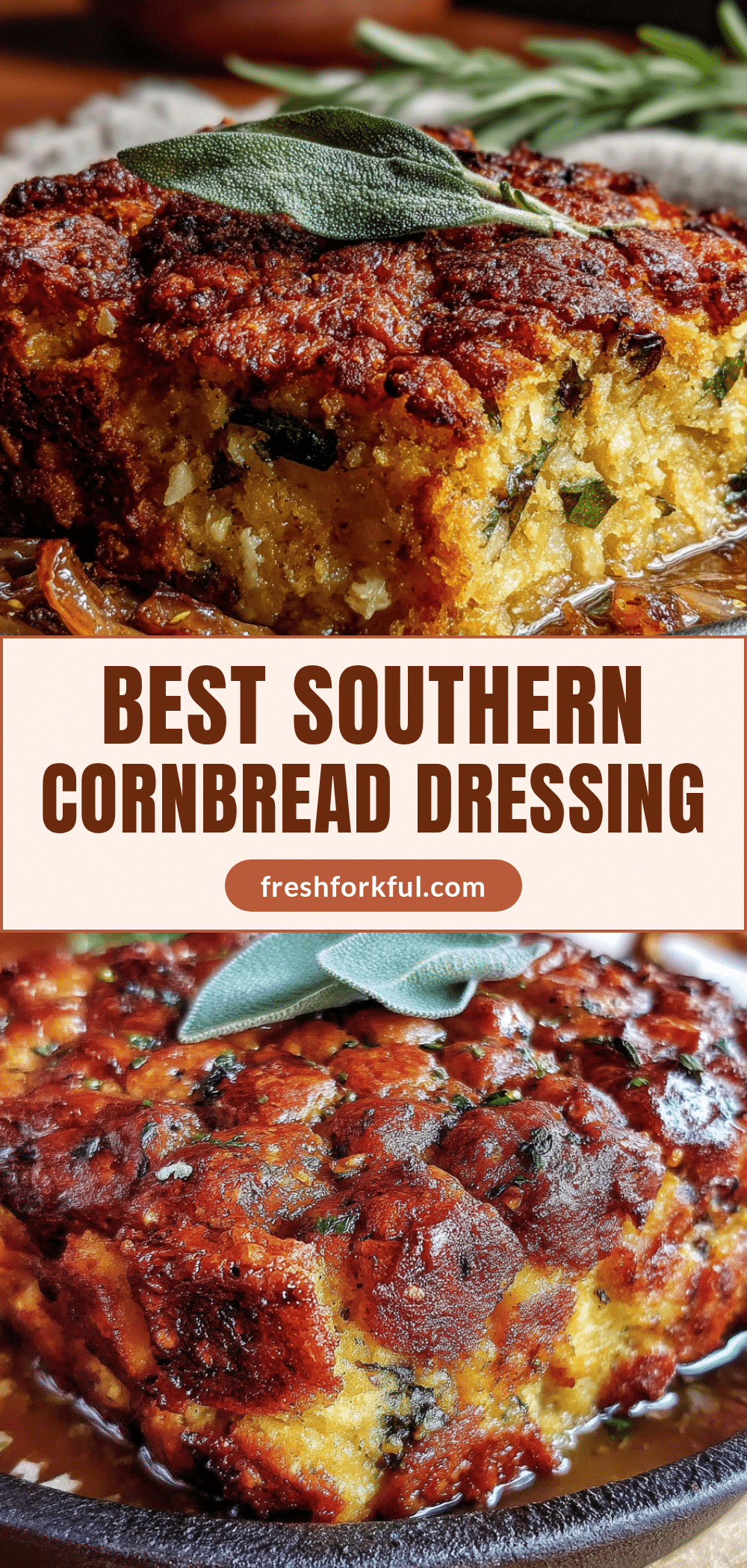
Best Southern Cornbread Dressing with Sage – Easy Recipe

This is the best Southern cornbread dressing with sage, built on memory, patience, and a few tricks learned the hard way. It’s the kind that makes people close their eyes at the table, perfect for Thanksgiving, Christmas, or any time you need something warm and familiar.
- Prep Time: 30 minutes
- Cook Time: 1 hour 5 minutes
- Total Time: 1 hour 35 minutes (plus overnight staling)
- Yield: 12 servings 1x
- Category: Side Dish
- Cuisine: Southern
Ingredients
- 1 ½ cups yellow cornmeal
- ½ cup all-purpose flour
- 1 tablespoon baking powder
- 1 teaspoon salt
- 1 tablespoon sugar
- 2 large eggs, room temperature
- 1 ½ cups buttermilk
- ¼ cup unsalted butter, melted (plus more for the skillet)
- 6 cups crumbled day-old cornbread (about one full 9-inch skillet’s worth)
- 2 tablespoons unsalted butter
- 1 large yellow onion, finely diced (about 1 ½ cups)
- 3 celery stalks, finely diced (about 1 cup)
- 2 tablespoons fresh sage, finely chopped (or 1 tablespoon dried)
- 1 teaspoon dried thyme
- ½ teaspoon black pepper
- 1 teaspoon salt
- 2 cups low-sodium chicken broth (plus more if needed)
- 2 large eggs, beaten
Instructions
- Preheat your oven to 425°F (220°C). Place your cast iron skillet inside while it heats up.
- In a large bowl, whisk together the cornmeal, flour, baking powder, salt, and sugar.
- In a separate bowl, whisk the eggs until frothy, then add the buttermilk and melted butter. Stir until combined.
- Pour the wet mixture into the dry ingredients. Stir with a wooden spoon until just combined.
- Carefully remove the hot skillet from the oven and add a tablespoon of butter. Swirl to coat. Pour in the batter and bake for 20-25 minutes, until golden and a toothpick comes out clean.
- Let the cornbread cool completely, then crumble it into a large bowl. Cover with a clean kitchen towel and let it sit out overnight.
- Preheat your oven to 375°F (190°C). Grease a 9×13 baking dish with butter or nonstick spray.
- In a large skillet, melt 2 tablespoons of butter over medium heat. Add the diced onion and celery. Cook for 8-10 minutes until translucent and tender.
- Stir in the chopped sage, thyme, salt, and pepper. Cook for one more minute until fragrant. Remove from heat.
- In a large bowl, combine the crumbled cornbread and the sautéed vegetable mixture. Toss gently.
- In a separate bowl, whisk together the chicken broth and beaten eggs. Pour over the cornbread mixture and stir gently until all is moistened. Let rest for 10 minutes.
- Transfer the mixture to the prepared baking dish and spread evenly. Bake for 35-40 minutes, until the top is golden brown and the edges are slightly crispy.
- Let the dressing rest for 10 minutes before serving.
Notes
Use low-sodium broth to control salt. Fresh sage is preferred; if using dried, use half the amount and rub between palms. Make cornbread a day ahead and let it stale overnight for best texture. Let the mixture rest 10 minutes before baking to allow absorption. Check internal temperature of 165°F (74°C) for doneness. Keep extra warm broth on hand to add if dressing looks dry during baking.
Nutrition
- Serving Size: 1 serving (1/12 of r
- Calories: 285
- Sugar: 4
- Sodium: 520
- Fat: 12
- Saturated Fat: 6
- Carbohydrates: 36
- Fiber: 3
- Protein: 7
Keywords: cornbread dressing, sage dressing, Southern dressing, Thanksgiving dressing, holiday side dish, cornbread stuffing