Love this? Save it for later!
Share the inspiration with your friends
I was digging through a dusty box of vinyl records at a flea market last October—flipping past scratched Beatles albums and a truly questionable collection of polka music—when the elderly man running the booth started talking about wine. Not the records. Not the weather. Wine. He had this gruff, no-nonsense way about him, like he’d been selling records since they were made of shellac, and he just looked at me and said, “You look like someone who needs a good mulled wine recipe.” I mean, I wasn’t expecting life advice from a man who smelled like old paper and cinnamon gum, but there I was, clutching a scratched copy of Fleetwood Mac’s Rumours, listening to him describe exactly how to make his signature mulled wine.
He told me he’d learned it from his wife, who had learned it from her grandmother in Germany, and that the secret wasn’t the wine itself but the patience you showed it. “You can’t rush it,” he said, tapping the side of his nose. “That’s where most people mess up.” I scribbled the recipe on a napkin—a greasy napkin, honestly, that had been sitting under a coffee mug—and I almost threw it away twice. But something made me keep it. Maybe it was the way he talked about serving it at family gatherings, or the way he said the smell alone would make people forgive you for burning the appetizers. Let me tell you, that man was right.
I’ve been making this Guest-Favorite Mulled Wine with Orange and Cinnamon for every single get-together since that day. It’s become my secret weapon for hosting—the thing people ask for before they even walk in the door. Maybe you’ve been there, standing in the kitchen, wondering how to make a gathering feel special without spending hours slaving over something complicated. This is it. This is the drink that does the heavy lifting for you. The first time I served it, my friend Jenna—who is notoriously hard to impress—actually closed her eyes after the first sip and said, “Okay, this is the best thing you’ve ever made.” And honestly? She wasn’t wrong.
Why You’ll Love This Recipe
Look, I’ve tested a lot of mulled wine recipes over the years. Some were too sweet, some tasted like straight-up cough syrup, and others just felt flat—like they were missing that warm, cozy soul that makes mulled wine, well, mulled wine. This one is different. This version has been tweaked and perfected through countless dinner parties, holiday gatherings, and those random Tuesday nights when you just need a glass of something comforting. It’s the recipe I trust when I’m hosting, and here’s why you will too:
- Bold, Balanced Flavor: The orange and cinnamon aren’t just floating around for decoration—they actually infuse the wine with layers of citrusy brightness and warm spice. No artificial syrups here.
- Simple Ingredients: You don’t need to hunt down obscure spices or fancy liqueurs. Most of these ingredients are probably in your pantry right now, which means you can make this on a whim.
- Perfect for Hosting: This is the ultimate party drink. It fills your home with an incredible aroma, it’s easy to make in large batches, and it makes you look like you put in way more effort than you actually did.
- Crowd-Pleaser: I’ve served this to wine snobs, casual drinkers, and people who swore they didn’t like red wine. It wins everyone over. Every single time.
- Make-Ahead Friendly: You can prep this hours before your guests arrive, and it actually gets better as it sits. That’s the kind of flexibility a host needs.
What makes this recipe different from the dozens of others out there? It’s the technique. Most recipes just dump everything in a pot and hope for the best. But this one uses a gentle simmer—never a boil—and a carefully timed infusion that draws out the best from each ingredient without turning bitter. It’s the difference between a good mulled wine and a great one. And when you’re hosting, you want great. You want the kind of drink that makes people linger by the stove, cups in hand, asking for the recipe before they leave. That’s what this is.
What Ingredients You Will Need
This recipe uses simple, wholesome ingredients that come together to create something truly special. The beauty of mulled wine is that it’s forgiving—you can adjust things to your taste—but these specific ingredients and ratios have been tested to deliver the most balanced, crowd-pleasing result. Here’s what you’ll need:
For the Mulled Wine Base
- 2 bottles (750 ml each) dry red wine – I recommend a medium-bodied red like Merlot, Zinfandel, or a Spanish Garnacha. You don’t need expensive wine here—something in the $10-15 range works beautifully. The spices and fruit will do the heavy lifting. My personal go-to is a bottle of Bogle Old Vine Zinfandel or a decent Rioja. Avoid anything too tannic or oaky, like a young Cabernet Sauvignon, as it can turn bitter when heated.
- 1/4 cup honey or maple syrup – This adds natural sweetness and a subtle floral note. I prefer honey for its smooth sweetness, but maple syrup works wonderfully if you want a slightly earthier flavor. For a vegan option, use agave or coconut sugar.
- 1/2 cup fresh orange juice (about 2 oranges) – Fresh juice is non-negotiable here. Bottled orange juice has a flat, sometimes metallic taste that doesn’t play well with the wine. Roll your oranges on the counter before juicing to get the most juice out of them.
- 1/4 cup brandy or cognac (optional, but highly recommended) – This gives the mulled wine a little extra warmth and complexity. It’s not essential, but it’s the secret touch that makes people ask, “What’s in this?” If you’re skipping it, just add an extra tablespoon of honey to balance the flavor.
For the Spice and Fruit Infusion

- 2 cinnamon sticks – Use whole sticks, not ground cinnamon. Ground cinnamon will turn your wine cloudy and gritty. The sticks release their flavor slowly and cleanly. I like to break one of the sticks in half to expose more surface area for a stronger cinnamon presence.
- 6 whole cloves – A little goes a long way. Cloves are potent, and too many can make the wine taste medicinal. Stick to 6, and if you’re unsure, start with 4 and add more to taste.
- 3 star anise pods – This adds that subtle licorice-like warmth that makes mulled wine so distinctive. If you don’t have star anise, you can skip it, but it really rounds out the flavor profile beautifully.
- 1 teaspoon whole black peppercorns – I know this sounds strange, but trust me. A tiny bit of black pepper adds a gentle warmth that wakes up the other spices without making the wine spicy. It’s a little trick I learned from that flea market guy, and it makes a noticeable difference.
- 1 large orange, sliced into rounds – Use a navel orange or a Cara Cara if you can find one. The slices are for both flavor and presentation. I like to stud a few of the slices with extra cloves for a classic look.
- 1-2 tablespoons brown sugar (optional, for extra sweetness) – Depending on the sweetness of your wine and your personal taste, you may want to add a bit of brown sugar at the end. I usually start without it and add it if needed.
Ingredient Selection Tip: When choosing your wine, look for something you’d actually enjoy drinking on its own. The rule “don’t cook with wine you wouldn’t drink” absolutely applies here. But you also don’t need to break the bank. A $12 bottle of a fruity red is perfect. Also, if you’re using honey, try to get a local or raw honey—it has more flavor complexity that shines through even after heating.
Substitution Guidance: For a non-alcoholic version, substitute the wine with 4 cups of high-quality red grape juice or pomegranate juice. Skip the brandy, and you may want to add a splash of apple cider vinegar or lemon juice to mimic the acidity of wine. For a low-sugar version, use a dry red wine and reduce the honey to 2 tablespoons. You can also use a sugar-free sweetener like monk fruit, but taste as you go—some sweeteners can have an aftertaste when heated.
Equipment Needed
You don’t need a fancy setup for this recipe, which is part of its charm. Here’s what you’ll need to get the job done:
- Large heavy-bottomed pot or Dutch oven – A 5-6 quart pot is ideal. The heavy bottom helps distribute heat evenly and prevents the wine from scorching. I use my trusty Le Creuset Dutch oven, but any sturdy pot will work. Avoid thin aluminum pots, as they can create hot spots.
- Wooden spoon or silicone spatula – For stirring. A wooden spoon won’t scratch your pot, and it’s gentle on the spices.
- Fine-mesh strainer – To strain out the spices and orange slices before serving. You don’t want someone biting into a whole clove. Trust me on this one.
- Ladle – For serving. A nice deep ladle makes pouring into mugs easy and mess-free.
- Measuring cups and spoons – For accuracy, especially with the honey and brandy.
- Sharp knife and cutting board – For slicing the oranges.
- Mugs or heatproof glasses – Ceramic mugs are perfect, but heatproof glass mugs also look lovely. Avoid thin glass, as the hot wine can crack it.
Personal Note: I used to make this in a cheap non-stick pot, and it worked fine, but the wine never quite had that deep, integrated flavor. When I upgraded to a heavy-bottomed stainless steel pot, the difference was noticeable. The heat was more consistent, and the spices infused more evenly. If you’re making this for a crowd, a slow cooker or Instant Pot (on the slow cook setting) also works beautifully—just keep it on low and let it steep for at least 2 hours.
Preparation Method
This is where the magic happens. Follow these steps carefully, and you’ll have a pot of mulled wine that will make your guests think you spent hours on it. (Spoiler: you didn’t.)
- Prep the oranges (5 minutes): Wash your orange thoroughly. Slice it into thin rounds, about 1/4-inch thick. If you want to get fancy, you can stud 4-5 of the slices with a whole clove each—just push the clove through the peel into the flesh. This looks beautiful and adds a little extra clove flavor. Set the slices aside.
- Combine the base (2 minutes): Pour both bottles of red wine into your large pot. Add the honey or maple syrup, fresh orange juice, and brandy (if using). Whisk gently to combine. The honey will settle at the bottom at first, but it will dissolve as the wine heats.
- Add the whole spices (1 minute): Drop in the cinnamon sticks, whole cloves, star anise, and whole black peppercorns. Don’t be tempted to crush or grind them—they need to stay whole to infuse slowly and cleanly. Toss in the orange slices as well, reserving a few for garnish later.
- Heat gently, never boil (15-20 minutes): Place the pot over medium-low heat. You want to bring the wine to a gentle simmer—small bubbles should barely break the surface. This is the most important step. Do not let it boil. Boiling will cook off the alcohol too quickly, concentrate the acidity, and make the wine taste harsh and bitter. I usually set a timer for 15 minutes and keep the heat at a steady low. The aroma will start filling your kitchen around the 10-minute mark, and that’s when you know it’s working.
- Taste and adjust (2 minutes): After 15 minutes, carefully ladle a small amount into a mug and taste it. Is it sweet enough? Add a tablespoon of brown sugar or a drizzle more honey. Is it too sweet? Add a splash more orange juice or a tiny pinch of salt to balance it. Does it need more spice? Let it simmer for another 5-10 minutes. This is your chance to customize it to your exact preference.
- Strain (2 minutes): Once the wine is perfectly flavored, remove the pot from the heat. Place your fine-mesh strainer over a large heatproof bowl or another pot. Carefully pour the mulled wine through the strainer to catch all the spices and orange slices. This step is crucial—nobody wants to fish a clove out of their mug at a party. Discard the solids.
- Serve immediately (1 minute): Transfer the strained mulled wine back to the pot (or a clean slow cooker on warm) and ladle it into mugs. Garnish each mug with a fresh orange slice or a small cinnamon stick for that picture-perfect look. Serve hot.
Sensory Cues: At the 10-minute mark, your kitchen should smell like a holiday candle come to life—warm, spicy, and sweet. The wine should look deep ruby red with a slight translucency from the orange juice. When you taste it, you should first get the wine, then the warmth of the spices, and finally a gentle sweetness on the finish. If it tastes sharp or acidic, it’s been heated too high or too fast. If it tastes flat, it needs more time or a touch more sweetener.
Personal Tip for Efficiency: I like to prep the oranges and measure out all the spices the morning of a party. That way, when guests are about to arrive, I can just dump everything in the pot and let it simmer while I put out appetizers. It takes maybe 5 minutes of active work, and the passive simmering time is when I’m setting the table or fixing my hair. Multitasking at its finest.
Cooking Tips & Techniques
Over the years, I’ve made this recipe dozens of times, and I’ve learned a few things the hard way. Here are my best tips to make sure your mulled wine turns out perfect every time:
Don’t rush the infusion. The biggest mistake I made early on was thinking that if I simmered the wine longer, it would be more flavorful. That’s true—up to a point. After about 30 minutes, the spices can start to turn bitter, especially the cloves and star anise. I’ve found the sweet spot is 15-20 minutes of gentle simmering. That’s enough time for the cinnamon and orange to fully infuse without the stronger spices taking over. I once left it on the stove for 45 minutes while I got distracted by a phone call, and honestly, it tasted like a potpourri candle. Not ideal.
Temperature control is everything. I cannot stress this enough: keep the heat low. A rolling boil will ruin your mulled wine. It evaporates the alcohol, concentrates the acidity, and makes the wine taste flat and harsh. I use the lowest setting on my stove and adjust as needed. If you’re using a slow cooker, set it to low and let it go for 2-3 hours. The slow cooker is actually my favorite method for parties because it keeps the wine warm without any risk of boiling.
Taste as you go. This is the most important rule of cooking anything, and it applies here too. Everyone’s palate is different. Some people like their mulled wine sweeter, some prefer more spice. I always start with the base recipe and then adjust based on my personal taste and the wine I’m using. A fruity Zinfandel might need less sweetener, while a dry Merlot might need a bit more. Trust your taste buds.
Make it ahead of time. Here’s a little secret: mulled wine actually tastes better the next day. The flavors continue to meld and deepen as it sits. I often make a batch the day before a party, let it cool, and store it in the fridge in a sealed container. Then I just reheat it gently before guests arrive. It saves me time on party day, and the flavor is even more complex. Just remember to strain it before storing, or the spices will continue to infuse and could become overpowering.
A note on scaling. This recipe doubles and triples beautifully. For a large party, I use a 12-quart stockpot and multiply everything by 3. The only thing to watch is the simmering time—with a larger volume, it will take a bit longer to come to temperature, but the infusion time stays the same. I’ve served this to over 30 people at a holiday open house, and it was a hit.
Variations & Adaptations
One of the things I love most about this recipe is how adaptable it is. Once you have the basic technique down, you can play with flavors to suit your mood, the season, or your guests’ preferences. Here are some of my favorite variations:
Spiced Apple Mulled Wine: Replace the orange juice with 1/2 cup of unfiltered apple cider. Add 2-3 whole allspice berries and a slice of fresh ginger along with the other spices. This version is slightly less citrusy and more autumnal—perfect for a fall gathering. I first tried this on a whim when I ran out of oranges, and it was such a happy accident that it’s now my go-to for November parties.
White Mulled Wine: Yes, you can make mulled wine with white wine! Use a dry white like Sauvignon Blanc or Pinot Grigio. Swap the orange for lemon and add a few slices of fresh pear. Use white honey or agave for sweetener, and skip the star anise (it can be overpowering with white wine). The result is lighter, more delicate, and surprisingly refreshing. It’s a great option for spring or summer gatherings.
Non-Alcoholic Version: For guests who don’t drink alcohol, or for a family-friendly gathering, substitute the wine with 4 cups of high-quality red grape juice or a blend of cranberry and pomegranate juice. Add 1/4 cup of apple cider vinegar or lemon juice to mimic the acidity of wine. Follow the same simmering instructions. This version is delicious enough that even the adults will reach for it. I’ve served it at a kids’ holiday party, and the parents were asking for the recipe.
Extra-Spicy Version: If you’re a spice lover, add 1-2 dried chiles (like ancho or guajillo) to the pot along with the other spices. The heat is subtle and warming, not fiery. I also add a teaspoon of vanilla extract at the end for a touch of sweetness that balances the heat. This version is not for everyone, but my spice-loving friends absolutely request it every year.
Dietary Adaptations: This recipe is naturally gluten-free and dairy-free. For a vegan version, use maple syrup or agave instead of honey. For a low-sugar version, use a dry red wine and reduce the sweetener to 2 tablespoons. You can also add a sugar-free sweetener like monk fruit, but taste as you go to avoid any aftertaste. For a keto-friendly version, use a dry red wine and sweeten with a keto-approved sweetener like erythritol.
Serving & Storage Suggestions
Serving mulled wine is almost as important as making it. The presentation can turn a simple drink into a memorable experience for your guests.
Serving Temperature: Mulled wine should be served hot, but not scalding. Aim for around 150-160°F (65-70°C). If it’s too hot, it will burn your guests’ mouths and mask the flavors. If it’s too cool, it won’t have that comforting warmth. I like to keep it in a slow cooker on the “warm” setting during parties—it stays at the perfect temperature for hours without risk of boiling.
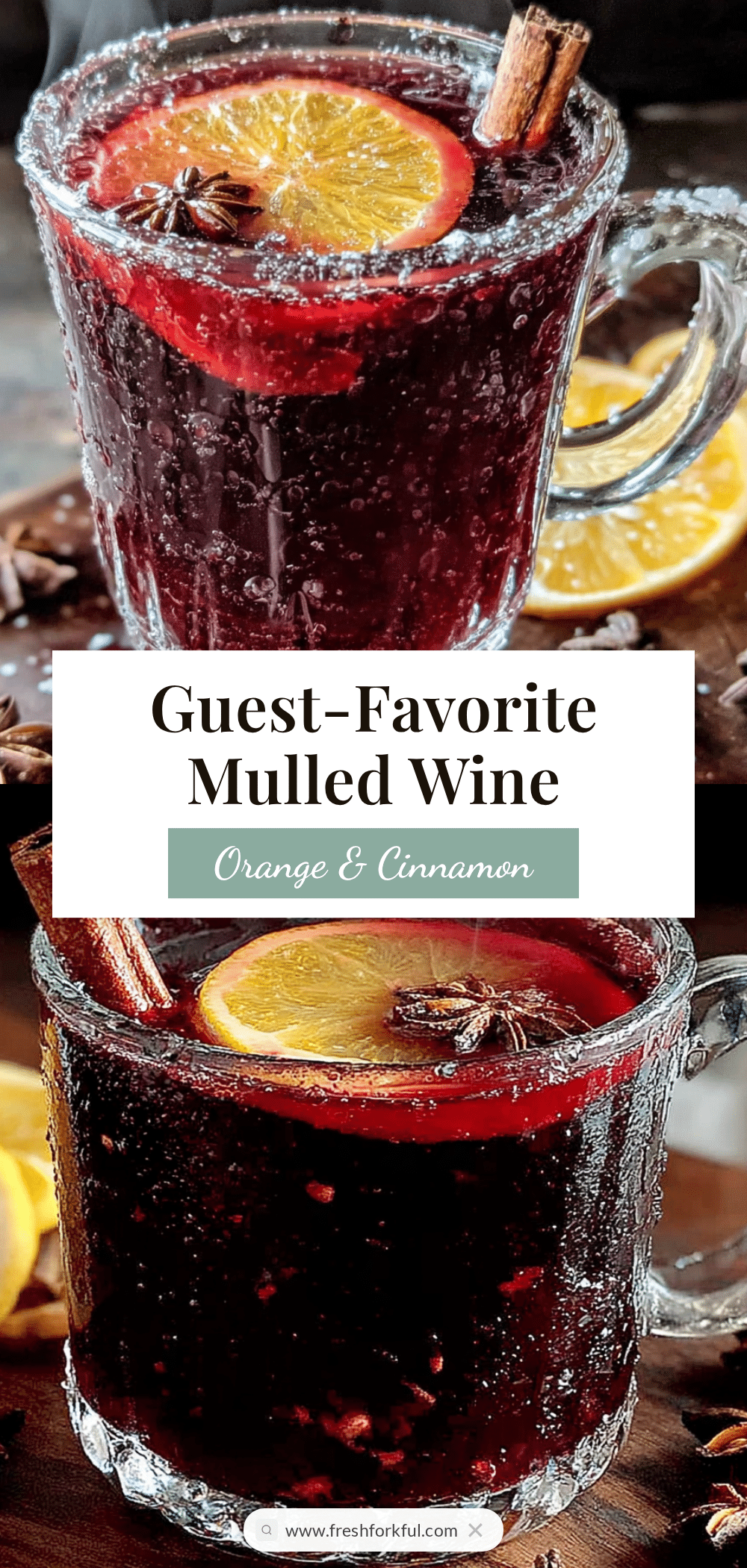
Presentation Tips: Garnish each mug with a fresh orange slice and a small cinnamon stick. You can also add a star anise pod for visual appeal. For a festive touch, rim the mugs with a mixture of sugar and cinnamon—just dip the rim in a little water or honey, then into the sugar-cinnamon mix. It looks beautiful and adds a tiny bit of sweetness with each sip. I also like to set out a small tray of garnishes so guests can customize their own mugs.
What to Serve Alongside: Mulled wine pairs beautifully with a cheese board featuring aged cheddar, brie, and blue cheese. It also goes well with roasted nuts, spiced cookies, or a simple apple tart. For a heartier spread, serve it alongside roasted pork tenderloin or a warm lentil salad. The spices in the wine complement savory dishes wonderfully.
Storage Instructions: Leftover mulled wine can be stored in an airtight container in the refrigerator for up to 5 days. The flavors will continue to meld, and it often tastes even better the next day. To reheat, pour it into a pot and warm it over low heat—again, never let it boil. You can also reheat individual servings in the microwave, but be careful not to overheat it.
Freezing Instructions: Mulled wine freezes surprisingly well. Let it cool completely, then pour it into freezer-safe containers or zip-top bags. It will keep for up to 3 months. Thaw it in the refrigerator overnight, then reheat gently. The texture will be slightly different after freezing, but the flavor remains excellent. I often make a double batch and freeze half for a busy holiday week.
Flavor Development: As I mentioned, mulled wine gets better with time. The spices and fruit continue to infuse the wine even after it’s been strained, so the flavor becomes more integrated and smooth. I actually prefer the second-day version—it’s less sharp and more mellow. If you’re making it for a party, I highly recommend making it a day ahead.
Nutritional Information & Benefits
While mulled wine is certainly a treat, it does offer some surprising health benefits when enjoyed in moderation. Here’s a quick breakdown:
Estimated Nutritional Values (per 6-ounce serving):
- Calories: 180-220 (depending on sweetener)
- Carbohydrates: 20-25g
- Sugar: 15-20g
- Alcohol: Approximately 12-15g (about 1 standard drink)
Health Benefits: Red wine is known for its antioxidant properties, particularly resveratrol, which supports heart health. The cinnamon in this recipe is anti-inflammatory and can help regulate blood sugar. Oranges provide a healthy dose of vitamin C, which supports your immune system—especially welcome during cold and flu season. The cloves and star anise also have antimicrobial properties. Of course, these benefits are best enjoyed as part of a balanced diet and in moderation.
Dietary Considerations: This recipe is naturally gluten-free, dairy-free, and nut-free. For a vegan version, use maple syrup instead of honey. For a low-sugar version, reduce the sweetener or use a sugar-free alternative. The alcohol content can be reduced by simmering longer, but keep in mind that some alcohol will remain. Pregnant or breastfeeding individuals should consult their healthcare provider before consuming.
Personal Perspective: I love that this recipe allows me to enjoy a comforting, festive drink without feeling like I’m overindulging. The spices and fruit add so much flavor that I don’t miss the extra sugar or artificial ingredients found in many store-bought versions. It’s a treat that feels good to sip on a cold evening.
Conclusion
This Guest-Favorite Mulled Wine with Orange and Cinnamon has become a staple in my home for good reason. It’s simple, forgiving, and absolutely crowd-pleasing. The first time I made it, I was nervous—what if it didn’t live up to the story that gruff flea market man had told me? But the moment I poured that first mug and took a sip, I knew I’d found something special. And every time I serve it, I think of him, standing there among the dusty records, sharing a piece of his family’s tradition with a stranger.
I hope you’ll make this your own. Adjust the spices to your liking, try the apple cider variation, or serve it at your next holiday party and watch your guests’ faces light up. That’s the beauty of this recipe—it’s a starting point, not a rulebook. The best version is the one that tastes perfect to you.
So go ahead. Grab a bottle of red, a few oranges, and those cinnamon sticks sitting in the back of your spice cabinet. Make a pot of this mulled wine, invite some people over, and let the aroma do its magic. And when someone inevitably asks for the recipe, tell them it came from a man at a flea market who knew a thing or two about making people feel welcome. Cheers!
Frequently Asked Questions
Can I use ground spices instead of whole spices?
I really don’t recommend it. Ground spices will make your wine cloudy and gritty, and they can easily become overpowering. Whole spices release their flavor slowly and cleanly, and they’re much easier to strain out. Stick with whole spices for the best results.
Can I make this in a slow cooker?
Absolutely! A slow cooker is actually my favorite method for parties. Combine all the ingredients in the slow cooker and set it on low for 2-3 hours. After that, switch it to the “warm” setting to keep it at the perfect serving temperature. Just remember to strain it before serving, or use a spice bag or cheesecloth to contain the whole spices.
What’s the best wine to use for mulled wine?
You want a dry, medium-bodied red wine. Something like a Merlot, Zinfandel, or Spanish Garnacha works beautifully. Avoid anything too expensive—your spices and fruit will do the work—but also avoid anything too cheap or overly tannic. A $10-15 bottle is the sweet spot. I personally love using a bottle of Bogle Old Vine Zinfandel or a decent Rioja.
Can I make this non-alcoholic?
Yes, absolutely! Substitute the wine with 4 cups of high-quality red grape juice or a blend of cranberry and pomegranate juice. Add 1/4 cup of apple cider vinegar or lemon juice to mimic the acidity of wine. Follow the same simmering instructions. It’s delicious and perfect for kids or anyone avoiding alcohol.
How long does mulled wine last in the fridge?
Strained and stored in an airtight container, mulled wine will keep in the refrigerator for up to 5 days. The flavors actually deepen and become more mellow over time. To reheat, simply warm it gently on the stove over low heat—never let it boil. You can also reheat individual servings in the microwave for about 30-45 seconds.
Pin This Recipe!
Guest-Favorite Mulled Wine with Orange and Cinnamon

A warm, spiced mulled wine infused with orange and cinnamon, perfect for holiday gatherings and cozy nights. This crowd-pleasing recipe uses simple ingredients and a gentle simmering technique for a balanced, aromatic drink.
- Prep Time: 10 minutes
- Cook Time: 20 minutes
- Total Time: 30 minutes
- Yield: 8 servings 1x
- Category: Beverage
- Cuisine: German
Ingredients
- 2 bottles (750 ml each) dry red wine (e.g., Merlot, Zinfandel, or Spanish Garnacha)
- 1/4 cup honey or maple syrup
- 1/2 cup fresh orange juice (about 2 oranges)
- 1/4 cup brandy or cognac (optional)
- 2 cinnamon sticks
- 6 whole cloves
- 3 star anise pods
- 1 teaspoon whole black peppercorns
- 1 large orange, sliced into rounds
- 1–2 tablespoons brown sugar (optional, for extra sweetness)
Instructions
- Prep the oranges: Wash the orange thoroughly and slice into thin rounds (about 1/4-inch thick). Optionally, stud 4-5 slices with a whole clove each. Set aside.
- Combine the base: Pour both bottles of red wine into a large heavy-bottomed pot or Dutch oven. Add honey or maple syrup, fresh orange juice, and brandy (if using). Whisk gently to combine.
- Add the whole spices: Drop in cinnamon sticks, whole cloves, star anise, and whole black peppercorns. Add the orange slices, reserving a few for garnish.
- Heat gently, never boil: Place the pot over medium-low heat and bring to a gentle simmer (small bubbles barely breaking the surface). Do not let it boil. Simmer for 15-20 minutes.
- Taste and adjust: After 15 minutes, taste the mulled wine. Adjust sweetness with brown sugar or more honey, or add a splash of orange juice if too sweet. If more spice is desired, let it simmer another 5-10 minutes.
- Strain: Remove the pot from heat. Pour the mulled wine through a fine-mesh strainer into a heatproof bowl or another pot to remove spices and orange slices. Discard solids.
- Serve immediately: Transfer the strained wine back to the pot or a slow cooker on warm. Ladle into mugs and garnish each with a fresh orange slice or a small cinnamon stick. Serve hot.
Notes
Do not let the wine boil, as it will become bitter. For a non-alcoholic version, substitute wine with red grape juice or pomegranate juice and add a splash of apple cider vinegar. Mulled wine can be made a day ahead and reheated gently; flavors deepen over time.
Nutrition
- Serving Size: 6 ounces
- Calories: 200
- Sugar: 18
- Sodium: 10
- Carbohydrates: 22
Keywords: mulled wine, hot wine, spiced wine, Christmas drink, holiday drink, orange cinnamon wine, winter beverage