Love this? Save it for later!
Share the inspiration with your friends
The woman at the farmers market stand watched me circle back three times before she finally spoke. “You keep looking at the apple cider,” she said, not unkindly. I was holding a bag of Honeycrisps and feeling indecisive, which is pretty much my default state when faced with too many good choices. She reached under her table and pulled out a mason jar of the darkest, most amber-colored cider I’d ever seen. “This one’s from the last pressing of the season. It’s got more body. More soul.” She handed it to me like she was passing along a secret, and honestly? She was. I bought two gallons on the spot, mostly because I didn’t want to disappoint her, but also because something about the way she said “soul” made me think of bundt cakes. Maybe you’ve been there—where a single ingredient just screams “bake me into something.”
That cider sat in my fridge for two days while I figured out what it wanted to be. I thought about mulling it, but that felt too predictable. I thought about reducing it into syrup, but that felt like cheating. Then I remembered an old bundt pan I’d picked up at a thrift store—the kind with all those fancy ridges that make even a simple cake look like you tried really hard. The cider wanted warmth. It wanted cinnamon and cloves and that deep, almost caramel-like richness that only happens when you let apple cider simmer down into something concentrated. So I boiled it. I reduced it until my whole apartment smelled like autumn had moved in permanently. And then I poured that liquid gold into a cake batter that would do it justice.
The first time I made this cake, I forgot to grease the pan properly. You know that sinking feeling when you flip a bundt cake and only half of it comes out? I stood there staring at the ruined top, the exposed crumb, the caramel drizzle pooling in places it shouldn’t. But here’s the thing—my neighbor knocked on my door right then, and I offered her the broken pieces on a plate. She ate three of them before I could even explain what happened. “This is the best accident you’ve ever had,” she said with her mouth full. And she was right. That’s when I knew this recipe was special. Not because it was perfect, but because even when it fell apart, it was still worth sharing. This is that cake.
Why You’ll Love This Recipe
I’ve tested this cake seven times to get it exactly right. Seven times of adjusting the spice ratios, tweaking the baking time, and figuring out how to keep the crumb tender while still packing in that concentrated apple cider flavor. Let me tell you—it was worth every single test batch. This is the kind of cake that makes people close their eyes when they take the first bite. I’ve seen it happen at least a dozen times now.
- Deep, Real Apple Flavor : This isn’t one of those cakes where you squint and think, “Hmm, maybe there’s apple in here?” The reduced cider gives you concentrated, authentic apple taste that hits you right away.
- Perfectly Spiced Without Being Overwhelming : The cinnamon, nutmeg, and cloves work together to support the apple flavor, not bury it. You’ll taste warmth, not a spice cabinet explosion.
- Incredibly Moist Texture : The apple cider reduction does double duty—it adds flavor and keeps the crumb incredibly tender. This cake stays moist for days, if it lasts that long.
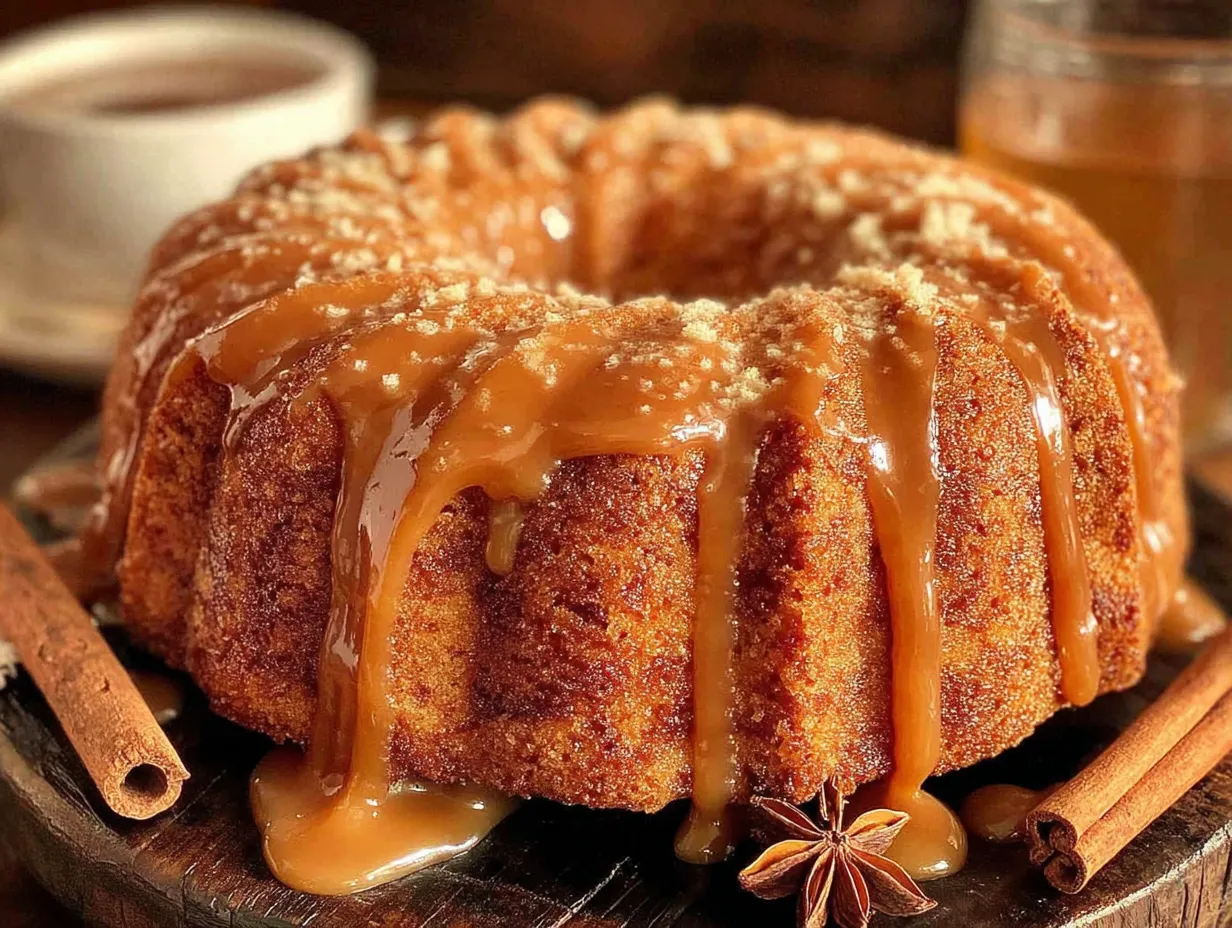
- That Caramel Drizzle : The caramel is simple to make but tastes like you spent hours on it. It seeps into the warm cake and creates these little pockets of sweetness that are honestly addictive.
- No Fancy Equipment Needed : You just need a bundt pan, a saucepan, and basic mixing bowls. Nothing complicated, nothing expensive.
- Perfect for Fall Gatherings : This cake shows up at Thanksgiving, Friendsgiving, cozy brunches, and random Tuesday nights when you need something warm and comforting. It fits everywhere.
What makes this recipe different from every other apple cider cake out there? It’s the reduction step. Most recipes just dump in regular apple cider and hope for the best. But reducing the cider first concentrates the sugars and the apple flavor in a way that transforms the entire cake. You get this deep, almost caramelized apple taste that you just can’t achieve any other way. Plus, the texture is better—less watery, more tender. I’ve had people tell me this is the best apple cake they’ve ever eaten, and I believe them because I’ve eaten a lot of apple cakes myself.
What Ingredients You Will Need
This recipe uses simple, wholesome ingredients that come together to create something truly special. Most of these are pantry staples, which makes this cake perfect for those days when you want to bake but don’t want to make a special trip to the store. The star of the show is the apple cider, so try to get good quality stuff if you can.
- Apple Cider (2 cups / 480 ml) : This gets reduced down to about 1/2 cup, so don’t skip this step. Use fresh, unfiltered cider if you can find it—it has more flavor and body. I like buying from local orchards when they’re in season.
- All-Purpose Flour (2 1/2 cups / 300 grams) : Spoon and level your flour for the most accurate measurement. Scooping directly from the bag can pack in too much flour and make the cake dense.
- Granulated Sugar (1 cup / 200 grams) : Regular white sugar works perfectly here. It dissolves easily and helps create that tender crumb.
- Light Brown Sugar (1/2 cup / 100 grams) : Packed. Brown sugar adds moisture and a subtle molasses flavor that pairs beautifully with the apple cider and spices.
- Unsalted Butter (1 cup / 2 sticks / 226 grams) : Softened to room temperature. I recommend using a good quality butter like Kerrygold or Plugrà—the flavor really comes through in the finished cake.
- Large Eggs (3) : Room temperature. Cold eggs can seize up the butter and create a lumpy batter. Leave them on the counter for about 30 minutes before you start baking.
- Vanilla Extract (2 teaspoons) : Pure vanilla extract, not imitation. It adds depth and rounds out the spice flavors.
- Baking Powder (1 1/2 teaspoons) : Make sure your baking powder is fresh—test it by dropping a little in hot water. If it fizzes, it’s good to go.
- Baking Soda (1/2 teaspoon) : Helps with browning and tenderness.
- Salt (1/2 teaspoon) : Fine sea salt or table salt. Don’t skip this—salt enhances all the other flavors.
- Ground Cinnamon (2 teaspoons) : I use Ceylon cinnamon for its milder, sweeter flavor, but regular cinnamon works great too.
- Ground Nutmeg (1/2 teaspoon) : Freshly grated if you have it—the flavor is noticeably better.
- Ground Cloves (1/4 teaspoon) : A little goes a long way. Cloves are potent, so measure carefully.
- Buttermilk (1/2 cup / 120 ml) : Room temperature. Buttermilk adds tenderness and helps activate the baking soda. If you don’t have buttermilk, you can make a quick substitute by adding 1/2 tablespoon of lemon juice or vinegar to regular milk and letting it sit for 5 minutes.
For the Caramel Drizzle:
- Granulated Sugar (1/2 cup / 100 grams)
- Unsalted Butter (3 tablespoons / 42 grams) : Cut into pieces.
- Heavy Cream (1/4 cup / 60 ml) : Room temperature. Cold cream can cause the caramel to seize.
- Vanilla Extract (1/2 teaspoon)
- Flaky Sea Salt (optional, for sprinkling) : Maldon or another flaky salt. The salt balances the sweetness beautifully.
Equipment Needed
You don’t need a professional kitchen to make this cake, but having the right tools makes the process smoother. Here’s what you’ll need:
- 10 to 12-Cup Bundt Pan : This is non-negotiable. A standard bundt pan works perfectly. I use a Nordic Ware pan that I found at a garage sale for five dollars—best five dollars I ever spent. If you’re buying new, look for one with a non-stick coating and good heat distribution.
- Medium Saucepan : For reducing the apple cider. A heavy-bottomed pan works best to prevent scorching.
- Large Mixing Bowl : For the dry ingredients.
- Stand Mixer or Hand Mixer : You can cream the butter and sugar by hand, but a mixer makes it much easier and gives you a lighter texture.
- Whisk : For combining dry ingredients.
- Spatula : A silicone spatula is ideal for scraping down the bowl and folding in ingredients.
- Cooling Rack : Essential for even cooling. If you don’t have one, you can use the inverted lid of a roasting pan—I’ve done it in a pinch.
- Small Saucepan : For the caramel. A light-colored pan helps you see the color change.
- Candy Thermometer (optional) : Helpful for the caramel, but not required if you watch the color carefully.
Preparation Method
Let me walk you through this step by step. I’ve tried to include all the little details that make the difference between a good cake and a great one.
- Reduce the Apple Cider : Pour 2 cups of apple cider into a medium saucepan. Bring it to a boil over medium-high heat, then reduce the heat to medium-low and let it simmer. You want it to reduce down to about 1/2 cup, which takes around 20 to 25 minutes. Stir it occasionally to prevent scorching, especially toward the end when the liquid gets syrupy. You’ll know it’s done when it coats the back of a spoon and has a deep, concentrated apple aroma. Set it aside to cool completely. (Don’t rush this—hot reduction can mess with your batter temperature.)
- Preheat and Prep : Preheat your oven to 350°F (175°C). Generously grease your bundt pan with butter or non-stick baking spray. I like using a pastry brush to get into all the crevices. Then dust the pan with a light coating of flour, tapping out the excess. This double-coating is your insurance policy against sticking.
- Mix Dry Ingredients : In a large bowl, whisk together the flour, baking powder, baking soda, salt, cinnamon, nutmeg, and cloves. Make sure everything is evenly distributed—you don’t want a pocket of baking soda in one slice.
- Cream Butter and Sugars : In the bowl of a stand mixer fitted with the paddle attachment (or using a hand mixer), beat the softened butter, granulated sugar, and brown sugar together on medium speed until light and fluffy. This takes about 3 to 4 minutes. Scrape down the sides of the bowl halfway through. The mixture should look pale and airy.
- Add Eggs and Vanilla : Add the eggs one at a time, beating well after each addition. Then mix in the vanilla extract. The batter might look slightly curdled at this point—that’s normal, especially if your eggs were a little cold. Don’t panic.
- Alternate Dry Ingredients and Buttermilk : With the mixer on low speed, add the dry ingredients in three additions, alternating with the buttermilk. Start and end with the dry ingredients. So: dry, buttermilk, dry, buttermilk, dry. Mix just until combined after each addition. Overmixing will make the cake tough.
- Fold in the Cider Reduction : Pour the cooled apple cider reduction into the batter and fold it in gently with a spatula. You want it fully incorporated, but don’t beat it. The batter will be thick and smell incredible at this point—like autumn in a bowl.
- Fill the Pan : Spoon the batter into the prepared bundt pan and spread it evenly. Give the pan a few gentle taps on the counter to release any air bubbles. Don’t overfill—leave about 1/2 inch of space from the top.
- Bake : Bake for 45 to 55 minutes, or until a toothpick inserted into the center comes out clean or with just a few moist crumbs. The top should be golden brown and spring back when lightly touched. Start checking at 45 minutes—every oven runs differently.
- Cool in the Pan : Let the cake cool in the pan on a wire rack for 15 minutes. This is crucial. If you try to turn it out too soon, it will fall apart. If you wait too long, it might stick. Fifteen minutes is the sweet spot.
- Turn Out the Cake : Place a wire rack or serving plate upside down on top of the pan. Carefully flip the whole thing over. Lift the pan off gently. If any pieces stick, use a small spatula to coax them loose. Let the cake cool completely before adding the caramel drizzle.
- Make the Caramel Drizzle : While the cake cools, make the caramel. In a small saucepan, heat the sugar over medium heat, stirring constantly with a heatproof spatula or wooden spoon. The sugar will clump up at first, then melt into an amber-colored liquid. Keep stirring until it’s completely smooth and reaches a deep golden color—about 5 to 7 minutes. Remove from heat immediately. Carefully whisk in the butter pieces (it will bubble up, so be cautious). Then slowly drizzle in the heavy cream while whisking. Add the vanilla and stir until smooth. Let the caramel cool for 5 to 10 minutes—it will thicken as it cools.
- Drizzle and Serve : Once the cake is completely cool, drizzle the caramel over the top. I like to let it drip down the sides naturally. Sprinkle with flaky sea salt if you’re using it. Let the caramel set for about 10 minutes before slicing.
Cooking Tips & Techniques
I’ve made this cake enough times to know where things can go wrong. Here are the lessons I learned the hard way so you don’t have to.
Don’t Rush the Cider Reduction : The first time I made this, I tried to speed up the reduction by cranking the heat to high. Big mistake. The cider scorched on the bottom of the pan and tasted bitter. Keep it at a gentle simmer and be patient. Low and slow is the way to go.
Room Temperature Ingredients Matter : I know it’s annoying to wait for butter and eggs to come to room temperature, but it really does make a difference. Cold ingredients don’t emulsify properly, which means your batter can end up greasy or dense. Set everything out an hour before you start baking.
Grease Every Crevice : Bundt pans are notorious for sticking, especially if they have intricate designs. Use a pastry brush to get butter into every nook and cranny. Then dust with flour and tap out the excess. Some bakers swear by using a baking spray that contains flour—that works too.
Check Your Oven Temperature : Ovens lie. I’ve had ovens that run 25 degrees hotter than what the dial says. An inexpensive oven thermometer will save you from overbaked or underbaked cakes. Trust me on this one.
Let It Cool Properly : The 15-minute rest in the pan is not optional. I once got impatient and tried to turn the cake out after 5 minutes. It collapsed into a sad pile of crumbs. Give it the full 15 minutes, then invert it confidently.
Caramel Troubleshooting : If your caramel seizes and turns into a hard, sugary mess, don’t throw it out. Add a splash of warm water and heat it gently while stirring—it should come back together. If it’s too thin, let it simmer a bit longer. If it’s too thick, add a tablespoon of warm cream.
Variations & Adaptations
This recipe is flexible, and I’ve tried several variations over the years. Here are some of my favorites.
- Gluten-Free Version : Substitute the all-purpose flour with a good quality gluten-free flour blend that contains xanthan gum. I’ve had excellent results with King Arthur’s Measure for Measure flour. The texture is slightly more delicate, so handle the batter gently.
- Dairy-Free Adaptation : Use vegan butter sticks (not the spreadable kind in a tub) and replace the buttermilk with 1/2 cup of unsweetened almond or oat milk mixed with 1/2 tablespoon of lemon juice. For the caramel, use coconut cream instead of heavy cream and vegan butter.
- Add Some Texture : Fold in 1 cup of toasted pecans or walnuts along with the cider reduction. The crunch is a nice contrast to the tender crumb. I did this for a Thanksgiving potluck and it was the first thing to disappear.
- Spice It Up Differently : Swap the nutmeg and cloves for 1 teaspoon of cardamom and 1/2 teaspoon of ginger. This gives the cake a more warming, almost chai-like flavor profile. It’s especially good with the caramel drizzle.
- Apple Cider Glaze Instead of Caramel : If you want something lighter, whisk together 1 cup of powdered sugar with 2 to 3 tablespoons of the reduced apple cider (reserve some before adding it to the batter). Drizzle over the cooled cake for a tangy-sweet finish.
- Bake as a Loaf Cake : Pour the batter into a greased 9×5 inch loaf pan and bake for 55 to 65 minutes. The texture will be a bit denser, but it’s perfect for slicing and toasting.
Serving & Storage Suggestions
This cake is at its best when served slightly warm, with the caramel still a little soft. I like to slice it and serve it on a wooden board with a few apple slices and a dusting of cinnamon for presentation. It pairs beautifully with a cup of hot coffee, chai tea, or even a glass of cold milk.
For a more decadent dessert, serve each slice with a scoop of vanilla ice cream or a dollop of lightly sweetened whipped cream. The cold creaminess against the warm spiced cake is absolutely divine. I’ve also been known to warm up leftover slices in the microwave for about 15 seconds—it brings back that fresh-from-the-oven feeling.
Storage Instructions: Store the cake in an airtight container at room temperature for up to 3 days. If you’ve already added the caramel drizzle, I recommend placing a piece of parchment paper between the cake and the lid to prevent the caramel from sticking. The cake actually gets better on day two—the flavors meld together and become even more pronounced.
Freezing Instructions: You can freeze the unfrosted cake for up to 3 months. Wrap it tightly in plastic wrap, then in a layer of aluminum foil. Thaw overnight in the refrigerator, then bring to room temperature before adding the caramel. If you want to freeze individual slices, wrap each one separately for easy grab-and-go treats.
Reheating: For best results, reheat individual slices in a 300°F (150°C) oven for about 5 minutes, or in the microwave for 15 to 20 seconds. The caramel will soften and the spices will become more aromatic.
Nutritional Information & Benefits
Let’s be honest—this is a treat, not a health food. But that doesn’t mean it’s completely devoid of redeeming qualities. The apple cider provides a small amount of vitamin C and antioxidants, and the cinnamon has anti-inflammatory properties. Plus, there’s something to be said for the mental health benefits of a warm, comforting slice of cake shared with people you love.
Estimated Nutritional Values (per slice, assuming 12 slices):
- Calories: 380
- Fat: 18g
- Saturated Fat: 11g
- Carbohydrates: 52g
- Sugar: 35g
- Fiber: 1g
- Protein: 4g
- Sodium: 220mg
Dietary Considerations: This recipe contains gluten, dairy, and eggs. For gluten-free and dairy-free options, see the variations section above. It is not suitable for vegan diets as written, but I’m working on a vegan version—stay tuned.
Allergen Notes: Contains wheat, milk, and eggs. May contain traces of tree nuts if you add the pecan or walnut variation.
Conclusion
This cozy spiced apple cider bundt cake with caramel drizzle has become my go-to fall recipe for a reason. It’s the cake I bring to Friendsgiving, the one I make when the first chill hits the air, the one I bake just because I want my kitchen to smell like cinnamon and apples. It’s forgiving enough for beginners but impressive enough for experienced bakers. And honestly? It just makes people happy.
I hope you give this recipe a try. Don’t be afraid to make it your own—add more spice, skip the caramel, throw in some nuts. The best recipes are the ones that adapt to your taste. And when you do make it, I’d love to hear how it turned out. Drop a comment below, tag me in your photos, or just send me a message telling me about your own kitchen adventures. That’s what makes this whole cooking thing so special—sharing it with each other.
Happy baking, friends. May your bundt pan never stick and your caramel always be golden.
Frequently Asked Questions
Can I use apple juice instead of apple cider?
Technically yes, but the flavor won’t be as rich. Apple juice is thinner and less concentrated, so you’ll end up with a milder apple taste. If you only have apple juice, reduce it the same way, but consider adding an extra 1/4 teaspoon of cinnamon to boost the flavor.
Why did my bundt cake stick to the pan?
This happens to everyone at least once. The most common reasons are insufficient greasing, not letting the cake cool long enough in the pan, or using a pan with worn-out non-stick coating. Next time, try using a baking spray that contains flour, and make sure you get into all the crevices with a pastry brush.
Can I make this cake ahead of time?
Absolutely. The cake itself can be baked a day ahead and stored wrapped tightly at room temperature. Add the caramel drizzle just before serving for the best presentation. The flavors actually deepen overnight, so it might taste even better on day two.
How do I know when the cider is reduced enough?
You’re looking for about 1/2 cup of liquid, which is roughly a quarter of the original volume. It should be syrupy and coat the back of a spoon. You can also measure it—pour it into a liquid measuring cup to check. If it’s not reduced enough, the cake will be too wet.
Can I skip the caramel drizzle?
Of course! The cake is delicious on its own, or you can dust it with powdered sugar for a simpler finish. You could also serve it with a dollop of whipped cream or a scoop of ice cream instead. The caramel is wonderful, but the cake doesn’t need it to be amazing.
Cozy Spiced Apple Cider Bundt Cake with Caramel Drizzle
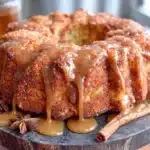
A moist and tender bundt cake infused with concentrated apple cider and warm spices, topped with a rich caramel drizzle. Perfect for fall gatherings and cozy nights in.
- Prep Time: 20 minutes
- Cook Time: 45 minutes
- Total Time: 1 hour 5 minutes
- Yield: 12 servings 1x
- Category: Dessert
- Cuisine: American
Ingredients
- 2 cups (480 ml) apple cider
- 2 1/2 cups (300 g) all-purpose flour
- 1 cup (200 g) granulated sugar
- 1/2 cup (100 g) light brown sugar, packed
- 1 cup (2 sticks / 226 g) unsalted butter, softened
- 3 large eggs, room temperature
- 2 teaspoons vanilla extract
- 1 1/2 teaspoons baking powder
- 1/2 teaspoon baking soda
- 1/2 teaspoon salt
- 2 teaspoons ground cinnamon
- 1/2 teaspoon ground nutmeg
- 1/4 teaspoon ground cloves
- 1/2 cup (120 ml) buttermilk, room temperature
- For the Caramel Drizzle:
- 1/2 cup (100 g) granulated sugar
- 3 tablespoons (42 g) unsalted butter, cut into pieces
- 1/4 cup (60 ml) heavy cream, room temperature
- 1/2 teaspoon vanilla extract
- Flaky sea salt (optional, for sprinkling)
Instructions
- Reduce the apple cider: Pour 2 cups of apple cider into a medium saucepan. Bring to a boil over medium-high heat, then reduce heat to medium-low and simmer until reduced to about 1/2 cup, about 20-25 minutes. Stir occasionally. Set aside to cool completely.
- Preheat oven to 350°F (175°C). Generously grease a 10 to 12-cup bundt pan with butter or non-stick baking spray, then dust with flour, tapping out excess.
- In a large bowl, whisk together flour, baking powder, baking soda, salt, cinnamon, nutmeg, and cloves.
- In a stand mixer fitted with the paddle attachment (or using a hand mixer), beat softened butter, granulated sugar, and brown sugar on medium speed until light and fluffy, about 3-4 minutes. Scrape down sides as needed.
- Add eggs one at a time, beating well after each addition. Mix in vanilla extract.
- With mixer on low speed, add dry ingredients in three additions, alternating with buttermilk, starting and ending with dry ingredients. Mix just until combined after each addition.
- Fold in the cooled apple cider reduction with a spatula until fully incorporated.
- Spoon batter into prepared bundt pan and spread evenly. Tap pan gently on counter to release air bubbles.
- Bake for 45-55 minutes, or until a toothpick inserted into the center comes out clean or with a few moist crumbs. Cool in pan on a wire rack for 15 minutes.
- Turn cake out onto a wire rack or serving plate and let cool completely.
- Make the caramel drizzle: In a small saucepan, heat sugar over medium heat, stirring constantly, until melted and deep golden amber, about 5-7 minutes. Remove from heat. Carefully whisk in butter pieces (mixture will bubble). Slowly drizzle in heavy cream while whisking. Stir in vanilla. Let cool for 5-10 minutes until thickened.
- Once cake is completely cool, drizzle caramel over top. Sprinkle with flaky sea salt if desired. Let caramel set for about 10 minutes before slicing.
Notes
Don’t rush the cider reduction; keep it at a gentle simmer to avoid scorching. Room temperature ingredients are crucial for proper emulsification. Grease every crevice of the bundt pan to prevent sticking. Let the cake cool in the pan for exactly 15 minutes before turning out. If caramel seizes, add a splash of warm water and heat gently while stirring.
Nutrition
- Serving Size: 1 slice
- Calories: 380
- Sugar: 35
- Sodium: 220
- Fat: 18
- Saturated Fat: 11
- Carbohydrates: 52
- Fiber: 1
- Protein: 4
Keywords: apple cider bundt cake, spiced apple cake, caramel drizzle, fall dessert, bundt cake recipe