Love this? Save it for later!
Share the inspiration with your friends
I was standing in the produce aisle last Thursday, staring at a bunch of garlic like it held the secrets to the universe, when the smell hit me. Not the garlic itself, but something else—a sticky-sweet, savory scent that I hadn’t thought about in years. It was the exact smell of my neighbor Mrs. Kowalski’s apartment, the one I used to visit after school when my mom was running late. I was maybe nine years old, sitting at her tiny kitchen table while she pulled a roasting pan out of the oven, the glaze bubbling and catching the afternoon light. I’d never asked her what she put in that pork. I just knew it was the best thing I’d ever eaten, and I’d close my eyes with every single bite, trying to memorize the flavor.
Honestly, I forgot about that memory for the longest time. But standing there in the grocery store, I got this sudden, almost desperate urge to recreate it. I grabbed the garlic, some honey, and a pork tenderloin without even having a plan. I mean, I didn’t even know if I remembered the flavor correctly. Maybe I was romanticizing it, you know? That happens sometimes with childhood memories—they get bigger and better than they actually were.
I got home, made a mess of my kitchen, and after a few attempts (and one very sticky counter), this sticky honey garlic pork tenderloin with roasted vegetables was born. It’s not Mrs. Kowalski’s recipe—I’ll never know exactly what she did—but honestly, it’s better. It’s mine. And that first bite? I closed my eyes again, and for a second, I was right back in that tiny kitchen. That’s why I keep making it. That’s why I think you’ll love it, too.
Why You’ll Love This Recipe
This isn’t just another pork tenderloin recipe. I’ve tested this one at least six times to get the glaze just right—not too sticky, not too runny, with that perfect balance of sweet honey and savory garlic. Let me tell you, it was hard work eating all that pork, but someone had to do it.
- Quick & Easy: From start to finish, this comes together in about 45 minutes. Perfect for a Tuesday night when you want something impressive but don’t have all evening.
- Simple Ingredients: You probably have most of these in your pantry right now. No fancy trips to specialty stores.
- Perfect for Company: This is my go-to for dinner parties. It looks fancy on the plate but doesn’t stress me out.
- One Pan Wonder: The pork and vegetables roast together, so you have a complete meal with minimal cleanup.
- Unbelievably Delicious: The glaze caramelizes on the pork while the vegetables soak up all those savory juices. It’s the kind of meal that makes everyone at the table go quiet.
What makes this recipe different? It’s the technique. Most recipes either burn the honey or end up with a watery sauce. I figured out the trick to getting that perfect sticky coating without any fuss. Plus, I add a splash of soy sauce and a pinch of red pepper flakes to cut through the sweetness. It’s not just another version—it’s the best version I’ve ever made.
This is the kind of meal that makes you close your eyes after the first bite. It’s comfort food that feels special but doesn’t require hours in the kitchen. Perfect for impressing guests without breaking a sweat, or turning a regular weeknight into something memorable.
What Ingredients You Will Need
This recipe uses simple, wholesome ingredients to deliver bold flavor without the fuss. Most of these are pantry staples, which makes this perfect for last-minute dinner inspiration.
For the Pork Tenderloin & Glaze
- Pork tenderloin (1 to 1.5 lbs) — Look for a tenderloin that’s evenly thick for consistent cooking. I usually grab one from the local butcher, but grocery store brands work great too.
- Honey (1/3 cup) — Use a good quality honey here. I prefer local honey for the flavor, but any runny honey works.
- Soy sauce (3 tablespoons) — Low-sodium is best so you can control the salt. Tamari works if you need gluten-free.
- Garlic (4-5 cloves, minced) — Fresh garlic is non-negotiable here. The pre-minced stuff in a jar just won’t give you the same punch.
- Rice vinegar (2 tablespoons) — Adds a gentle acidity that balances the sweetness. Apple cider vinegar works in a pinch.
- Olive oil (2 tablespoons) — For searing the pork and coating the veggies.
- Red pepper flakes (1/2 teaspoon) — Optional, but I love the little kick it adds.
- Salt and black pepper — To taste.
For the Roasted Vegetables
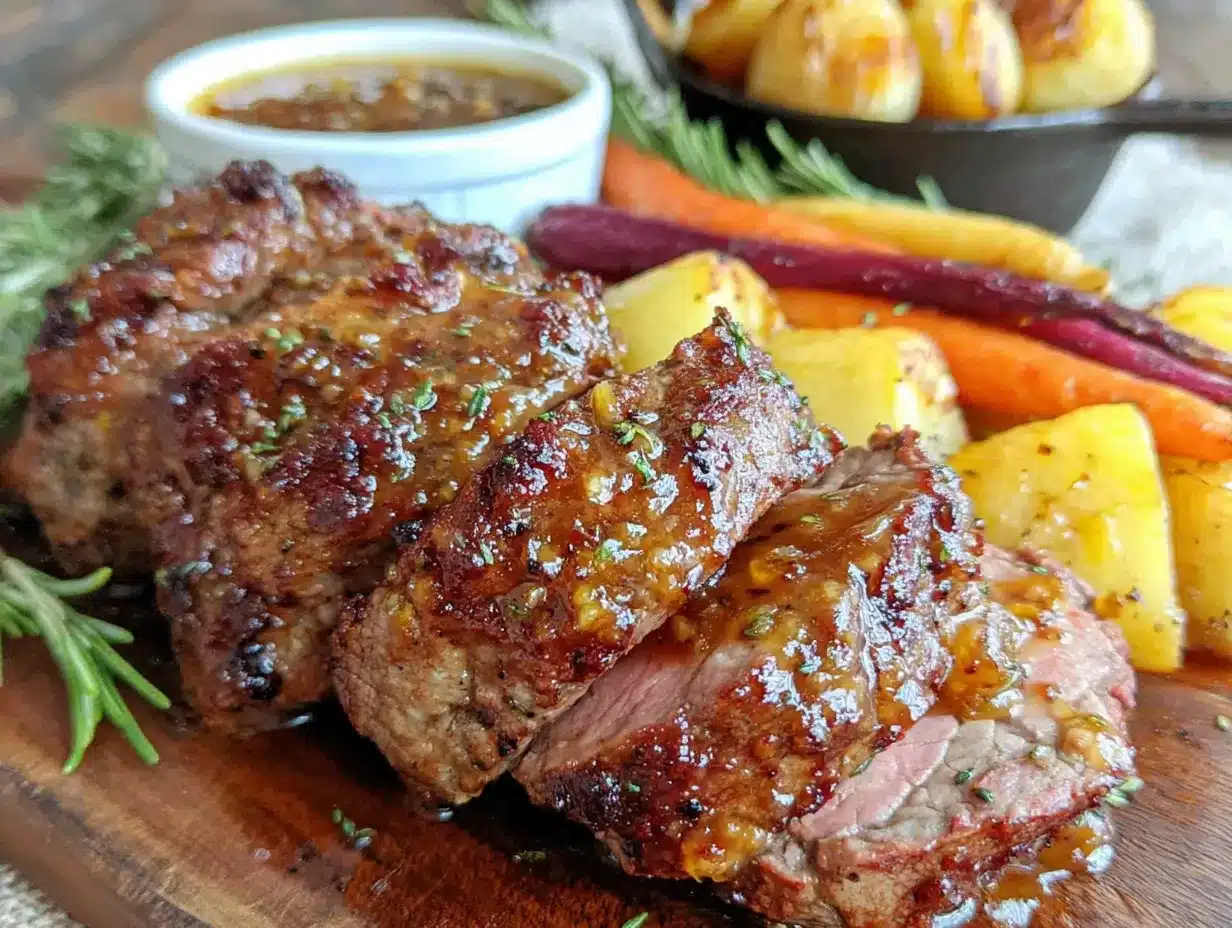
- Baby potatoes (1 lb, halved) — Yukon gold or red potatoes hold up best. No need to peel them.
- Carrots (3-4 medium, cut into chunks) — I like leaving them a bit chunky for texture.
- Broccoli florets (2 cups) — Adds a nice green pop. Cauliflower works too.
- Red onion (1 large, cut into wedges) — Sweetens up beautifully in the oven.
- Fresh rosemary (2 sprigs) — Or thyme if that’s what you have.
For the vegetables, feel free to swap based on what’s in season. In summer, I’ll throw in zucchini and bell peppers. In fall, butternut squash is amazing here.
Equipment Needed
You don’t need a fancy kitchen to pull this off. Here’s what you’ll need:
- Large oven-safe skillet (12-inch) — Cast iron is my favorite for this. It sears beautifully and goes straight into the oven. If you don’t have one, use a regular skillet and transfer everything to a baking dish.
- Sharp chef’s knife — For prepping the veggies. A dull knife makes this job miserable.
- Cutting board — Preferably one that won’t slide around on you.
- Measuring cups and spoons — I’ve eyeballed the glaze before and regretted it. Trust me, measure it out.
- Tongs — For flipping the pork without stabbing it and losing all those juices.
- Meat thermometer — This is non-negotiable for pork. You want 145°F, and a thermometer is the only way to get it right.
- Small bowl — For mixing the glaze.
- Aluminum foil — For tenting the pork while it rests.
I bought my cast iron skillet at a garage sale for five bucks, and it works better than any fancy brand. Don’t overthink the equipment—just use what you have.
Preparation Method
- Preheat your oven to 400°F (200°C). Make sure the rack is in the middle position. While it’s heating, take the pork out of the fridge and let it sit on the counter for about 15 minutes. This helps it cook more evenly.
- Prep the vegetables. Wash and cut your potatoes into halves or quarters (depending on size), chop the carrots into 2-inch chunks, cut the broccoli into florets, and wedge the red onion. Toss them in a bowl with 1 tablespoon of olive oil, salt, pepper, and the rosemary sprigs. Set aside.
- Make the glaze. In a small bowl, whisk together the honey, soy sauce, minced garlic, rice vinegar, and red pepper flakes. Give it a taste—it should be sweet, salty, and just a little spicy. Adjust if needed.
- Season the pork. Pat the tenderloin dry with paper towels. This is important—dry meat sears better. Season generously with salt and pepper on all sides.
- Sear the pork. Heat 1 tablespoon of olive oil in your oven-safe skillet over medium-high heat. When the oil shimmers (that’s your cue), carefully place the pork in the pan. Sear for 2-3 minutes per side, until golden brown. Don’t move it around—let it get that crust. The whole searing process should take about 8-10 minutes.
- Glaze the pork. Pour the honey garlic glaze over the seared pork. Use your tongs to roll the tenderloin around in the glaze, making sure it’s completely coated. Let it cook for another minute, spooning the glaze over the top.
- Add the vegetables. Arrange the seasoned vegetables around the pork in the skillet. Try not to overcrowd—if they’re piled too high, they’ll steam instead of roast. Tuck the rosemary sprigs in between everything.
- Roast. Transfer the skillet to the preheated oven. Roast for 20-25 minutes, or until the pork reaches an internal temperature of 145°F (63°C) when tested with a meat thermometer. The vegetables should be tender and starting to caramelize.
- Rest the pork. Remove the skillet from the oven. Transfer the pork to a cutting board and tent it loosely with aluminum foil. Let it rest for 5-10 minutes. This is crucial—if you cut it right away, all those juices will run out and you’ll end up with dry meat.
- Finish the vegetables. While the pork rests, return the skillet with the vegetables to the oven (turn it off) to keep warm. Or just leave them on the counter—they’ll stay hot enough.
- Slice and serve. Slice the pork into 1-inch thick medallions. Arrange on a platter with the roasted vegetables. Spoon any remaining glaze from the skillet over the top. Serve immediately.
A quick note: if the glaze starts to look too dark in the oven (honey can burn), tent the pork loosely with foil for the last 5 minutes. Better safe than sorry.
Cooking Tips & Techniques
I’ve made this recipe more times than I can count, and I’ve definitely learned some things the hard way. Here’s what I wish someone had told me:
Don’t skip the sear. I know it’s tempting to just throw everything in the oven and call it a day, but that golden crust is where the flavor lives. It also helps seal in the juices. Trust the process.
Use a meat thermometer. I once served overcooked pork to my in-laws. It was dry, tough, and I wanted to crawl under the table. Pork tenderloin is lean and cooks fast—145°F is your sweet spot. Pull it out at 140°F if you want to be extra safe, since it will continue cooking while it rests.
Watch the honey. Honey burns faster than you think. If you notice the glaze getting too dark in the oven, don’t panic—just tent the pork with foil. Also, don’t crank the oven up thinking it’ll cook faster. High heat will burn the glaze before the pork is done.
Cut your vegetables evenly. This is one of those little things that makes a big difference. If some pieces are way bigger than others, they won’t cook at the same rate. Aim for uniform chunks, about 1-2 inches.
Let the pork rest. I cannot stress this enough. Five minutes makes the difference between juicy, tender meat and dry, sad meat. Use that time to set the table or pour yourself a glass of wine.
Double the glaze. If you’re a sauce person (I am), make an extra batch of the glaze. Reserve half before it touches the raw pork, and drizzle it over the finished dish. Game changer.
Variations & Adaptations
This recipe is pretty forgiving, so feel free to play around with it. Here are some variations I’ve tried:
Spicy Honey Garlic. Add an extra teaspoon of red pepper flakes or a minced serrano pepper to the glaze. The heat cuts through the sweetness beautifully. My husband loves this version—I think he adds hot sauce to everything.
Citrus Twist. Swap the rice vinegar for orange juice and add a tablespoon of orange zest to the glaze. It brightens everything up and works especially well in spring.
Different Protein. This glaze works on chicken thighs, salmon, or even tofu. Adjust cooking times accordingly. For chicken thighs, bake at 400°F for about 30 minutes. For salmon, 12-15 minutes is plenty.
Low-Carb Version. Skip the potatoes and double up on broccoli, cauliflower, and Brussels sprouts. The glaze itself is fairly low-carb, so you’re good there.
Herb Swap. Not a fan of rosemary? Thyme, oregano, or even sage work beautifully here. I’ve used dried herbs in a pinch (about 1 teaspoon), and it still turns out great.
Sheet Pan Method. If you don’t have an oven-safe skillet, just sear the pork in a regular pan, then transfer everything to a lined baking sheet. Same result, slightly more dishes. Worth it though.
I once tried this with maple syrup instead of honey when I ran out. It was different—less floral, more earthy—but honestly, it was still delicious. Don’t be afraid to experiment.
Serving & Storage Suggestions
This dish is best served hot, straight from the oven. The glaze is at its stickiest and most glorious right when it comes out. Here’s how I like to serve it:
Arrange the sliced pork medallions on a large platter, surrounded by the roasted vegetables. Spoon any remaining glaze from the skillet over everything. A sprinkle of fresh parsley or chopped chives on top adds a nice pop of color. I like to serve it with a simple green salad on the side—something light to balance the richness.
For drinks, a crisp white wine like Sauvignon Blanc or a light red like Pinot Noir pairs beautifully. If you’re going non-alcoholic, sparkling water with lemon is perfect.
Storage: Leftovers keep well in an airtight container in the refrigerator for up to 3 days. The glaze will thicken as it cools, which is totally normal.
Reheating: The best way is in a skillet over medium-low heat with a splash of water or broth to loosen the glaze. Microwave works in a pinch, but the pork can get tough. If using the microwave, cover it with a damp paper towel and heat in 30-second bursts.
Freezer: You can freeze the cooked pork (without the vegetables) for up to 2 months. Wrap it tightly in plastic wrap and then foil. Thaw in the fridge overnight and reheat gently. The vegetables don’t freeze well—they get mushy—so I’d make those fresh.
The flavors actually deepen overnight, so leftovers are never a bad thing. I’ve been known to make extra on purpose just for lunch the next day.
Nutritional Information & Benefits
Here’s a rough estimate per serving (based on 4 servings):
- Calories: 425
- Protein: 35g
- Carbohydrates: 38g
- Fat: 14g
- Fiber: 5g
- Sugar: 18g
Pork tenderloin is one of the leanest cuts of pork—it’s actually comparable to chicken breast in terms of fat content. It’s packed with protein, B vitamins (especially B6 and B12), and selenium, which supports your immune system.
The roasted vegetables bring their own benefits. Carrots are loaded with beta-carotene for eye health. Broccoli is a powerhouse of vitamin C and fiber. Potatoes get a bad rap, but they’re actually a great source of potassium and vitamin B6—especially when you eat the skin.
Honey, in moderation, has antioxidant properties and can help soothe a sore throat. Just don’t go overboard—it’s still sugar.
This recipe is naturally gluten-free if you use tamari instead of soy sauce. It’s also dairy-free and nut-free, making it a great option for people with common allergies. If you’re watching your carbs, skip the potatoes and double up on the broccoli.
I’m not a nutritionist, but I try to keep things balanced. This meal gives you protein, veggies, and a little sweetness—all on one plate. That’s a win in my book.
FAQs
Can I use pork loin instead of tenderloin?
Yes, but be aware that pork loin is thicker and leaner, so it will take longer to cook and can dry out more easily. Increase the roasting time to 30-35 minutes and use a meat thermometer to check for doneness at 145°F.
Can I make the glaze ahead of time?
Absolutely. You can mix the glaze up to 3 days in advance and store it in the fridge. Just give it a good stir before using, as the honey can settle at the bottom.
Why is my glaze burning in the oven?
Honey has a low smoke point and can burn if the oven is too hot or if it’s exposed to direct heat for too long. If you notice it getting dark, tent the pork with foil for the last 5-10 minutes of cooking.
Can I use frozen vegetables?
You can, but they’ll release more water and won’t get as crispy. If using frozen, thaw them first and pat them dry with a paper towel. Roasting time may also increase by 5-10 minutes.
How do I know when the pork is done without a thermometer?
If you don’t have a thermometer, look for the juices to run clear when you cut into the thickest part. The meat should be slightly pink in the center—pork can be safely eaten at medium doneness. But honestly, a thermometer is cheap and takes the guesswork out completely.
Conclusion
This sticky honey garlic pork tenderloin with roasted vegetables is one of those recipes that looks like you spent hours in the kitchen, but really, it’s just a little bit of prep and a whole lot of oven time. The glaze caramelizes into this beautiful, sticky coating that clings to every slice, while the vegetables soak up all those savory-sweet juices.
What I love most about this recipe is how adaptable it is. Swap the vegetables based on what’s in your fridge. Adjust the spice level to your liking. Make it for a fancy dinner party or a quiet weeknight. It works every time.
I’d love to hear how it turns out for you! Did you try any variations? Did your family go quiet at the table? Leave a comment below and let me know. And if you’re looking for another one-pan meal, you might also enjoy this creamy garlic parmesan chicken or these honey garlic slow cooker meatballs.
Happy cooking, friends. Go make something sticky and delicious.
Pin This Recipe!
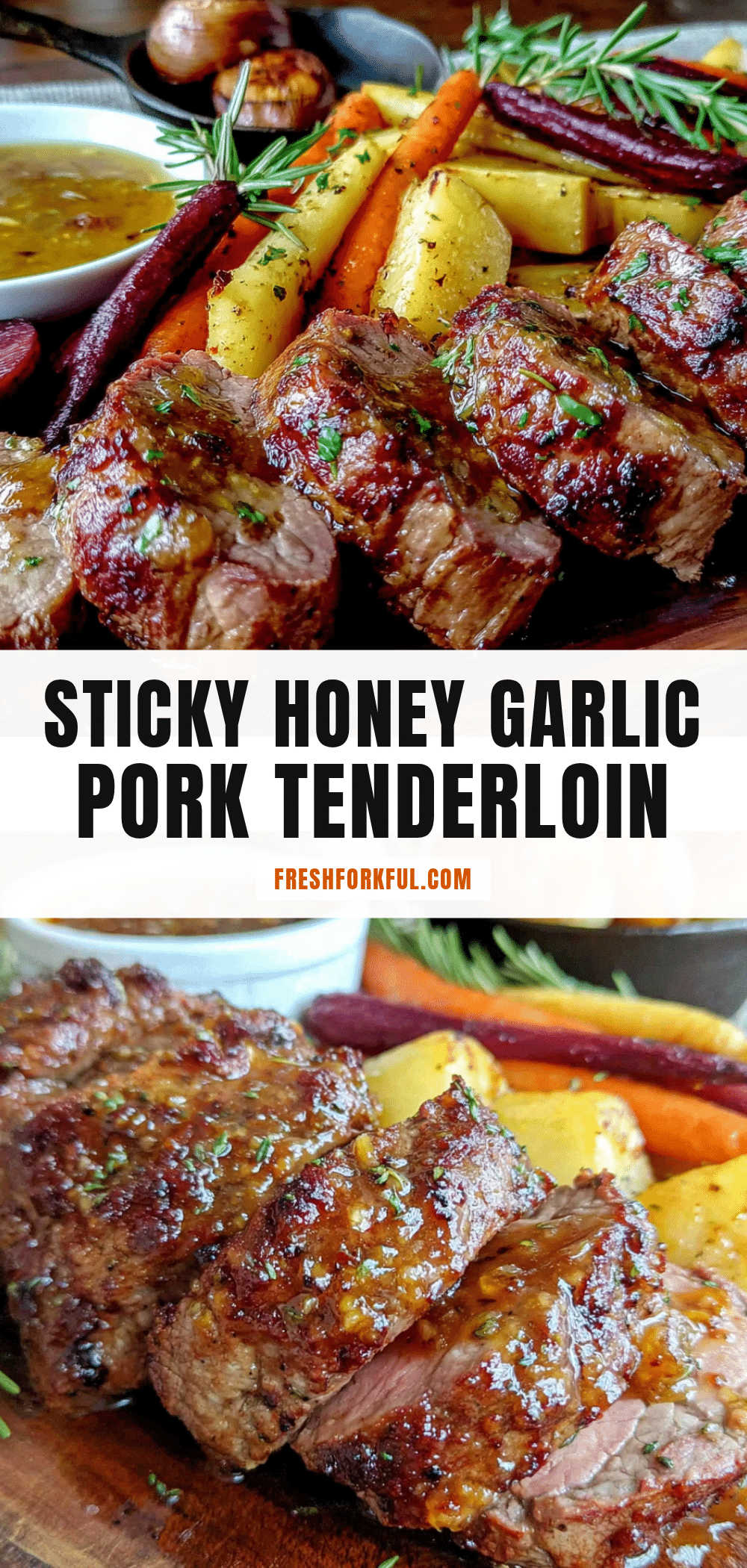
Best Sticky Honey Garlic Pork Tenderloin Recipe
This sticky honey garlic pork tenderloin with roasted vegetables is a quick and easy one-pan meal that delivers bold flavor with simple ingredients. Perfect for weeknight dinners or impressing guests, the glaze caramelizes beautifully while the vegetables soak up all the savory-sweet juices.
- Prep Time: 15 minutes
- Cook Time: 30 minutes
- Total Time: 45 minutes
- Yield: 4 servings 1x
- Category: Main Course
- Cuisine: American
Ingredients
- 1 to 1.5 lbs pork tenderloin
- 1/3 cup honey
- 3 tablespoons low-sodium soy sauce
- 4–5 cloves garlic, minced
- 2 tablespoons rice vinegar
- 2 tablespoons olive oil
- 1/2 teaspoon red pepper flakes
- Salt and black pepper to taste
- 1 lb baby potatoes, halved
- 3–4 medium carrots, cut into chunks
- 2 cups broccoli florets
- 1 large red onion, cut into wedges
- 2 sprigs fresh rosemary
Instructions
- Preheat your oven to 400°F (200°C). Take the pork out of the fridge and let it sit on the counter for about 15 minutes.
- Wash and cut potatoes into halves or quarters, chop carrots into 2-inch chunks, cut broccoli into florets, and wedge the red onion. Toss them in a bowl with 1 tablespoon olive oil, salt, pepper, and rosemary sprigs. Set aside.
- In a small bowl, whisk together honey, soy sauce, minced garlic, rice vinegar, and red pepper flakes.
- Pat the pork tenderloin dry with paper towels. Season generously with salt and pepper on all sides.
- Heat 1 tablespoon olive oil in an oven-safe skillet over medium-high heat. When the oil shimmers, sear the pork for 2-3 minutes per side until golden brown (about 8-10 minutes total).
- Pour the honey garlic glaze over the seared pork. Use tongs to roll the tenderloin in the glaze, coating completely. Cook for another minute, spooning glaze over the top.
- Arrange the seasoned vegetables around the pork in the skillet. Tuck rosemary sprigs in between.
- Transfer the skillet to the preheated oven. Roast for 20-25 minutes, or until the pork reaches an internal temperature of 145°F (63°C). Vegetables should be tender and caramelized.
- Remove the skillet from the oven. Transfer pork to a cutting board and tent loosely with aluminum foil. Let rest for 5-10 minutes.
- While the pork rests, return the skillet with vegetables to the warm oven (turned off) to keep warm.
- Slice the pork into 1-inch thick medallions. Arrange on a platter with roasted vegetables. Spoon any remaining glaze from the skillet over the top. Serve immediately.
Notes
If the glaze starts to look too dark in the oven, tent the pork loosely with foil for the last 5 minutes. For extra sauce, double the glaze and reserve half before it touches the raw pork. Let the pork rest for 5-10 minutes before slicing to keep it juicy.
Nutrition
- Serving Size: 1 serving (about 1/4
- Calories: 425
- Sugar: 18
- Sodium: 600
- Fat: 14
- Saturated Fat: 3
- Carbohydrates: 38
- Fiber: 5
- Protein: 35
Keywords: honey garlic pork, sticky pork tenderloin, roasted vegetables, one-pan meal, easy dinner, pork tenderloin recipe