Love this? Save it for later!
Share the inspiration with your friends
“I never imagined that a simple barbecue flavor could become a part of my healing journey,” I confessed to my nurse during a late afternoon check-up. It was just two weeks after my bariatric surgery, and honestly, eating had become this tricky balancing act between nutrition and comfort. The hospital dietitian had stressed protein, but I craved something that felt less clinical and more… soulful. That’s when I stumbled upon the idea of a creamy post-bariatric BBQ protein puree.
It wasn’t from a fancy cookbook or a health blog; it came from a casual chat with a fellow patient in the recovery ward. She swore by adding a dash of smoky BBQ sauce to her protein shakes, making them feel less like medicine and more like a treat. Intrigued, I experimented with blending tender chicken breast, a hint of smoky BBQ, and a silky smooth base to create a puree that was both gentle on my healing stomach and packed with the protein I desperately needed.
Let me tell you, it wasn’t perfect on the first try—I forgot to peel the chicken properly once and ended up with a gritty texture that almost made me give up. But with a few tweaks and a lot of patience, this creamy BBQ protein puree became my go-to recipe for easy healing.
Maybe you’ve been there too—looking for something that fits the strict post-bariatric diet but still brings a little joy to mealtime. This recipe stayed with me because it turned recovery into a moment of comfort, flavor, and nourishment all at once. If you’re ready to add a creamy, smoky twist to your healing process, let’s get started.
Why You’ll Love This Recipe
Honestly, this creamy post-bariatric BBQ protein puree isn’t just another bland recovery meal. From my many kitchen trials and late-night blend sessions, I can confidently say this recipe stands out for several reasons:
- Quick & Easy: Comes together in under 15 minutes, perfect for those days when your energy is low but your protein needs are high.
- Simple Ingredients: You likely have everything on hand—no hunting down obscure supplements.
- Perfect for Recovery: Designed specifically for post-bariatric diets, it’s gentle yet packed with muscle-healing protein.
- Crowd-Pleaser: Family members have even asked for seconds, which is a rare win in the healing kitchen!
- Unbelievably Delicious: The creamy texture blends beautifully with the smoky BBQ flavor, making every spoonful comforting and satisfying.
What makes this recipe different? I blend real, lean chicken breast with a homemade or high-quality low-sugar BBQ sauce and creamy Greek yogurt or cottage cheese to achieve an ultra-smooth, silky texture. No gritty bits, no overpowering spices—just balanced, nourishing goodness that feels like a little indulgence during a tough time.
This puree isn’t just food; it’s a small victory in your recovery, a moment where healing meets flavor and texture in a way that makes you smile. If you’re juggling post-op restrictions and cravings, this recipe might just become your new favorite comfort food.
What Ingredients You Will Need
This recipe uses simple, wholesome ingredients to deliver bold flavor and satisfying texture without the fuss. Most of these are pantry staples or easy to find at your local grocery store.
- Lean Chicken Breast: About 6 oz (170 g), cooked and shredded or chopped finely. I recommend organic or free-range for best flavor and nutrient quality.
- Low-Sugar BBQ Sauce: 2 tablespoons (30 ml). Choose a brand like Stubbs or Bone Suckin’ for a smoky, authentic taste without too much sugar.
- Plain Greek Yogurt or Small-Curd Cottage Cheese: ½ cup (120 ml). Provides creaminess and extra protein—use dairy-free yogurt if needed.
- Chicken Broth or Low-Sodium Vegetable Broth: ¼ cup (60 ml). Helps thin the puree to your preferred consistency and adds subtle flavor.
- Apple Cider Vinegar: 1 teaspoon (5 ml). Adds a gentle tang that balances the BBQ’s sweetness.
- Ground Black Pepper: A pinch, for mild seasoning.
- Salt: Use sparingly, about ⅛ teaspoon (0.5 g), especially if your broth is salted.
- Optional: A pinch of smoked paprika or garlic powder for extra depth without overwhelming your palate.
Feel free to swap the chicken broth with water if you want a lighter version, or use vegetable broth for a subtler taste. For a dairy-free option, coconut yogurt works well but changes the flavor profile a bit.
Equipment Needed
- Blender or Food Processor: Essential for achieving a creamy, smooth texture. I personally prefer a high-speed blender like a Vitamix, but a standard blender or food processor also works well.
- Measuring Cups and Spoons: To keep the ingredient amounts precise, especially important post-bariatric surgery.
- Mixing Bowl: For combining ingredients before blending.
- Sharp Knife and Cutting Board: For chopping cooked chicken finely before blending.
- Spatula: To scrape down sides of the blender and transfer puree efficiently.
If you don’t have a blender, an immersion blender with a deep bowl can be a budget-friendly alternative. Just be mindful to blend long enough to avoid any lumps that might be uncomfortable to swallow.
Preparation Method
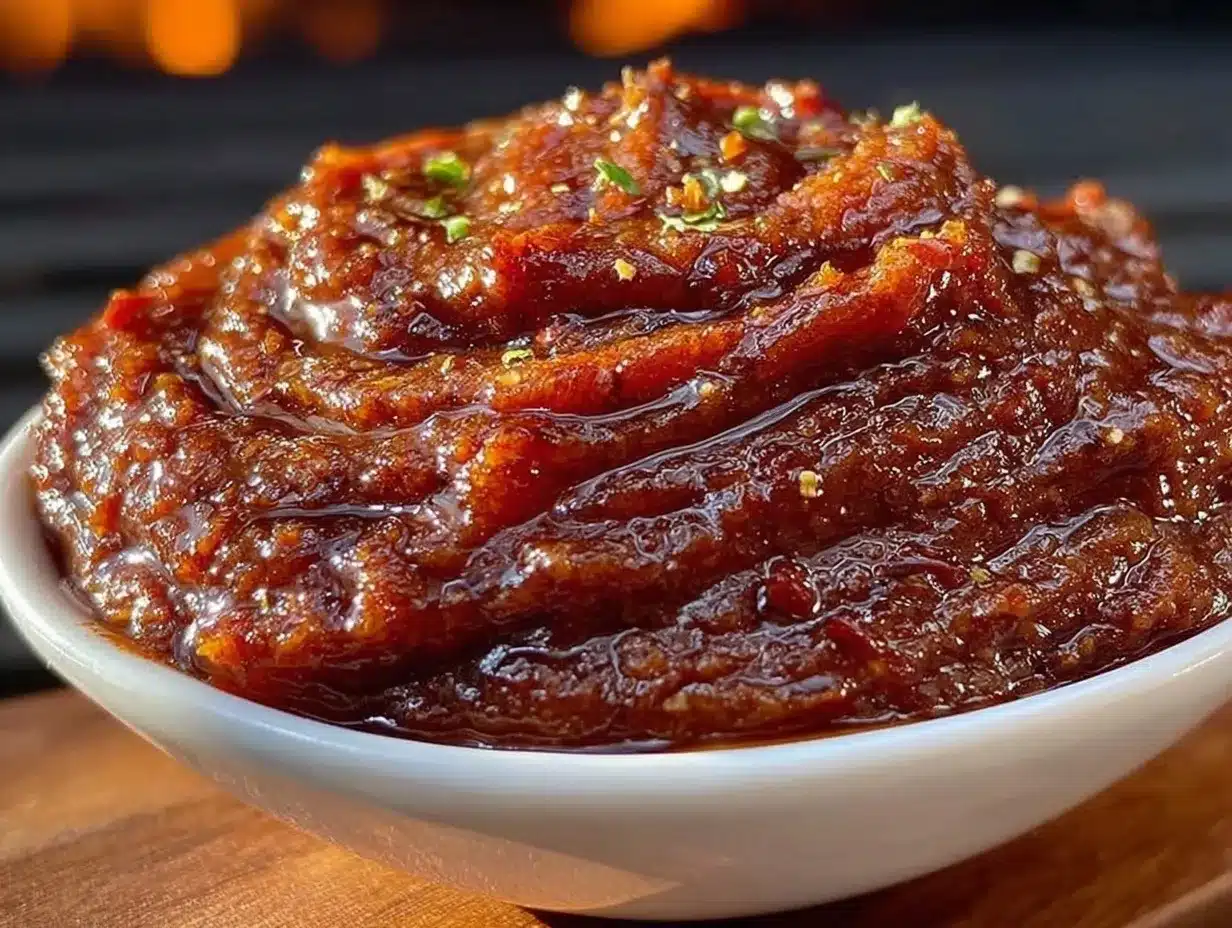
- Cook the Chicken: Start with 6 oz (170 g) of boneless, skinless chicken breast. Poach it gently in simmering water or broth for about 15 minutes until fully cooked and tender. Let it cool slightly before moving to the next step.
- Chop Chicken Finely: Using a sharp knife, chop the chicken into small pieces to help your blender work more efficiently. This step usually takes 3-5 minutes.
- Combine Ingredients: In a mixing bowl, add the chopped chicken, 2 tablespoons (30 ml) of low-sugar BBQ sauce, ½ cup (120 ml) Greek yogurt or cottage cheese, ¼ cup (60 ml) chicken broth, 1 teaspoon (5 ml) apple cider vinegar, a pinch of black pepper, and ⅛ teaspoon (0.5 g) salt.
- Blend Until Smooth: Transfer everything to your blender or food processor. Blend on medium-high speed for 1-2 minutes until the mixture is creamy and smooth, stopping to scrape down the sides once or twice.
- Adjust Consistency: If the puree feels too thick, add a little more broth (1 tablespoon at a time) and blend again until you reach your preferred texture. The goal is a silky, spoonable consistency that’s easy to swallow.
- Taste and Adjust Seasoning: Give it a small taste (after it cools slightly) and add a pinch more salt, pepper, or a dash more BBQ sauce if needed. Blend briefly to incorporate any additions.
- Serve Warm or Cool: This puree can be served slightly warm or at room temperature—whatever feels best for your healing stomach.
If you notice any gritty texture, it might be from under-blended chicken or cottage cheese. Just blend a bit longer. When I first tried this, I rushed the blending step and ended up with a lumpy mess that was no fun to eat!
Cooking Tips & Techniques
Getting the texture just right is key for this post-bariatric protein puree. Here are some tips from my kitchen experience:
- Cook Chicken Gently: Poaching keeps the chicken tender and easy to puree. Avoid grilling or roasting, which can dry it out and make blending harder.
- Use Low-Sugar BBQ Sauce: Many store-bought sauces are loaded with sugar, which can be harsh on a post-op diet. Always check the label or make a quick homemade version.
- Blend in Pulses: Start blending in short bursts to break down chunks gradually before going full speed. This gives you better control over texture.
- Don’t Skip the Broth: It’s the secret to that creamy, spoonable texture without adding fat or extra calories.
- Watch Temperature: Too hot can curdle the yogurt; too cold can mute flavors. Aim for slightly warm or room temperature.
- Multitask Wisely: Cook your chicken while prepping other recovery-friendly meals. It helps save energy and keeps your kitchen time manageable.
One time, I overblended and ended up with a puree that was almost liquid—lesson learned: stop blending as soon as it’s smooth but still has some body.
Variations & Adaptations
- Vegetarian Option: Replace chicken with cooked white beans or silken tofu for a plant-based protein boost. Use vegetable broth and a vegan BBQ sauce.
- Seasonal Twist: Swap BBQ sauce for a roasted red pepper puree with mild spices for a summer-friendly flavor profile.
- Flavor Boost: Add a teaspoon of smoked paprika or a few drops of liquid smoke (use sparingly) to deepen the smoky BBQ notes without extra sugar.
- Allergen-Friendly: Use coconut yogurt or almond-based yogurt instead of dairy to make it dairy-free, and ensure your BBQ sauce is gluten-free if needed.
- Personal Fave: I’ve tried blending in a small roasted sweet potato for natural sweetness and extra creaminess—it’s surprisingly good and adds a subtle earthy flavor.
Serving & Storage Suggestions
This creamy BBQ protein puree is best enjoyed fresh but stores well in the fridge for up to 3 days. Store it in an airtight container to keep flavors bright and texture smooth.
When reheating, warm it gently in a microwave or over low heat on the stove, stirring often to prevent scorching. Adding a splash of broth during reheating helps maintain the silky texture.
Serve it in small bowls or ramekins, garnished with a tiny sprinkle of fresh herbs like parsley for a touch of color (if your diet allows). It pairs nicely with steamed veggies or a soft mashed root vegetable for added nutrition.
Over time, the flavors meld beautifully, so if you prepare it ahead, the smoky BBQ taste becomes even more comforting and pronounced.
Nutritional Information & Benefits
Each serving of this creamy post-bariatric BBQ protein puree packs approximately 250 calories, 35 grams of high-quality protein, 5 grams of fat, and 7 grams of carbohydrates. It’s low in sugar and sodium, depending on your BBQ sauce choice.
Protein is crucial for healing after bariatric surgery, helping rebuild tissues and maintain muscle mass. The yogurt or cottage cheese adds calcium and probiotics for gut health, which is especially important during recovery.
The gentle spices and apple cider vinegar aid digestion without irritating a sensitive stomach. This recipe also fits well within low-carb and gluten-free dietary needs, making it versatile for various recovery plans.
Conclusion
So there you have it—a creamy post-bariatric BBQ protein puree that makes healing a bit more delicious and a lot less daunting. It’s simple, nourishing, and honestly, a little comforting in those early recovery days when texture and taste matter so much.
Feel free to tweak the ingredients and seasoning to suit your preferences. This recipe has become a staple in my healing kitchen, a reminder that even recovery food can be tasty and satisfying.
If you try it, I’d love to hear how you made it your own—drop a comment below or share your version. Remember, healing is a journey, and a great recipe like this one makes it a little smoother.
Keep nourishing yourself with kindness and care—you’ve got this!
FAQs
Is this puree suitable immediately after bariatric surgery?
This puree is designed for the pureed stage post-surgery, typically after the clear liquid and full liquid phases. However, always follow your surgeon or dietitian’s guidance for timing.
Can I freeze the BBQ protein puree?
Yes, you can freeze it in small portions for up to one month. Thaw overnight in the fridge and reheat gently before serving.
What if I’m allergic to dairy?
Substitute Greek yogurt or cottage cheese with dairy-free options like coconut or almond-based yogurt. Just be aware this may change the flavor slightly.
Can I use other protein sources besides chicken?
Absolutely. Cooked turkey, white fish, or plant-based proteins like silken tofu or white beans work well, just adjust cooking and blending times accordingly.
How do I make sure the puree is smooth enough?
Use a high-speed blender and blend in short pulses, scraping down the sides as needed. Adding broth gradually helps achieve a silky texture without lumps.
Pin This Recipe!
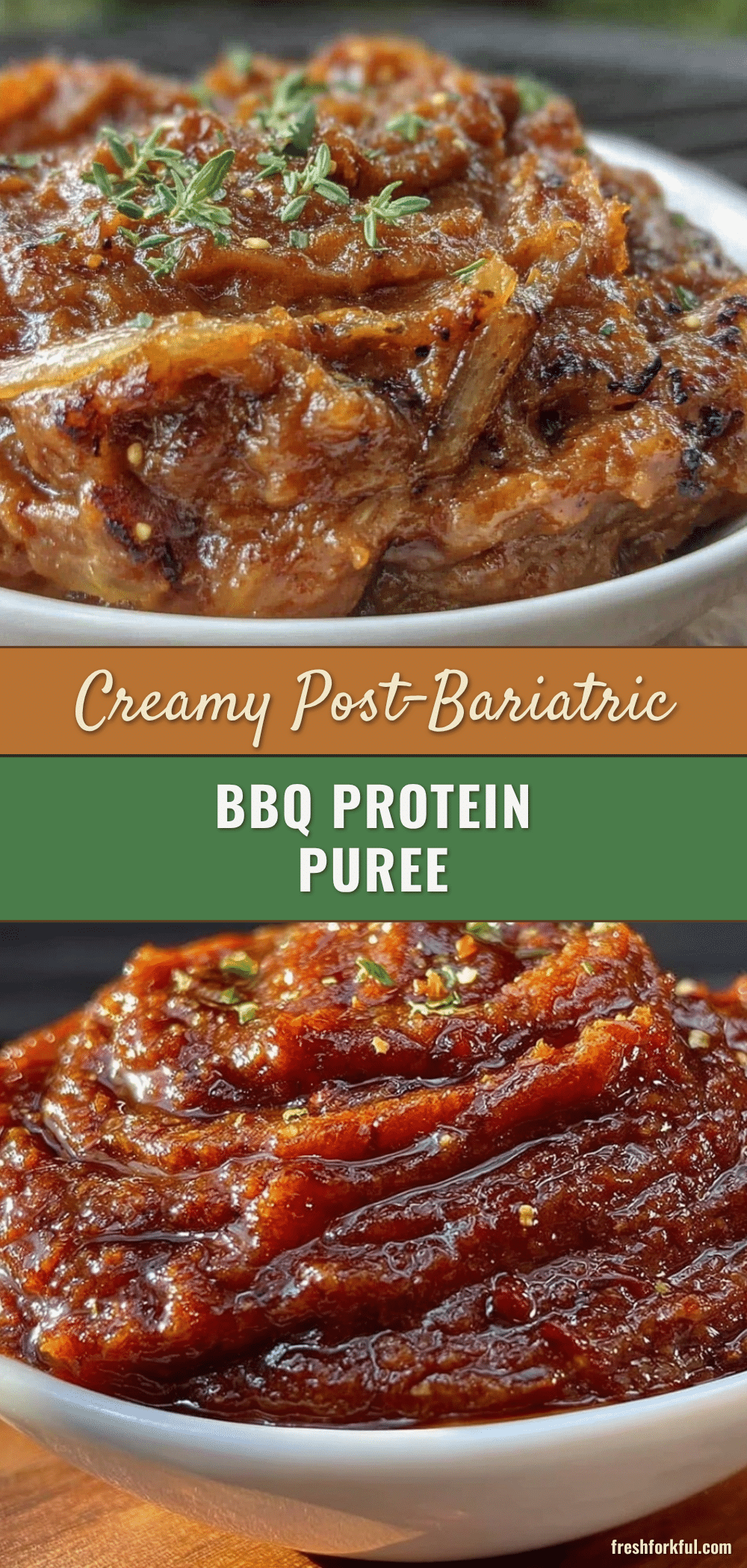
Creamy Post-Bariatric BBQ Protein Puree Recipe for Easy Healing and Recovery

A creamy, smoky BBQ protein puree designed specifically for post-bariatric diets, providing gentle nutrition and muscle-healing protein in a comforting texture.
- Prep Time: 10 minutes
- Cook Time: 15 minutes
- Total Time: 25 minutes
- Yield: 2 servings 1x
- Category: Main Course
- Cuisine: American
Ingredients
- 6 oz (170 g) lean chicken breast, cooked and shredded or chopped finely
- 2 tablespoons (30 ml) low-sugar BBQ sauce
- ½ cup (120 ml) plain Greek yogurt or small-curd cottage cheese
- ¼ cup (60 ml) chicken broth or low-sodium vegetable broth
- 1 teaspoon (5 ml) apple cider vinegar
- A pinch of ground black pepper
- ⅛ teaspoon (0.5 g) salt
- Optional: A pinch of smoked paprika or garlic powder
Instructions
- Cook the chicken: Poach 6 oz (170 g) of boneless, skinless chicken breast in simmering water or broth for about 15 minutes until fully cooked and tender. Let cool slightly.
- Chop chicken finely: Using a sharp knife, chop the chicken into small pieces (3-5 minutes).
- Combine ingredients: In a mixing bowl, add chopped chicken, 2 tablespoons low-sugar BBQ sauce, ½ cup Greek yogurt or cottage cheese, ¼ cup chicken broth, 1 teaspoon apple cider vinegar, a pinch of black pepper, and ⅛ teaspoon salt.
- Blend until smooth: Transfer mixture to a blender or food processor and blend on medium-high speed for 1-2 minutes until creamy and smooth, scraping down sides once or twice.
- Adjust consistency: If too thick, add more broth (1 tablespoon at a time) and blend again until silky and spoonable.
- Taste and adjust seasoning: After cooling slightly, add more salt, pepper, or BBQ sauce if needed and blend briefly.
- Serve warm or at room temperature.
Notes
Cook chicken gently by poaching to keep it tender and easy to puree. Use low-sugar BBQ sauce to avoid excess sugar. Blend in short pulses and scrape sides to achieve a smooth texture. Adjust broth to get a silky, spoonable consistency. Serve slightly warm or at room temperature. Can be frozen in small portions for up to one month.
Nutrition
- Serving Size: About 1 cup per serv
- Calories: 250
- Sugar: 2
- Sodium: 150
- Fat: 5
- Saturated Fat: 1.5
- Carbohydrates: 7
- Fiber: 0.5
- Protein: 35
Keywords: post-bariatric, protein puree, BBQ, recovery recipe, creamy puree, low-sugar BBQ sauce, high protein, healing food