Love this? Save it for later!
Share the inspiration with your friends
I was at the farmers’ market last November, juggling a bag of apples and trying to decide if I really needed another winter squash, when the woman at the herb stall watched me struggle. She didn’t say anything at first. Then she just reached over, tucked a massive bundle of rosemary into my tote bag, and said, “You look like someone who’s about to host something. This is for the bread.”
I didn’t even know her name, but she was absolutely right. I had been mentally planning my holiday menu for weeks, and bread was the one thing I kept putting off because, honestly, store-bought felt fine. But that rosemary—it smelled like pine trees and Sunday dinners and something I couldn’t quite name. I went home, shoved the rosemary in a jar of water on my counter, and stared at it for two days before I finally gave in and started experimenting.
That’s how this rosemary focaccia came to be. It wasn’t born from a family recipe or a culinary school lesson. It came from a stranger’s kindness and a stubborn feeling that the holidays deserved something special, even if I was nervous about baking bread for the first time. I messed up the first batch—too much salt, I mean, it was practically a brine—but the second one? That was the one. The top was golden and crackly, the inside was pillowy soft, and the rosemary had infused every single bubble with this woodsy, comforting aroma.
Maybe you’ve been there, staring at your holiday menu and wondering if you should just buy the bread. But let me tell you, this rosemary focaccia is the reason I stopped buying bread altogether. It’s the thing people ask for year after year, and it’s the recipe that made me believe that the best dishes come from unexpected conversations and a little bit of kitchen courage.
Why You’ll Love This Recipe
This isn’t just another bread recipe. This is the bread that makes your whole house smell like the holidays, and it’s easier than you think. I’ve tested this rosemary focaccia more times than I care to admit, and I’ve learned exactly what works so you don’t have to guess.
- Simple Ingredients: You probably have flour, yeast, olive oil, and salt in your kitchen right now. The rosemary is the only special guest, and it’s worth the trip to the store.
- No Kneading Required: Seriously. You mix, you wait, you bake. No arm workout needed.
- Perfect for the Holiday Table: This rosemary focaccia sits beautifully next to roasted meats, soups, or cheese boards. It’s the bread that ties the whole meal together.
- Crowd-Pleaser: I’ve served this at Thanksgiving, Christmas Eve, and random Tuesday dinners. It disappears every single time. Kids love the dimples, adults love the flavor.
- Unbelievably Delicious: The contrast between the crispy, olive oil-crusted bottom and the soft, airy interior is pure magic. And the rosemary? It’s not overpowering—it’s just right.
What makes this rosemary focaccia different from all the other recipes out there is the technique. I use a high-hydration dough that creates those big, beautiful air pockets without any complicated folding. Plus, I let the rosemary steep in the olive oil before baking, which infuses every bite with flavor instead of just sprinkling it on top where it can burn. It’s comfort food reimagined—faster, simpler, but with the same soul-soothing satisfaction that makes you close your eyes after the first bite.
What Ingredients You Will Need
This rosemary focaccia uses simple, wholesome ingredients to deliver that signature texture and flavor. Most of these are pantry staples, so you’re likely already halfway there.
- All-purpose flour (4 cups / 500g) – I use King Arthur Flour for consistent results. It has the right protein content for a chewy yet tender crumb.
- Warm water (1 ⅔ cups / 395ml) – About 105-110°F. Too hot kills the yeast, too cold slows it down. Think warm bath water.
- Active dry yeast (2 ¼ teaspoons / 7g, or one packet) – I’ve used both active dry and instant yeast here. If using instant, you can skip the proofing step.
- Extra-virgin olive oil (⅓ cup / 80ml, plus more for the pan and topping) – A good quality oil matters here. It’s a major flavor component. I like California Olive Ranch for a fruity, not-too-peppery oil.
- Honey (1 teaspoon) – Just a touch to feed the yeast and add a subtle sweetness that balances the rosemary.
- Fine sea salt (2 teaspoons) – Divided. I use 1 ½ teaspoons in the dough and ½ teaspoon for the topping.
- Fresh rosemary (3-4 sprigs) – Fresh is non-negotiable here. Dried rosemary just doesn’t have the same aromatic punch. Strip the leaves and roughly chop them.
- Flaky sea salt (for finishing) – Maldon is my go-to. Those little crunchy salt crystals make a huge difference.
For the topping, you’ll want to infuse about ¼ cup of olive oil with a couple of chopped rosemary sprigs while the dough rises. This is the trick that makes this rosemary focaccia stand out. If you’re feeling fancy, add a few garlic cloves to the oil for an extra layer of flavor. Just make sure to remove them before brushing so they don’t burn in the oven.
Equipment Needed
You don’t need a professional bakery setup for this rosemary focaccia. Here’s what I use:
- Large mixing bowl – Glass or ceramic works best. I avoid metal because it can react with the dough over long rises.
- 9×13-inch baking pan – A metal or dark-colored pan gives the best golden-brown crust. Glass pans work but may need a few extra minutes in the oven.
- Kitchen scale – I know, I know, but measuring flour by weight is the secret to consistent bread. A $15 scale will change your baking life.
- Plastic wrap or a damp kitchen towel – For covering the dough during the rise.
- Bench scraper – Optional but helpful for handling the sticky dough. A spatula works too.
- Pastry brush – For spreading that rosemary-infused oil.
I’ve made this rosemary focaccia in a cheap baking pan from the grocery store and it turned out fine. The key is to use plenty of olive oil in the pan—don’t skimp, or it will stick. If you don’t have a pastry brush, just drizzle the oil over the dough and use your fingers to spread it. Trust me, it’s more fun that way.
Preparation Method
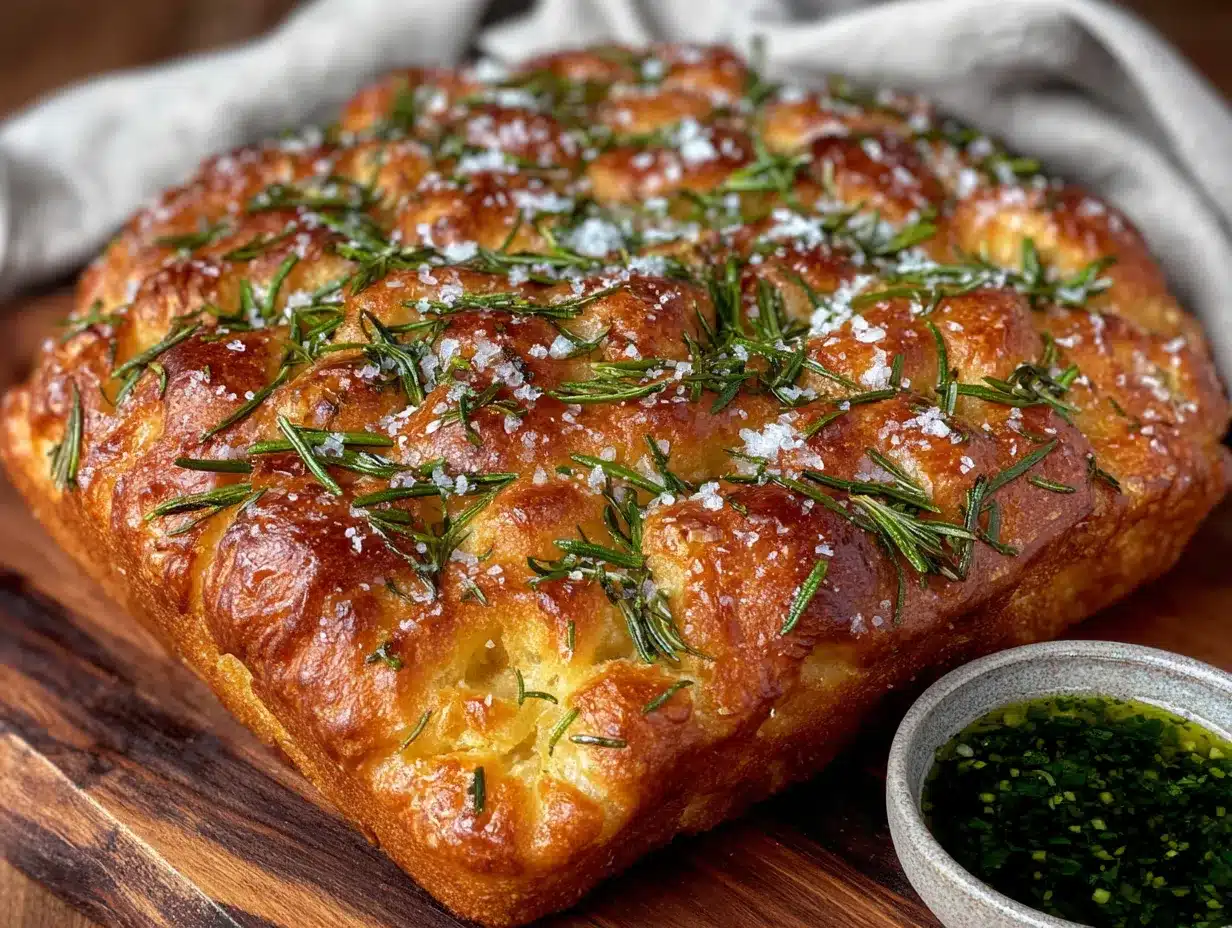
Let’s make some rosemary focaccia. This takes time, but most of it is hands-off. Plan for about 3-4 hours total, including rising.
- Proof the yeast (5 minutes): In your mixing bowl, combine the warm water, honey, and active dry yeast. Give it a gentle stir and let it sit for 5 minutes until it’s foamy and smells like bread. If nothing happens, your yeast is dead—start over with fresh yeast.
- Mix the dough (5 minutes): Add the flour and 1 ½ teaspoons of fine sea salt to the yeast mixture. Stir with a wooden spoon or your hands until a shaggy, sticky dough forms. It will look rough. That’s okay.
- Add the oil (2 minutes): Pour in the ⅓ cup of olive oil and mix until it’s mostly incorporated. The dough will feel slippery and wet. Resist the urge to add more flour.
- First rise (1.5-2 hours): Cover the bowl with plastic wrap or a damp towel. Let it sit at room temperature until it doubles in size. I usually put it in my microwave (turned off) to keep it away from drafts. It should look puffy and full of bubbles.
- Prepare the pan (5 minutes): While the dough rises, pour about 2 tablespoons of olive oil into your 9×13-inch pan. Use your fingers to coat the bottom and sides generously. Don’t be shy—this creates that crispy bottom crust.
- Transfer the dough (5 minutes): When the first rise is done, use a bench scraper or spatula to gently coax the dough into the oiled pan. It will be sticky and wobbly. Let it rest for 10 minutes—it will relax and be easier to stretch.
- Stretch and dimple (10 minutes): Using oiled fingers, gently stretch the dough to fill the corners of the pan. If it resists, let it rest another 5 minutes. Once it’s evenly spread, use your fingertips to press deep dimples all over the surface—right down to the bottom of the pan. This is the fun part.
- Second rise (30-45 minutes): Cover the pan loosely with plastic wrap and let the dough rise again until it’s puffy and nearly doubled. It should look like a soft, pillowy cloud.
- Make the rosemary oil (5 minutes): While the dough rises for the second time, warm ¼ cup of olive oil in a small saucepan over low heat. Add the chopped rosemary and let it steep for 5 minutes. Do not let it boil—you want to infuse, not fry. Remove from heat and let it cool slightly.
- Preheat the oven (15 minutes): About 15 minutes before baking, preheat your oven to 425°F (220°C). Place a rack in the middle position.
- Top the focaccia (5 minutes): After the second rise, drizzle the rosemary-infused oil all over the dough. Use a pastry brush or your fingers to spread it evenly, making sure it pools in the dimples. Sprinkle with the remaining ½ teaspoon of fine sea salt and a generous pinch of flaky sea salt. If you want, press a few extra rosemary leaves on top for looks.
- Bake (20-25 minutes): Place the pan in the preheated oven and bake until the top is deep golden brown and the bottom sounds hollow when tapped. Rotate the pan halfway through for even browning. The kitchen will smell like heaven at this point.
- Cool and serve (10 minutes): Let the focaccia cool in the pan for 5 minutes, then transfer to a wire rack. Don’t skip this—it lets the steam escape so the bottom doesn’t get soggy. Serve warm or at room temperature.
Cooking Tips & Techniques
I’ve made this rosemary focaccia more times than I can count, and I’ve learned a few things the hard way. Here’s what I wish I knew from the start.
Don’t skip the dimpling. I know it feels weird to poke holes in your beautiful dough, but those dimples are what catch the oil and create those crispy, flavorful pockets. Press all the way down to the bottom of the pan. The dough will spring back a little, but that’s fine.
Let the dough relax. If your dough keeps shrinking away from the edges of the pan, it’s telling you it needs a break. Cover it and wait 10 minutes. Stretching cold or tense dough will only make it fight back. Patience is your friend here.
Watch the salt. I once used table salt instead of fine sea salt and ended up with rosemary focaccia that tasted like the ocean. Table salt is much denser, so you need less. Stick with fine sea salt for the dough and flaky salt for the finish.
Oil is not optional. I mean it. The olive oil in the pan and on top is what gives focaccia its signature texture. If you try to cut back, you’ll end up with a dry, pale bread that sticks to the pan. Use good oil and use it generously.
Check for doneness. Every oven runs differently. Your rosemary focaccia is done when the internal temperature reaches 200°F (93°C) or when the bottom is golden brown and sounds hollow when you tap it. If the top is browning too fast but the bottom isn’t done, tent it with foil for the last 5 minutes.
Variations & Adaptations
This rosemary focaccia is a wonderful base for experimentation. Here are some ways I’ve adapted it over the years.
Garlic and Herb Focaccia: Add 3-4 minced garlic cloves to the rosemary oil while it steeps. The garlic mellows in the oven and becomes sweet and fragrant. I also like to sprinkle fresh thyme or oregano on top before baking.
Sea Salt and Cracked Pepper: Skip the rosemary entirely and go simple. A generous sprinkle of flaky sea salt and freshly cracked black pepper makes a focaccia that’s perfect for sandwiches or dipping in balsamic vinegar.
Caramelized Onion and Rosemary: This is my favorite holiday variation. Slowly caramelize 2 large sliced onions in olive oil until they’re deep golden brown, about 30 minutes. Spread them over the dough before the second rise, then proceed with the recipe. The sweetness pairs beautifully with the rosemary.
Gluten-Free Option: I’ve tested this with a good quality gluten-free all-purpose flour blend (like Bob’s Red Mill 1-to-1) and it works, but the texture is denser and more cake-like. Add an extra tablespoon of olive oil and reduce the water by ¼ cup. It’s still delicious, just different.
Whole Wheat Twist: Substitute half the all-purpose flour with whole wheat flour. The bread will be nuttier and more substantial. Add an extra 2 tablespoons of water since whole wheat absorbs more liquid.
Serving & Storage Suggestions
This rosemary focaccia is best served warm, fresh from the oven, when the crust is still crackly and the inside is pillowy soft. But let’s be real—it’s still amazing at room temperature the next day.
Serving Temperature: Warm is ideal, but room temperature works beautifully for bread baskets and appetizer platters. If you’re serving it with soup or stew, definitely warm it up.
What to Serve It With: This rosemary focaccia is a natural partner for olive oil and balsamic vinegar for dipping. It’s also fantastic alongside roasted chicken, beef stew, or a hearty minestrone. For the holidays, I serve it with a cheese board and a bowl of fig jam—it’s always the first thing to disappear.
Storage: Store leftover focaccia in an airtight container at room temperature for up to 3 days. Do not refrigerate—it will dry out and go stale faster. If you have a bread box, that’s perfect.
Freezing: This rosemary focaccia freezes beautifully. Wrap it tightly in plastic wrap, then foil, and freeze for up to 3 months. To reheat, unwrap and place directly in a 350°F (175°C) oven for 10 minutes. It will taste almost as good as fresh.
Reheating: For a single piece, pop it in a toaster oven or air fryer at 350°F for 3-4 minutes. The microwave will make it chewy and sad—avoid it if you can.
Flavor Development: Honestly, the flavors get even better on day two. The rosemary mellows and the olive oil soaks deeper into the bread. If you can resist eating it all in one sitting, you’re in for a treat.
Nutritional Information & Benefits
This rosemary focaccia is made with simple, real ingredients. While it’s definitely a treat, it also offers some nutritional perks.
- Estimated per serving (1/12 of the recipe): Calories: 220, Fat: 10g, Carbohydrates: 28g, Protein: 4g, Fiber: 1g, Sodium: 380mg.
- Healthy fats: The extra-virgin olive oil is rich in monounsaturated fats and antioxidants, which support heart health.
- Rosemary benefits: Rosemary contains compounds like rosmarinic acid that have anti-inflammatory and antioxidant properties. It’s also been linked to improved digestion and memory support.
- Carbohydrates for energy: The flour provides complex carbohydrates for sustained energy, making this a good choice before a long meal or active day.
- Dietary considerations: This recipe is dairy-free and nut-free. For a vegan version, simply replace the honey with maple syrup or agave. For gluten-free, see the variations section above.
I love that this rosemary focaccia feels indulgent but is made from ingredients I feel good about. It’s not health food, but it’s real food, and there’s a difference.
Conclusion
This rosemary focaccia has become my holiday signature, and I think it’s because it’s more than just bread. It’s the thing that fills your kitchen with warmth before anyone even arrives. It’s the excuse to gather around the table a little early and tear off a piece while it’s still steaming. It’s the recipe that started with a stranger’s kindness and turned into something I share every year.
I hope you make this rosemary focaccia your own. Add garlic if you like, throw on some caramelized onions, or keep it simple with just salt and rosemary. The beauty of this recipe is that it’s forgiving and flexible. It wants you to succeed. And when you pull that golden, crackly bread out of the oven and watch everyone’s eyes light up, you’ll know exactly why I keep making it year after year.
I’d love to hear how yours turns out. Leave a comment below and tell me about your favorite way to serve it, or tag me in your photos on social media. Happy baking, friend. Your holiday table is about to get a whole lot cozier.
Frequently Asked Questions
Can I use dried rosemary instead of fresh?
You can, but I really recommend fresh rosemary for this recipe. Dried rosemary has a more concentrated, almost piney flavor and can be a bit sharp. Fresh rosemary gives a softer, more aromatic touch that infuses beautifully into the olive oil. If you only have dried, use about half the amount and crush it between your fingers before adding it to the oil.
Why is my focaccia dough so sticky?
That’s completely normal! Focaccia dough is intentionally wet and sticky—that’s what creates the airy, open crumb. Resist the urge to add more flour. Use oiled hands or a bench scraper to handle it, and trust the process. The high hydration is what makes this rosemary focaccia so soft and pillowy on the inside.
Can I make this rosemary focaccia ahead of time?
Absolutely. You have two options. You can bake it a day ahead and reheat it just before serving. Or, you can prepare the dough through the first rise, punch it down, cover it tightly, and refrigerate it for up to 24 hours. When you’re ready, let it come to room temperature for about an hour before stretching it into the pan and proceeding with the second rise.
My focaccia didn’t get those big air bubbles. What went wrong?
This usually happens for one of three reasons: the dough wasn’t wet enough (add a tablespoon more water next time), it didn’t rise long enough (be patient—the second rise is crucial), or you deflated it too much when transferring it to the pan. Be gentle with the dough and let it rest if it fights back. Those big bubbles come from a relaxed, well-hydrated dough.
How do I get a really crispy bottom crust?
The secret is plenty of olive oil in the pan and a hot oven. Don’t skimp on the oil—it should pool slightly in the bottom of the pan. Also, make sure your oven is fully preheated to 425°F before you put the focaccia in. If your pan is dark or non-stick, it will help conduct heat better for a crispier bottom. And don’t forget to let it cool on a wire rack so the steam can escape.
Pin This Recipe!
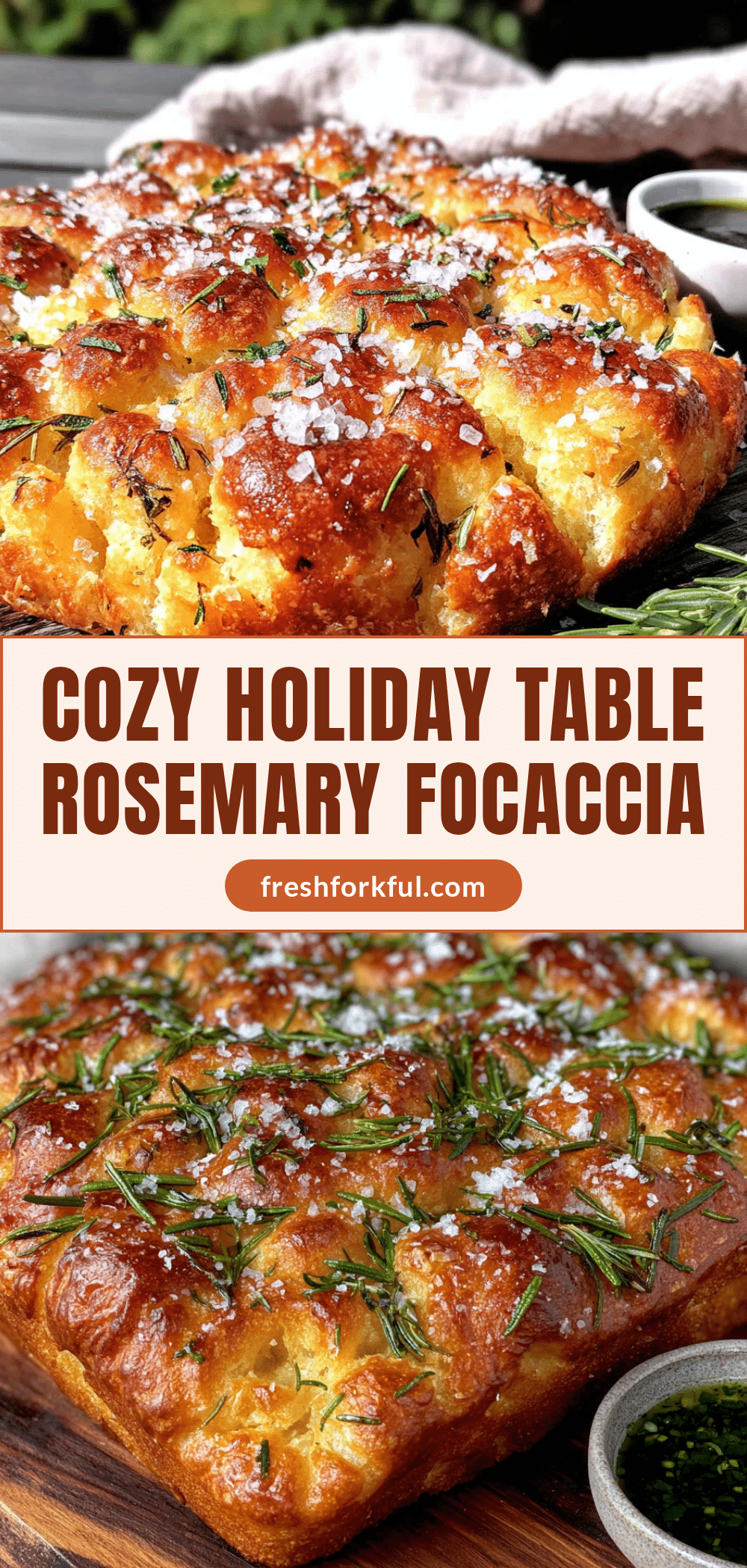
Rosemary Focaccia: The Perfect Easy Holiday Table Bread

This rosemary focaccia is an easy, no-knead bread with a golden, crackly crust and a pillowy soft interior, infused with woodsy rosemary and olive oil. Perfect for holiday tables, it’s a crowd-pleaser that fills your home with warmth and aroma.
- Prep Time: 15 minutes
- Cook Time: 25 minutes
- Total Time: 3 hours 40 minutes (including rising time)
- Yield: 12 servings 1x
- Category: Bread
- Cuisine: Italian
Ingredients
- 4 cups (500g) all-purpose flour
- 1 ⅔ cups (395ml) warm water (105-110°F)
- 2 ¼ teaspoons (7g) active dry yeast (or one packet)
- ⅓ cup (80ml) extra-virgin olive oil, plus more for pan and topping
- 1 teaspoon honey
- 2 teaspoons fine sea salt, divided (1 ½ tsp for dough, ½ tsp for topping)
- 3–4 sprigs fresh rosemary, leaves stripped and roughly chopped
- Flaky sea salt (e.g., Maldon) for finishing
- ¼ cup (60ml) extra-virgin olive oil (for rosemary infusion)
Instructions
- Proof the yeast: In a large mixing bowl, combine warm water, honey, and active dry yeast. Stir gently and let sit for 5 minutes until foamy.
- Mix the dough: Add flour and 1 ½ teaspoons fine sea salt to the yeast mixture. Stir with a wooden spoon or hands until a shaggy, sticky dough forms.
- Add the oil: Pour in ⅓ cup olive oil and mix until mostly incorporated. Dough will be wet and slippery.
- First rise: Cover the bowl with plastic wrap or a damp towel. Let rise at room temperature for 1.5-2 hours until doubled in size and bubbly.
- Prepare the pan: Pour about 2 tablespoons olive oil into a 9×13-inch baking pan. Coat bottom and sides generously.
- Transfer the dough: Gently coax the dough into the oiled pan using a bench scraper or spatula. Let rest for 10 minutes.
- Stretch and dimple: Using oiled fingers, gently stretch dough to fill the pan. Press deep dimples all over the surface down to the bottom of the pan.
- Second rise: Cover pan loosely with plastic wrap and let rise for 30-45 minutes until puffy and nearly doubled.
- Make rosemary oil: While dough rises, warm ¼ cup olive oil in a small saucepan over low heat. Add chopped rosemary and steep for 5 minutes. Do not boil. Remove from heat and cool slightly.
- Preheat oven: About 15 minutes before baking, preheat oven to 425°F (220°C) with rack in middle position.
- Top the focaccia: Drizzle rosemary-infused oil over dough. Spread evenly with a pastry brush or fingers, letting it pool in dimples. Sprinkle with remaining ½ teaspoon fine sea salt and a generous pinch of flaky sea salt. Optionally press extra rosemary leaves on top.
- Bake: Place pan in oven and bake for 20-25 minutes until deep golden brown and bottom sounds hollow when tapped. Rotate pan halfway through.
- Cool and serve: Let cool in pan for 5 minutes, then transfer to a wire rack. Serve warm or at room temperature.
Notes
For best results, use fresh rosemary and good quality extra-virgin olive oil. The dough is intentionally sticky; resist adding more flour. Let the dough relax if it shrinks back when stretching. For a crispy bottom, use plenty of oil in the pan and a hot oven. Store leftovers at room temperature for up to 3 days; freeze for up to 3 months.
Nutrition
- Serving Size: 1/12 of recipe
- Calories: 220
- Sugar: 1
- Sodium: 380
- Fat: 10
- Saturated Fat: 1.5
- Carbohydrates: 28
- Fiber: 1
- Protein: 4
Keywords: rosemary focaccia, easy focaccia, holiday bread, no-knead bread, homemade focaccia, rosemary bread, Italian bread