Love this? Save it for later!
Share the inspiration with your friends
The neighborhood Friendsgiving was in twelve hours and I had absolutely nothing to bring. Not a single dish planned, not a grocery list written, not even a vague idea scribbled on a napkin. Everyone else would be showing up with their grandmother’s legendary stuffing or a brisket that had been brining for three days. I’d spent the whole week buried in work deadlines and honestly, the holiday snuck right up on me. I stood in my kitchen at nine o’clock on a Tuesday night, staring into the fridge like it might suddenly produce a miracle.
What I found was a single butternut squash rolling around in the crisper drawer, a half-empty bag of pomegranate seeds from some forgotten salad project, and a block of feta cheese that was staring at me with what felt like judgment. Not exactly the makings of a showstopper. I almost just grabbed a bottle of wine and called it a contribution. But something made me stop. I’d seen a salad like this somewhere before, maybe on a restaurant menu or in a magazine I’d flipped through at the doctor’s office. The combination was stuck in my head: sweet roasted squash, tart little jewels of pomegranate, salty creamy feta. It sounded like fall on a plate.
I’ll be honest with you, I wasn’t confident. I roasted that squash with shaking hands, praying it wouldn’t turn to mush. I tossed everything together in my grandmother’s old wooden bowl, the one with the crack running down the side that I refuse to throw away. I drizzled a simple maple-tahini dressing over the top and hoped for the best. The next day, I carried that bowl into the party feeling like I was bringing a B-minus effort to an A-plus crowd. You know that feeling when you’re sure everyone is going to take one polite scoop and then ignore your dish for the rest of the night? Yeah, that was me.
But here’s the thing. That bowl was empty before the turkey even made it to the table. People kept coming back for seconds, then thirds. Someone asked me for the recipe while they were still chewing. Another person scraped the last bit of dressing out of the bowl with a piece of bread. I stood there, genuinely confused, watching this simple dish I’d thrown together in a panic become the unexpected star of the evening. And that’s the story of how this perfect fall roasted butternut squash with pomegranate and feta became my go-to recipe for every autumn gathering. It’s the dish I never planned to make but now can’t imagine the season without.
Why You’ll Love This Recipe
This isn’t just another roasted vegetable side dish. This perfect fall roasted butternut squash with pomegranate and feta is the kind of recipe that makes people close their eyes after the first bite. I’ve tested it at least a dozen times since that fateful Friendsgiving, tweaking the roasting temperature, adjusting the dressing ratio, and figuring out exactly how to get that perfect balance of textures. Let me tell you why this one is different.
- Quick & Easy: Despite looking like something from a fancy restaurant menu, this dish comes together in about 45 minutes with just 15 minutes of active prep. The oven does most of the work while you relax.
- Simple Ingredients: No specialty grocery store trips required. Butternut squash, pomegranate seeds, feta cheese, and a few pantry staples for the dressing. You probably already have most of this in your kitchen right now.
- Perfect for Fall Gatherings: Thanksgiving, Friendsgiving, Sunday dinners, or just a cozy weeknight when you want something that tastes like autumn. This dish fits every occasion from October through December.
- Crowd-Pleaser: I’ve watched picky eaters, vegetable skeptics, and even kids go back for seconds. Something about that combination of sweet, salty, tart, and creamy just works on everyone.
- Unbelievably Delicious: The caramelized edges of the roasted squash, the pop of the pomegranate seeds, the creamy saltiness of the feta, and that tangy maple-tahini dressing all come together in a way that feels greater than the sum of its parts.
What makes this version different from all the other squash salads out there? It’s the roasting technique. I cube the squash into exactly one-inch pieces and roast them at a higher temperature than most recipes call for. This gives you those gorgeous caramelized edges while keeping the inside tender but not mushy. Plus, the maple-tahini dressing is a game-changer. It’s creamy without being heavy, tangy without being sharp, and it ties everything together in a way that a simple vinaigrette just can’t match.
What Ingredients You Will Need
This recipe uses simple, wholesome ingredients that come together to create something truly special. Most of these are fall pantry staples, and I’ve included notes on substitutions where they work well. Let me walk you through each one.
For the Roasted Squash
- 1 medium butternut squash (about 2-2.5 pounds) — Look for one that feels heavy for its size with firm, unblemished skin. I prefer the ones with a longer neck because they’re easier to peel and cube. (Pro tip: if you’re short on time, many grocery stores sell pre-cut butternut squash in the produce section. Just make sure the pieces are roughly the same size for even roasting.)
- 2 tablespoons olive oil — Use a good quality extra virgin olive oil here. It adds flavor as well as helping the squash caramelize. I like California Olive Ranch for everyday cooking.
- 1 tablespoon maple syrup — Pure maple syrup, not pancake syrup. This helps the squash develop those gorgeous caramelized edges and adds a subtle sweetness that pairs perfectly with the other ingredients.
- ½ teaspoon salt — I use fine sea salt for even distribution. If you’re using kosher salt, you might need a bit more.
- ¼ teaspoon black pepper — Freshly ground is always better, but pre-ground works in a pinch.
- ¼ teaspoon cinnamon — Just a hint to bring out the natural sweetness of the squash and reinforce that fall flavor profile.
- ⅛ teaspoon cayenne pepper (optional) — This is my secret weapon. It’s not enough to make the dish spicy, but it adds a subtle warmth that balances the sweetness. I leave it out when serving to a crowd with sensitive palates, but I always add it for my own bowl.
For the Toppings
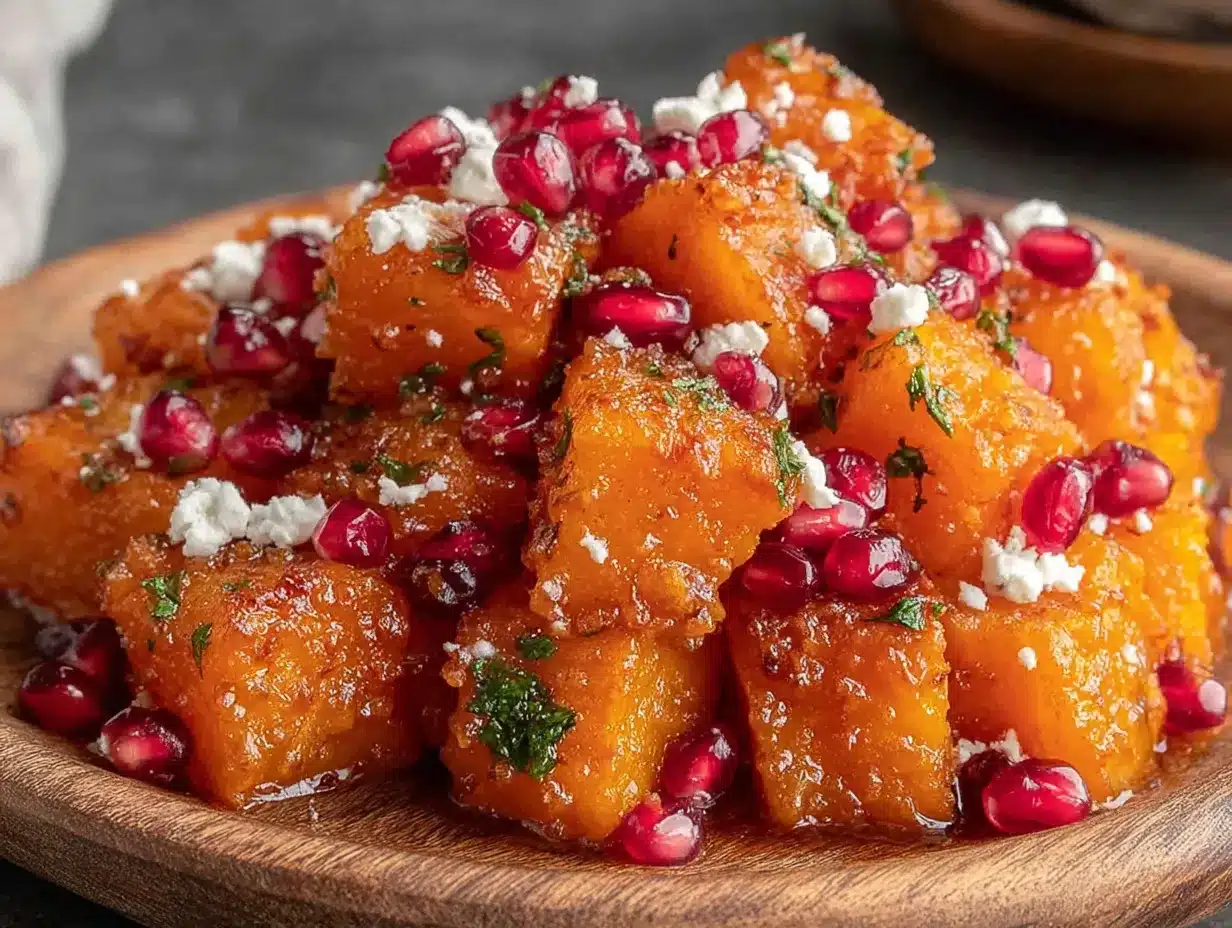
- ½ cup pomegranate seeds — You can buy these pre-seeded in the produce section, which saves a ton of time and mess. If you’re seeding a fresh pomegranate, do it in a bowl of water to prevent the juice from staining everything. The seeds add those little bursts of tartness that make every bite exciting.
- ⅓ cup crumbled feta cheese — Go for a block of feta and crumble it yourself rather than the pre-crumbled stuff. It has better texture and more flavor. I prefer sheep’s milk feta for its creaminess, but cow’s milk feta works great too. For a dairy-free version, try a plant-based feta alternative or omit it entirely.
- ¼ cup toasted pepitas (pumpkin seeds) — These add a wonderful crunch and nutty flavor. Toast them in a dry pan over medium heat for about 3 minutes until they start to pop and smell fragrant. Watch them closely because they burn fast.
- 2 tablespoons fresh parsley or cilantro, chopped — A handful of fresh herbs at the end brightens everything up. I use parsley for a milder flavor or cilantro when I want something more vibrant.
For the Maple-Tahini Dressing
- 3 tablespoons tahini — Stir your tahini well before measuring because it tends to separate. I recommend Soom or Seed + Mill brands for the smoothest texture. If your tahini is thick, warm the jar slightly in a bowl of hot water to loosen it up.
- 2 tablespoons maple syrup — Again, pure maple syrup. This balances the bitterness of the tahini beautifully.
- 2 tablespoons lemon juice — Fresh squeezed is non-negotiable here. Bottled lemon juice has a flat, metallic taste that will ruin the dressing. One lemon usually gives you about 2-3 tablespoons.
- 2 tablespoons warm water — This helps thin the dressing to the perfect drizzling consistency. Add more or less depending on how thick you like it.
- 1 tablespoon olive oil — For richness and to help emulsify the dressing.
- 1 small clove garlic, minced — A microplane works great here for getting the garlic super fine so it blends seamlessly into the dressing.
- ¼ teaspoon salt — Adjust to taste.
Equipment Needed
You don’t need a fancy kitchen to make this perfect fall roasted butternut squash with pomegranate and feta. Here’s what I use every time:
- Large baking sheet — A half-sheet pan (18×13 inches) is ideal. Make sure it’s rimmed so nothing drips off. I’ve made this on a smaller pan before and the squash gets crowded, which means it steams instead of roasting. Give those cubes some space.
- Parchment paper or silicone baking mat — Not strictly necessary, but it makes cleanup so much easier and helps prevent the squash from sticking. I’m a parchment paper loyalist myself.
- Sharp chef’s knife — A good knife makes peeling and cubing butternut squash infinitely easier. I use my 8-inch Wusthof and it handles the job beautifully. A dull knife with a hard squash is a recipe for frustration.
- Vegetable peeler — A sturdy Y-peeler works best for butternut squash. The standard straight peelers tend to struggle with the curves of the squash.
- Large mixing bowl — For tossing the squash with oil and spices before roasting. Also for assembling everything at the end.
- Small bowl or jar — For whisking together the dressing. I use a mason jar with a tight-fitting lid so I can shake it up. Less mess, fewer dishes.
- Whisk or fork — For mixing the dressing if you’re not using a jar.
- Serving platter or bowl — Something wide and shallow shows off all the beautiful colors. My favorite is a white ceramic platter that makes the orange, red, and green really pop.
If you don’t have a baking sheet, a large casserole dish works in a pinch. Just keep in mind that the sides are higher, so the squash won’t get quite as crispy. And if you don’t have a vegetable peeler, you can use a paring knife to remove the skin, though it takes a bit more patience.
Preparation Method
Let me walk you through this step by step. I’ve made this dish so many times that I’ve got the process down to a science, and I’ll share every little trick I’ve learned along the way.
- Preheat your oven to 425°F (220°C). This higher temperature is key for getting those caramelized edges. Don’t be tempted to turn it down to 400°F. I tried that once and ended up with sad, pale squash that lacked the roasty flavor we’re after. Line your baking sheet with parchment paper for easy cleanup.
- Prep the butternut squash. This is the most labor-intensive part, but I promise it gets easier with practice. First, cut off about ½ inch from both the stem end and the bottom end so the squash sits flat on your cutting board. Use a sharp vegetable peeler to remove the skin completely. I like to go over the squash a second time to make sure I got all the tough greenish-white layer underneath. Then, cut the squash in half where the narrow neck meets the round bulb. Cut the bulb in half and scoop out the seeds and stringy bits with a spoon. (Save the seeds! You can roast them just like pumpkin seeds.) Now cut the squash into 1-inch cubes. Try to make them as uniform as possible so they cook evenly. The neck cuts into nice even cubes, while the bulb pieces will be more irregular — that’s totally fine.
- Season the squash. Place the cubed squash in your large mixing bowl. Drizzle with 2 tablespoons olive oil and 1 tablespoon maple syrup. Sprinkle with ½ teaspoon salt, ¼ teaspoon black pepper, ¼ teaspoon cinnamon, and the optional pinch of cayenne. Toss everything together with your hands until every piece is evenly coated. I find hands work better than a spoon here because you can really feel if the seasoning is distributed.
- Roast the squash. Spread the seasoned cubes in a single layer on your prepared baking sheet. Make sure they have a little space between them — overcrowding leads to steaming instead of roasting. If they’re too crowded, use two baking sheets. Roast for 25-30 minutes, flipping the pieces halfway through with a spatula. You’ll know they’re done when they’re golden brown on the edges, tender when pierced with a fork, and slightly caramelized on the bottom. Every oven runs a little differently, so start checking at the 22-minute mark if your oven runs hot.
- Make the dressing while the squash roasts. In your small bowl or mason jar, combine 3 tablespoons tahini, 2 tablespoons maple syrup, 2 tablespoons lemon juice, 2 tablespoons warm water, 1 tablespoon olive oil, the minced garlic clove, and ¼ teaspoon salt. Whisk thoroughly or shake vigorously until completely smooth. The dressing should be thick but pourable — like heavy cream. If it’s too thick, add warm water a teaspoon at a time until it reaches the right consistency. Taste and adjust salt or lemon juice as needed. I usually end up adding another squeeze of lemon because I like the tang.
- Toast the pepitas. While the squash finishes roasting, heat a small dry skillet over medium heat. Add the pepitas and cook for 2-3 minutes, shaking the pan frequently, until they start to pop and smell toasty. Immediately transfer them to a plate to cool — they’ll keep cooking in the hot pan if you leave them there.
- Assemble the dish. Let the roasted squash cool for about 5 minutes on the baking sheet. This helps it firm up slightly so it doesn’t get mushy when you toss it. Transfer the warm squash to your serving platter or bowl. Sprinkle with the pomegranate seeds, crumbled feta, toasted pepitas, and fresh herbs. Drizzle the maple-tahini dressing generously over the top. I like to serve extra dressing on the side because some people (me) want more.
- Serve immediately or at room temperature. This dish is delicious warm, but it’s also fantastic at room temperature, which makes it perfect for potlucks and holiday tables where timing is tricky. Just don’t let it sit out for more than 2 hours if you’re serving it at a gathering.
Cooking Tips & Techniques
I’ve learned a few things the hard way through my many batches of this perfect fall roasted butternut squash with pomegranate and feta. Let me save you from my mistakes.
The biggest mistake people make is not drying the squash enough. After you wash and peel the squash, pat the cubes dry with a clean kitchen towel before tossing them with oil. Extra moisture on the surface prevents caramelization and gives you steamed, pale squash instead of golden, roasty pieces. I learned this after making a soggy batch for a dinner party and watching everyone politely take tiny portions.
Don’t skip the halfway flip. I know, it’s tempting to just let the oven do its thing and walk away. But flipping the squash halfway through ensures even browning on all sides. Set a timer on your phone so you don’t forget. I once got distracted by a phone call and ended up with squash that was burnt on one side and underdone on the other. Not my finest moment.
Let the squash cool before adding the dressing. If you drizzle the dressing over piping hot squash, it’ll slide right off and pool at the bottom of the dish. Give it those 5 minutes to cool slightly, and the dressing will cling to the pieces much better. Plus, the flavors have a chance to meld without the heat breaking down the tahini dressing.
Toast your pepitas fresh. I cannot emphasize this enough. Pre-toasted pepitas from the store are fine in a pinch, but freshly toasted ones have a nuttiness and crunch that takes this dish from good to unforgettable. They take three minutes and make a huge difference. Just watch them like a hawk because they go from perfectly toasted to burnt in about 30 seconds.
For the best texture, serve within an hour of assembling. The pomegranate seeds will start to release their juice into the dish if it sits too long, and the feta can get a bit soft. If you’re making this ahead for a party, roast the squash and make the dressing in advance, then assemble everything right before serving. I’ve done this many times and it works perfectly.
Variations & Adaptations
One of the things I love most about this recipe is how adaptable it is. Over the years, I’ve tried all kinds of variations depending on what I have on hand or who I’m serving. Here are some of my favorites.
Make it a meal: Turn this side dish into a main course by adding some protein. I’ve added grilled chicken, roasted chickpeas, or even leftover turkey from Thanksgiving. The sweet and savory flavors work with just about anything. For a vegetarian version that’s still hearty, add a cup of cooked quinoa or farro to the bowl. It stretches the dish and adds great texture.
Swap the squash: Butternut is my first love, but this recipe works beautifully with other winter squashes. Try delicata squash (no need to peel it!), acorn squash, or even sweet potatoes. Each one brings a slightly different flavor and texture. Delicata gets especially crispy edges that I’m obsessed with. Just adjust roasting times based on the squash you choose — smaller pieces cook faster.
Change up the cheese: Feta is classic, but goat cheese adds a tangy creaminess that’s absolutely divine. I’ve also used shaved Parmesan for a saltier, nuttier profile, or crumbled blue cheese when I’m feeling bold. For a vegan version, try a sprinkle of nutritional yeast or a dollop of cashew cream. Honestly, the sweet squash and tart pomegranate can handle just about any cheese you throw at them.
Seasonal twists: In the fall, I sometimes add roasted Brussels sprouts or thinly sliced apples for extra crunch. In winter, I’ll toss in some dried cranberries and chopped pecans. In spring (if I’m really stretching the season), fresh mint instead of parsley gives it a bright, fresh finish. The base recipe is so forgiving that you can really make it your own based on what looks good at the market.
Dietary adaptations: This recipe is naturally gluten-free and can easily be made vegan by omitting the feta or using a plant-based alternative. For a nut-free version, skip the tahini and use a simple maple-balsamic vinaigrette instead. I’ve made it for friends with all kinds of dietary restrictions and it’s always a hit.
Serving & Storage Suggestions
This perfect fall roasted butternut squash with pomegranate and feta is incredibly versatile when it comes to serving. Here’s how I like to enjoy it.
Serving temperature: This dish is delicious warm, at room temperature, or even cold straight from the fridge (not that I’ve ever eaten leftovers for breakfast… okay, maybe once or twice). For a dinner party, I usually serve it warm because the aroma of roasted squash is so inviting. For potlucks and buffets, room temperature is actually ideal because it holds up better and doesn’t get soggy.
What to serve with it: This dish pairs beautifully with roasted chicken, grilled salmon, or a simple roast pork tenderloin. For vegetarian meals, I serve it alongside a lentil loaf or stuffed portobello mushrooms. At Thanksgiving, it sits perfectly next to the turkey and all the classic sides. I also love it on a bed of arugula with some extra dressing as a hearty salad for lunch.
Storage instructions: Store leftovers in an airtight container in the refrigerator for up to 4 days. I do recommend keeping the dressing separate if you know you’ll have leftovers, because the dressed squash can get a bit soggy by day two. If you’ve already dressed it, it’s still delicious — just a little softer in texture.
Reheating tips: The best way to reheat this dish is in a 350°F oven for about 10 minutes, which helps the squash crisp back up slightly. The microwave works in a pinch but will make the squash softer. I actually love eating the leftovers cold — the flavors seem to meld together even more overnight.
Make-ahead notes: This is my go-to make-ahead holiday side dish. Roast the squash up to 2 days in advance and store it in the fridge. Make the dressing up to a week ahead (it keeps beautifully in a jar). Toast the pepitas the day before. Then on serving day, just bring everything to room temperature, assemble, and you’re done. It takes about 5 minutes and looks like you spent hours on it.
Nutritional Information & Benefits
I’m not a nutritionist, but I’ve done enough research to know that this dish is packed with good-for-you ingredients. Here’s the estimated nutritional breakdown per serving (based on 6 servings):
- Calories: Approximately 280-320 per serving
- Protein: 8-10 grams
- Fat: 16-18 grams (mostly healthy fats from olive oil, tahini, and pepitas)
- Carbohydrates: 30-35 grams
- Fiber: 6-8 grams
- Sugar: 14-16 grams (mostly natural sugars from squash and pomegranate)
Health highlights: Butternut squash is loaded with vitamin A (one cup gives you over 400% of your daily needs), vitamin C, and potassium. Pomegranate seeds are packed with antioxidants and have been linked to heart health. Tahini is rich in healthy fats and calcium. And pepitas are a great source of magnesium and zinc. This isn’t just a pretty dish — it’s genuinely good for you.
Dietary considerations: This recipe is naturally gluten-free, vegetarian, and can easily be made vegan by omitting the feta or using a plant-based alternative. It’s also relatively low in added sugars, with most of the sweetness coming from the maple syrup and the natural sugars in the squash.
Conclusion
This perfect fall roasted butternut squash with pomegranate and feta has become my signature dish for a reason. It’s the recipe that started as a panic-induced kitchen experiment and turned into something I genuinely look forward to making every autumn. There’s something about the way the caramelized squash mingles with the tart pomegranate seeds, the salty feta, and that creamy maple-tahini dressing that just feels like fall in a bowl.
I love that this dish is fancy enough for a holiday table but simple enough for a random Tuesday dinner. I love that it’s forgiving and adaptable, always turning out delicious even when I’m rushing or improvising. And I love that it’s the kind of recipe that makes people ask for seconds and then ask for the recipe — which is exactly how it found its way to me in the first place.
So whether you’re bringing it to a Friendsgiving like I did, serving it alongside your Thanksgiving turkey, or just making it for a cozy dinner at home, I hope you love it as much as I do. Give it a try and let me know how it turns out! Leave a comment below or tag me in your photos — I genuinely love seeing your versions and hearing about your own kitchen adventures. Happy fall cooking, friends!
Frequently Asked Questions
Can I use frozen butternut squash for this recipe?
I don’t recommend it. Frozen squash releases a lot of water as it thaws, which prevents caramelization and leaves you with mushy, watery squash. Fresh squash really makes a difference here. If you’re short on time, look for pre-cut fresh squash in the produce section instead.
How do I keep the pomegranate seeds from sinking to the bottom?
This is a common question! The trick is to sprinkle the pomegranate seeds over the top after you’ve arranged the squash on the serving platter, rather than tossing everything together in a bowl. This way they stay visible and distributed throughout the dish. If you’re serving family-style, just let guests scoop from the top and they’ll get a good mix.
Can I make this recipe ahead of time?
Absolutely! In fact, I often do. Roast the squash up to 2 days ahead and store it in the fridge. Make the dressing up to a week ahead. Toast the pepitas the day before. Then assemble everything right before serving. The squash is actually delicious at room temperature, so you don’t even need to reheat it if you don’t want to.
What can I substitute for tahini in the dressing?
If you don’t have tahini or need a nut-free option, you can make a simple maple-balsamic vinaigrette instead. Whisk together 3 tablespoons balsamic vinegar, 2 tablespoons maple syrup, ¼ cup olive oil, and a pinch of salt. It’s different from the creamy tahini version but still absolutely delicious with the squash and pomegranate.
How do I seed a pomegranate without making a huge mess?
This is the method I swear by: Cut the pomegranate in half horizontally. Hold one half cut-side down over a large bowl of water. Hit the back of the pomegranate firmly with a wooden spoon. The seeds will fall into the water while the white pith floats to the top. Skim off the pith, drain the seeds, and you’re done. No stains, no mess, no fuss!
Pin This Recipe!
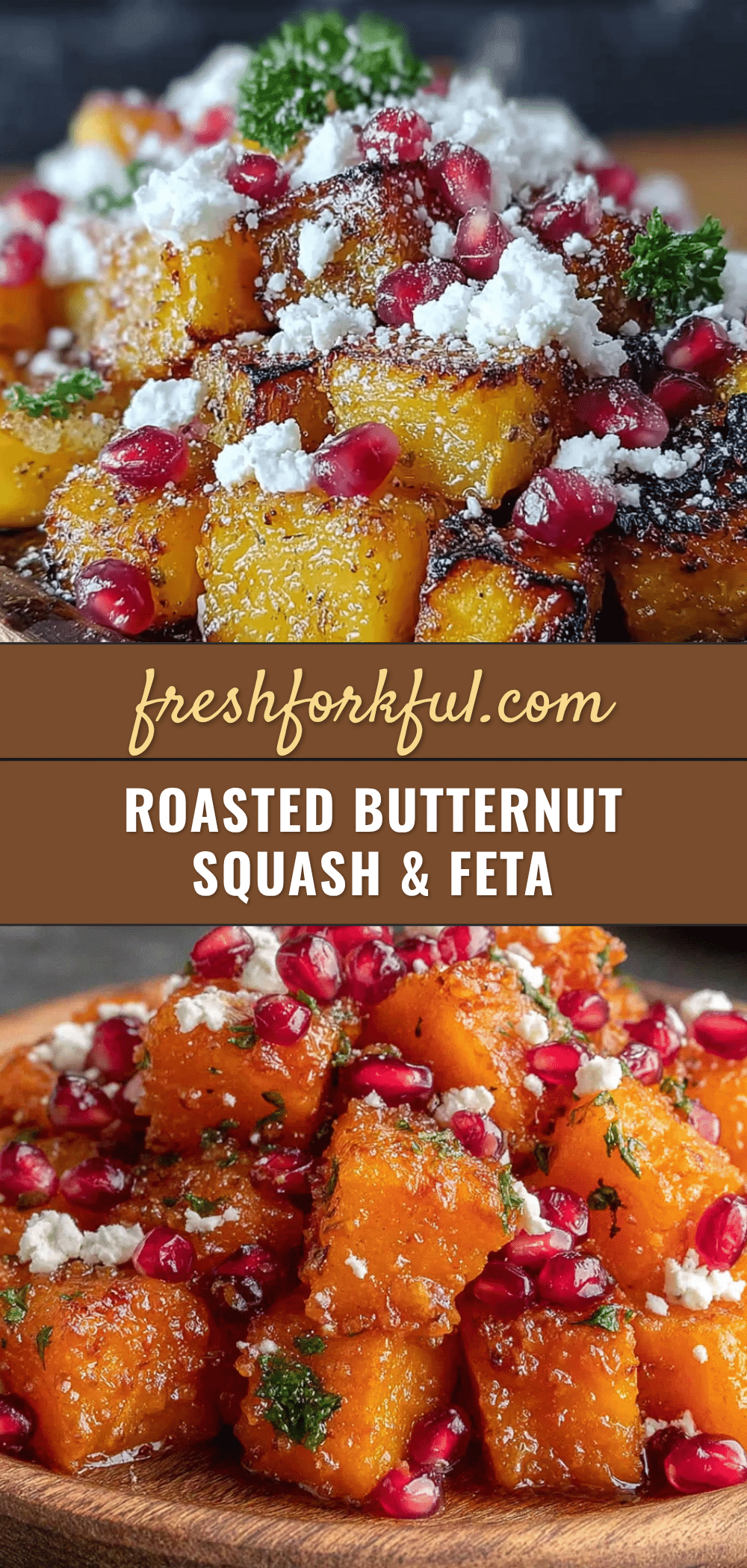
Perfect Fall Roasted Butternut Squash with Pomegranate and Feta

This perfect fall roasted butternut squash with pomegranate and feta is a quick and easy side dish that combines sweet caramelized squash, tart pomegranate seeds, salty feta, and a creamy maple-tahini dressing. It’s a crowd-pleasing recipe perfect for autumn gatherings.
- Prep Time: 15 minutes
- Cook Time: 30 minutes
- Total Time: 45 minutes
- Yield: 6 servings 1x
- Category: Side Dish
- Cuisine: American
Ingredients
- 1 medium butternut squash (about 2–2.5 pounds), peeled and cubed into 1-inch pieces
- 2 tablespoons olive oil
- 1 tablespoon maple syrup
- ½ teaspoon fine sea salt
- ¼ teaspoon black pepper
- ¼ teaspoon cinnamon
- ⅛ teaspoon cayenne pepper (optional)
- ½ cup pomegranate seeds
- ⅓ cup crumbled feta cheese
- ¼ cup toasted pepitas (pumpkin seeds)
- 2 tablespoons fresh parsley or cilantro, chopped
- 3 tablespoons tahini
- 2 tablespoons maple syrup
- 2 tablespoons lemon juice (fresh squeezed)
- 2 tablespoons warm water
- 1 tablespoon olive oil
- 1 small clove garlic, minced
- ¼ teaspoon salt
Instructions
- Preheat your oven to 425°F (220°C). Line a large baking sheet with parchment paper.
- Prep the butternut squash: Cut off about ½ inch from both ends so the squash sits flat. Use a sharp vegetable peeler to remove the skin completely. Cut the squash in half where the narrow neck meets the round bulb. Cut the bulb in half and scoop out the seeds and stringy bits. Cut the squash into 1-inch cubes, making them as uniform as possible.
- Season the squash: Place the cubed squash in a large mixing bowl. Drizzle with 2 tablespoons olive oil and 1 tablespoon maple syrup. Sprinkle with ½ teaspoon salt, ¼ teaspoon black pepper, ¼ teaspoon cinnamon, and optional cayenne. Toss with your hands until evenly coated.
- Roast the squash: Spread the seasoned cubes in a single layer on the prepared baking sheet, leaving space between them. Roast for 25-30 minutes, flipping halfway through, until golden brown on the edges and tender when pierced with a fork.
- Make the dressing: In a small bowl or mason jar, combine 3 tablespoons tahini, 2 tablespoons maple syrup, 2 tablespoons lemon juice, 2 tablespoons warm water, 1 tablespoon olive oil, minced garlic, and ¼ teaspoon salt. Whisk or shake until smooth. Add more warm water if needed to reach a pourable consistency.
- Toast the pepitas: Heat a small dry skillet over medium heat. Add the pepitas and cook for 2-3 minutes, shaking frequently, until they start to pop and smell toasty. Transfer to a plate to cool.
- Assemble the dish: Let the roasted squash cool for about 5 minutes on the baking sheet. Transfer to a serving platter or bowl. Sprinkle with pomegranate seeds, crumbled feta, toasted pepitas, and fresh herbs. Drizzle the maple-tahini dressing generously over the top. Serve immediately or at room temperature.
Notes
For best texture, serve within an hour of assembling. To make ahead, roast squash up to 2 days in advance, make dressing up to a week ahead, and toast pepitas the day before. Assemble just before serving. For a vegan version, omit feta or use a plant-based alternative. For a nut-free version, skip tahini and use a maple-balsamic vinaigrette instead.
Nutrition
- Serving Size: 1 serving (about 1 c
- Calories: 300
- Sugar: 15
- Sodium: 450
- Fat: 17
- Saturated Fat: 4
- Carbohydrates: 33
- Fiber: 7
- Protein: 9
Keywords: roasted butternut squash, pomegranate, feta, fall recipe, Thanksgiving side dish, maple-tahini dressing, vegetarian, gluten-free