Love this? Save it for later!
Share the inspiration with your friends
This was supposed to be a simple loaf of sourdough bread. I had the starter fed and bubbly, the flour measured, the water at the perfect temperature. But somewhere between answering a text from my sister and trying to convince my cat that the counter was not his personal lounge chair, I grabbed the wrong container of salt. Instead of the fine sea salt, I dumped in a heaping tablespoon of garlic salt. The dough was ruined before it even had a chance to rise.
I stood there staring at this sticky, garlicky mess, honestly feeling a little defeated. It was a Tuesday, it was raining, and I had just wasted a cup of my precious sourdough starter. Throwing it away felt like a crime. So I did what any stubborn home cook would do—I started adding things. A handful of chopped onions, some celery that was wilting in the fridge, a mountain of fresh herbs I had been meaning to use. I figured, at worst, I would have a strange, savory bread pudding. At best, I might accidentally stumble onto something good.
Let me tell you, the smell that filled my kitchen that rainy afternoon was nothing short of a miracle. The garlic salt, the one that started this whole disaster, actually worked. It mingled with the sage and thyme in a way that made my neighbor knock on the door asking what I was baking. When it came out of the oven, golden and crispy on top with those soft, tangy sourdough pockets underneath, I knew I had accidentally created my new favorite side dish. Maybe you’ve been there—a kitchen mistake that turns into a family legend. This is mine, and I’m so glad I messed up that day.
Why You’ll Love This Recipe
This cozy sourdough herb stuffing is not your average boxed mix. It is a labor of love that tastes like a warm hug, and it has become the dish everyone asks me to bring to every gathering. Here is why it will earn a permanent spot in your recipe rotation:
- Quick & Easy: Despite using homemade sourdough, this comes together in under an hour. The active prep time is only about 20 minutes, making it perfect for busy holiday mornings or a cozy weeknight dinner.
- Simple Ingredients: You likely have most of these pantry staples already. No need for a special trip to the store for obscure spices or fancy condiments.
- Perfect for Cozy Occasions: This is the ultimate comfort food for a slow Sunday, a Thanksgiving table, or a rainy evening when you need something warm and satisfying.
- Crowd-Pleaser: I have served this to picky kids and gourmet chefs, and it always gets rave reviews. The crispy sage on top is a showstopper.
- Unbelievably Delicious: The tangy sourdough pairs perfectly with the earthy herbs and rich broth. It is next-level comfort food that makes you close your eyes after the first bite.
What makes this recipe different from the rest is the technique of toasting the sourdough cubes first. This simple step ensures your stuffing stays perfectly textured—crispy on top and tender in the middle—without turning into a soggy mess. It is comfort food reimagined, healthier than traditional versions, but with the same soul-soothing satisfaction.
Ingredients Needed
This recipe uses simple, wholesome ingredients to deliver bold flavor and satisfying texture without the fuss. Most are pantry staples, making this an easy last-minute dish to throw together.
For the Stuffing Base
- 1 large loaf of sourdough bread (about 12 cups when cubed), preferably day-old
- 1/2 cup unsalted butter (I prefer Kerrygold for its rich flavor)
- 1 large yellow onion, finely diced
- 3 celery stalks, chopped into small pieces
- 4 cloves garlic, minced (or use 1 teaspoon garlic powder if you are in a rush)
- 2 cups low-sodium chicken or vegetable broth (Swanson’s is my go-to for consistent flavor)
- 2 large eggs, lightly beaten (helps bind everything together)
- 1 teaspoon salt (adjust based on your broth’s saltiness)
- 1/2 teaspoon black pepper, freshly ground
For the Herb & Sage Magic

- 1/4 cup fresh sage leaves, chopped (plus extra whole leaves for the crispy topping)
- 2 tablespoons fresh rosemary, finely chopped
- 2 tablespoons fresh thyme leaves (strip them from the stems yourself—it’s worth it)
- 1 tablespoon fresh parsley, chopped (optional, but adds a nice freshness)
For the Crispy Sage Topping
- 12-15 fresh whole sage leaves
- 2 tablespoons olive oil or butter
- Flaky sea salt for finishing (like Maldon)
Ingredient Tips & Substitutions: For a gluten-free option, use a high-quality gluten-free sourdough loaf. If you don’t have fresh herbs, you can use dried herbs—just reduce the amount by half. I recommend using a good quality broth because it is the backbone of the flavor. For a vegetarian version, swap chicken broth for vegetable broth and use a plant-based butter.
Equipment Needed
You do not need a professional kitchen to make this stuffing. Here is what you will need:
- Large Baking Sheet: For toasting the sourdough cubes. A half-sheet pan works perfectly.
- Large Skillet or Dutch Oven: For sautéing the vegetables. I use my trusty Le Creuset, but any heavy-bottomed pan works.
- 9×13-inch Baking Dish: For baking the stuffing. A ceramic or glass dish gives the best browning.
- Chef’s Knife: A sharp knife makes cubing the bread and chopping herbs a breeze.
- Large Mixing Bowl: For combining all the ingredients.
- Wooden Spoon or Spatula: For stirring without scratching your pans.
If you don’t have a Dutch oven, a large skillet will work just fine. For the baking dish, you can also use a 10-inch cast iron skillet for a rustic look. I have made this in a disposable aluminum pan for potlucks, and it works great too.
Preparation Method
Follow these steps carefully, and you will have the most incredible stuffing of your life. Trust the process, especially when it comes to toasting the bread.
- Preheat and Prep: Preheat your oven to 375°F (190°C). Cut your sourdough loaf into 1-inch cubes. If your bread is fresh, spread the cubes on a baking sheet and bake for 10-12 minutes until lightly toasted but not hard. This step is non-negotiable—it prevents mushy stuffing.
- Sauté the Aromatics: In a large skillet over medium heat, melt the butter. Add the diced onion and celery. Cook for 5-7 minutes until softened and translucent. The smell at this point is incredible. Add the minced garlic and cook for another minute until fragrant. Remove from heat.
- Mix the Herb Broth: In a large mixing bowl, whisk together the chicken broth, beaten eggs, salt, pepper, and all your chopped fresh herbs (sage, rosemary, thyme, and parsley). This is your flavor base.
- Combine Everything: Add the toasted sourdough cubes to the bowl with the broth mixture. Pour the sautéed vegetables over the top. Using your hands (or a large spatula), gently toss everything together until all the bread is evenly coated. Do not overmix—you want some texture.
- Rest the Mixture: Let the stuffing sit for 10-15 minutes. This allows the bread to absorb all that herby goodness. If the mixture looks dry, add a splash more broth. It should be moist but not soupy.
- Transfer to Baking Dish: Grease your 9×13-inch baking dish with butter or non-stick spray. Spread the stuffing mixture evenly in the dish. Do not press it down—you want it fluffy.
- Bake Covered: Cover the dish with foil and bake for 25 minutes. This steams the stuffing and ensures the inside is perfectly tender.
- Prepare the Crispy Sage: While the stuffing bakes, heat 2 tablespoons of olive oil or butter in a small skillet over medium heat. Add the whole sage leaves and fry for 30-45 seconds per side until they turn bright green and crispy. Drain on a paper towel and sprinkle with flaky sea salt.
- Final Bake: Remove the foil from the stuffing and bake for another 15-20 minutes until the top is golden brown and crispy. The edges should be slightly caramelized.
- Garnish and Serve: Remove from the oven and let it rest for 5 minutes. Top with the crispy sage leaves and serve warm.
Cooking Tips & Techniques
Over the years, I have made this stuffing more times than I can count, and I have learned a few things the hard way. Here are my best tips to ensure your success:
- Don’t Skip the Toasting: Fresh bread will turn into a gluey paste. Toasting the cubes first creates a sturdy structure that holds up to the broth. I learned this after one particularly sad, mushy Thanksgiving.
- Use Day-Old Bread: If you have the foresight, cut your sourdough into cubes and leave them out on the counter overnight. Stale bread absorbs liquid better than fresh bread.
- Check Your Broth Temperature: The broth should be warm when you mix it with the eggs. If it is too hot, it will scramble the eggs. Aim for lukewarm—like bathwater.
- Season in Layers: Salt the vegetables as they cook, not just the final mixture. This builds depth of flavor that you cannot get from seasoning at the end.
- The Squeeze Test: After mixing, grab a handful of the stuffing and squeeze it gently. If liquid drips out, it is too wet. Add a few more bread cubes. If it crumbles apart, add a splash of broth.
- Patience with the Crispy Sage: These little leaves burn in seconds. Keep a close eye on them and remove them the moment they turn bright green. They will continue to crisp as they cool.
One time, I forgot to cover the dish during the first bake. The top burned while the inside was still cold. Covering it is crucial for even cooking. Learn from my mistakes!
Variations & Adaptations
This recipe is incredibly versatile. Here are some of my favorite ways to change it up:
- Add Sausage: Brown 1 pound of Italian sausage (casings removed) before sautéing the vegetables. Crumble it into the mixture for a heartier, protein-packed stuffing.
- Make it Vegan: Use vegan butter and vegetable broth. Replace the eggs with a flax egg (1 tablespoon ground flaxseed mixed with 3 tablespoons water per egg). The texture will be slightly different but still delicious.
- Add Dried Fruit: Stir in 1/2 cup of dried cranberries or chopped dried apricots along with the herbs. The sweetness cuts through the savory herbs beautifully.
- Go Nutty: Add 1/2 cup of toasted pecans or walnuts to the mixture before baking. They add a wonderful crunch and earthy flavor.
- Mushroom Lovers: Sauté 8 ounces of sliced cremini or shiitake mushrooms with the onions and celery. They add an umami depth that is incredible.
- Spice It Up: Add 1/2 teaspoon of red pepper flakes or a pinch of cayenne pepper to the broth for a subtle kick of heat.
I personally love the sausage and dried cranberry combination for holiday dinners. It feels festive and indulgent without being overly complicated.
Serving & Storage Suggestions
This stuffing is best served warm, straight from the oven. The contrast between the crispy top and the soft, herby interior is the whole point. Here is how to make the most of it:
- Serving Temperature: Serve immediately after baking. If it cools down, pop it back in a 350°F oven for 10 minutes to re-crisp the top.
- Presentation: Transfer the stuffing to a beautiful serving platter or leave it in the baking dish. Garnish with extra fresh herbs and the crispy sage leaves for a stunning presentation.
- Pairings: This stuffing is a natural side for roasted turkey or chicken. It also pairs beautifully with a simple roasted vegetable medley and a dollop of cranberry sauce. For drinks, a crisp white wine like Sauvignon Blanc or a dry cider cuts through the richness.
- Refrigerator Storage: Store leftovers in an airtight container in the refrigerator for up to 4 days. The flavors actually meld and deepen overnight.
- Freezer Storage: You can freeze the unbaked stuffing for up to 3 months. Assemble it in the baking dish, cover tightly with foil, and freeze. Bake directly from frozen, adding 20 minutes to the covered baking time.
- Reheating: For best results, reheat in a 350°F oven for 15-20 minutes. The microwave will work in a pinch, but the top will lose its crispiness.
I have found that day-old stuffing is almost better than fresh. The herbs have had time to marry with the bread, creating an even more complex flavor profile.
Nutritional Information & Benefits
While this is comfort food at its finest, it does offer some nutritional benefits worth noting. Here is an approximate breakdown per serving (based on 8 servings):
- Calories: 320
- Fat: 14g
- Carbohydrates: 38g
- Protein: 8g
- Fiber: 3g
- Sugar: 4g
- Sodium: 580mg
Health Benefits: Sourdough bread is naturally fermented, which makes it easier to digest than regular bread. The fermentation process also reduces the glycemic index, meaning it won’t spike your blood sugar as much. Fresh herbs like sage and rosemary are packed with antioxidants and anti-inflammatory properties. Sage, in particular, has been used for centuries to support brain health and digestion.
Dietary Considerations: This recipe can easily be made vegetarian or vegan with simple substitutions. It is not gluten-free by default, but using a gluten-free sourdough loaf works wonderfully. The main allergens to be aware of are wheat (gluten) and dairy (butter).
I love that I can serve this indulgent dish knowing it has a few redeeming qualities. It is comfort food that doesn’t leave you feeling guilty.
Conclusion
This cozy sourdough herb stuffing started as a kitchen disaster, but it has become one of my most cherished recipes. It is proof that sometimes the best things in life come from our biggest mistakes. The tangy sourdough, the earthy herbs, and those incredibly crispy sage leaves come together to create something truly special.
I encourage you to make this recipe your own. Add your favorite ingredients, adjust the herbs to your taste, and don’t be afraid to experiment. Cooking should be fun and personal. Whether you serve it at a holiday feast or a simple Sunday dinner, I hope this stuffing brings you the same warmth and comfort it has brought me.
If you make this recipe, I would love to hear about it! Leave a comment below with your favorite variation or tag me in your photos on social media. Your kitchen adventures inspire me every day. Now go make some magic—even if it starts with a mistake.
Frequently Asked Questions
Can I use store-bought sourdough instead of homemade?
Absolutely! Store-bought sourdough works perfectly. Just make sure it is a good quality loaf with a sturdy crust. Day-old bread from your local bakery is ideal.
Can I make this stuffing ahead of time?
Yes! You can assemble the stuffing up to 24 hours in advance. Keep it covered in the refrigerator, and bake it just before serving. You may need to add 10-15 minutes to the baking time since it will be cold.
Why did my stuffing turn out soggy?
This usually happens if the bread cubes were not toasted enough or if you added too much broth. Make sure you toast the bread until it is dry and lightly golden. Also, let the mixture rest before baking to allow the bread to absorb the liquid evenly.
Can I freeze leftover stuffing?
Yes! Leftover baked stuffing freezes well for up to 3 months. Let it cool completely, then transfer to a freezer-safe container. Thaw in the refrigerator overnight and reheat in the oven for best results.
What can I use instead of fresh herbs?
Dried herbs work in a pinch. Use 1 teaspoon each of dried sage, rosemary, and thyme instead of the fresh amounts. Keep in mind that dried herbs are more potent, so adjust to your taste. The flavor will be slightly different but still delicious.
Pin This Recipe!
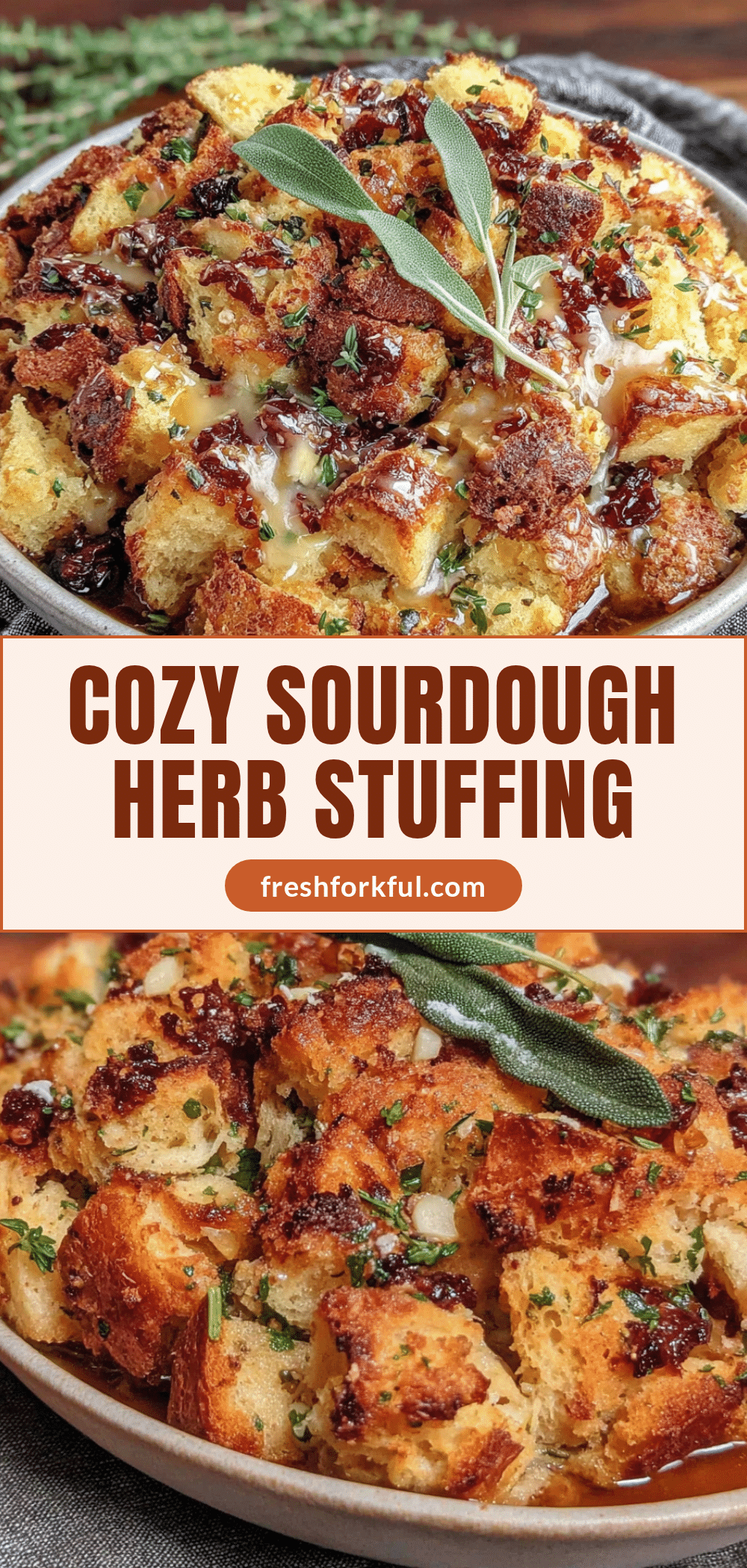
Cozy Sourdough Herb Stuffing: Easy Homemade Recipe

This cozy sourdough herb stuffing is a labor of love that tastes like a warm hug. It has become the dish everyone asks me to bring to every gathering.
- Prep Time: 20 minutes
- Cook Time: 40 minutes
- Total Time: 1 hour
- Yield: 8 servings 1x
- Category: Side Dish
- Cuisine: American
Ingredients
- 1 large loaf of sourdough bread (about 12 cups when cubed), preferably day-old
- 1/2 cup unsalted butter (I prefer Kerrygold for its rich flavor)
- 1 large yellow onion, finely diced
- 3 celery stalks, chopped into small pieces
- 4 cloves garlic, minced (or use 1 teaspoon garlic powder if you are in a rush)
- 2 cups low-sodium chicken or vegetable broth (Swanson’s is my go-to for consistent flavor)
- 2 large eggs, lightly beaten (helps bind everything together)
- 1 teaspoon salt (adjust based on your broth’s saltiness)
- 1/2 teaspoon black pepper, freshly ground
- 1/4 cup fresh sage leaves, chopped (plus extra whole leaves for the crispy topping)
- 2 tablespoons fresh rosemary, finely chopped
- 2 tablespoons fresh thyme leaves (strip them from the stems yourself—it’s worth it)
- 1 tablespoon fresh parsley, chopped (optional, but adds a nice freshness)
- 12–15 fresh whole sage leaves
- 2 tablespoons olive oil or butter
- Flaky sea salt for finishing (like Maldon)
Instructions
- Preheat and Prep: Preheat your oven to 375°F (190°C). Cut your sourdough loaf into 1-inch cubes. If your bread is fresh, spread the cubes on a baking sheet and bake for 10-12 minutes until lightly toasted but not hard. This step is non-negotiable—it prevents mushy stuffing.
- Sauté the Aromatics: In a large skillet over medium heat, melt the butter. Add the diced onion and celery. Cook for 5-7 minutes until softened and translucent. The smell at this point is incredible. Add the minced garlic and cook for another minute until fragrant. Remove from heat.
- Mix the Herb Broth: In a large mixing bowl, whisk together the chicken broth, beaten eggs, salt, pepper, and all your chopped fresh herbs (sage, rosemary, thyme, and parsley). This is your flavor base.
- Combine Everything: Add the toasted sourdough cubes to the bowl with the broth mixture. Pour the sautéed vegetables over the top. Using your hands (or a large spatula), gently toss everything together until all the bread is evenly coated. Do not overmix—you want some texture.
- Rest the Mixture: Let the stuffing sit for 10-15 minutes. This allows the bread to absorb all that herby goodness. If the mixture looks dry, add a splash more broth. It should be moist but not soupy.
- Transfer to Baking Dish: Grease your 9×13-inch baking dish with butter or non-stick spray. Spread the stuffing mixture evenly in the dish. Do not press it down—you want it fluffy.
- Bake Covered: Cover the dish with foil and bake for 25 minutes. This steams the stuffing and ensures the inside is perfectly tender.
- Prepare the Crispy Sage: While the stuffing bakes, heat 2 tablespoons of olive oil or butter in a small skillet over medium heat. Add the whole sage leaves and fry for 30-45 seconds per side until they turn bright green and crispy. Drain on a paper towel and sprinkle with flaky sea salt.
- Final Bake: Remove the foil from the stuffing and bake for another 15-20 minutes until the top is golden brown and crispy. The edges should be slightly caramelized.
- Garnish and Serve: Remove from the oven and let it rest for 5 minutes. Top with the crispy sage leaves and serve warm.
Notes
Don’t skip toasting the bread cubes to prevent soggy stuffing. Use day-old bread for best absorption. Check broth temperature to avoid scrambling eggs. Season vegetables as they cook for depth of flavor. Perform the squeeze test to check moisture level. Watch crispy sage carefully to prevent burning.
Nutrition
- Serving Size: 1 serving
- Calories: 320
- Sugar: 4
- Sodium: 580
- Fat: 14
- Saturated Fat: 8
- Carbohydrates: 38
- Fiber: 3
- Protein: 8
Keywords: sourdough stuffing, herb stuffing, Thanksgiving stuffing, homemade stuffing, sourdough bread stuffing, cozy stuffing, easy stuffing recipe