Love this? Save it for later!
Share the inspiration with your friends
I was elbow-deep in a pile of vintage linens at a dusty estate sale last October—honestly, I was supposed to be looking for a pie dish, not life advice—when the elderly woman running the register started talking about stew. She had this no-nonsense way of folding her arms and said, “The secret to a good stew isn’t the wine or the meat. It’s waiting long enough to hear it sigh.” I laughed, thinking she was being poetic, but she just pointed at a handwritten recipe card taped to the cash register. It was smudged with what I hoped was chocolate and titled “Red Wine Beef Stew for a Cold Heart.” I bought it for fifty cents, took it home, and let me tell you—that card has become my winter obsession.
This isn’t just any beef stew. It’s the kind of meal that makes you slow down, that fills your kitchen with a deep, winey aroma that clings to your sweater for hours. I’ve made it on rainy Sundays, after long work weeks, and once during a power outage (thank goodness for gas stoves). There’s something about the way the beef gets tender, the root vegetables soak up that rich broth, and the whole thing comes together in one pot—minimal cleanup, maximum comfort. If you’re craving a dinner that feels like a hug, you’ve found it.
Why You’ll Love This Recipe
I’ve tested this stew more times than I care to admit—burned my tongue twice, oversalted a batch, and once forgot the carrots entirely (don’t recommend that). But through all those trials, I landed on a version that’s forgiving, foolproof, and absolutely packed with flavor. Here’s why this one stands out:
- One-Pot Wonder: Everything cooks in a single Dutch oven or heavy pot. Less scrubbing means more time to curl up on the couch.
- Simple Ingredients: You don’t need a specialty butcher or obscure spices. Most of these items are probably in your pantry or fridge right now.
- Perfect for Cold Weather: This stew was made for snowy evenings, rainy afternoons, or any day that calls for something warm and hearty.
- Crowd-Pleaser: I’ve served it to picky eaters, wine snobs, and kids who “don’t like vegetables.” Empty bowls every time.
- Deep, Complex Flavor: The red wine doesn’t just add color—it creates a rich, slightly tangy broth that coats every piece of beef and potato. It’s the kind of flavor that tastes like you simmered it all day (and you do, but it’s hands-off time).
This recipe is different because of the technique. Most stews rush the browning step, but taking those extra few minutes to sear the beef properly makes all the difference. Plus, I’ve found that adding a splash of balsamic vinegar at the end—trust me on this—brightens the whole dish without making it taste vinegary. It’s a small trick that makes the stew feel restaurant-quality.
What Ingredients You Will Need
This recipe uses humble ingredients that work together to create something extraordinary. The wine is the star, but the root vegetables and aromatics are the supporting cast that make every spoonful satisfying. Most of these are pantry staples or easy to find at any grocery store.
- Beef chuck, cut into 1.5-inch cubes (2 lbs / 900g): Chuck is my go-to for stew because it has enough marbling to stay tender during long cooking. Don’t use lean cuts like sirloin—they’ll turn tough.
- Red wine (1.5 cups / 360ml): Use a dry red like Cabernet Sauvignon, Merlot, or a Côtes du Rhône. Nothing fancy, but nothing you wouldn’t drink. I like Bogle Old Vine Zinfandel for its bold fruitiness.
- Beef broth (4 cups / 960ml): Low-sodium is best so you can control the salt. I recommend Swanson or Pacific Foods for consistent quality.
- Carrots (3 large, peeled and cut into chunks): They add sweetness that balances the wine’s acidity. If your carrots are thin, use 4-5.
- Celery (3 stalks, chopped): Adds a subtle savory note. Don’t skip it—even if you’re not a celery fan, it melts into the background.
- Yellow onion (1 large, diced): Sweet onions work too, but yellow gives a stronger base flavor.
- Garlic (4 cloves, minced): Fresh garlic is non-negotiable here. The jarred stuff won’t give the same depth.
- Potatoes (1.5 lbs / 680g, Yukon Gold or Russet, cut into 1-inch pieces): Yukon Golds hold their shape better and have a buttery texture. Russets will break down more, which thickens the stew naturally.
- Parsnips (2 medium, peeled and chopped): These are my secret weapon. They have a slightly sweet, earthy flavor that pairs beautifully with beef. If you can’t find them, use an extra carrot and potato.
- Tomato paste (2 tablespoons): Adds umami and helps thicken the broth. I like Amore double-concentrated paste in a tube—it keeps in the fridge forever.
- All-purpose flour (3 tablespoons): For coating the beef and thickening the stew. Gluten-free flour works too if needed.
- Olive oil (2 tablespoons): For searing. Avocado oil is a good substitute with a higher smoke point.
- Fresh thyme (4 sprigs) and bay leaves (2): Dried thyme works in a pinch (use 1 teaspoon), but fresh makes the broth more aromatic.
- Balsamic vinegar (1 tablespoon): Added at the end—it cuts through the richness and wakes up all the flavors.
- Salt and black pepper (to taste): I use kosher salt and freshly ground pepper. Start with 1 teaspoon salt and adjust later.
Equipment Needed
You don’t need a fancy kitchen to make this stew, but having the right tools makes the process smoother. Here’s what I use:
- Dutch oven or heavy-bottomed pot (5-6 quart / 5-6 liter): A Le Creuset or Lodge enameled cast iron pot is ideal because it holds heat evenly. If you don’t have one, a stainless steel soup pot works—just watch the heat to avoid burning. I’ve used a $30 enameled pot from a discount store for years, and it’s still going strong.
- Sharp chef’s knife: A dull knife makes cutting beef and vegetables frustrating. I use a Victorinox 8-inch chef’s knife—it’s affordable and stays sharp.
- Cutting board: Wood or plastic, just make sure it’s stable. I prefer a large wooden board because it doesn’t slip.
- Wooden spoon or spatula: For stirring and scraping up those flavorful browned bits from the bottom of the pot.
- Measuring cups and spoons: Accuracy matters for the wine and broth, but don’t stress—this recipe is forgiving.
- Tongs: For flipping the beef cubes during searing. Metal tongs give you better control than a fork.
- Bowl for flour coating: A shallow dish or pie plate works perfectly.
Budget-friendly tip: If you don’t own a Dutch oven, use a large skillet for browning and transfer everything to a slow cooker. The results won’t be identical, but it’s still delicious.
Preparation Method
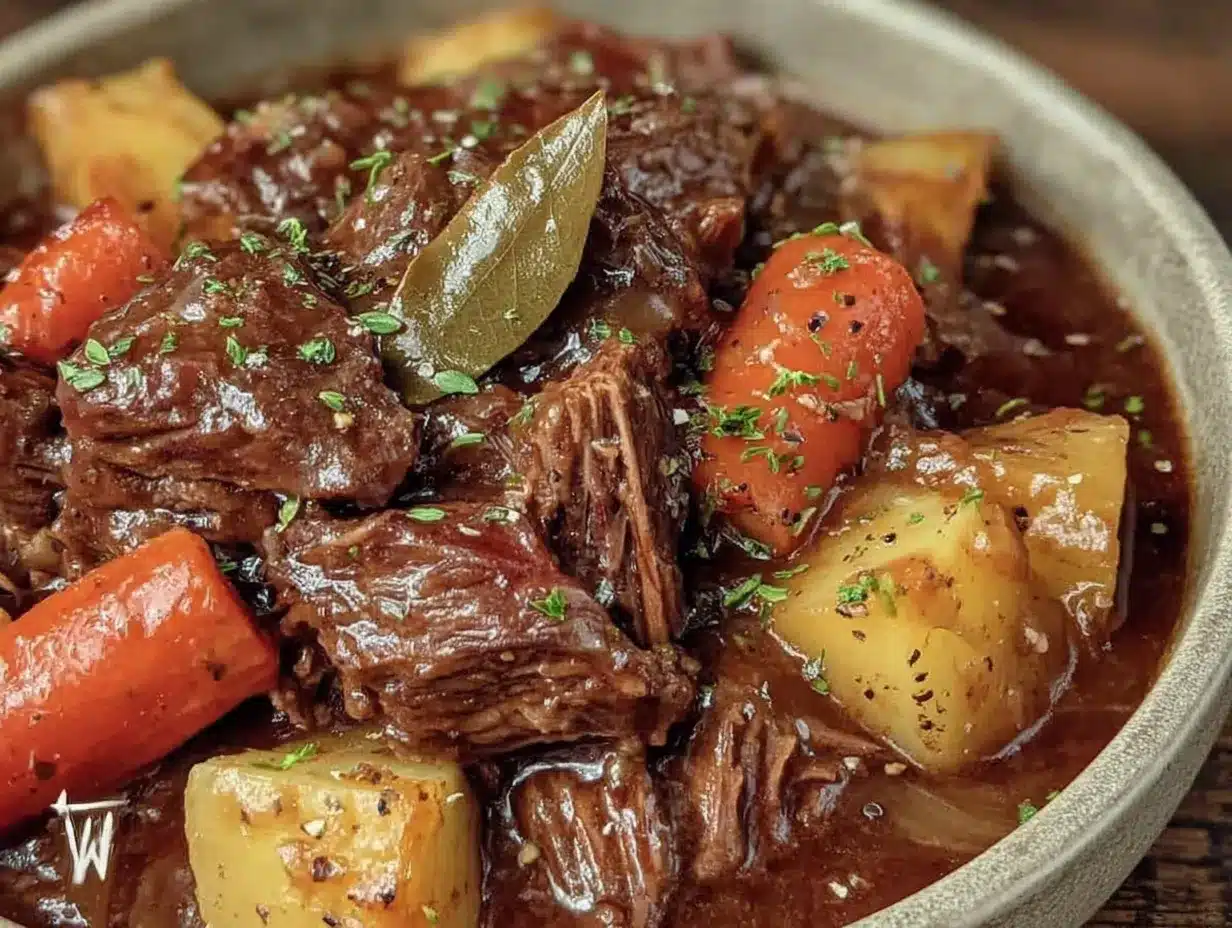
This stew takes about 2.5 hours from start to finish, but most of that is simmering time where you can read a book or binge a show. Here’s how to make it:
- Prep the beef (5 minutes): Pat the beef cubes dry with paper towels. This is crucial—wet meat won’t brown properly. Season generously with salt and pepper. In a shallow bowl, toss the beef with the flour until lightly coated.
- Sear the beef (10-12 minutes): Heat the olive oil in your Dutch oven over medium-high heat until it shimmers. Add the beef in a single layer—don’t crowd the pot. Work in batches if needed. Sear each side for 2-3 minutes until deeply browned. Transfer the beef to a plate and set aside. Don’t worry if there are brown bits stuck to the pot; that’s flavor.
- Sauté the aromatics (5 minutes): Reduce the heat to medium. Add the diced onion and cook for 3 minutes, stirring occasionally, until softened. Add the garlic and cook for 30 seconds until fragrant. If the pot looks dry, add a splash of olive oil.
- Deglaze the pot (2 minutes): Pour in about 1/2 cup of the red wine and use your wooden spoon to scrape up all those browned bits from the bottom. This is called deglazing, and it’s where the magic happens. Let it simmer for a minute.
- Add the tomato paste and remaining wine (3 minutes): Stir in the tomato paste and cook for 1 minute to deepen its flavor. Then add the rest of the wine and let it bubble for 2 minutes. The alcohol will cook off, leaving behind rich fruitiness.
- Return the beef and add broth (2 minutes): Put the seared beef back into the pot, including any juices on the plate. Pour in the beef broth, add the thyme sprigs and bay leaves, and stir everything together.
- Simmer the stew (1.5 hours): Bring the stew to a gentle boil, then reduce the heat to low. Cover the pot with the lid slightly ajar and let it simmer for 1 hour. Stir occasionally to prevent sticking. The liquid should be gently bubbling, not rapidly boiling.
- Add the root vegetables (10 minutes prep, then 30-40 minutes cooking): After the first hour, add the carrots, celery, potatoes, and parsnips. Stir them in, cover again, and let simmer for another 30-40 minutes until the vegetables are tender when pierced with a fork. The potatoes should offer slight resistance but not be mushy.
- Finish with balsamic vinegar (1 minute): Remove the thyme sprigs and bay leaves. Stir in the balsamic vinegar. Taste and adjust salt and pepper. The vinegar brightens the whole stew without making it taste sour—it’s a tiny step that makes a huge difference.
- Rest before serving (10-15 minutes): Let the stew sit off the heat for 10 minutes. This allows the flavors to meld and the stew to thicken slightly. Serve hot with crusty bread or over mashed potatoes.
Cooking Tips & Techniques
I’ve made this stew so many times that I’ve collected a few hard-won lessons. Here are the most important ones:
- Don’t rush the browning: This is the number one mistake people make. If you crowd the pan, the beef steams instead of browning. Take your time and do it in batches. That deep, caramelized crust is where the flavor lives.
- Use a good wine: I once used a cheap cooking wine because I was in a hurry. The stew tasted metallic and flat. Stick with a wine you’d actually drink—it doesn’t need to be expensive, just decent.
- Skim the fat if needed: If your stew looks greasy after simmering, use a spoon to skim off the fat from the surface. Some fat adds richness, but too much can feel heavy.
- Thicken it if you like: If the stew is thinner than you’d like after cooking, mix 1 tablespoon cornstarch with 2 tablespoons cold water and stir it in. Let it simmer for 5 minutes to thicken.
- Watch the salt: Beef broth and wine both contain salt, so go easy at the beginning. You can always add more at the end, but you can’t take it out.
- My biggest failure: I once forgot to add the vegetables entirely and realized it when I sat down to eat. I had to scoop out the beef, boil the veggies separately, and combine them. It worked, but the vegetables didn’t absorb as much flavor. Learn from my absent-mindedness!
Variations & Adaptations
This stew is wonderfully adaptable. Here are some ways to make it your own:
- Gluten-Free Version: Skip the flour coating on the beef. Instead, sear the beef without flour and thicken the stew at the end with a cornstarch slurry (2 tablespoons cornstarch mixed with 3 tablespoons cold water).
- Slow Cooker Version: Sear the beef and sauté the aromatics on the stovetop, then transfer everything (except the balsamic vinegar) to a slow cooker. Cook on low for 8 hours or high for 4 hours. Add the vegetables in the last 2 hours. Stir in the vinegar before serving.
- Instant Pot Version: Use the sauté function to brown the beef and cook the aromatics. Add the wine, broth, and vegetables, then pressure cook on high for 35 minutes. Do a natural release for 10 minutes, then quick release. Stir in the vinegar.
- Seasonal Twist: In spring, swap the parsnips for fresh fennel and add a handful of peas in the last 5 minutes. In summer, use sweet potatoes instead of Russets for a milder sweetness.
- Herb Variations: Replace thyme with rosemary or sage for a different aromatic profile. I’ve tried a combination of thyme and a pinch of smoked paprika—it adds a subtle warmth that’s lovely.
- Personal Favorite: I once added a quarter cup of dark beer (a stout) along with the wine. It gave the stew a roasty, almost chocolatey depth. Try it if you’re feeling adventurous.
Serving & Storage Suggestions
This stew is best served hot, straight from the pot, but there are a few ways to make it shine:
- Serving Temperature: Serve piping hot in deep bowls. I like to let it cool for 5 minutes so it’s not scalding, but still warm enough to steam.
- Presentation: Ladle the stew over a bed of creamy mashed potatoes or alongside a thick slice of crusty sourdough for dipping. A sprinkle of fresh parsley on top adds a pop of color.
- Pairings: A glass of the same red wine you used in the stew is perfect. For a non-alcoholic option, try a sparkling water with a squeeze of lemon. A simple green salad with a vinaigrette balances the richness.
- Storage: Let the stew cool completely, then transfer to an airtight container. It keeps in the refrigerator for up to 4 days. The flavors actually get better after a day or two—the beef absorbs more of the wine and herbs.
- Freezing: This stew freezes beautifully. Portion it into freezer-safe bags or containers, leaving a little room for expansion. It will keep for up to 3 months. Thaw in the refrigerator overnight before reheating.
- Reheating: Reheat gently on the stovetop over medium-low heat, stirring occasionally. If it’s too thick, add a splash of beef broth or water. You can also microwave individual portions in 30-second bursts, stirring in between.
- Flavor Development: Honestly, I think this stew tastes even better on day two. The wine mellows, the vegetables soften further, and the whole thing becomes more cohesive. Make it a day ahead if you can.
Nutritional Information & Benefits
This stew is hearty and satisfying without being overly indulgent. Here’s a rough estimate per serving (based on 6 servings):
- Calories: Approximately 450-500
- Protein: 35-40g
- Fat: 15-20g (mostly from the beef and olive oil)
- Carbohydrates: 35-40g (from vegetables and flour)
- Fiber: 6-8g
- Sugar: 10-12g (naturally occurring from vegetables)
- Sodium: 800-1000mg (varies based on broth and added salt)
Health Benefits: Beef is rich in iron and B vitamins, which support energy levels. Root vegetables like carrots and parsnips are packed with fiber and vitamin A. The red wine contains antioxidants like resveratrol (in moderation, of course). This stew is naturally gluten-free if you skip the flour coating, and it’s low in added sugars. It’s a balanced meal that provides protein, complex carbs, and vegetables all in one bowl.
Dietary Notes: This recipe is dairy-free and nut-free. For a lower-carb version, reduce the potatoes and add more celery and parsnips. If you’re watching sodium, use low-sodium broth and go light on the added salt.
Conclusion
This cozy red wine beef stew is more than just a recipe—it’s a ritual. It’s the meal you make when you need to slow down, when the world feels too loud, or when you just want something warm and familiar. The deep, wine-infused broth, the tender beef, the sweet root vegetables—every spoonful is a reminder that good things take time.
I hope you give this stew a try, whether it’s for a quiet dinner alone or a gathering of friends. Don’t be afraid to tweak it—add more garlic, swap in sweet potatoes, or throw in a handful of mushrooms. Cooking is about making it your own. And honestly, the best version of this stew is the one you make with love.
If you make this recipe, I’d love to hear about it. Leave a comment below or tag me in your photos—it makes my day to see these cozy bowls in your kitchens. Until next time, happy cooking!
Frequently Asked Questions
Can I use a different cut of beef?
Yes, but choose a tougher cut with good marbling, like brisket or bottom round. Lean cuts like sirloin will become dry and tough during long cooking. Chuck is the best choice for its balance of flavor and tenderness.
Can I make this stew in a slow cooker?
Absolutely. Sear the beef and sauté the aromatics on the stovetop first for maximum flavor, then transfer everything to the slow cooker. Cook on low for 8 hours or high for 4 hours, adding the vegetables in the last 2 hours. Stir in the balsamic vinegar before serving.
How do I thicken the stew if it’s too thin?
Mix 1 tablespoon of cornstarch with 2 tablespoons of cold water to make a slurry. Stir it into the simmering stew and cook for 5 minutes until thickened. Alternatively, mash a few of the potatoes against the side of the pot to release their starch.
Can I freeze leftovers?
Yes, this stew freezes wonderfully. Let it cool completely, then transfer to freezer-safe containers or bags. It will keep for up to 3 months. Thaw in the refrigerator overnight and reheat gently on the stovetop.
What if I don’t have red wine?
You can substitute with an equal amount of beef broth plus 2 tablespoons of balsamic vinegar or red wine vinegar. The flavor won’t be as deep, but it will still be delicious. For a non-alcoholic option, use non-alcoholic red wine or pomegranate juice.
Pin This Recipe!
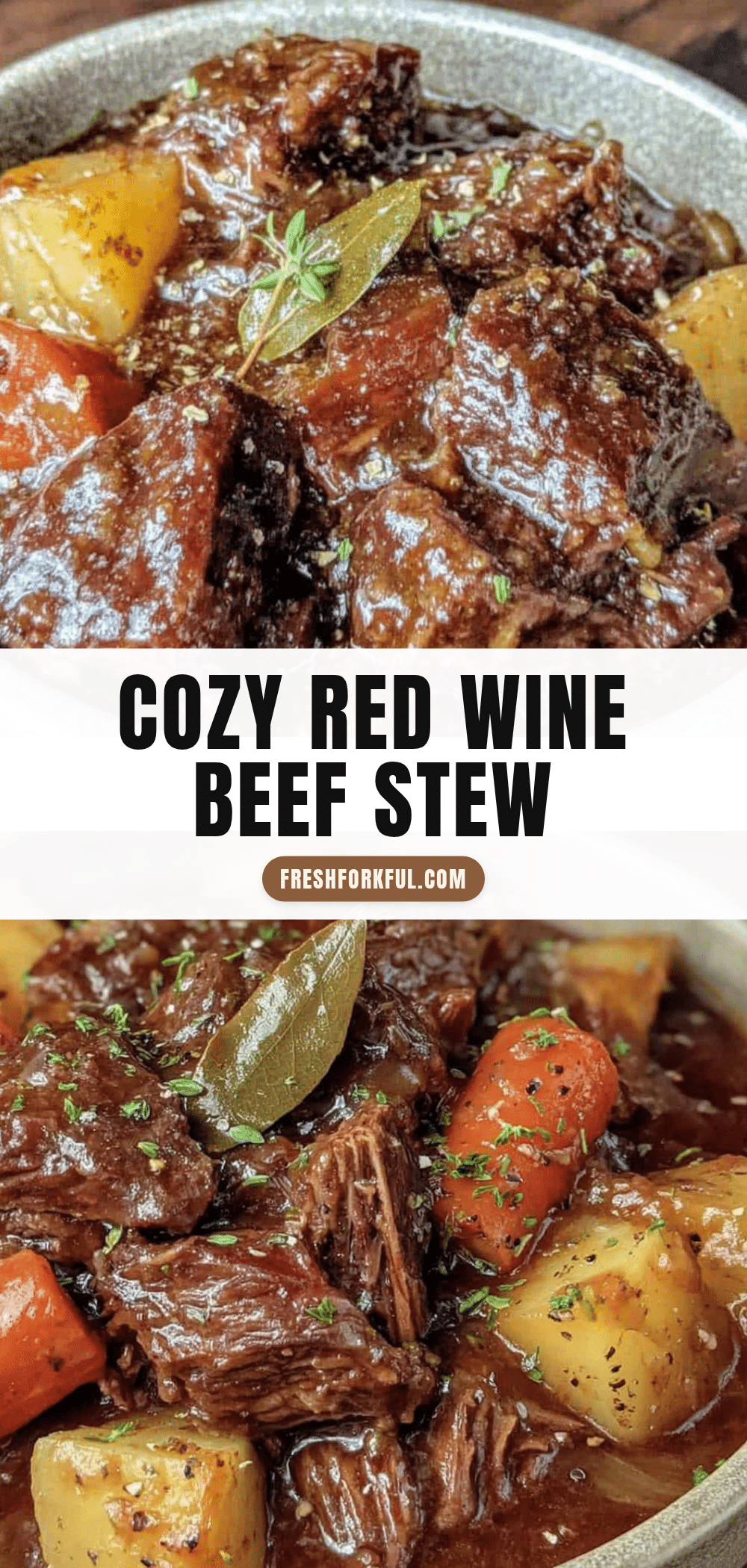
Cozy Red Wine Beef Stew with Root Vegetables: Easy One-Pot Dinner

This hearty beef stew is made with tender chuck, root vegetables, and a rich red wine broth, all simmered together in one pot for a comforting meal that tastes even better the next day.
- Prep Time: 15 minutes
- Cook Time: 2 hours 15 minutes
- Total Time: 2 hours 30 minutes
- Yield: 6 servings 1x
- Category: Main Course
- Cuisine: American
Ingredients
- 2 lbs (900g) beef chuck, cut into 1.5-inch cubes
- 1.5 cups (360ml) dry red wine (e.g., Cabernet Sauvignon, Merlot)
- 4 cups (960ml) low-sodium beef broth
- 3 large carrots, peeled and cut into chunks
- 3 stalks celery, chopped
- 1 large yellow onion, diced
- 4 cloves garlic, minced
- 1.5 lbs (680g) Yukon Gold or Russet potatoes, cut into 1-inch pieces
- 2 medium parsnips, peeled and chopped
- 2 tablespoons tomato paste
- 3 tablespoons all-purpose flour
- 2 tablespoons olive oil
- 4 sprigs fresh thyme (or 1 teaspoon dried)
- 2 bay leaves
- 1 tablespoon balsamic vinegar
- Salt and black pepper to taste
Instructions
- Pat the beef cubes dry with paper towels. Season generously with salt and pepper. In a shallow bowl, toss the beef with the flour until lightly coated.
- Heat the olive oil in a Dutch oven over medium-high heat until shimmering. Add the beef in a single layer (work in batches if needed) and sear each side for 2-3 minutes until deeply browned. Transfer the beef to a plate and set aside.
- Reduce the heat to medium. Add the diced onion and cook for 3 minutes, stirring occasionally, until softened. Add the garlic and cook for 30 seconds until fragrant.
- Pour in about 1/2 cup of the red wine and use a wooden spoon to scrape up the browned bits from the bottom of the pot. Let it simmer for 1 minute.
- Stir in the tomato paste and cook for 1 minute. Add the remaining wine and let it bubble for 2 minutes.
- Return the seared beef to the pot, including any juices. Pour in the beef broth, add the thyme sprigs and bay leaves, and stir.
- Bring the stew to a gentle boil, then reduce the heat to low. Cover the pot with the lid slightly ajar and let it simmer for 1 hour, stirring occasionally.
- After 1 hour, add the carrots, celery, potatoes, and parsnips. Stir, cover again, and let simmer for 30-40 minutes until the vegetables are tender.
- Remove the thyme sprigs and bay leaves. Stir in the balsamic vinegar. Taste and adjust salt and pepper.
- Let the stew rest off the heat for 10-15 minutes before serving. Serve hot with crusty bread or over mashed potatoes.
Notes
Don’t rush the browning step; it builds flavor. Use a wine you’d drink. For a thicker stew, mix 1 tablespoon cornstarch with 2 tablespoons cold water and stir in at the end. The stew tastes even better the next day.
Nutrition
- Serving Size: 1 serving (about 1.5
- Calories: 475
- Sugar: 11
- Sodium: 900
- Fat: 18
- Saturated Fat: 6
- Carbohydrates: 38
- Fiber: 7
- Protein: 37
Keywords: beef stew, red wine stew, one-pot dinner, root vegetables, comfort food, winter recipe