Love this? Save it for later!
Share the inspiration with your friends
“I never thought meal planning could feel this overwhelming,” my friend Lisa confessed one chilly autumn evening, her voice tinged with both exhaustion and hope. She’d just been diagnosed with gestational diabetes during her second trimester, and like many expecting moms, she found herself suddenly navigating a maze of dietary dos and don’ts. Honestly, I get it. The moment you hear “gestational diabetes,” your mind races with questions about what you can eat, how to keep your blood sugar steady, and still enjoy your meals through all three trimesters.
The truth is, managing gestational diabetes doesn’t have to mean bland or boring food. In fact, with a bit of guidance and some smart ingredient choices, you can enjoy a variety of tasty, nourishing dishes tailored perfectly for every stage of your pregnancy. I remember the nights when Lisa and I would experiment in her cozy kitchen, armed with fresh produce and a determination not to let gestational diabetes steal the joy from her meals. We stumbled, made messes, and yes, sometimes forgot to check the carb counts, but through it all came a collection of meals that not only kept her blood sugar balanced but also felt comforting and satisfying.
If you’ve been there — standing in the grocery aisle wondering if a recipe is safe or if a snack will spike your glucose — this Healthy Gestational Diabetes Meal Guide for All Trimesters is for you. Let me tell you, it’s not about restriction, but about smart choices that empower you to feel confident and cared for in your eating habits. This guide blends practical meal ideas with an understanding of how your body’s needs shift during pregnancy, so you can breeze through your trimesters with meals that nourish both you and your baby.
Why You’ll Love This Recipe Guide
Over the years, I’ve helped many women like Lisa find their footing with gestational diabetes meal planning. This guide isn’t just theory—it’s built on tested, real-life kitchen trials and nutritionist-approved tips that work.
- Quick & Easy: Recipes come together in under 30 minutes, perfect for busy days or when you just need a fuss-free meal.
- Simple Ingredients: No need for specialty stores. Most ingredients are pantry staples or easy to find at your local market.
- Perfect for All Trimesters: Meals are thoughtfully designed to match the changing nutritional needs and cravings from first to third trimester.
- Crowd-Pleaser: Whether you’re eating solo or sharing with loved ones, these dishes get rave reviews for flavor and satisfaction.
- Balanced and Nourishing: Each recipe carefully balances carbs, protein, and fiber to help maintain steady blood sugar levels.
What sets this guide apart is the practical approach—it’s not about strict dieting, but about meals that make you feel good. For example, blending cottage cheese into a creamy dip adds protein without the carb overload, and swapping white rice for cauliflower rice keeps dishes lighter yet filling. I’ve personally found that these little tweaks make a huge difference, turning what could be a stressful diet into a comforting routine.
This guide isn’t just food; it’s a toolkit for your pregnancy journey. Picture closing your eyes after the first bite, feeling nourished and cared for—that’s what I want for you.
What Ingredients You Will Need
This meal guide uses wholesome, accessible ingredients that combine to create delicious, blood sugar-friendly meals. The focus is on whole grains, lean proteins, healthy fats, and plenty of fiber to keep you full and balanced.
- Proteins: Skinless chicken breasts, wild-caught salmon, firm tofu, low-fat cottage cheese (I recommend Good Culture for its creamy texture), and eggs (room temperature for best cooking results)
- Whole Grains & Fibers: Quinoa, steel-cut oats, brown rice, lentils, chickpeas, and whole wheat wraps (look for brands with minimal added sugar)
- Vegetables: Leafy greens like spinach and kale, bell peppers, zucchini, broccoli, and seasonal favorites (fresh or frozen—both work well)
- Healthy Fats: Extra virgin olive oil, avocado, nuts (almonds or walnuts), and seeds (chia or flaxseed)—these add richness and help slow glucose absorption
- Dairy & Alternatives: Unsweetened Greek yogurt, almond milk (unsweetened), and cheese varieties with lower fat content
- Herbs & Spices: Fresh garlic, ginger, turmeric, cinnamon, fresh basil, and lemon zest—these pack flavor without extra calories or carbs
- Sweeteners: Natural sweeteners like stevia or monk fruit (sparingly used) to satisfy cravings without sugar spikes
For substitutions, almond flour works great if you’re avoiding gluten, and coconut yogurt can replace dairy yogurt for those sensitive to lactose. In warmer months, swapping frozen berries for fresh ones adds a juicy burst without added sugar.
Equipment Needed
Keeping things simple in the kitchen is key, especially when managing gestational diabetes. Here’s what you’ll want on hand:
- A reliable non-stick skillet or sauté pan — I’ve found that a good-quality pan like the T-fal E76597 lasts for years and makes cleanup a breeze.
- A medium-sized saucepan for cooking grains and lentils.
- A blender or food processor — perfect for making creamy dips or smoothies that balance protein and fiber.
- Measuring cups and spoons to keep portion sizes accurate, which is crucial for blood sugar management.
- A sharp chef’s knife and cutting board for efficient meal prep.
If you don’t have a food processor, don’t worry—a blender or even a sturdy whisk can work for many recipes. For budget-friendly options, consider hand tools like a garlic press and a manual citrus juicer; they add flavor without extra effort. And remember, keeping your knives sharp makes prep faster and safer.
Preparation Method
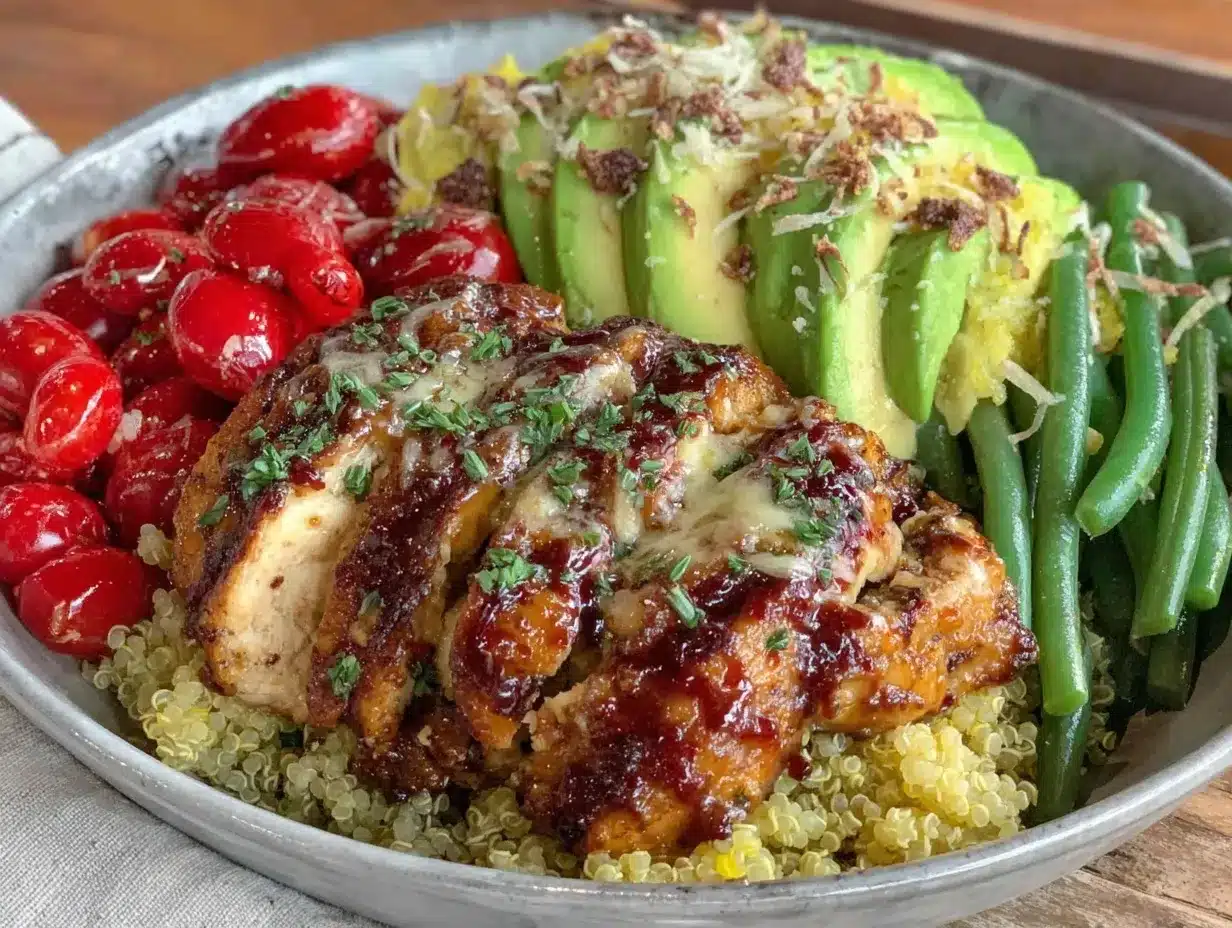
- Plan Your Meals Ahead: Spend 10-15 minutes each weekend mapping out your meals for the week, focusing on variety and balance. This saves stress on busy days and helps avoid last-minute carb-heavy choices.
- Cook Grains and Legumes: Rinse 1 cup (170 g) of quinoa or lentils under cold water. In a saucepan, combine with 2 cups (480 ml) water, bring to a boil, then simmer covered for 15-20 minutes until tender. Fluff with a fork and let cool slightly. Pro tip: Adding a pinch of salt enhances flavor without extra sodium.
- Prepare Proteins: For chicken breasts (about 6 oz / 170 g each), season lightly with salt, pepper, and your favorite herbs. Heat 1 tablespoon (15 ml) olive oil in a skillet over medium heat. Cook chicken for 6-7 minutes per side until internal temperature reaches 165°F (74°C). Rest for 5 minutes before slicing. If using salmon fillets (5 oz / 140 g), cook skin-side down first for 4 minutes, then flip and cook 3 more minutes.
- Chop Vegetables: Dice bell peppers, shred kale, or slice zucchini into uniform pieces for even cooking. Toss veggies with olive oil and roast at 400°F (205°C) for 15-20 minutes or sauté them for 8-10 minutes until tender but still vibrant.
- Assemble Meals: Combine cooked grains with proteins and veggies. Add a spoonful of low-fat cottage cheese or a drizzle of olive oil-based dressing. Fresh herbs and a squeeze of lemon juice brighten flavors wonderfully.
- Snack Prep: Portion out nuts (about ¼ cup / 30 g) and cut fresh veggies like cucumber or carrots into sticks for easy, balanced snacks.
- Final Tips: Taste as you go to adjust seasoning. If a dish feels dry, a splash of unsweetened almond milk or a dollop of Greek yogurt can add creaminess. Keep a kitchen timer handy to avoid overcooking and losing nutrients.
Cooking Tips & Techniques
Let me share some kitchen wisdom that’s helped me and so many moms manage gestational diabetes with confidence:
- Don’t Skip Fiber: It slows digestion and smooths out blood sugar spikes. Adding flaxseeds or chia seeds to oatmeal or smoothies is an easy trick I’ve grown to love.
- Portion Control Matters: Even healthy carbs can affect glucose levels if portions are too large. Using measuring cups and a food scale helped me avoid guesswork.
- Balance Your Plate: Protein and healthy fats paired with carbs make a huge difference. For example, pairing apple slices with almond butter slows sugar absorption.
- Steer Clear of Hidden Sugars: Sauces and dressings can sneak in sugar. Reading labels or making your own dressings with olive oil and lemon juice saves headaches.
- Timing is Key: Eating smaller, frequent meals throughout the day can help keep blood glucose steady. I usually recommend 5-6 small meals rather than three big ones.
- Stay Hydrated: Water supports digestion and overall health—aim for at least 8 cups (1.9 liters) daily.
I once forgot to set a timer while roasting veggies and ended up with a crunchy, almost burnt batch—not ideal! But that little mishap taught me patience and the value of multitasking carefully in the kitchen.
Variations & Adaptations
This meal guide embraces flexibility because every pregnancy and palate is unique. Here are some ways to customize:
- Vegetarian Option: Swap out chicken or fish for hearty lentil patties or chickpea salads to keep protein high without meat.
- Seasonal Swaps: In summer, use fresh berries or grilled zucchini instead of roasted winter veggies to keep meals fresh and exciting.
- Low-Carb Variation: Replace grains with cauliflower rice or spiralized veggies for an ultra-light meal that’s still filling.
- Flavor Boosts: Add fresh herbs like cilantro or parsley and spices such as cumin or smoked paprika to jazz up dishes without extra calories.
- Allergen-Friendly: If you’re avoiding dairy, use coconut or almond yogurt, and opt for nut-free seeds like pumpkin or sunflower.
Personally, I once swapped quinoa for black beans in a salad recipe out of curiosity, and it turned into a new favorite—heartier but still balanced and delicious.
Serving & Storage Suggestions
Serving your gestational diabetes-friendly meals at the right temperature and with complementary sides makes all the difference:
- Serving Temperature: Most dishes taste best warm or at room temperature, which helps mellow flavors and improve digestion.
- Complementary Sides: Fresh cucumber slices, carrot sticks, or a crisp side salad add crunch and fiber.
- Storage: Store leftovers in airtight containers in the refrigerator for up to 3 days. Meals with fresh herbs or avocado are best eaten within 24 hours for peak flavor.
- Freezing: Cooked grains and proteins freeze well—portion them out to avoid thawing more than you need.
- Reheating: Warm gently on the stove or microwave, adding a splash of water or almond milk to prevent dryness.
With time, flavors often deepen, especially in soups or stews—perfect for a cozy evening when you want something soothing yet balanced.
Nutritional Information & Benefits
This meal guide focuses on balanced nutrition geared toward managing gestational diabetes effectively. On average, a typical meal contains about 350-400 calories, with approximately 30-40 grams of complex carbohydrates, 20-25 grams of protein, and 10-15 grams of healthy fats.
Key ingredients like leafy greens provide essential vitamins A and C, while healthy fats from olive oil support fetal brain development. Proteins help maintain muscle mass and keep you feeling full longer, reducing the risk of blood sugar spikes.
If you’re gluten-sensitive, many recipes are naturally gluten-free or easily adapted. Just be mindful of cross-contamination if you have celiac disease. Also, watch for nut allergies when using seeds or nut butters—there are safe alternatives like sunflower seed butter.
From a wellness perspective, these meals encourage steady energy throughout the day and support both your health and your baby’s growth, making nutrition a joyful part of your pregnancy, not a chore.
Conclusion
Managing gestational diabetes meal planning doesn’t have to be stressful or restrictive. This guide offers simple, nourishing meals suited for every trimester, designed to help you feel good and maintain balanced blood sugar. Whether you’re new to this or looking for fresh ideas, these recipes provide a solid foundation with room to customize based on your tastes and needs.
I love this meal guide because it’s practical yet caring—like a trusted friend in your kitchen reminding you that eating well can be both joyful and doable. So go ahead, experiment a little, and make these meals your own.
If you try any recipes or have your own tweaks, please share! Your experience might just help another mom-to-be feel a little less alone in her journey. Remember, you’ve got this, and good food is a wonderful part of the path.
FAQs about Healthy Gestational Diabetes Meals
What foods should I avoid with gestational diabetes?
It’s best to limit sugary snacks, white bread, and processed foods with high carbs that spike blood sugar quickly. Focus instead on whole grains, lean proteins, and plenty of fiber.
Can I eat fruit if I have gestational diabetes?
Yes! Choose fresh, whole fruits like berries, apples, or pears, which have fiber to help moderate blood sugar. Avoid fruit juices or dried fruits that have concentrated sugars.
How often should I eat during the day?
Eating smaller, balanced meals every 3-4 hours helps keep your blood sugar steady and prevents extreme hunger or spikes.
Is snacking important for gestational diabetes?
Absolutely. Healthy snacks like nuts, veggies with hummus, or a small serving of Greek yogurt provide nutrients without causing blood sugar spikes.
Can I still enjoy desserts?
Yes, but choose recipes that use natural sweeteners, whole grains, and healthy fats. Portion control is key—try a small piece of dark chocolate or a berry parfait with unsweetened yogurt.
For more nourishing meal ideas, you might enjoy checking out this crispy garlic chicken recipe, which pairs beautifully with low-carb sides, or the hearty lentil soup that’s both filling and gentle on blood sugar.
Pin This Recipe!
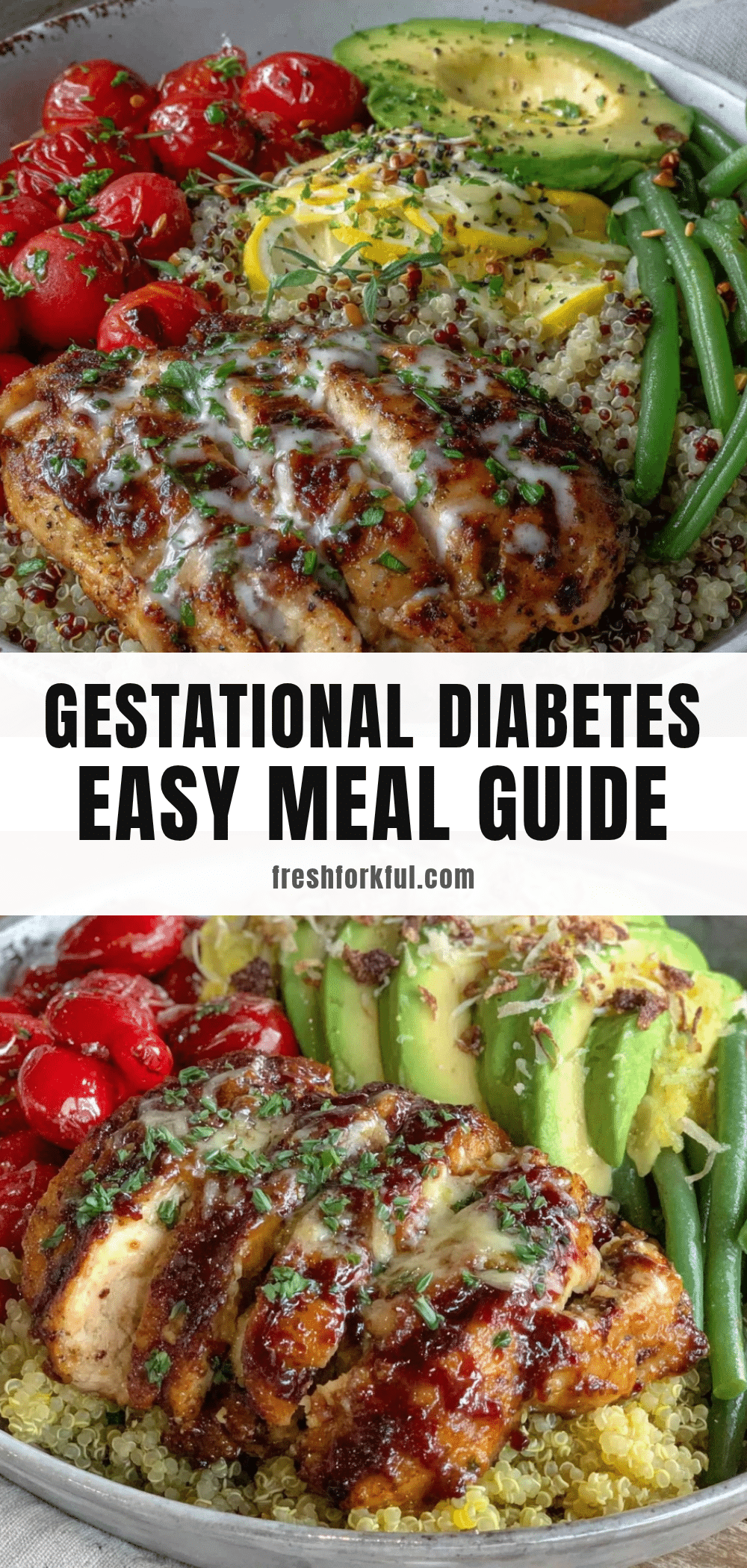
Healthy Gestational Diabetes Meal Guide Easy Recipes for All Trimesters

A practical and nourishing meal guide designed to help manage gestational diabetes throughout all trimesters with balanced, tasty, and easy-to-prepare recipes.
- Prep Time: 15 minutes
- Cook Time: 20 minutes
- Total Time: 35 minutes
- Yield: 4 servings
- Category: Main Course
- Cuisine: American
Ingredients
- Skinless chicken breasts
- Wild-caught salmon
- Firm tofu
- Low-fat cottage cheese
- Eggs (room temperature)
- Quinoa
- Steel-cut oats
- Brown rice
- Lentils
- Chickpeas
- Whole wheat wraps (minimal added sugar)
- Leafy greens (spinach, kale)
- Bell peppers
- Zucchini
- Broccoli
- Seasonal vegetables (fresh or frozen)
- Extra virgin olive oil
- Avocado
- Nuts (almonds or walnuts)
- Seeds (chia or flaxseed)
- Unsweetened Greek yogurt
- Almond milk (unsweetened)
- Low-fat cheese varieties
- Fresh garlic
- Ginger
- Turmeric
- Cinnamon
- Fresh basil
- Lemon zest
- Natural sweeteners (stevia or monk fruit, sparingly)
Instructions
- Plan your meals ahead by spending 10-15 minutes each weekend mapping out your meals for the week, focusing on variety and balance.
- Rinse 1 cup (170 g) of quinoa or lentils under cold water. In a saucepan, combine with 2 cups (480 ml) water, bring to a boil, then simmer covered for 15-20 minutes until tender. Fluff with a fork and let cool slightly.
- Season chicken breasts (about 6 oz each) lightly with salt, pepper, and herbs. Heat 1 tablespoon olive oil in a skillet over medium heat. Cook chicken for 6-7 minutes per side until internal temperature reaches 165°F (74°C). Rest for 5 minutes before slicing.
- For salmon fillets (5 oz each), cook skin-side down first for 4 minutes, then flip and cook 3 more minutes.
- Dice bell peppers, shred kale, or slice zucchini into uniform pieces. Toss veggies with olive oil and roast at 400°F (205°C) for 15-20 minutes or sauté for 8-10 minutes until tender but still vibrant.
- Combine cooked grains with proteins and veggies. Add a spoonful of low-fat cottage cheese or a drizzle of olive oil-based dressing. Add fresh herbs and a squeeze of lemon juice to brighten flavors.
- Portion out nuts (about ¼ cup / 30 g) and cut fresh veggies like cucumber or carrots into sticks for easy, balanced snacks.
- Taste as you go to adjust seasoning. If a dish feels dry, add a splash of unsweetened almond milk or a dollop of Greek yogurt for creaminess.
- Use a kitchen timer to avoid overcooking and nutrient loss.
Notes
Use measuring tools to control portions and maintain blood sugar levels. Substitute almond flour for gluten-free needs and coconut yogurt for dairy sensitivity. Keep knives sharp for safer and faster prep. Store leftovers in airtight containers for up to 3 days; consume meals with fresh herbs or avocado within 24 hours for best flavor. Reheat gently with a splash of water or almond milk to prevent dryness.
Nutrition
- Serving Size: 1 meal serving (appr
- Calories: 375
- Sugar: 5
- Sodium: 300
- Fat: 12
- Saturated Fat: 2.5
- Carbohydrates: 35
- Fiber: 8
- Protein: 22
Keywords: gestational diabetes, pregnancy meals, healthy recipes, balanced diet, blood sugar control, easy recipes, trimester nutrition