Love this? Save it for later!
Share the inspiration with your friends
“You wouldn’t believe the chaos that erupted one Tuesday morning when I realized my son’s school banned peanuts—and I had just packed a peanut butter sandwich.” That moment was a turning point in my lunch-packing life. I wasn’t new to packing school lunches, but juggling allergies, picky eating, and my own time crunch? That was a whole different game.
Honestly, I never thought allergen-free meant boring or bland until I started experimenting with vibrant, kid-approved ingredients that kept my son’s lunchbox colorful, tasty, and safe. It wasn’t some big plan, either—I was just trying to keep him happy and healthy while respecting the school’s top 8 allergen restrictions. Maybe you’ve been there, scrambling to find options that avoid peanuts, tree nuts, dairy, eggs, soy, wheat, fish, and shellfish, yet still feel like a treat.
What I found was a treasure trove of simple, wholesome ideas that got my little guy excited about lunchtime—and honestly, I still use them on busy days. These healthy top 8 allergen-free school lunch box ideas are not just about allergy safety but about making meals kids genuinely want to eat (and parents can pack without pulling their hair out). Let me tell you, there’s nothing like the relief of seeing an empty lunchbox come home after a full day at school. This list stays with me because it’s about care, creativity, and a pinch of trial-and-error magic—perfect for any parent who’s ever felt stuck packing lunch.”
Why You’ll Love This Recipe
After trying countless recipes and tweaks, these healthy top 8 allergen-free school lunch box ideas have become my go-to for several reasons. They’re kid-tested, parent-approved, and designed to take the stress out of packing a safe, balanced meal. Here’s why you’ll love them, too:
- Quick & Easy: Each lunch idea comes together in under 20 minutes, which means you can whip them up even on hectic mornings.
- Simple Ingredients: No complicated or exotic items—just common pantry staples and fresh produce that are easy to find at your local store.
- Perfect for School Days: These recipes are tailored to be mess-free, kid-friendly, and easy to eat in a lunchbox without fuss or spills.
- Crowd-Pleaser: Whether your child is a picky eater or adventurous, these options have been loved by a range of kids I know.
- Unbelievably Delicious: Don’t let “allergen-free” fool you—these lunches are bursting with flavor and satisfying textures that make lunchtime exciting.
What sets this collection apart is the way it balances nutrition with flavor and allergy safety. For example, swapping out traditional sandwich bread for allergy-friendly wraps or using homemade seed butter instead of nut butters means no one feels like they’re missing out. Plus, I’ve included some tips on sneaking in veggies and protein without triggering a lunchbox rebellion. These ideas aren’t just safe; they’re meals I’d happily eat myself—packed with love and a bit of kitchen savvy.
What Ingredients You Will Need
These healthy top 8 allergen-free school lunch box ideas rely on simple, wholesome ingredients that come together quickly and keep well through the school day. I often shop at my local farmers’ market or trusted brands like Enjoy Life and MadeGood for allergy-safe snacks.
- For the Main Lunches:
- Gluten-free wraps or bread (check labels carefully for certified allergen-free)
- Seed butters (sunflower seed butter or pumpkin seed butter – great nut butter substitutes)
- Fresh veggies: carrot sticks, cucumber slices, bell pepper strips
- Cooked chicken breast, shredded or diced (season lightly with salt and herbs)
- Hummus (classic or roasted red pepper – homemade or store-bought from allergen-conscious brands)
- Rice cakes or rice crackers (plain or lightly salted)
- For Snacks and Sides:
- Fresh fruit: apple slices, grapes, blueberries, or clementines
- Vegetable chips (homemade kale chips or sweet potato chips)
- Allergen-free granola bars or homemade energy bites made with seeds and dried fruit
- Popcorn (lightly salted, no butter)
- For Dips and Extras:
- Avocado (mashed or sliced for wraps)
- Homemade dressing or vinaigrette (olive oil, lemon juice, simple herbs)
- Fresh herbs like parsley or cilantro (adds freshness and flavor)
Substitutions are easy with these ingredients. For instance, if your child can’t have gluten, use a gluten-free wrap or rice cakes instead of bread. If dairy is off-limits, opt for seed-based spreads and homemade hummus. I always recommend checking labels carefully and keeping a small allergy kit handy just in case. These ingredients work well year-round but feel especially fresh when you use seasonal veggies and fruits.
Equipment Needed
Packing these allergen-free lunches doesn’t require any fancy kitchen gadgets, which is part of what makes them so practical. Here’s the basic equipment I rely on:
- Sharp knives: For slicing veggies and fruits quickly and safely.
- Cutting board: Preferably one dedicated to produce to avoid cross-contamination.
- Mixing bowls: To assemble dips, hummus, or energy bites.
- Measuring cups and spoons: Useful for portioning seed butters or homemade dressings precisely.
- Lunch containers: Leak-proof and compartmentalized options keep foods separate and fresh.
- Reusable silicone bags or beeswax wraps: Great for wrapping sandwiches or snacks sustainably.
I once tried a fancy sandwich press for allergen-free wraps, but honestly, a simple skillet or toasted press works just as well—and it’s way easier to clean. If budget is tight, basic plastic containers and zip-top bags can do the trick, though investing in good-quality lunchboxes makes mornings smoother. Maintaining knives sharp and clean is key for fast prep and safety, especially when juggling breakfast and lunch packing.
Preparation Method
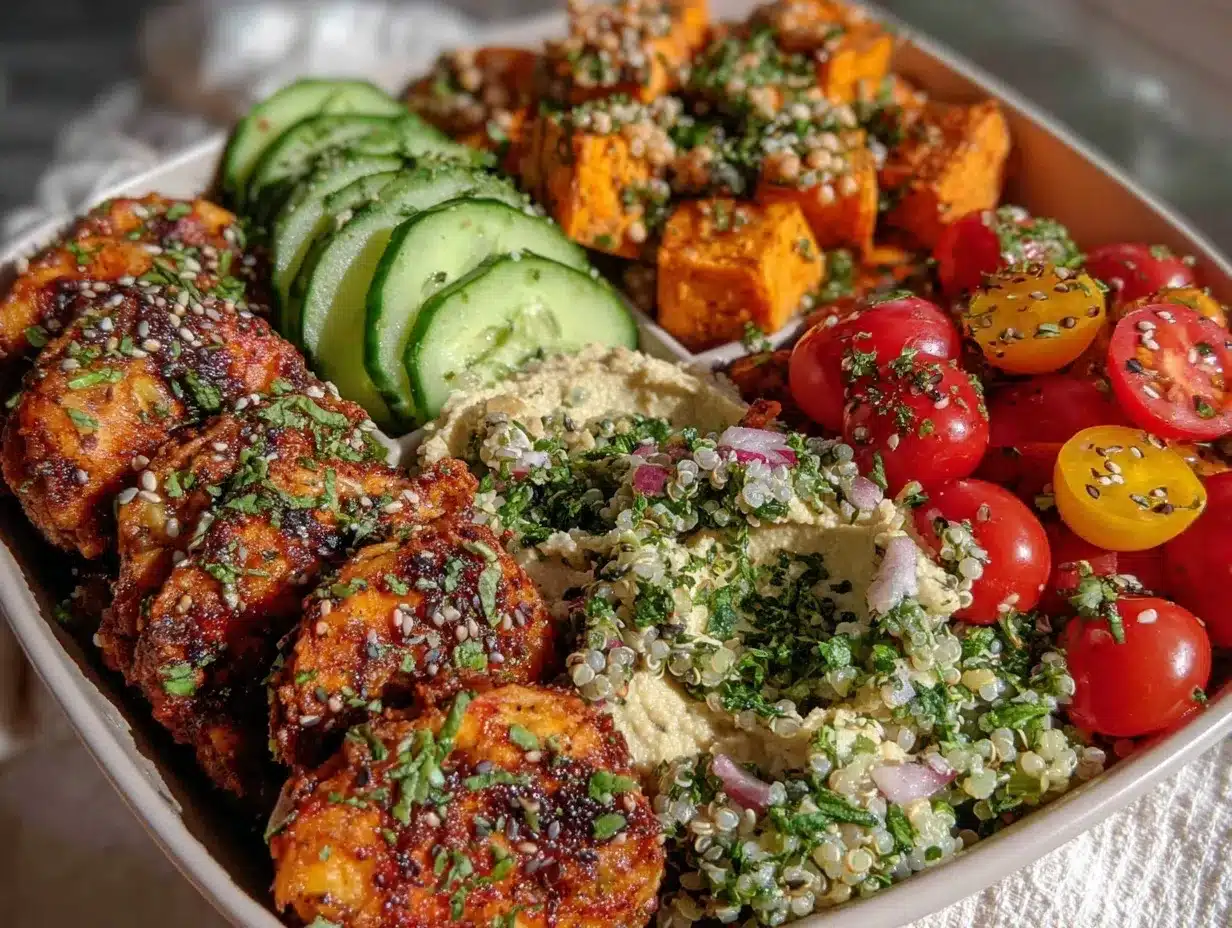
- Prep Veggies and Fruits (10 minutes):
Wash all produce thoroughly. Slice carrots, cucumbers, and bell peppers into thin sticks or bite-sized pieces. For fruits like apples, slice and toss quickly in lemon water to prevent browning. Pack these in small containers or silicone bags to keep fresh. - Make Seed Butter Wraps (5 minutes):
Spread 2 tablespoons (30 ml) of sunflower seed butter evenly on a gluten-free wrap (~8-inch/20 cm diameter). Add thin slices of banana or apple on top for sweetness. Roll tightly and slice in half for easy handling. - Assemble Chicken & Veggie Wraps (7 minutes):
Lay a gluten-free wrap flat, spread 2 tablespoons (30 ml) of hummus, layer ½ cup (75 g) of shredded cooked chicken, and scatter a handful of fresh spinach or lettuce leaves. Roll and secure with a toothpick if needed. - Prepare Energy Bites (Optional, 15 minutes):
Mix 1 cup (100 g) rolled oats, ½ cup (75 g) sunflower seeds, ¼ cup (40 g) dried cranberries, and ⅓ cup (80 ml) sunflower seed butter. Roll into 1-inch (2.5 cm) balls and refrigerate until firm. - Pack Snacks & Sides:
Add fruit portions, veggie chips, or popcorn into separate compartments. Include a small container of vinaigrette or avocado dip if desired.
Note: If your child’s school requires strict allergen labeling, write a small note or label on the lunchbox listing ingredients. Timing-wise, prepping the night before saves morning stress, especially with chopping and assembly. I’ve found that assembling wraps fresh in the morning keeps them from getting soggy, but if pressed for time, wrapping tightly in parchment paper helps.
Cooking Tips & Techniques
Packing allergen-free school lunches can feel like walking a tightrope, but a few tips make it much easier:
- Keep it Simple: Don’t overcomplicate meals. Kids appreciate straightforward flavors, and simple ingredients reduce allergy risk.
- Prep Ahead: Chop veggies and cook proteins in batches on weekends or evenings. Store in airtight containers to save time on busy mornings.
- Use Texture to Your Advantage: Crunchy carrot sticks or crispy rice cakes contrast nicely with creamy spreads—texture matters!
- Check Labels Religiously: Even “safe” brands can change recipes. I once packed a “safe” granola bar only to find out the next batch had soy—yikes!
- Watch for Cross-Contamination: Use separate cutting boards and utensils when preparing allergen-free meals to avoid surprises.
- Involve Kids: Let them choose veggies or help assemble wraps. They’re more likely to eat what they helped make.
One time, I forgot to pack the protein for the chicken wrap—and my son managed just fine with extra hummus and crunchy veggies. It taught me to stay flexible and trust the basics.
Variations & Adaptations
These lunch ideas can shift easily to fit your child’s preferences or dietary needs. Here are a few of my favorite tweaks:
- Vegan Variation: Swap cooked chicken for roasted chickpeas or extra hummus. Add avocado slices for healthy fats.
- Seasonal Swap: In warmer months, swap wraps for lettuce leaves as a fresh, crisp alternative that’s easy to hold.
- Grain-Free Option: Replace wraps with large collard green leaves or use rice cakes to keep it low-carb and gluten-free.
- Flavor Boost: Add fresh herbs like basil or mint inside wraps for a burst of flavor kids won’t expect.
- Personal Favorite: I love mixing diced cucumber and grated carrot with hummus as a spread inside wraps for an extra veggie punch that sneaks in nutrition without complaint.
Serving & Storage Suggestions
These allergen-free lunches are best served chilled or at room temperature. Use insulated lunch bags with ice packs to keep everything fresh, especially on warmer days.
For presentation, packing foods in colorful containers or adding fun silicone cupcake liners for dips and snacks makes lunchtime feel special. Pair these lunches with a small bottle of water or 100% fruit juice for hydration.
Store leftovers in airtight containers in the refrigerator for up to 2 days. If you prepare energy bites, they freeze beautifully—just thaw in the lunchbox by mid-morning.
Reheating isn’t usually necessary, but if you pack warm items like chicken, a quick zap in the microwave (if allowed at school) or pre-warming the protein before packing works well. Flavors tend to develop nicely when hummus and veggies sit together a bit, making the wrap tastier by lunchtime.
Nutritional Information & Benefits
Each lunch idea is balanced to provide protein, fiber, and healthy fats, which keep kids energized through the school day. Using seed butters instead of nuts reduces allergy risks while offering essential fatty acids and vitamins.
Fresh fruits and veggies contribute important antioxidants and fiber, supporting digestion and immunity. The gluten-free options make these lunches accessible for kids with celiac or gluten sensitivity.
These meals avoid common allergens like dairy and eggs, reducing inflammation or discomfort for sensitive children. I personally appreciate how these lunches satisfy hunger without relying on processed ingredients or excess sugar, which makes me feel good about what my child is eating.
Conclusion
These healthy top 8 allergen-free school lunch box ideas have become staples in my home because they solve a real problem with real food that kids love. They’re flexible, approachable, and designed with both safety and flavor in mind. Whether you’re packing for your first allergen-aware school year or looking to refresh tired lunch routines, these recipes offer something fresh and fuss-free.
I encourage you to customize based on your child’s tastes and your kitchen’s rhythm—and don’t stress if things aren’t perfect every day. The goal is to make lunch something your kid looks forward to and you feel confident about packing.
Give these ideas a try, and I’d love to hear which ones become your family favorites! Drop a comment below or share your own allergen-free lunch hacks—let’s keep the conversation tasty and safe.
FAQs
What are the top 8 allergens to avoid in school lunches?
The top 8 allergens commonly avoided in schools include peanuts, tree nuts, dairy, eggs, soy, wheat (gluten), fish, and shellfish.
Can these allergen-free lunch ideas be made ahead of time?
Yes, many components like chopped veggies, cooked chicken, and energy bites can be prepped the night before or in batches for easy assembly in the morning.
What if my child is picky—will they eat these meals?
These recipes focus on simple, familiar flavors and fun textures to appeal to picky eaters. Involving kids in prep often helps increase their interest in eating these lunches.
Are these lunches suitable for gluten-free diets?
Absolutely. The recipes use gluten-free wraps, bread, or alternatives like rice cakes, making them safe for kids with gluten sensitivities or celiac disease.
How can I keep lunches fresh until lunchtime?
Use insulated lunch bags with ice packs, airtight containers, and store perishable items in the fridge until you pack them. This keeps everything fresh and tasty for the whole school day.
Pin This Recipe!
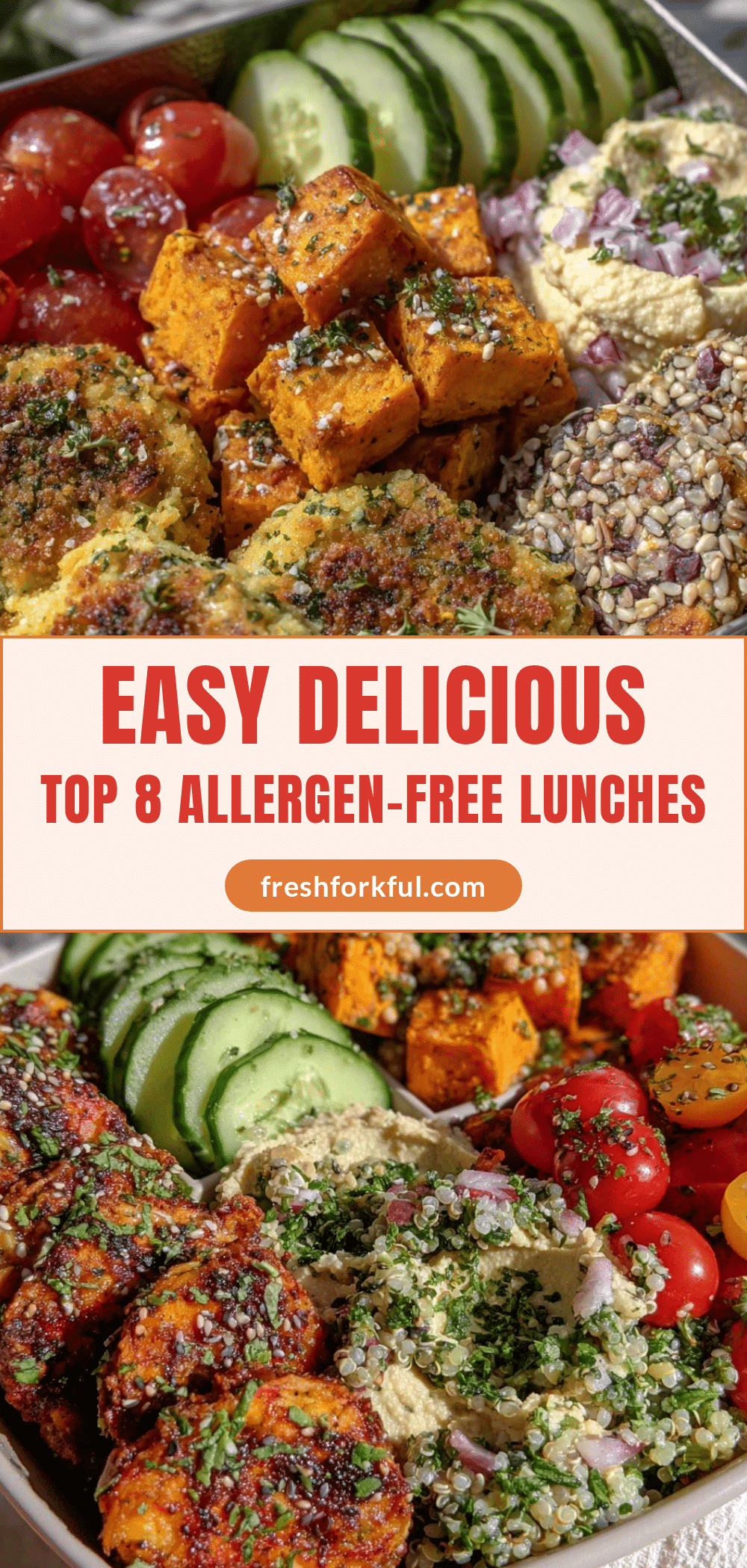
Healthy Top 8 Allergen-Free School Lunch Box Ideas for Easy Kid-Friendly Meals

A collection of quick, easy, and kid-approved allergen-free school lunch ideas that avoid the top 8 allergens while being flavorful, nutritious, and simple to prepare.
- Prep Time: 15 minutes
- Cook Time: 0 minutes
- Total Time: 15 minutes
- Yield: 2 servings
- Category: Lunch
- Cuisine: American
Ingredients
- Gluten-free wraps or bread (certified allergen-free)
- Sunflower seed butter or pumpkin seed butter
- Carrot sticks
- Cucumber slices
- Bell pepper strips
- Cooked chicken breast, shredded or diced (seasoned lightly with salt and herbs)
- Hummus (classic or roasted red pepper)
- Rice cakes or rice crackers (plain or lightly salted)
- Fresh fruit: apple slices, grapes, blueberries, or clementines
- Vegetable chips (kale chips or sweet potato chips)
- Allergen-free granola bars or homemade energy bites made with seeds and dried fruit
- Popcorn (lightly salted, no butter)
- Avocado (mashed or sliced)
- Homemade dressing or vinaigrette (olive oil, lemon juice, simple herbs)
- Fresh herbs like parsley or cilantro
Instructions
- Wash all produce thoroughly. Slice carrots, cucumbers, and bell peppers into thin sticks or bite-sized pieces. For fruits like apples, slice and toss quickly in lemon water to prevent browning. Pack these in small containers or silicone bags to keep fresh.
- Spread 2 tablespoons (1 fl oz) of sunflower seed butter evenly on a gluten-free wrap (~8-inch diameter). Add thin slices of banana or apple on top for sweetness. Roll tightly and slice in half for easy handling.
- Lay a gluten-free wrap flat, spread 2 tablespoons (1 fl oz) of hummus, layer ½ cup (2.6 oz) of shredded cooked chicken, and scatter a handful of fresh spinach or lettuce leaves. Roll and secure with a toothpick if needed.
- Optional: Mix 1 cup (3.5 oz) rolled oats, ½ cup (2.6 oz) sunflower seeds, ¼ cup (1.4 oz) dried cranberries, and ⅓ cup (2.7 fl oz) sunflower seed butter. Roll into 1-inch balls and refrigerate until firm.
- Add fruit portions, veggie chips, or popcorn into separate compartments. Include a small container of vinaigrette or avocado dip if desired.
Notes
Prep veggies and fruits the night before to save time. Assemble wraps fresh in the morning to avoid sogginess or wrap tightly in parchment paper if prepping earlier. Use separate cutting boards and utensils to avoid cross-contamination. Involve kids in prep to increase their interest in eating.
Nutrition
- Serving Size: One assembled wrap w
- Calories: 0.35
- Sugar: 8
- Sodium: 350
- Fat: 15
- Saturated Fat: 2
- Carbohydrates: 35
- Fiber: 6
- Protein: 15
Keywords: allergen-free, school lunch, kid-friendly, gluten-free, nut-free, dairy-free, egg-free, soy-free, healthy lunch, easy lunch ideas