Love this? Save it for later!
Share the inspiration with your friends
“I never thought summer salads could be this simple—and honestly, so freeing,” my friend Lila said one sweltering July afternoon as we sat on her porch, surrounded by the gentle hum of cicadas. She was explaining how she’d been struggling with Mast Cell Activation Syndrome (MCAS) for years, and summer meals often turned into a minefield of reactions. That day, she pulled out a bowl filled with vibrant cucumber ribbons, fresh herbs, and a light lemon dressing that didn’t trigger her symptoms. Watching her savor each bite, I was reminded how tricky it is to find fresh low-histamine summer meals that really work for MCAS-safe eating.
You know that feeling when the sun is blazing outside, and all you want is food that’s refreshing, nourishing, and won’t set off your allergies? That’s exactly what these recipes are all about. I’ve spent countless afternoons experimenting with ingredients that respect the delicate balance MCAS demands—no aged cheeses, fermented foods, or long-stored leftovers here. Instead, think crisp vegetables, freshly picked herbs, and protein sources that are gentle on the system.
Honestly, it’s been a journey of trial and error with a few spills and messes along the way (one time I forgot to rinse a crucial ingredient thoroughly and paid for it later). But these fresh low-histamine summer meals have stuck with me because they’re not just safe—they’re genuinely delicious and easy to prepare. Maybe you’ve been there too, hunting for something simple that doesn’t feel like a compromise. These dishes might just change your relationship with summer eating, whether it’s for MCAS or simply wanting lighter, allergy-conscious meals that keep you cool and satisfied.
Why You’ll Love This Recipe
I’ve tested these fresh low-histamine summer meals countless times, and let me tell you—they work. Whether you’re new to MCAS-safe eating or looking for fresh ideas to keep meals enjoyable, here’s why these recipes stand out:
- Quick & Easy: Each meal comes together in under 30 minutes, perfect for those hot days when you don’t want to spend hours in the kitchen.
- Simple Ingredients: You won’t need to hunt down rare items. Most ingredients are pantry staples or easy-to-find fresh produce.
- Perfect for Summer: Light, refreshing, and hydrating, these dishes are ideal for outdoor dinners, picnics, or casual family gatherings.
- Crowd-Pleaser: Whether you’re cooking for yourself or hosting friends who appreciate thoughtful meals, these recipes always receive compliments for flavor and freshness.
- Unbelievably Delicious: The combination of fresh herbs, crisp veggies, and gentle proteins creates a texture and flavor harmony that feels like a treat, not a restriction.
What sets these recipes apart? It’s the attention to ingredient quality and timing. For example, using freshly picked basil instead of dried, or squeezing lemon juice just before serving to keep the brightness alive without the histamine buildup. I’ve learned that small tweaks—like choosing freshly harvested chicken or rinsing produce thoroughly—make all the difference. This isn’t just another list of low-histamine meals; it’s a collection crafted with care and respect for your body’s needs.
So, if you’ve been searching for summer meals that feel safe and satisfying, this recipe guide is here to help you enjoy the season without worry. Let’s get cooking!
What Ingredients You Will Need
These fresh low-histamine summer meals rely on straightforward, natural ingredients that keep your dishes vibrant and MCAS-friendly. Below, I’ve grouped them by their role in the recipes to make shopping and prep a breeze.
- Vegetables & Greens:
- Fresh cucumbers, peeled and thinly sliced (adds crunch and hydration)
- Zucchini, spiralized or sliced (great base for salads or light noodles)
- Carrots, shredded or julienned (natural sweetness and color)
- Fresh basil leaves (use fresh for aroma and flavor)
- Parsley, finely chopped (brightens dishes)
- Leafy greens like butter lettuce or baby spinach (choose young, tender leaves to avoid bitterness)
- Proteins:
- Freshly cooked chicken breast, sliced thin (preferably free-range, freshly cooked within 24 hours)
- Fresh white fish fillets like cod or haddock (avoid smoked or cured fish)
- Eggs, hard-boiled and cooled (fresh eggs only, as older eggs increase histamine)
- Dressings & Flavorings:
- Fresh lemon juice (added last minute for brightness)
- Extra virgin olive oil (choose a mild, fruity brand like California Olive Ranch for best flavor)
- Sea salt (fine grain)
- Fresh ginger, grated (adds gentle zing without histamine risk)
- Maple syrup or raw honey (optional, for slight sweetness)
- Optional Garnishes:
- Chives, chopped (for mild onion flavor)
- Fresh mint leaves (refreshing and cooling)
When selecting ingredients, freshness is key. I recommend visiting your local farmers’ market or trusted grocer to pick up produce that looks vibrant and hasn’t been sitting around for days. And if you’re ever in doubt, rinsing veggies thoroughly can help reduce any surface histamines. For substitutions, almond milk can replace any dairy components if needed, and swapping chicken for turkey breast is perfectly fine for a slight change in flavor.
Equipment Needed
To make these fresh low-histamine summer meals, you won’t need a lot of fancy gadgets, but having the right tools makes the process smoother and more enjoyable:
- Sharp chef’s knife – for clean, precise slicing of vegetables and proteins. I use a Wüsthof classic, but any well-maintained knife works.
- Cutting board – a sturdy plastic or wooden board that’s easy to clean is best.
- Vegetable peeler or spiralizer – essential for creating zucchini noodles or thin cucumber ribbons. If you don’t have a spiralizer, a peeler works just fine.
- Mixing bowls – a few medium-sized ones to toss salads and whisk dressings.
- Measuring spoons and cups – for accurate dressing ingredients and seasonings.
- Small whisk or fork – for blending dressings smoothly.
- Colander or salad spinner – to wash and dry leafy greens thoroughly (dry leaves help dressings stick better).
If you’re budget-conscious, you can often find affordable peelers and knives at local stores or online. I once tried using a dull knife and ended up with a messier prep session—lesson learned! Keeping your knives sharp not only protects your fingers but also keeps those veggies looking fresh and crisp.
Preparation Method
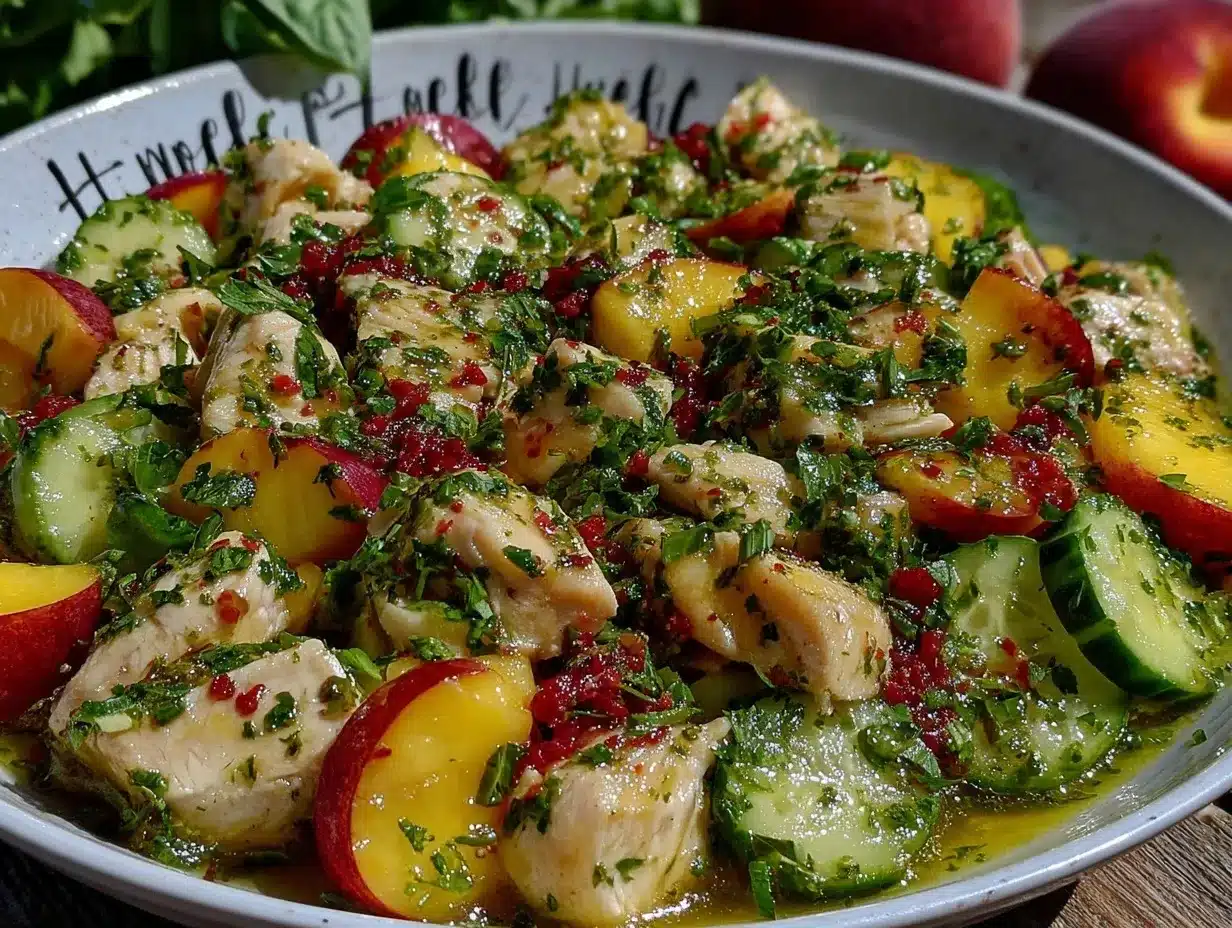
- Prepare the vegetables: Start by washing all your fresh produce thoroughly using cold water. Use a colander or salad spinner to dry leafy greens well. Peel thin ribbons of cucumber with a vegetable peeler (about 2 medium cucumbers) and spiralize or slice one medium zucchini into noodles or thin strips. Shred two medium carrots using a grater or julienne them with your knife. This step should take about 10-15 minutes.
- Cook the protein: If using chicken breast, poach it gently in simmering water for 12-15 minutes until cooked through (internal temperature of 165°F / 74°C). Let it cool completely before slicing thinly. For fresh fish, bake or steam fillets for 8-10 minutes until opaque and flaky. Hard-boil eggs by placing them in boiling water for 10 minutes, then cool in an ice bath. This step typically requires 15-20 minutes depending on your protein choice.
- Mix the dressing: In a small bowl, whisk together 3 tablespoons (45 ml) of extra virgin olive oil, 1 tablespoon (15 ml) of fresh lemon juice, 1 teaspoon (5 ml) of maple syrup or honey (optional), a pinch of sea salt, and 1 teaspoon (2 grams) of freshly grated ginger. Taste and adjust seasoning as needed. Set aside—dressing is best added just before serving. This takes about 5 minutes.
- Toss the salad: In a large bowl, combine the cucumber ribbons, zucchini noodles, shredded carrots, and leafy greens. Add chopped fresh basil, parsley, chives, and mint leaves to brighten the flavors. Gently toss with half the dressing to coat evenly.
- Assemble the meal: Arrange the sliced proteins atop the salad. Drizzle remaining dressing over the top or serve on the side for guests to add as desired. Garnish with extra herbs if you like. This final step takes about 5 minutes.
Quick tip: If you’re prepping ahead, keep the dressing separate until serving to prevent soggy greens. Also, taste as you go—you might find you want a little more lemon or a touch more salt to suit your palate. And don’t stress if you forget an herb or two; the fresh veggies carry plenty of flavor on their own.
Cooking Tips & Techniques
When working with fresh low-histamine summer meals, a few tricks can make a big difference:
- Freshness is everything: Use ingredients as soon after purchase as possible. Histamine builds up in foods the longer they sit, so buying smaller portions more frequently helps keep meals safe.
- Keep it cool: After prepping, store your salad and proteins separately in airtight containers in the fridge. This reduces histamine formation and keeps textures crisp.
- Rinse thoroughly: Sometimes, rinsing produce under cold water removes surface residues or pollen that can trigger sensitivities. I’ve found this particularly helpful with leafy greens.
- Cook proteins gently: Avoid high-heat methods like frying or grilling that can increase histamine levels. Poaching, steaming, or baking at moderate temperatures is your best bet.
- Dress last minute: Adding dressing right before eating prevents sogginess and preserves the bright, fresh flavors of lemon and olive oil.
- Watch for hidden triggers: Avoid ingredients like tomatoes, spinach, or aged cheeses that might sneak into other summer recipes but aren’t MCAS-friendly.
Learning these tips wasn’t immediate for me—I remember one sunny afternoon when I made a batch of salad early and tossed the dressing in immediately. By dinner, it was sad and wilted, which was disappointing. Now, I keep dressings separate and add them just before serving. Trust me, your taste buds will thank you!
Variations & Adaptations
There’s always room for creativity with fresh low-histamine summer meals. Here are a few ways I’ve tweaked this base recipe to keep things interesting or meet different needs:
- Vegetarian option: Swap out chicken or fish for firm tofu (fresh, not marinated) or cooked quinoa. I like to toss the quinoa in just before serving to keep it fluffy.
- Seasonal twists: In late summer, add peeled, sliced fresh peaches or nectarines for natural sweetness and a juicy contrast. Just be cautious if you’re sensitive to stone fruits.
- Different herbs: Try swapping parsley and basil for dill or cilantro for a different flavor profile. Fresh mint is always a refreshing addition, especially on hot days.
- Cooking methods: Instead of poaching, you can gently steam fish or bake chicken wrapped in parchment paper with herbs for extra moisture and flavor.
- Allergen substitutions: For those avoiding eggs, omit hard-boiled eggs or replace with cooked chickpeas if tolerated. For olive oil allergies, avocado oil works well.
Once, I tried adding a tiny pinch of grated fresh turmeric to the dressing for an anti-inflammatory boost. It added a subtle earthiness that played nicely with the lemon and ginger. Honestly, experimenting within your comfort zone can keep meals exciting without risking symptoms.
Serving & Storage Suggestions
These fresh low-histamine summer meals are best served chilled or at room temperature to keep flavors vibrant. I like to plate them on wide, shallow bowls to showcase the colorful veggies and herbs. A sprinkle of freshly chopped herbs on top always brightens the presentation.
Pair these meals with a crisp, cold cucumber-infused water or a mild herbal tea like chamomile to complement the light flavors. For something heartier, a side of simple steamed potatoes or rice pilaf can round out the meal.
For storage, keep salad and proteins in separate airtight containers in the fridge for up to 24 hours. Reheat proteins gently if desired—avoid microwaving too long as it can dry out the texture. Dress salads only before serving to prevent wilting.
One of the best parts? Flavors often deepen after a few hours in the fridge, so leftovers can taste even better the next day. Just remember to give the salad a quick toss with fresh lemon juice before eating to refresh the brightness.
Nutritional Information & Benefits
These fresh low-histamine summer meals offer a balanced mix of lean protein, fiber-rich vegetables, and healthy fats. A typical serving provides roughly:
| Nutrient | Approximate Amount |
|---|---|
| Calories | 350-400 kcal |
| Protein | 30-35 grams |
| Fat | 15-18 grams (mostly from olive oil) |
| Carbohydrates | 20-25 grams (mainly from vegetables) |
| Fiber | 5-7 grams |
Key ingredients like fresh vegetables and olive oil provide antioxidants and anti-inflammatory benefits, which are especially valuable for those managing MCAS symptoms. The lean proteins support muscle maintenance and satiety without adding histamine stress.
These meals are naturally gluten-free and low in histamine, making them suitable for many dietary needs. Just be mindful of individual sensitivities, especially with herbs and optional add-ins.
Conclusion
Fresh low-histamine summer meals don’t have to be complicated or bland. These recipes prove that with a little care and the right ingredients, you can enjoy vibrant, satisfying dishes that respect your body’s needs. I love how this collection turned a challenging diet into something joyful and nourishing—something I look forward to making, time and again.
Feel free to tailor these meals to your taste and lifestyle, swapping proteins or herbs as you like. And if you try them out, I’d love to hear how you made them your own—drop a comment or share your tweaks! Remember, summer eating can be fresh, safe, and delicious all at once.
Here’s to happy, healthy meals that keep you feeling your best!
FAQs About Fresh Low-Histamine Summer Meals
What makes a meal low-histamine?
A low-histamine meal avoids aged, fermented, or leftover foods that contain high histamine levels. Freshness and ingredient choice are key to keeping histamine levels low.
Can I use leftovers for these meals?
It’s best to use freshly cooked proteins and freshly prepared veggies. Leftovers tend to accumulate histamines and may trigger symptoms.
Are fresh herbs safe for MCAS?
Generally, fresh herbs like basil, parsley, and mint are well-tolerated, but individual sensitivity varies. Start with small amounts and observe your reaction.
Can I make these meals vegan?
Yes! Swap animal proteins for firm tofu, tempeh, or cooked grains like quinoa, but ensure all ingredients align with your personal tolerance.
How do I keep salads fresh longer?
Store salad components separately, keep dressings aside until serving, and refrigerate promptly. Using crisp greens like butter lettuce helps maintain texture.
For more ideas on simple, allergy-friendly dishes, you might enjoy my crispy garlic chicken recipe, which also emphasizes fresh, safe ingredients for sensitive diets.
And if you’re looking to add light, homemade dressings to your meals, check out this lemon herb dressing that pairs beautifully with summer salads.
Pin This Recipe!
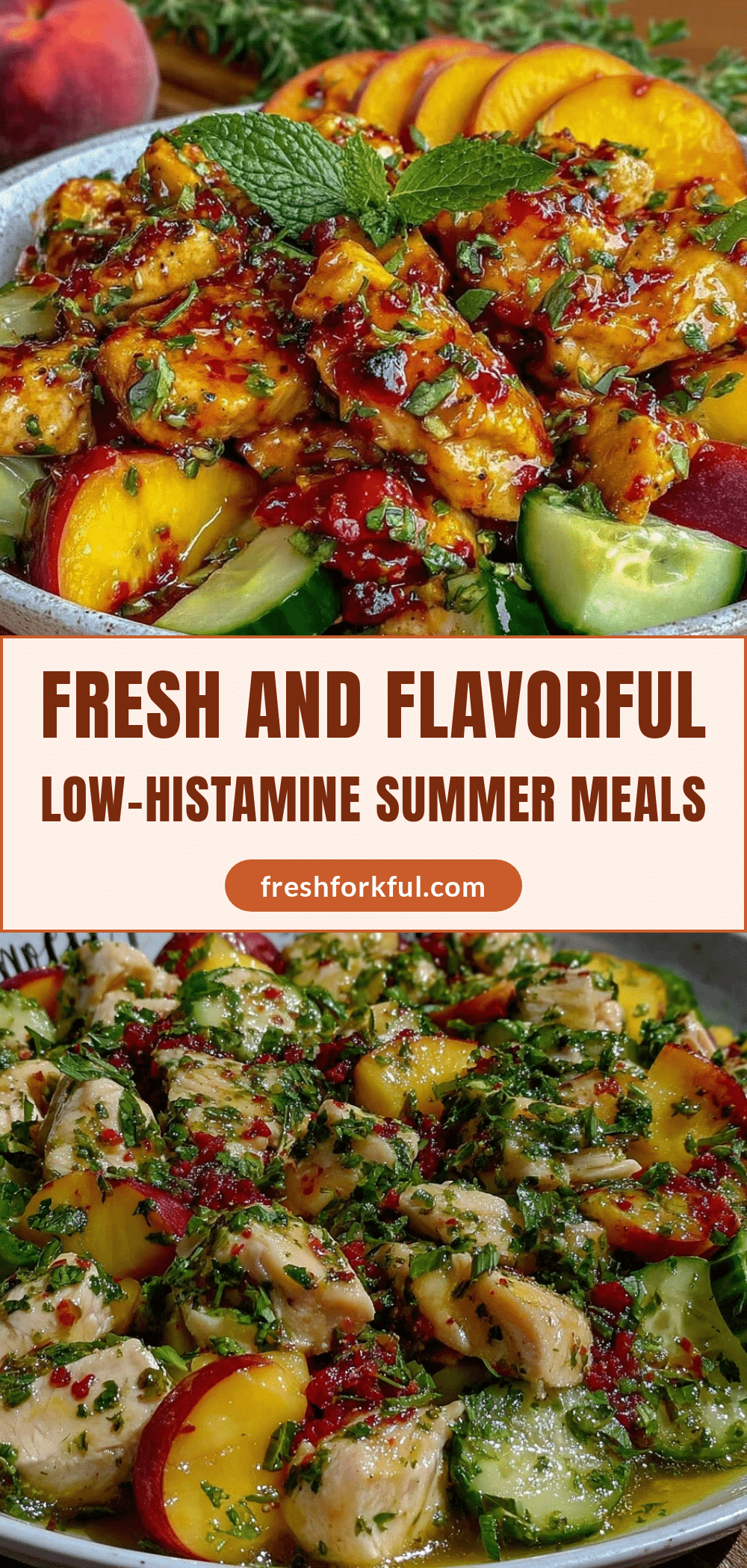
Fresh Low-Histamine Summer Meals Perfect for Easy MCAS-Safe Eating

These fresh low-histamine summer meals are light, refreshing, and designed to be safe for those managing Mast Cell Activation Syndrome (MCAS). They combine crisp vegetables, fresh herbs, and gentle proteins for nourishing, allergy-conscious eating.
- Prep Time: 15 minutes
- Cook Time: 15 minutes
- Total Time: 30 minutes
- Yield: 4 servings 1x
- Category: Main Course
- Cuisine: American
Ingredients
- 2 medium fresh cucumbers, peeled and thinly sliced
- 1 medium zucchini, spiralized or sliced
- 2 medium carrots, shredded or julienned
- Fresh basil leaves
- Finely chopped parsley
- Leafy greens like butter lettuce or baby spinach
- Freshly cooked chicken breast, sliced thin (preferably free-range, freshly cooked within 24 hours)
- Fresh white fish fillets like cod or haddock
- Hard-boiled eggs, cooled (fresh eggs only)
- 3 tablespoons extra virgin olive oil
- 1 tablespoon fresh lemon juice
- 1 teaspoon maple syrup or raw honey (optional)
- Pinch of fine grain sea salt
- 1 teaspoon freshly grated fresh ginger
- Chopped chives (optional garnish)
- Fresh mint leaves (optional garnish)
Instructions
- Prepare the vegetables: Wash all fresh produce thoroughly using cold water. Use a colander or salad spinner to dry leafy greens well. Peel thin ribbons of cucumber with a vegetable peeler. Spiralize or slice zucchini into noodles or thin strips. Shred or julienne carrots. (10-15 minutes)
- Cook the protein: Poach chicken breast gently in simmering water for 12-15 minutes until cooked through (internal temperature 165°F). Let cool and slice thinly. For fish, bake or steam fillets for 8-10 minutes until opaque and flaky. Hard-boil eggs for 10 minutes and cool in ice bath. (15-20 minutes)
- Mix the dressing: Whisk together extra virgin olive oil, fresh lemon juice, maple syrup or honey (optional), sea salt, and freshly grated ginger in a small bowl. Adjust seasoning to taste. (5 minutes)
- Toss the salad: In a large bowl, combine cucumber ribbons, zucchini noodles, shredded carrots, and leafy greens. Add chopped basil, parsley, chives, and mint leaves. Toss gently with half the dressing to coat evenly.
- Assemble the meal: Arrange sliced proteins atop the salad. Drizzle remaining dressing over the top or serve on the side. Garnish with extra herbs if desired. (5 minutes)
Notes
Use ingredients as fresh as possible to minimize histamine buildup. Keep salad and proteins stored separately in airtight containers in the fridge and add dressing just before serving to prevent sogginess. Rinse produce thoroughly to reduce surface histamines. Poach or steam proteins gently to avoid increasing histamine levels. Adjust herbs and seasoning to taste.
Nutrition
- Serving Size: 1 bowl with protein
- Calories: 375
- Sugar: 5
- Sodium: 250
- Fat: 16.5
- Saturated Fat: 2.5
- Carbohydrates: 22.5
- Fiber: 6
- Protein: 32.5
Keywords: low-histamine, MCAS-safe, summer meals, fresh salads, allergy-friendly, easy recipes, light meals, healthy eating