Love this? Save it for later!
Share the inspiration with your friends
“I never thought summer would be the season I dreaded the most,” my friend Lena confessed one humid July afternoon as we sat on her porch. She was battling a diverticulitis flare-up, and with the heat making everything feel heavier, finding soft, low-fiber foods that actually tasted good felt impossible. I remember her fridge was a quiet testament to that struggle—bland soups, plain yogurt, and a few carefully peeled peaches. It wasn’t until she started experimenting with some gentle, soothing recipes that I saw her light up again, even on the toughest days.
Honestly, it was a bit of a surprise. I’d always associated summer with bold flavors and crunchy salads, not the kind of softness and simplicity needed during a diverticulitis flare. But watching Lena navigate her way through those hot, difficult weeks inspired me to gather recipes that bring comfort without aggravation. Maybe you’ve been there too—stuck craving meals that feel nourishing but also gentle enough to keep the pain at bay.
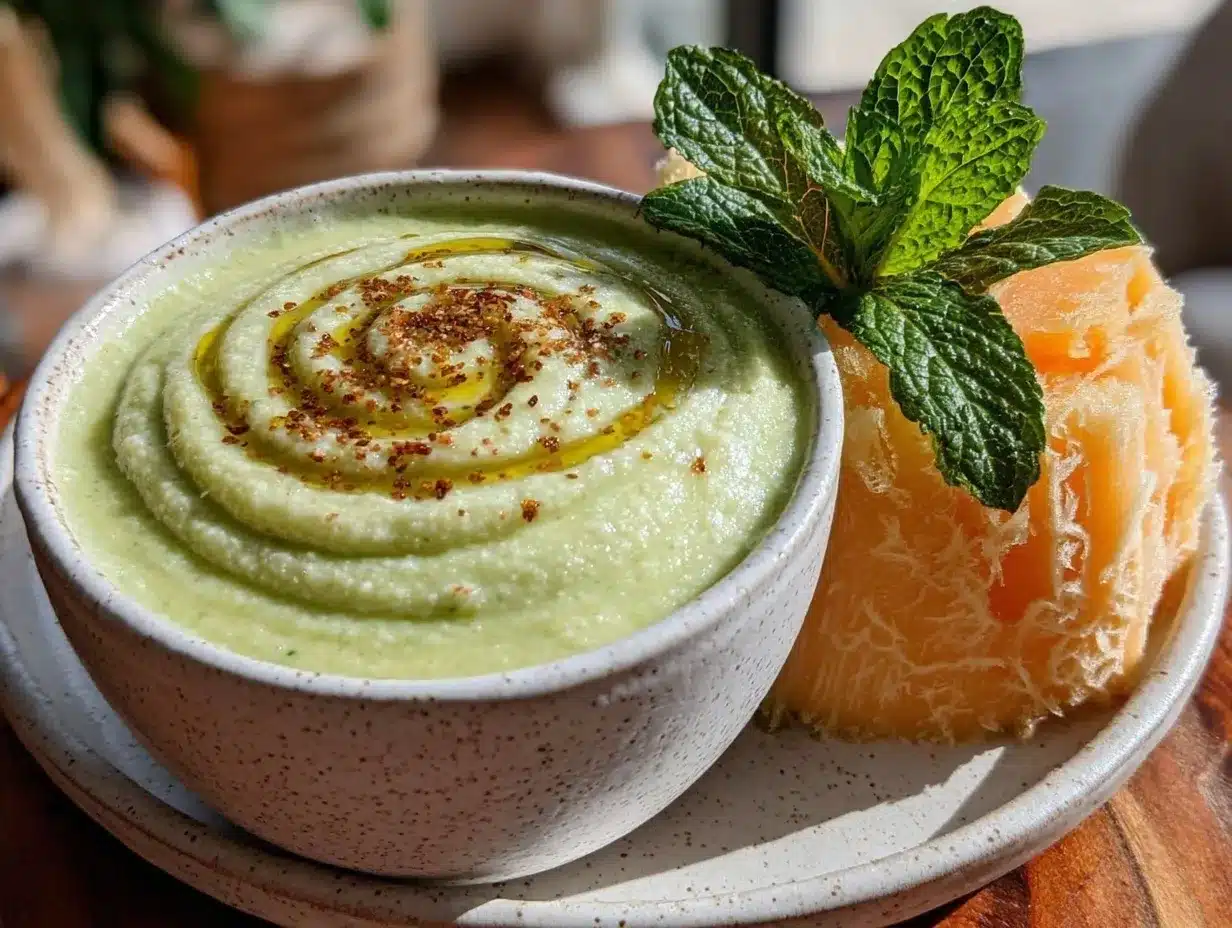
One evening, after a laundry list of trial and error, Lena showed me her favorite dish: a velvety zucchini soup, chilled just right, with a whisper of fresh herbs. It was like the summer sunshine on a spoon, calming and light. That cracked bowl in her kitchen became a symbol for me—reminding me that even in flare-ups, food can feel both safe and satisfying. So, let me tell you about these soothing low-fiber diverticulitis soft foods that can help get you through those flare-ups this summer, with ten easy recipes that are as simple as they are kind to your system.
Why You’ll Love This Recipe
Let me share why these soothing low-fiber soft foods are a game changer during diverticulitis flare-ups. I’ve tested these recipes myself and helped friends adapt them too, so they’re not just theoretical—they’re kitchen-tested and flare-approved.
- Quick & Easy: Most of these recipes come together in under 30 minutes, perfect when you’re not feeling your best but still want something comforting.
- Simple Ingredients: No need for obscure items—these dishes use everyday pantry staples and fresh produce that’s gentle on your digestion.
- Perfect for Summer: Light, refreshing, and easy to digest, these recipes suit the warmer months when heavy meals just won’t do.
- Crowd-Pleaser: Even non-diverticulitis eaters love these meals for their delicate flavors and smooth textures.
- Unbelievably Delicious: The key is in balancing soothing textures with subtle seasoning, making every bite feel like a small celebration.
What sets these recipes apart is the attention to texture and fiber content—they’re designed to calm inflammation without compromising taste. For instance, blending the vegetables until silky smooth or gently poaching fruits to maintain softness. These are not your typical soft foods; they’re thoughtfully crafted to soothe and satisfy. Honestly, once you try these, you might find yourself reaching for them beyond flare-ups, just because they feel so good.
What Ingredients You Will Need
This collection relies on gentle, low-fiber ingredients that ease your digestive system while still delivering flavor and nutrition. Most ingredients are easy to find year-round, with some seasonal swaps for freshness.
- Vegetables (for soups and purees): zucchini (peeled and deseeded), peeled carrots, peeled potatoes, peeled cucumber (great chilled), peeled summer squash
- Fruits: ripe peaches (peeled and pitted), peeled apples, seedless pears, ripe bananas (mashed), melon varieties like cantaloupe or honeydew
- Dairy & Alternatives: plain yogurt (preferably low-fat and smooth texture), lactose-free milk, almond milk (unsweetened), smooth ricotta cheese
- Proteins: tender chicken breast (well-cooked and shredded), soft tofu (silken variety), eggs (boiled or poached)
- Grains & Starches: white rice (well-cooked and soft), plain pasta (small shapes like orzo, cooked to softness), white bread (no seeds or nuts), cream of wheat
- Fats & Flavor Enhancers: olive oil (extra virgin for flavor), unsalted butter, mild herbs like parsley and basil (finely chopped), a pinch of salt, and a dash of lemon juice
For best results, I recommend brands like Stonyfield for smooth yogurts and Bob’s Red Mill for cream of wheat. When picking fruits or veggies, peeling is your friend—it helps reduce fiber and makes digestion easier. If you need to avoid dairy, almond or rice milk work nicely without changing the recipe’s character.
Equipment Needed
- Blender or Food Processor: Essential for achieving those smooth, soft textures. A handheld immersion blender also works well if you want less cleanup.
- Medium Saucepan: For simmering vegetables and making gentle purees. Non-stick pans are convenient here to avoid sticking and easy cleanup.
- Measuring Cups and Spoons: For accuracy, especially with liquids and seasonings.
- Fine Mesh Strainer: Helpful if you want extra silky textures by removing any bits of pulp or fiber.
- Soft Spatula and Ladle: For gentle stirring and serving without breaking the delicate food.
If you don’t have a food processor, a sturdy blender or even a potato masher can do the trick for some recipes. I once tried hand-mashing a pureed soup and, let me tell you, patience is key—but it worked! Budget-wise, many of these tools are versatile kitchen staples, so investing in a good blender will pay off well beyond this recipe list.
Preparation Method
- Prepare Vegetables and Fruits: Peel and chop zucchini, carrots, potatoes, peaches, or any produce you’re using into uniform small chunks (about 1-inch pieces). This ensures even cooking. (Time: 10 mins)
- Cook Gently: Place chopped veggies or fruits in a saucepan, cover with water or low-sodium broth just enough to submerge, and simmer over medium-low heat until very tender—usually 15-20 minutes. You want them soft enough to mash easily. (Tip: Avoid boiling vigorously; a gentle simmer helps keep flavors delicate.)
- Blend to Smooth: Drain vegetables, reserving some cooking liquid. Transfer to blender, add a splash of liquid, and blend until silky smooth. Adjust consistency with reserved liquid to your liking. (Tip: For extra smoothness, strain through a fine mesh.)
- Season Mildly: Add a pinch of salt, a teaspoon of olive oil, or a few drops of lemon juice to brighten flavors. Stir gently. (Be cautious with spices—mild herbs like parsley or basil are best.)
- Prepare Proteins: For chicken, poach breasts in water until tender (about 20 minutes), then shred finely. For tofu, simply drain and blend or mash to a smooth texture. Eggs should be hard-boiled or softly poached and chopped finely.
- Combine Components: Mix pureed veggies with proteins or dairy as needed. For example, blend smooth ricotta with pureed zucchini for a creamy dish. (Tip: Warm gently on low heat if serving warm.)
- Chill or Serve Warm: Depending on the recipe, chill chilled soups or serve warm purees. Texture and temperature are key—soft, soothing, and easy on your system.
Note: When making soft pasta or rice dishes, cook grains until very tender (adding extra water if needed) to avoid any chewing difficulties. Keep an eye on texture throughout; if something feels too thick, a splash of stock or milk can help. You know that feeling when you bite into a soup that’s just a touch grainy? Yeah, avoid that by blending well and cooking thoroughly.
Cooking Tips & Techniques
From my experience, the secret to these soft foods isn’t just the ingredients but how you treat them. Slow and gentle cooking will save you from tough textures that irritate your system. For instance, steaming zucchini instead of boiling can retain more flavor while keeping softness.
Common mistakes include undercooking veggies, which leads to unpleasant chunks, or overseasoning, which can upset sensitive digestion. I once added too much garlic in a soft food batch—lesson learned! Mild herbs and minimal spices keep things calm.
Timing is everything. Planning ahead means you can simmer veggies while prepping proteins, making the process smoother and less stressful. Also, multitasking is your friend here; while something cooks, you can mash or prepare other components.
For consistency, always taste as you go. The goal is gentle flavor, not blandness. A pinch of salt or a small squeeze of lemon can make all the difference. And if texture feels off, don’t hesitate to blend again or add a little liquid.
Variations & Adaptations
Let’s talk about ways to make these recipes your own or suitable for different needs:
- Dairy-Free Option: Substitute yogurt or milk with coconut or almond milk for creaminess without lactose.
- Vegetarian Protein: Silken tofu works wonderfully blended into purees or soups instead of chicken.
- Seasonal Fruits: Swap peaches for peeled pears or melons depending on what’s fresh and easier to digest.
- Flavor Twists: Add a tiny pinch of ginger or turmeric for anti-inflammatory benefits, but keep quantities small to avoid irritation.
- Cooking Method: Instead of simmering, try gentle steaming to preserve nutrients while keeping softness.
Once, I made a chilled cucumber and yogurt soup that Lena loved during a relentless heatwave flare. It was so simple but refreshing—sometimes the easiest recipes are the best. Feel free to experiment with what works best for your palate and flare severity.
Serving & Storage Suggestions
These soft foods are best served at mild temperatures. For summer, chilled soups or purees feel incredibly soothing, while warm dishes can comfort on cooler evenings. Presentation doesn’t need to be fancy—using a simple bowl with a drizzle of olive oil or a sprinkle of fresh herbs makes it inviting.
Pair these dishes with light, easy sides like soft white bread or plain crackers if tolerated. Mild herbal teas or diluted fruit juices complement gently without overwhelming.
Store leftovers in airtight containers in the refrigerator for up to 3 days. Most purees and soups freeze well—just thaw slowly in the fridge overnight and reheat gently on the stovetop or microwave, stirring frequently to maintain smoothness.
Flavors often mellow overnight, making the dishes even more comforting. I always find that these meals taste better the next day (if there’s any left!).
Nutritional Information & Benefits
These recipes focus on low fiber to ease digestive stress during flare-ups, but they still pack good nutrition. Soft cooked veggies provide vitamins A and C, while proteins like chicken and tofu offer necessary amino acids for healing. Using healthy fats like olive oil supports anti-inflammatory effects.
Most recipes are naturally gluten-free (if you omit wheat-based pasta) and low in sugar. They’re designed to be gentle on the gut, minimizing irritation while keeping your body nourished. Just watch out for potential allergens like dairy or nuts and adapt accordingly.
Personally, I appreciate how these meals bring balance—comfort food that supports wellness without feeling like a compromise.
Conclusion
If you’re dealing with a summer diverticulitis flare-up, these soothing low-fiber soft foods offer relief without sacrificing flavor or satisfaction. They’re simple enough to make when your energy is low, yet carefully crafted to keep you nourished and comfortable. I love how they bring a little calm to an otherwise tough time—like a quiet moment of kindness from your kitchen.
Feel free to tweak ingredients to suit your tastes or dietary needs. After all, the best recipes are the ones you make your own. I’d love to hear how these dishes work for you, or if you have your own flare-friendly favorites to share!
Give these a try and let the gentle summer meals bring you comfort and ease.
FAQs about Soothing Low-Fiber Diverticulitis Soft Foods
What does a low-fiber diet mean during a diverticulitis flare-up?
A low-fiber diet limits foods that are hard to digest, like raw vegetables, nuts, and whole grains, to reduce irritation. Soft, cooked, and peeled foods are recommended to ease symptoms.
Can I eat fruits during a diverticulitis flare?
Yes, but focus on peeled, ripe, and soft fruits like peaches, bananas, or melon, which are easier on your digestive tract.
Are these soft food recipes suitable after the flare-up?
They’re perfect during flare-ups but can also be a gentle way to transition back to a regular diet as you heal.
How long should I follow a low-fiber soft food diet?
This varies by individual, but typically it’s recommended during active flare-ups and until symptoms improve. Always check with your healthcare provider.
Can I freeze these soft food recipes?
Absolutely! Most purees and soups freeze well. Just thaw slowly and reheat gently to maintain texture and flavor.
For more ideas on gentle, comforting meals, you might enjoy reading about creamy chicken rice soup or simple soft egg dishes that work well during sensitive digestion phases.
Pin This Recipe!
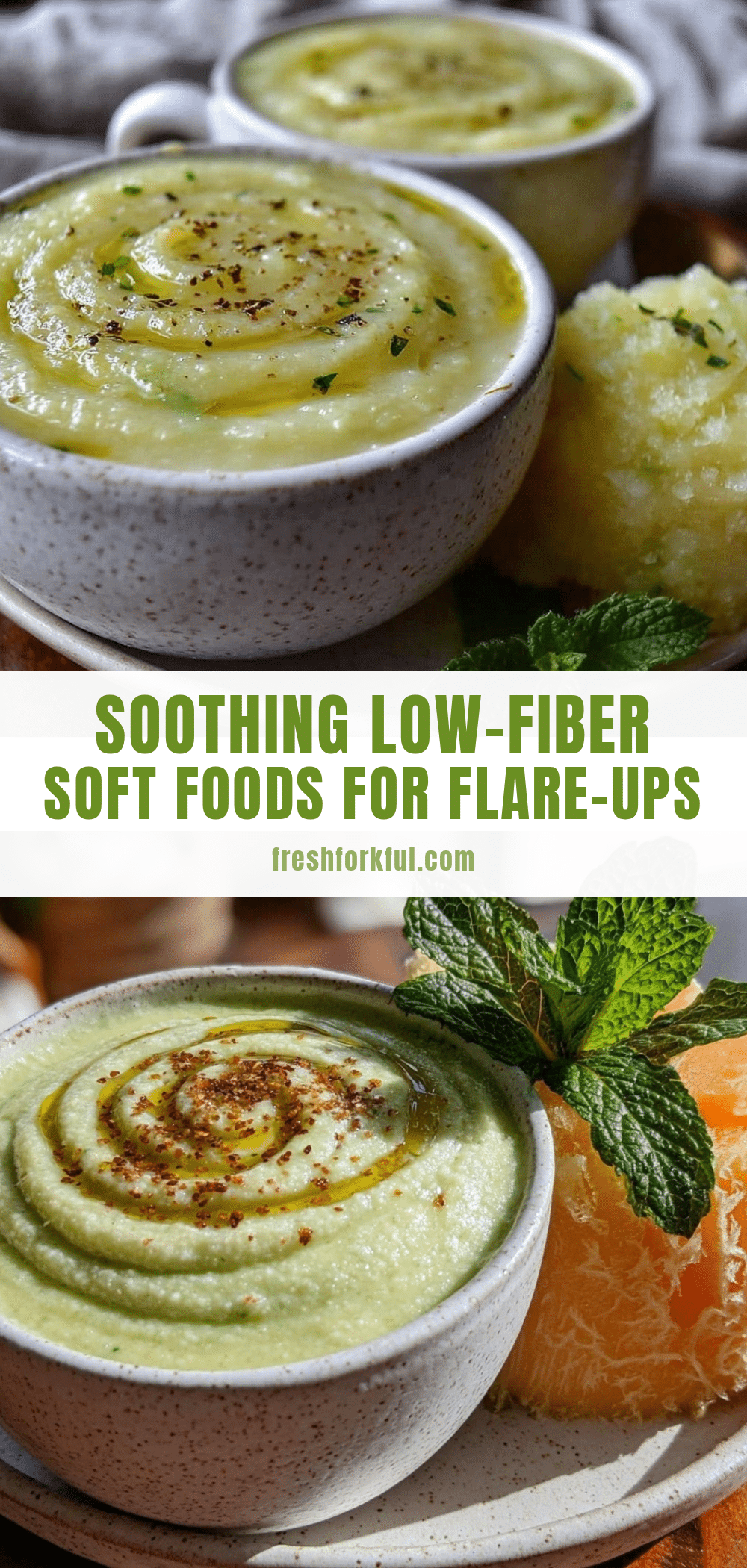
Soothing Low-Fiber Diverticulitis Soft Foods 10 Easy Summer Recipes

A collection of gentle, low-fiber soft food recipes designed to soothe and nourish during diverticulitis flare-ups, perfect for summer with simple ingredients and easy preparation.
- Prep Time: 10 minutes
- Cook Time: 20 minutes
- Total Time: 30 minutes
- Yield: 4 servings
- Category: Main Course
- Cuisine: American
Ingredients
- Zucchini (peeled and deseeded)
- Peeled carrots
- Peeled potatoes
- Peeled cucumber
- Peeled summer squash
- Ripe peaches (peeled and pitted)
- Peeled apples
- Seedless pears
- Ripe bananas (mashed)
- Melon varieties like cantaloupe or honeydew
- Plain yogurt (preferably low-fat and smooth texture)
- Lactose-free milk
- Almond milk (unsweetened)
- Smooth ricotta cheese
- Tender chicken breast (well-cooked and shredded)
- Soft tofu (silken variety)
- Eggs (boiled or poached)
- White rice (well-cooked and soft)
- Plain pasta (small shapes like orzo, cooked to softness)
- White bread (no seeds or nuts)
- Cream of wheat
- Olive oil (extra virgin)
- Unsalted butter
- Mild herbs like parsley and basil (finely chopped)
- Pinch of salt
- Dash of lemon juice
Instructions
- Prepare Vegetables and Fruits: Peel and chop zucchini, carrots, potatoes, peaches, or any produce you’re using into uniform small chunks (about 1-inch pieces).
- Cook Gently: Place chopped veggies or fruits in a saucepan, cover with water or low-sodium broth just enough to submerge, and simmer over medium-low heat until very tender (15-20 minutes). Avoid boiling vigorously.
- Blend to Smooth: Drain vegetables, reserving some cooking liquid. Transfer to blender, add a splash of liquid, and blend until silky smooth. Adjust consistency with reserved liquid. For extra smoothness, strain through a fine mesh.
- Season Mildly: Add a pinch of salt, a teaspoon of olive oil, or a few drops of lemon juice. Stir gently. Use mild herbs like parsley or basil; avoid strong spices.
- Prepare Proteins: Poach chicken breasts in water until tender (about 20 minutes), then shred finely. Drain and blend or mash silken tofu to a smooth texture. Hard-boil or softly poach eggs and chop finely.
- Combine Components: Mix pureed veggies with proteins or dairy as needed. For example, blend smooth ricotta with pureed zucchini. Warm gently on low heat if serving warm.
- Chill or Serve Warm: Depending on the recipe, chill soups or serve warm purees. Ensure soft, soothing texture and easy digestibility.
Notes
Peeling fruits and vegetables reduces fiber and eases digestion. Use gentle simmering rather than boiling to preserve flavor and softness. Mild herbs and minimal spices prevent irritation. For dairy-free, substitute with almond or coconut milk. Freeze leftovers in airtight containers for up to 3 days; thaw slowly and reheat gently.
Nutrition
- Serving Size: 1 bowl or 1 cup serv
- Calories: 180
- Sugar: 6
- Sodium: 150
- Fat: 7
- Saturated Fat: 1.5
- Carbohydrates: 22
- Fiber: 1
- Protein: 8
Keywords: low-fiber, diverticulitis, soft foods, summer recipes, gentle digestion, soothing meals, pureed soups, easy cooking