Love this? Save it for later!
Share the inspiration with your friends
“You won’t believe what I found at the farmer’s market last Saturday,” my friend Jenna said, holding up a basket brimming with fresh, vibrant fruits. I was halfway through picking out tomatoes when she started telling me about her recent journey managing kidney health through diet. Honestly, I hadn’t considered how much summer fruits could play a role in that until she shared her list of fresh low-potassium summer fruits that kept her energized without any of the usual dietary stress.
It’s funny how a simple conversation can open your eyes to new ways of eating. I mean, we all crave that sweet, juicy refreshment during the hot months, but when you have to watch your potassium intake, things get tricky fast. Jenna’s list wasn’t just practical; it was colorful, inviting, and full of summer sunshine in every bite. That cracked ceramic bowl on her kitchen table, half-filled with sliced cantaloupe and blueberries, was a humble reminder that healthy eating doesn’t have to be boring or bland.
Maybe you’ve been there—looking at a fruit bowl feeling deprived because you can’t enjoy the usual suspects like bananas or oranges. Let me tell you, this collection of fresh low-potassium summer fruits is the kind of list that turns that frustration into joyful snacking. After trying these fruits myself, I kept going back for more, not just because they’re good for kidney health but because they taste like summer itself. So, let’s unpack this easy list that’s perfect for anyone wanting to keep their kidneys happy while savoring the season’s best.
Why You’ll Love This Recipe
This fresh low-potassium summer fruits list has been tested in real kitchens and reviewed by nutrition experts who understand kidney health inside and out. It’s not just a list—it’s a refreshing way to enjoy summer without compromising your dietary needs.
- Quick & Easy: No complicated prep; just rinse, slice, and enjoy in under 5 minutes.
- Simple Ingredients: These fruits are common, easy to find, and need no fancy substitutions.
- Perfect for Summer Snacking: Ideal for picnics, poolside treats, or a cool, hydrating dessert after dinner.
- Crowd-Pleaser: Kids and adults alike love the natural sweetness and juicy texture.
- Unbelievably Delicious: The balance of mild sweetness and refreshing flavors makes it feel indulgent, not restrictive.
What makes this list different? It’s curated with kidney health in mind, focusing on fruits naturally low in potassium—a detail often missed in generic summer fruit guides. Plus, the selection respects taste and texture, ensuring you get satisfying variety without feeling like you’re missing out. It’s the kind of combination that makes you want to close your eyes and savor each bite, a simple pleasure that’s both nourishing and comforting.
Whether you’re managing kidney health yourself or preparing meals for someone who is, these fresh low-potassium summer fruits are a gentle reminder that eating well doesn’t have to be complicated or dull. They bring that sweet, sun-kissed joy back to your plate. Honestly, after trying them, I keep reaching for these fruits whenever the heat rises and my cravings kick in.
What Ingredients You Will Need
This list focuses on fresh, wholesome fruits that provide hydration and flavor without tipping the potassium scale. These ingredients are pantry staples during summer, easy to grab at your local market or grocery store, and require no special prep.
- Blueberries: Fresh or frozen, small and sweet, packed with antioxidants.
- Strawberries: Ripe and juicy, sliced for easy snacking (look for bright red, fragrant berries).
- Cantaloupe: Cubed, sweet, and aromatic (choose firm but slightly soft to the touch).
- Watermelon: Seedless is easiest, cut into bite-sized chunks (hydrating and crisp).
- Pineapple: Fresh, peeled, and diced (adds a tropical zing and vitamin C).
- Peaches: Sliced thin, ripe but firm (summer’s natural candy, perfect for a slight tang).
- Plums: Pitted and halved, sweet with a hint of tartness (go for deep purple or red skin).
- Raspberries: Delicate and tart, perfect for adding brightness to any fruit mix.
- Cherries: Pitted fresh cherries add a pop of flavor and color (choose sweet varieties if possible).
If you want to swap out any of these fruits, look for low-potassium options like apples or grapes, but honestly, this list covers the best summer picks. I personally look for organic blueberries from Driscoll’s—they taste fresher and last longer—and always buy ripe peaches from my neighborhood market for that authentic summer sweetness.
Seasonal note: In late summer, you might find heirloom melons or even fresh figs that fit low-potassium profiles, so feel free to experiment a little. Just remember, fresh is best—avoid canned or dried versions if you’re watching potassium closely.
Equipment Needed
Keeping this fresh low-potassium summer fruits list simple means minimal equipment. Here’s what you’ll need to get started:
- Sharp Chef’s Knife: Essential for slicing cantaloupe, peaches, and plums cleanly. I prefer a 8-inch chef’s knife that feels balanced in my hand.
- Cutting Board: Choose a sturdy, easy-to-clean board—bamboo or plastic works well for fruit prep.
- Mixing Bowl: A medium-sized bowl to toss your fruits together if you want a fruit salad vibe.
- Measuring Cups: Optional, but helpful if you’re tracking portions for dietary needs.
- Fruit Peeler: Useful for peeling pineapple or peaches if you prefer skinless fruit.
If you don’t have a fruit peeler, no worries—just use your knife carefully. For budget-friendly options, a basic paring knife can substitute for a chef’s knife, though it might take a bit longer. I’ve tried both, and honestly, investing in a good sharp knife makes the difference when prepping fruit regularly.
Preparation Method
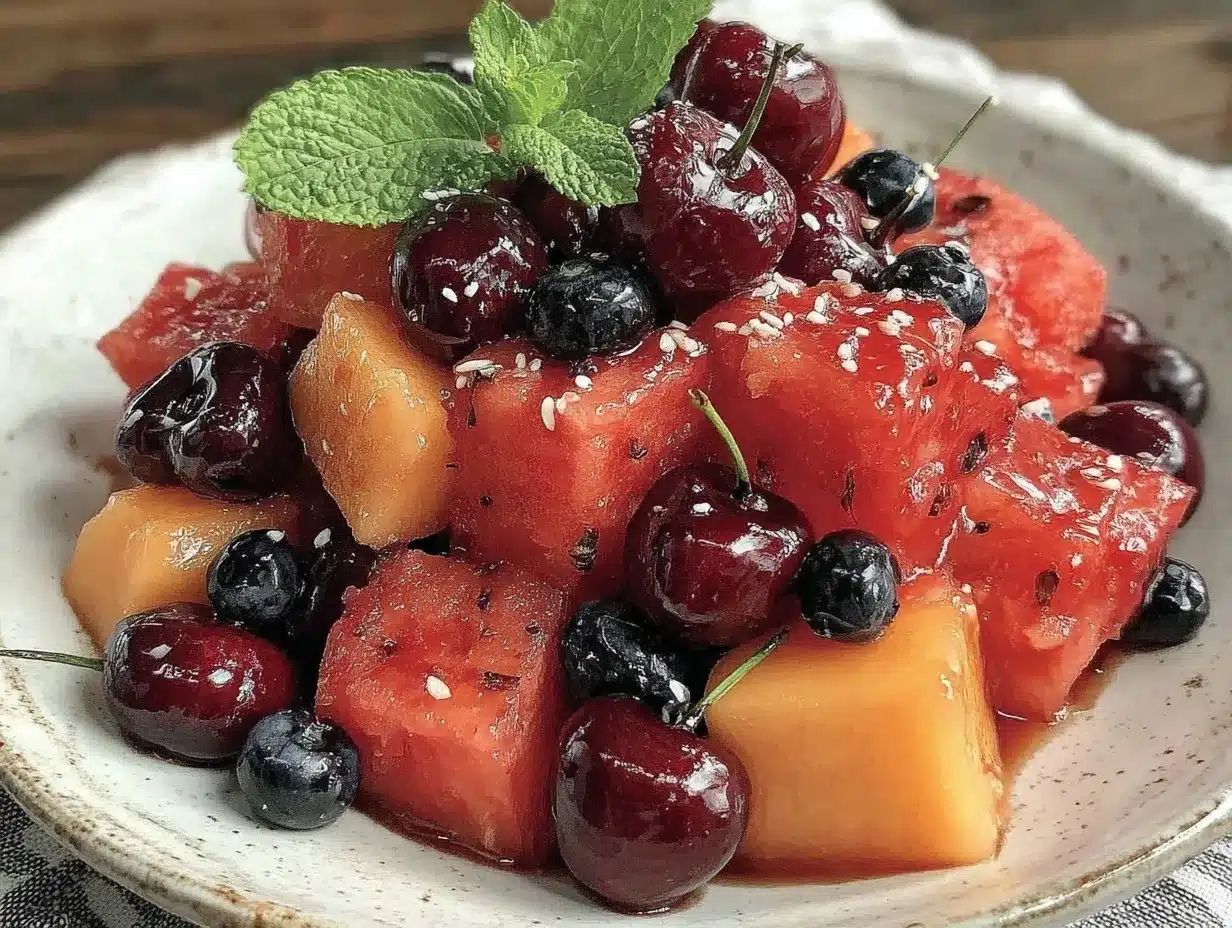
- Wash all fruits thoroughly: Rinse under cold running water to remove any dirt or residues. For delicate berries like blueberries and raspberries, gently swish them in a colander and let drain.
- Peel if necessary: Use a fruit peeler or knife to remove skins from pineapple and peaches if you prefer. For cantaloupe, cut in half, scoop out seeds with a spoon, then slice the flesh into cubes about 1-inch (2.5 cm).
- Slice and pit: For plums, cut in half and remove the pit carefully. Slice peaches into thin wedges, roughly 1/4-inch (0.6 cm) thick for easy eating.
- Cut watermelon into bite-sized chunks: Aim for about 1-inch (2.5 cm) cubes to keep it easy to eat and serve.
- Dice pineapple: After peeling and coring, cut into small cubes roughly 1/2-inch (1.3 cm) pieces for balanced sweetness in your fruit mix.
- Combine fruits in a bowl: If making a fruit salad, toss the prepared fruits gently to mix flavors. Avoid crushing berries by using a large spoon and folding carefully.
- Chill before serving: Let the fruit rest in the fridge for at least 30 minutes to bring out natural juiciness and coolness.
- Serve fresh: Enjoy as-is, or add a sprig of fresh mint or a squeeze of lemon juice for an extra zing.
Pro tip: If you’re prepping ahead, keep fruits like watermelon and cantaloupe separate from berries until just before serving to prevent sogginess. Also, a quick taste test before serving ensures the fruit is perfectly ripe and flavorful. I once forgot to chill the fruit salad and it felt a bit flat—lesson learned!
Cooking Tips & Techniques
Since this is all about fresh fruit, cooking is minimal, but some tricks help keep everything tasting fresh and vibrant:
- Choose ripe but firm fruits: Overripe fruits can quickly turn mushy, especially in mixed salads. I find gently pressing the fruit skin helps judge ripeness.
- Keep fruits cold: Chilling fruits before serving enhances flavor and texture—summer heat can dull sweetness and make fruit watery.
- Handle berries gently: Their delicate skin bruises easily, so fold them in last to avoid breaking.
- Acid helps keep color: A little lemon or lime juice prevents fruits like peaches and plums from browning if you’re prepping ahead.
- Don’t mix too early: Fruits release juices over time, which can turn a fresh salad soggy. Mix berries and melons just before serving.
Honestly, my first batch was a bit of a mess—blueberries squished and the cantaloupe juices made other fruits mushy. After a few tries, spacing out the mixing steps and quick chilling became my go-to method. It’s these small lessons that make the difference between a meh fruit bowl and a stunning one.
Variations & Adaptations
This list of fresh low-potassium summer fruits is flexible and easy to adapt according to your preferences or dietary needs:
- Dietary Variation: For a lower-sugar option, focus on berries and peaches, and skip sweeter fruits like pineapple and cantaloupe.
- Seasonal Twist: Late summer offers apricots or nectarines, which also fall low in potassium and add variety.
- Flavor Boost: Sprinkle a bit of ground cinnamon or fresh grated ginger over the fruit mix for a warming twist.
- Allergen-Friendly: If you’re allergic to any fruit, swap in apples or pears, which are also kidney-friendly.
- Frozen Fruit Salad: Use frozen berries instead of fresh for a cool, slushy treat—just thaw slightly before mixing.
One of my favorite personal twists is adding a handful of fresh mint leaves chopped finely—gives the fruit salad a refreshing lift without adding calories. It’s a small change but makes the whole bowl feel more special.
Serving & Storage Suggestions
Serve this fresh low-potassium summer fruits list chilled, straight from the fridge. The cool temperature helps the natural juices shine and keeps the fruits crisp.
Pair it with a dollop of plain Greek yogurt or a sprinkle of toasted coconut flakes for an extra layer of flavor and texture. It’s also delightful alongside a light cheese platter or as a refreshing side for grilled chicken or fish.
Storage is simple: keep prepared fruit in an airtight container in the refrigerator for up to 2 days. Beyond that, the fruits start losing their texture and flavor. Avoid freezing once mixed, as the texture changes dramatically.
To reheat (if you prefer room temperature), let the fruit sit out for 15 minutes before serving. Flavors mellow and meld nicely over time, so if you prep a day ahead, the fruit salad tastes even better the next day—just keep it cold until serving.
Nutritional Information & Benefits
This collection of fruits is naturally low in potassium, making them perfect for kidney health management. Here’s a quick look at their benefits:
- Blueberries and strawberries: Rich in antioxidants that support overall kidney function.
- Cantaloupe and watermelon: High water content aids hydration, essential for kidney health.
- Pineapple: Contains bromelain, an enzyme with anti-inflammatory properties.
- Peaches and plums: Provide vitamins A and C while keeping potassium low.
Each serving typically contains under 200 mg of potassium, fitting well into most kidney-friendly diets. Plus, these fruits are naturally low in sodium and fat, helping maintain heart health, which is often linked with kidney wellness. I always appreciate how these fruits make eating for kidney health feel less like a restriction and more like a nourishing, tasty choice.
Conclusion
Fresh low-potassium summer fruits are proof that eating well for kidney health doesn’t mean missing out on flavor or fun. This easy list brings joy and simplicity to your diet, with fruits that refresh, hydrate, and satisfy those sweet cravings without worry.
Feel free to mix and match based on what you love or what’s fresh at your local market—customizing this list makes it truly yours. Honestly, I keep coming back to these fruits not just for health, but because they remind me of sunny days and light, happy meals.
If you try this list or have your own favorite low-potassium summer fruits, I’d love to hear about it. Share your stories or tweaks in the comments below—let’s keep making kidney-friendly eating approachable and delicious together!
FAQs
What makes a fruit low in potassium?
Low-potassium fruits contain less than 200 mg of potassium per serving, making them safer for people managing kidney health where potassium intake needs to be controlled.
Can I eat bananas or oranges in a kidney-friendly diet?
Bananas and oranges are high in potassium and usually limited or avoided in kidney-friendly diets, especially in later disease stages.
Are frozen fruits okay for kidney health?
Yes, frozen fruits like berries are a great option and retain most nutrients. Just avoid canned fruits with added syrup or salt.
How should I store cut fruits to keep them fresh longer?
Store cut fruits in an airtight container in the refrigerator and consume within 2 days for best taste and texture.
Can I add sweeteners to this fresh fruit list?
It’s best to enjoy these fruits naturally sweet to avoid added sugars, which aren’t ideal for kidney health. If needed, a small drizzle of honey or maple syrup can be used sparingly.
Pin This Recipe!
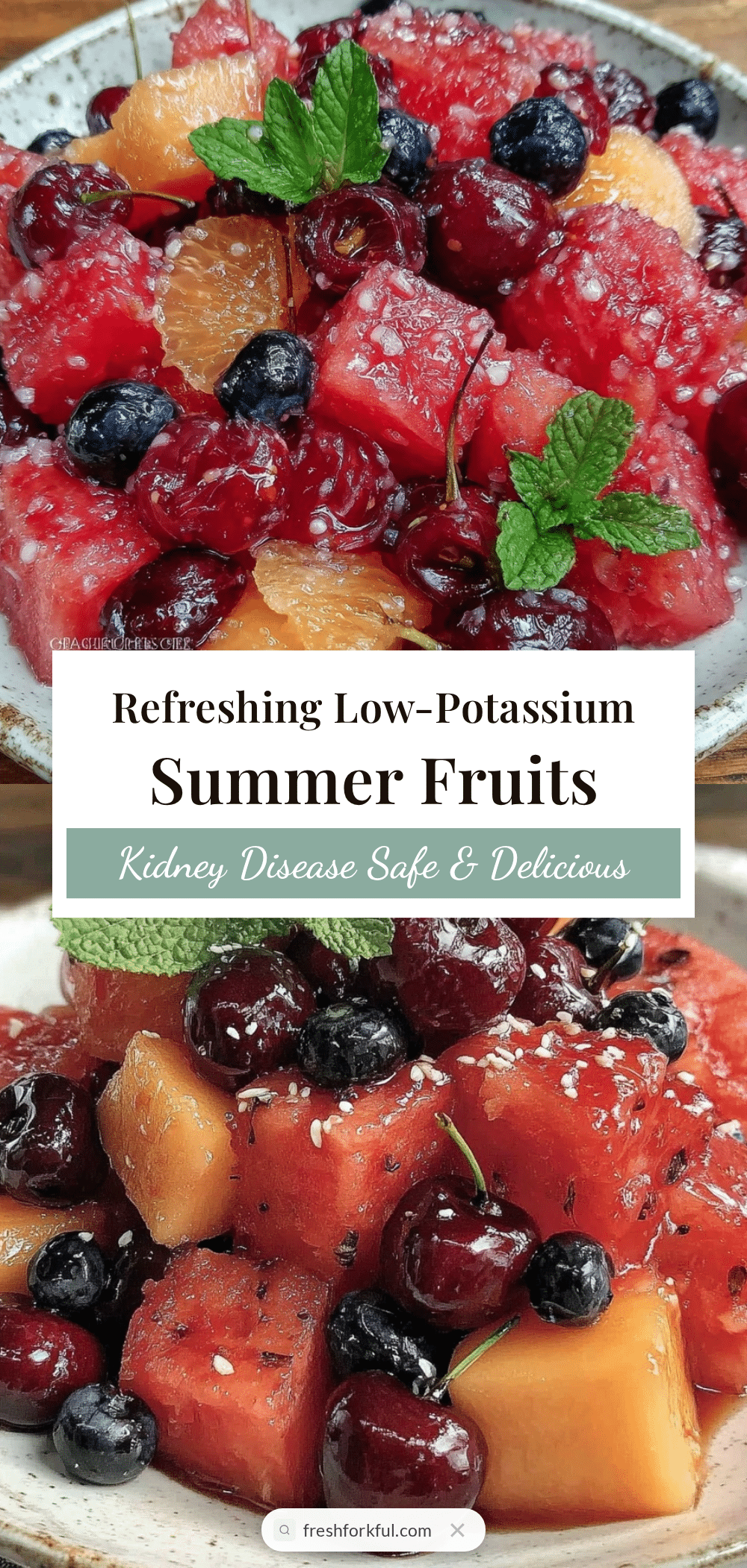
Fresh Low-Potassium Summer Fruits for Kidney Health Easy List for Diet

A refreshing and easy-to-prepare list of fresh low-potassium summer fruits perfect for kidney health, offering natural sweetness and hydration without dietary stress.
- Prep Time: 10 minutes
- Cook Time: 0 minutes
- Total Time: 40 minutes
- Yield: 4 servings
- Category: Snack
- Cuisine: American
Ingredients
- Blueberries (fresh or frozen)
- Strawberries (ripe and sliced)
- Cantaloupe (cubed)
- Watermelon (seedless, cut into bite-sized chunks)
- Pineapple (fresh, peeled, and diced)
- Peaches (sliced thin)
- Plums (pitted and halved)
- Raspberries
- Cherries (pitted fresh)
Instructions
- Wash all fruits thoroughly under cold running water. For delicate berries like blueberries and raspberries, gently swish them in a colander and let drain.
- Peel pineapple and peaches if preferred using a fruit peeler or knife. For cantaloupe, cut in half, scoop out seeds with a spoon, then slice the flesh into 1-inch cubes.
- Cut plums in half and remove the pit carefully. Slice peaches into thin wedges about 1/4-inch thick.
- Cut watermelon into bite-sized chunks about 1-inch cubes.
- Dice pineapple into small cubes roughly 1/2-inch pieces.
- Combine all prepared fruits gently in a mixing bowl, folding carefully to avoid crushing berries.
- Chill the fruit mixture in the refrigerator for at least 30 minutes before serving.
- Serve fresh as-is or add a sprig of fresh mint or a squeeze of lemon juice for extra flavor.
Notes
Keep fruits cold before serving to enhance flavor and texture. Handle berries gently to avoid bruising. Mix berries and melons just before serving to prevent sogginess. Store prepared fruit in an airtight container in the refrigerator for up to 2 days. Avoid canned or dried fruits to maintain low potassium levels.
Nutrition
- Serving Size: Approximately 1 cup
- Calories: 70
- Sugar: 14
- Sodium: 2
- Fat: 0.3
- Carbohydrates: 18
- Fiber: 2
- Protein: 1
Keywords: low potassium fruits, kidney health, summer fruits, fresh fruit salad, kidney-friendly diet, hydrating fruits, healthy snacks